


AI Concierge Agents vs. Traditional Chatbots: What's the Difference for eCommerce?
Quick Summary
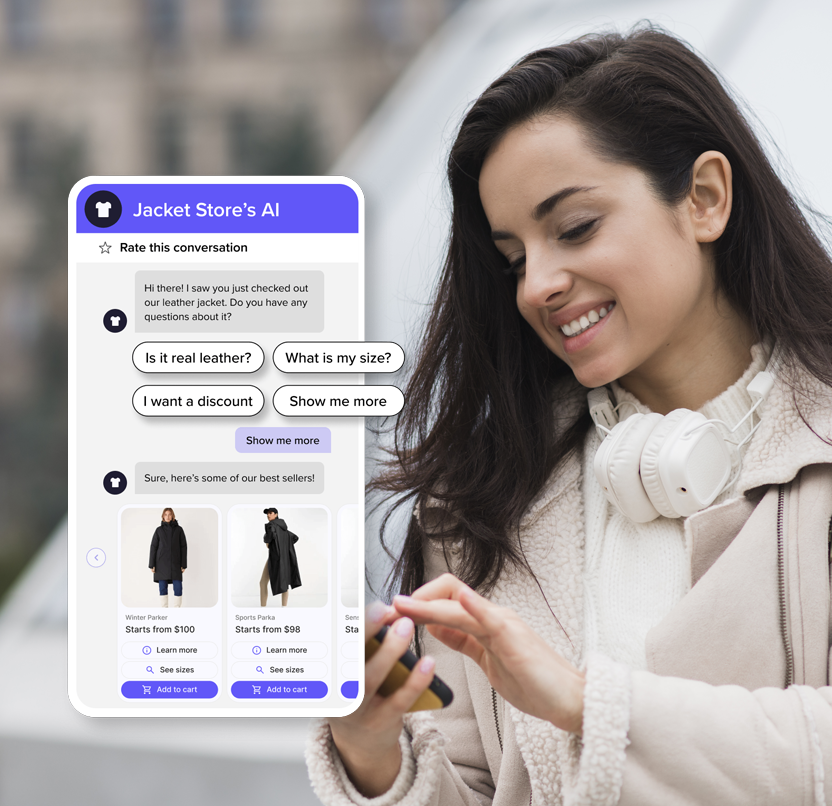
AI concierge agents don't wait for shoppers to ask questions. They proactively guide visitors, personalize recommendations, and drive conversions in real time. This guide breaks down the core differences between AI concierge agents and traditional chatbots, why the shift matters for e-commerce, and how Rep AI is leading this movement.
The Trillion-Dollar Shift Traditional Chatbots Can't Handle
The eCommerce industry is entering an agentic economy where AI agents will facilitate nearly $9 trillion in global online consumption by 2030. Yet most brands still rely on reactive chatbots built for a different era—scripted systems that wait for shoppers to ask questions before offering any value.
The result? 99% of visitors abandon sites because no one listens, guides, or adapts to their needs in real time. Traditional chatbots weren't designed to solve this, but AI concierge agents were. Understanding the difference is critical for brands ready to convert traffic into revenue.
Why Listen to Us?
Rep AI pioneered the first Agentic Commerce Operating System, powering AI-driven experiences for 500+ brands and 100 million+ visitors. Our behavioral engine is trained on 160 million+ sessions—giving us unmatched insight into what converts shoppers and what doesn't. This perspective shapes everything we share.
What an AI Concierge Experience Actually Looks Like
The difference between AI concierge agents and chatbots for eCommerce becomes clear when you see how each handles a real shopping scenario. Let’s consider a first-time visitor who browses a skincare site, views three moisturizers, but doesn't add anything to the cart.
Traditional Chatbot Response
The chatbot does nothing and waits for the shopper to make the first move. If they eventually click the chat icon and type "Which moisturizer is best for dry skin?" the bot searches its FAQ database, returns a generic product description, and offers to connect them with support. Then, the shopper leaves to research elsewhere.
AI Concierge Agent Response
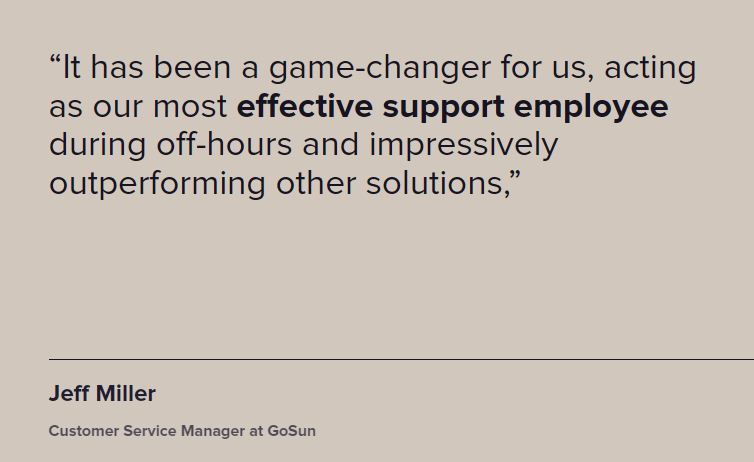
The AI notices hesitation after the third product view and opens a conversation: "Looking for something specific? I can help you find the right moisturizer." The shopper mentions dry skin and sensitivity concerns. The agent asks a quick clarifying question, then recommends two products with a side-by-side comparison that highlights ingredients, price points, and customer reviews.
The shopper adds one to the cart. The agent suggests a complementary serum, explains why they pair well together, and offers a one-click bundle. Checkout happens without the shopper ever leaving the conversation.
This is the shift from reactive support to agentic commerce, and it explains why brands using AI concierge solutions see conversion lifts that traditional chatbots simply cannot deliver.
AI Concierge Agents vs. Chatbots: Core Differences
AI concierge agents and traditional chatbots may look similar on the surface. Underneath, they’re built for completely different outcomes. Chatbots handle support tickets. AI concierge agents, like those powered by Rep AI, sell, recommend, guide, and optimize the entire shopping experience autonomously.
1. Proactive Behavioral Engagement vs. Reactive Responses
Traditional chatbots, and even human live chat, sit idle until a shopper clicks or types a question. But most visitors won’t ask for help when confused; they simply leave.
AI concierge agents address this problem by taking a proactive, behavior-based approach. For example, Rep AI’s behavioral AI analyzes real-time signals—exit intent, repeated product views, cart stagnations—and engages shoppers at the exact moment they need guidance. Think of a concierge agent as an attentive sales associate who notices you’re struggling and offers help before you even ask.
2. Sales-First Design vs. Support-Only
Most chatbots optimize for ticket deflection. They answer FAQs, track orders, and eventually hand off to humans. While this reduces support volume, it does nothing to increase revenue.
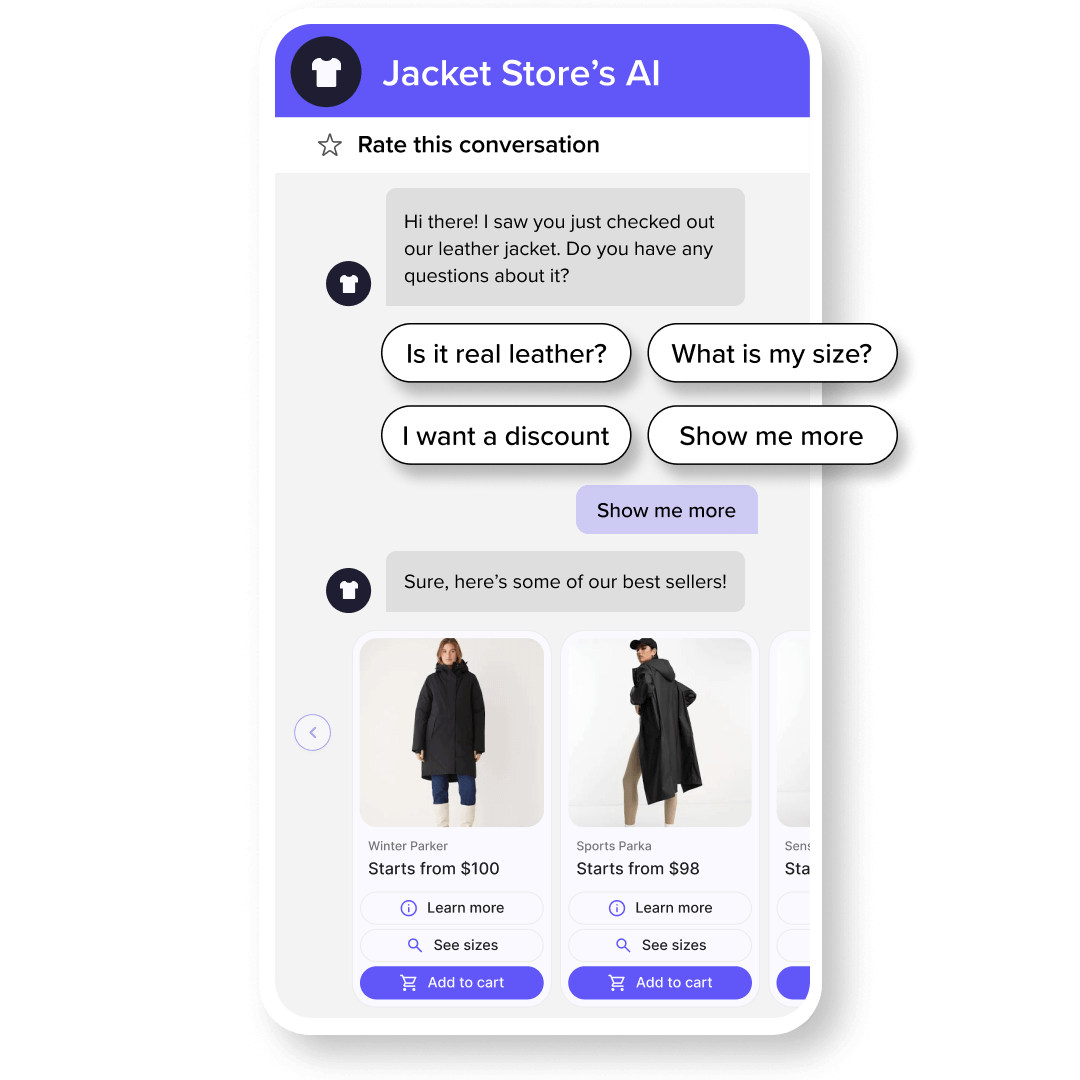
AI concierge agents flip this model. Every interaction is oriented around helping shoppers discover products, overcome hesitation, and complete purchases. They add items to cart mid-conversation, offer personalized bundles, and upsell after add-to-cart. These are capabilities traditional chatbots simply don’t have.
Support still happens, but it’s a byproduct of a larger commerce experience. For example, Rep AI’s AI support resolves up to 97% of customer requests while simultaneously driving sales.
3. Autonomous Conversations vs. Scripted Flows
Traditional chatbots run on rigid scripts and decision trees. If a shopper’s question falls outside predefined flows, the experience breaks—usually triggering handoff to human support. These interactions feel mechanical because the bot can’t reason or adapt, only respond.
AI concierge agents operate autonomously. Rep AI understands context across the entire shopper journey, asks intelligent follow-up questions, recalls prior responses, and adjusts conversations in real time. The experience mirrors a skilled sales associate who thinks with the shopper rather than reading from a script.
This is the core of agentic commerce: AI that decides what to do without being told, handling complex scenarios, and moving conversations toward conversion without friction.
4. Revenue Intelligence vs. Limited Visibility
Traditional chatbots offer little insight beyond surface-level metrics like chat volume, ticket counts, or basic response rates. They tell you what questions shoppers asked, but not why visitors left, which products caused confusion, or where the buying journey broke down.
AI concierge agents double as shopper intelligence engines. Rep AI’s reporting and analytics dashboard connects every interaction to outcomes: conversion rates, drop-off reasons, buyer intent signals, and revenue impact. You see which products get recommended most, which get added to cart, and where shoppers hesitate.
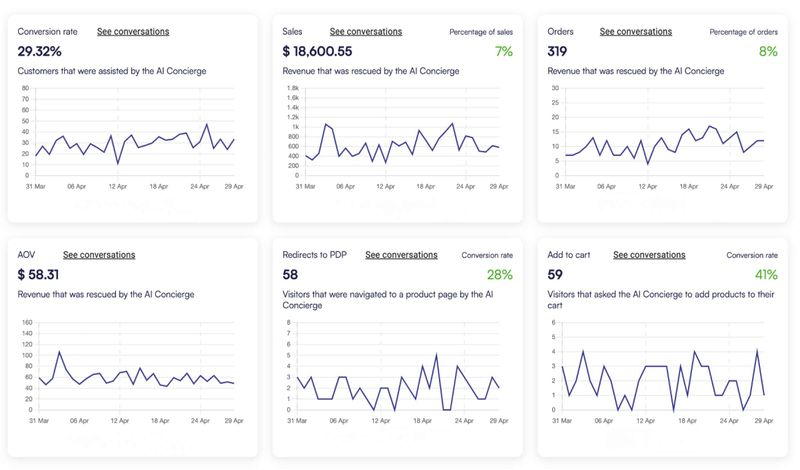
The continuous feedback loop gives eCommerce teams visibility they’ve never had, turning every conversation into optimization data.
5. Unified Commerce Intelligence vs. Siloed Support Data
Traditional chatbots operate in isolation. They capture support conversations but can't connect those interactions to sales outcomes, marketing campaigns, or customer behavior across channels. Data stays trapped in ticket systems, inaccessible to the teams who need it most.
AI concierge agents create a shared brain across your entire commerce operation. For example, Rep AI integrates with Klaviyo for email and SMS, syncs custom tags for segmentation, and connects to shipping, returns, and review platforms—all feeding into one intelligence layer. When a shopper hesitates on a product, that signal flows to marketing. When support requests spike around a specific item, merchandising sees it immediately.
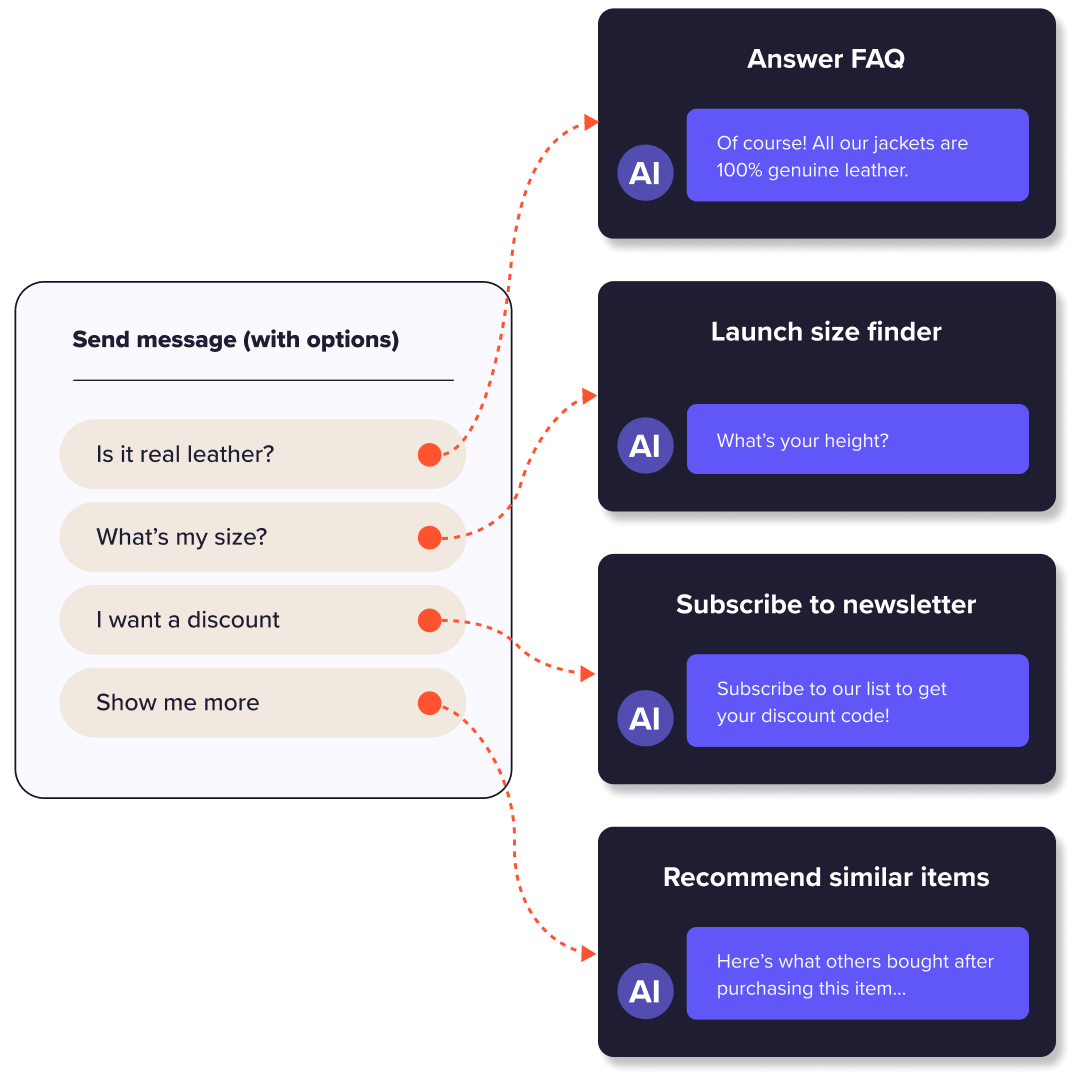
6. Real-Time Catalog Intelligence vs. Static Product Knowledge
Traditional chatbots rely on manual updates. When prices change, products sell out, or new items launch, someone has to retrain the bot. As a result, shoppers get outdated recommendations and broken flows, then become frustrated when trying to purchase products that no longer exist.
AI concierge agents stay current automatically. They sync with your catalog in real time, without manual retraining. They know what's in stock, what's trending, and what complements each product. The best solutions can exclude items you don't want promoted, prioritize high-margin products, and create dynamic product groups that adapt as inventory shifts.
When a shopper asks, "What's similar to this?" Rep AI delivers accurate, shoppable recommendations instantly. Traditional chatbots deliver stale data or nothing at all.
Benefits of Using AI Concierge Agents
1. Higher Conversion Rates and Increased AOV
AI concierge agents engage shoppers at moments of hesitation with personalized recommendations. In-chat actions like product comparisons, visual filtering, and one-click add-to-cart keep shoppers moving toward purchase. Brands consistently report 4x conversion lifts and 25% AOV increases.
2. Round-the-Clock Sales and Support
Your brand can offer high-quality sales guidance at any hour without scaling headcount. With Rep AI, for example, you can handle order issues, provide product guidance, and resolve requests instantly—cutting support ticket counts by 50-70% while maintaining 24/7 coverage.
3. One Platform Instead of Five
Traditional stacks force brands to stitch together separate solutions for chat, support, analytics, personalization, and marketing automation. AI concierge platforms consolidate these functions under one intelligence layer. There are fewer integrations to manage, cleaner data, and teams that operate from a single source of truth.
4. Actionable Shopper Intelligence
Rep AI surfaces insights traditional chatbots can't capture: visitor drop-off reasons, shopper emotion analysis, missing information gaps, and AI-powered recommendations for CX optimization. Teams gain a unified view of sales, support, and behavior from one dashboard.
5. Measurable ROI Within Days
Unlike traditional chatbots that require months to prove value, AI concierge agents deliver measurable impact quickly. Brands typically see positive ROI within the first 30 days through increased conversions, higher order values, and reduced support costs. The best solutions guarantee 5x ROI or more.
How Rep AI Is Leading the AI Concierge Movement
Rep AI isn't just another chatbot with AI features. It's the first Agentic Commerce Operating System—a unified platform that combines sales, support, and shopper intelligence under one AI brain.
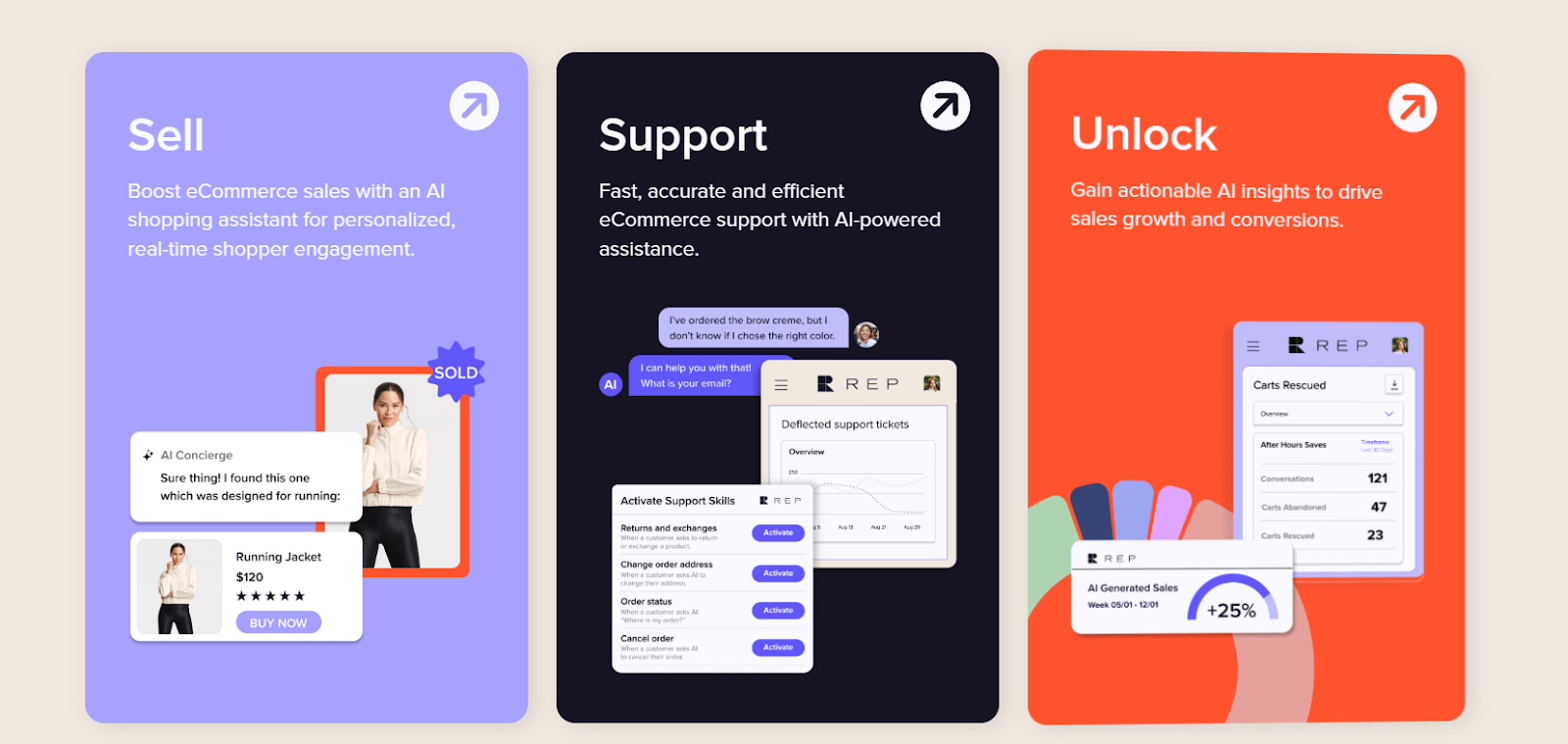
What makes Rep AI different:
- Behavioral algorithm engagement: Proactively reaches out to visitors likely to disengage, not every user indiscriminately.
- Sales-first architecture: Designed to increase conversions and AOV, not just deflect tickets.
- Truly agentic conversations: Human-like dialogue with autonomous decision-making rather than scripted flows.
- In-chat commerce actions: One-click add-to-cart, visual product filtering, and checkout guidance to keep shoppers moving.
- Rapid training: KNN technology makes customization faster and simpler than competitor solutions.
One Platform for Sales, Support, and Data
Rep AI addresses the three problems holding eCommerce teams back simultaneously. It proactively guides high-intent shoppers to increase conversion. It resolves 97% of support requests automatically, enabling all-day coverage without added headcount. And it delivers analytics that reveal exactly why shoppers convert or leave.
This unified approach is why Rep AI delivers 26x ROI, while traditional chatbots and support-focused competitors struggle to impact the metrics that matter.
The Right Solution for Your E-Commerce Business
AI concierge agents represent a fundamental shift from reactive support to proactive commerce. They engage shoppers before abandonment, drive revenue through every interaction, and generate intelligence that powers continuous optimization.
Key Takeaways:
- AI concierge agents proactively engage visitors at risk of leaving—traditional chatbots wait passively.
- Sales-first design ensures every interaction drives revenue, not just ticket deflection.
- Conversational AI adapts in real time, replacing rigid scripts with human-like guidance.
- Unified platforms combine sales, support, and shopper intelligence for smarter decisions.
- Rep AI delivers 4x conversion lifts, 26x ROI, and resolves 97% of customer requests automatically.
Ready to see the difference? Start your free trial to experience how Rep AI's Agentic Commerce OS transforms visitors into customers.
More from REP AI
AI Shopping Assistant: How It Guides Ecommerce Shoppers in 2026
When a shopper hesitates, timely guidance can help them decide what to explore next. An ai shopping assistant can answer product questions, narrow choices, and guide product discovery without taking control of checkout. Shoppers get help comparing options, while still making the purchase decision th...
Benefits of Agentic Commerce: How AI Can Help Brands Sell and Serve Better
When a shopper hesitates, a useful answer can turn a moment of uncertainty into a chance to help, rather than a sale lost or a question left unanswered. The benefits of agentic commerce come from connecting shopper intent with timely action, then learning from those interactions to improve sales gui...
Want to see what your store would do with Rep?
Run your real Shopify catalog through the simulator before you commit to anything. No sales call required.

