


8 AI Shopping Assistants That Actually Drive Sales in 2026 [Categorized by Use Case]

Quick Summary
Shoppers have questions, but no one to answer them. AI shopping assistants help solve this by engaging customers in real time, addressing objections, and guiding them toward checkout. This guide compares the 8 best AI shopping assistants for 2026 and breaks down what separates the tools that convert from the ones that just respond.
Why AI Shopping Assistants Matter in 2026
E-commerce has moved beyond static product pages and basic search filters. Today's shoppers expect recommendations that actually make sense, answers that arrive instantly, and guidance that feels human even when it isn't.
AI shopping assistants sit at the center of this shift. At their best, they simulate the experience of walking into a store and being greeted by a knowledgeable associate who understands what you're looking for, answers your questions, and points you toward the right product.
The problem is that most AI assistants are built for support, not sales. They deflect tickets and route complex issues to human agents. The best AI shopping assistants do both, reducing support burden while increasing revenue. That's the standard this guide uses to evaluate the tools below.
Why Listen to Us?
At Rep AI, we built the first Agentic Commerce OS for Shopify brands, combining AI-powered sales, support, and shopper intelligence in a unified solution. We've seen what separates AI that actually converts from AI that just deflects, and we understand what exactly makes a shopping assistant the best conversion tool for online stores.

What Is an AI Shopping Assistant?
An AI shopping assistant is a conversational agent that helps shoppers browse, discover, and purchase products more efficiently. Unlike traditional chatbots that follow rigid scripts, modern AI assistants use natural language processing to understand context, learn from interactions, and respond in ways that feel genuinely human.
These systems go beyond answering questions. They analyze browsing behavior, cart contents, and purchase history to deliver personalized recommendations. They detect when a shopper is about to leave and intervene with relevant offers or assistance. They handle post-purchase inquiries, such as order tracking, returns, and cancellations, without requiring human agents.
The best AI shopping assistants are trained on your specific product catalog, policies, and brand voice. They become experts on everything your store offers, capable of guiding shoppers through complex purchase decisions with the same nuance a well-trained sales associate would bring.
Benefits of AI Shopping Assistants for E-Commerce
AI shopping assistants deliver measurable impact across multiple dimensions of your business:
- Higher Conversion Rates: Shoppers with unanswered questions leave. AI assistants remove friction at the moment of hesitation, turning browsers into buyers before they bounce. Proactive engagement can recover sales that would otherwise be lost.
- Reduced Cart Abandonment: AI can intercept visitors about to leave, offering help, answering last-minute objections, or surfacing incentives to complete the purchase. This is where behavioral AI separates itself from reactive chatbots.
- Personalized Experiences at Scale: With access to browsing history, cart contents, and past orders, AI can recommend products, suggest alternatives, and tailor responses to each visitor's context. This level of personalization was previously only possible with human agents.
- Actionable Shopper Intelligence: Every conversation generates data that helps you optimize your site, messaging, and product offerings. The best platforms surface these insights automatically.
- 24/7 Availability: Unlike human agents, AI doesn't sleep. Customers get instant responses regardless of time zone, which matters when a significant portion of purchases happen outside business hours.
The Top AI Shopping Assistants Compared
Before diving into detailed reviews, here's a quick comparison of the top AI shopping assistants. This table highlights what each assistant does best and what you'll pay.
1. Rep AI
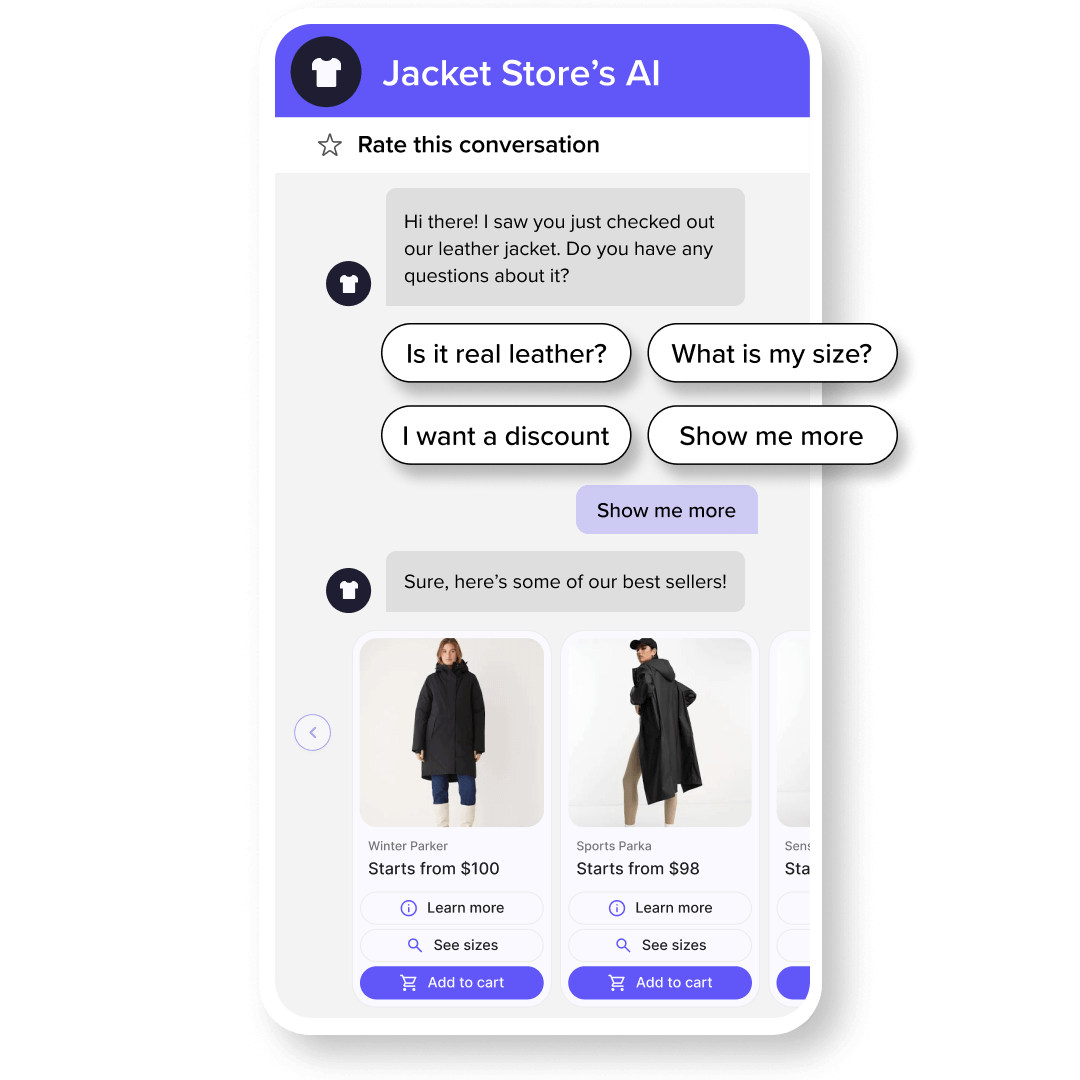
Rep AI is the first Agentic Commerce Operating System built specifically for e-commerce brands. Unlike traditional AI assistants that wait for customers to ask questions, Rep AI's behavioral engine proactively engages shoppers at the exact moment they're about to leave with natural, human-like conversations that guide them toward the right products.
The proprietary model, trained on over 160 million shopper sessions, understands buying intent, detects drop-off signals, and takes autonomous action to rescue abandoned carts, recommend complementary products, and increase average order value. Beyond sales, Rep AI resolves up to 97% of support requests without human intervention—handling order tracking, returns, cancellations, and FAQs while seamlessly handing off complex issues to your existing helpdesk.
Key Features
- Behavioral AI Sales Agent: Engages shoppers showing exit intent with personalized, conversational product guidance.
- One-Click Add to Cart & Visual Product Filtering: Shoppers browse carousels and add items directly in chat without redirection.
- Automated Support Resolution: Handles WISMO, returns, cancellations, and FAQs, deflecting 50–70% of tickets within 30 days.
- Shopper Intelligence & Drop-Off Analytics: Surfaces actionable insights on visitor behavior and missing website information.
Pricing
Plans scale with monthly sessions. All include a 30-day free trial with a 5X ROI guarantee.
- Pay As You Grow: $12/1,000 visitors
- Basic (25K sessions): $159–$191/month
- Standard (50K sessions): $280–$336/month
- Pro Plus (180K sessions): $792–$952/month
- Enterprise (500K+): Custom pricing
Pros
- Sales-first AI that drives conversion and AOV, not just ticket deflection
- Behavioral engagement reaches shoppers at the right moment
- 6-click setup with automatic brand voice calibration
- Real-time catalog sync without manual maintenance
Cons
- Currently Shopify-only (Salesforce Commerce Cloud expansion planned for Q2)
2. Vue.ai
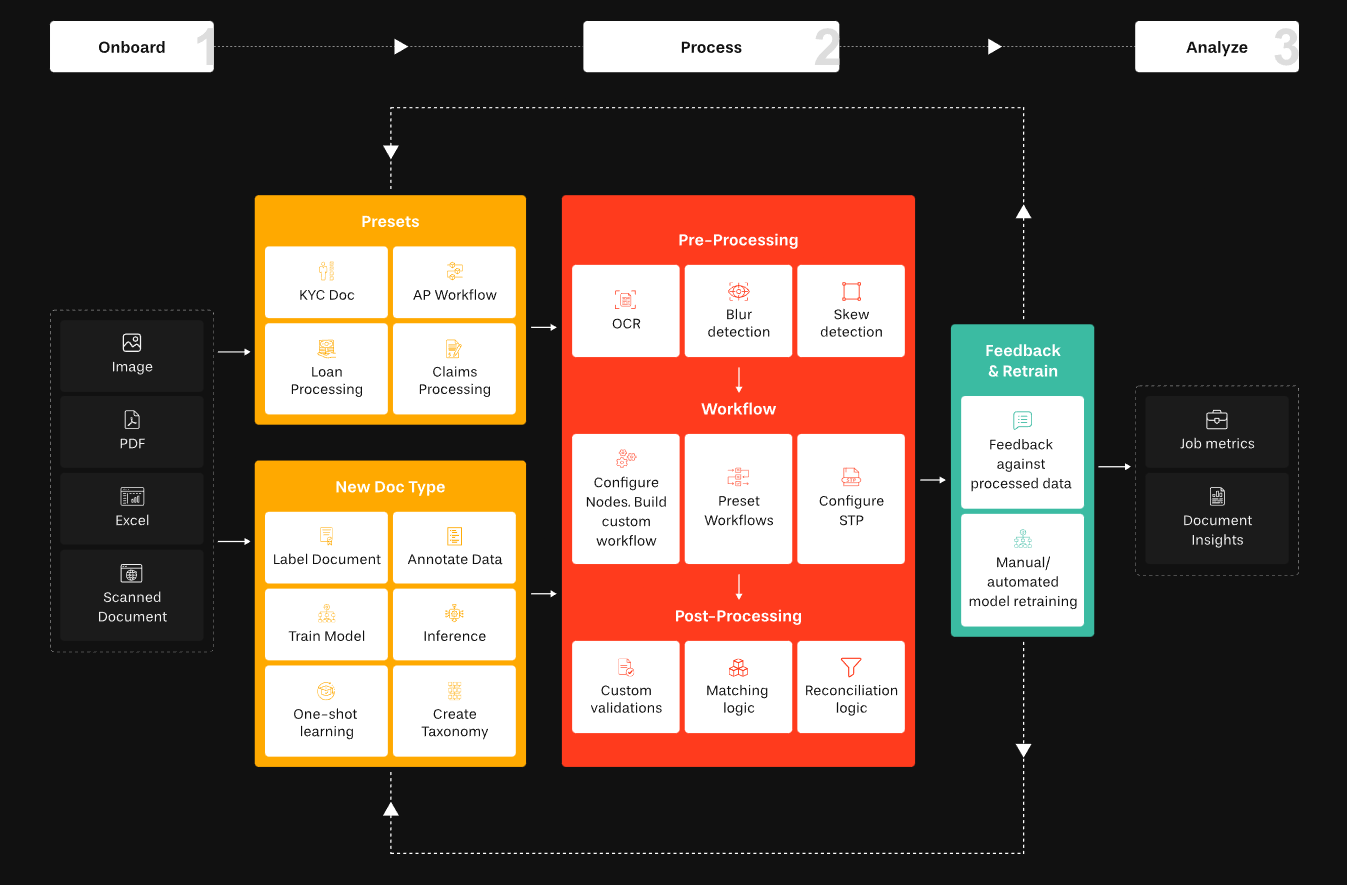
Vue.ai is an enterprise-grade AI platform that helps retailers and e-commerce brands deliver highly personalized shopping experiences. It unifies customer data, automates workflows, and powers real-time personalization and recommendations across the buyer journey.
Vue.ai focuses on data orchestration, customer segmentation, and AI-driven merchandising rather than conversational engagement. It's best suited for mid-market to enterprise retailers with complex personalization needs and the technical resources to implement them.
Key Features
- AI-Driven Personalization Engine: Analyzes shopper behavior and preferences to deliver personalized product recommendations in real time across touchpoints.
- Unified Customer Profiles: Combines data from multiple touchpoints into a single customer view, enabling precise segmentation and targeted messaging.
- Automated Data Cleanup: Handles messy or incomplete product and customer data automatically, improving personalization accuracy without manual effort.
Pricing
Custom pricing. Request a demo for details.
Pros
- Strong personalization capabilities for enterprise retailers
- Flexible technology that adapts to specific business needs
- Saves time with automated data management
Cons
- Not a conversational AI—focuses on personalization infrastructure rather than chat engagement
- Pricing not publicly available
- Image processing can be slow
3. Manifest AI
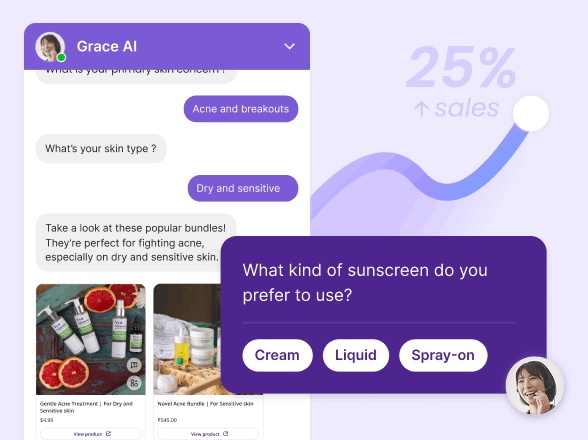
Manifest AI is a Shopify app that provides an AI shopping assistant designed to answer product questions, engage visitors in real time, and provide personalized recommendations. It's positioned as a simpler alternative to full-scale commerce platforms, focused on helping smaller Shopify stores add AI capabilities quickly.
Key Features
- AI-Driven Chatbot: Handles common customer questions automatically, reducing support workload and giving shoppers instant answers.
- Personalized Product Recommendations: Suggests products based on shopper preferences and browsing behavior.
- Shopify Integration: Syncs directly with your Shopify store to pull live inventory, pricing, and product information.
Pricing
30-day free trial available. Contact sales for pricing details.
Pros
- Blends sales assistance and customer support in one experience
- 24/7 availability without human staffing
- Simple and fast to set up
Cons
- Chatbot responses can sometimes be generic or lack detail
- Pricing not publicly available
- Limited advanced features compared to full-scale platforms
4. Tidio
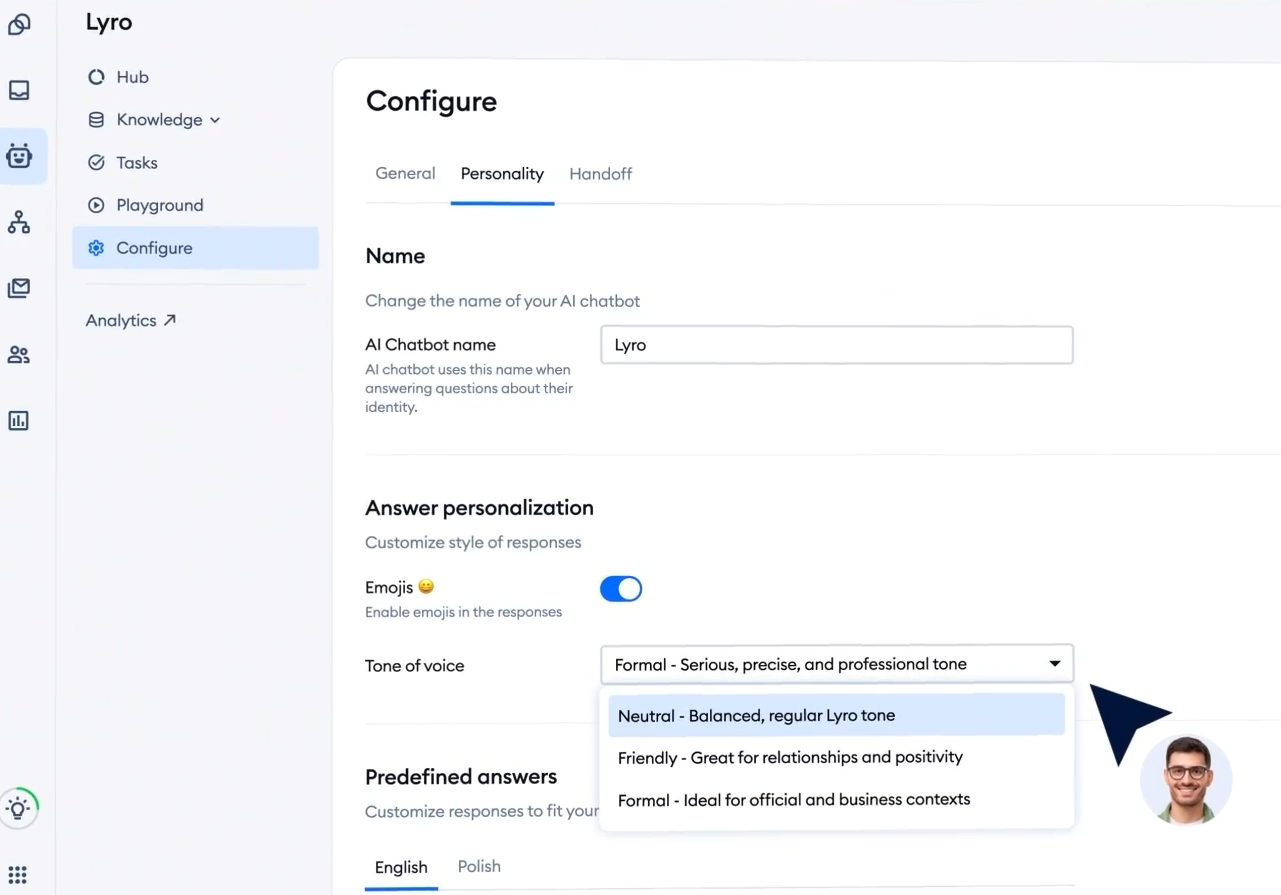
Tidio is a live chat and AI chatbot platform built for small to mid-sized e-commerce businesses. Its Lyro AI Agent handles common questions and recurring tasks, while the visual chatbot builder lets teams create automated flows without coding.
Tidio is an accessible entry point for stores exploring AI automation, though its rule-based chatbot logic and limited analytics mean it is only basic automation rather than true conversational AI.
Key Features
- Lyro AI Agent: AI-powered assistant that answers customer questions and resolves repetitive issues across channels automatically.
- Live Chat with Visitor Tracking: Real-time website chat with visibility into browsing behavior and cart contents.
- Visual Chatbot Builder: Drag-and-drop editor with pre-built templates for common e-commerce scenarios.
Pricing
- Free plan available
- Starter: $29/month (100 conversations)
- Growth: $59/month (250 conversations)
- Plus: $749/month (custom volume)
- Premium: Custom pricing
Pros
- Easy setup with minimal technical knowledge required
- Affordable entry point with a functional free tier
- Native Shopify integration provides order context in conversations
Cons
- Chatbot is rule-based and lacks natural conversational AI
- Limited analytics make it difficult to measure sales impact
- Quickly outgrown by scaling brands; the jump to higher tiers is steep
5. Alby
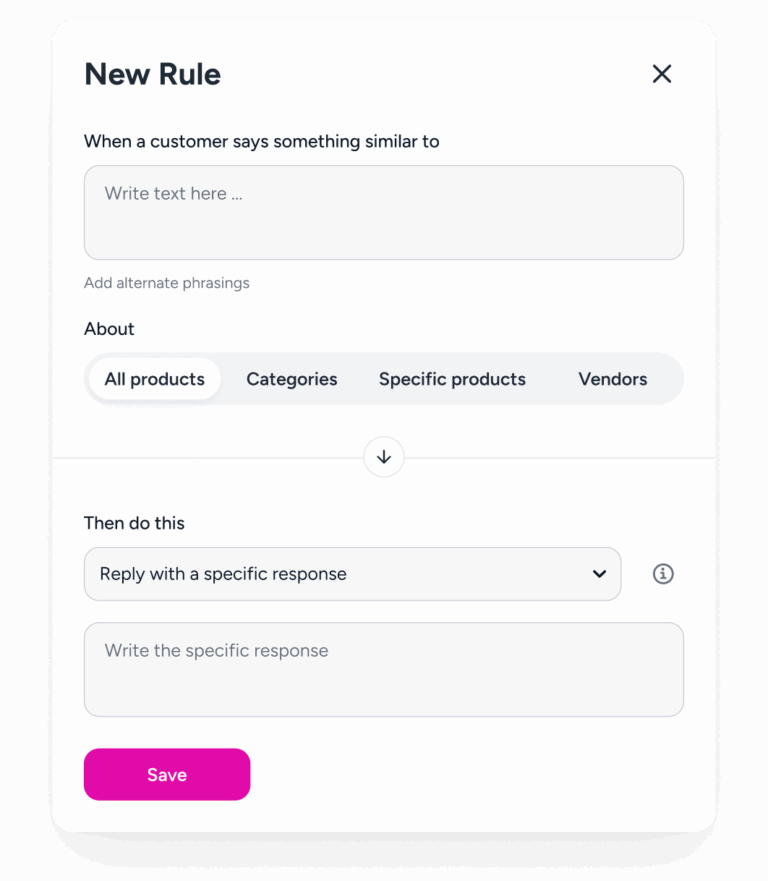
Alby is an AI-powered shopping agent for Shopify merchants. It syncs with your catalog and helps shoppers find products, answer questions, and navigate the buying journey with personalized guidance. Alby positions itself as a dual-purpose assistant for both sales and support.
Key Features
- AI Shopping Agent: Helps shoppers find the right products through intelligent discovery and conversational guidance.
- Shopify Catalog Sync: Integrates directly with your Shopify store to pull real-time product data.
- Predictive Prompts: Anticipates what shoppers might need next and offers proactive suggestions embedded in the conversation.
Pricing
Free to install. Contact sales for usage-based pricing details.
Pros
- Quick product answers and recommendations without waiting for human support
- Easy to install and integrates smoothly with Shopify
- Makes personalized shopping guidance more accessible
Cons
- Effectiveness depends on having clean, well-organized product data
- Some merchants report mixed performance on mobile
- Costs scale with traffic beyond the free tier
6. Rebuy
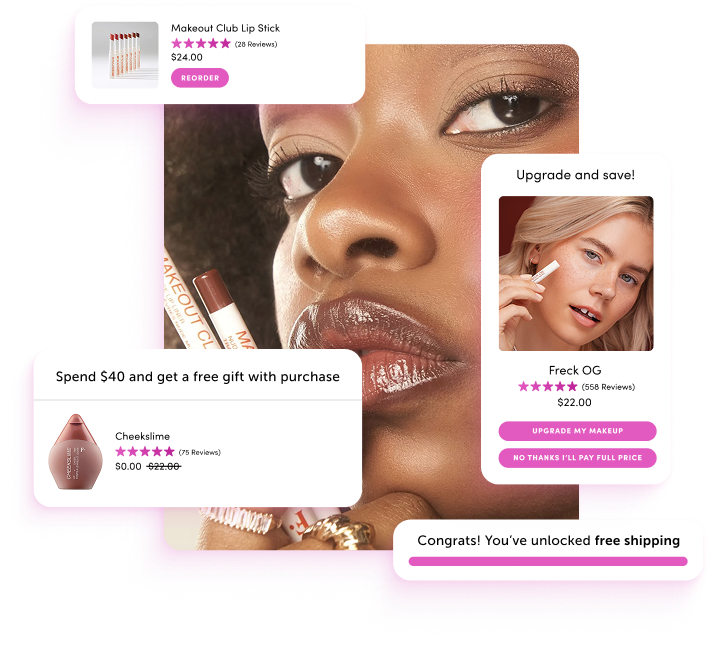
Rebuy is an AI-powered personalization platform built for Shopify brands. It focuses on intelligent product recommendations, dynamic bundles, and checkout upsells—using machine learning to analyze shopper behavior and surface the right products at the right moment throughout the buying journey.
Rebuy is more of a recommendation engine than a conversational assistant. Its strength lies in merchandising automation through smart cart upsells, post-purchase offers, and personalized collections that adapt based on real-time behavior and purchase history.
Key Features
- AI-Powered Recommendations: Machine learning analyzes browsing behavior, cart contents, and purchase history to serve personalized product suggestions across your store.
- Smart Cart & Checkout Upsells: Dynamic upsell and cross-sell widgets integrated directly into cart and checkout flows to increase AOV.
- Personalized Bundles: Automatically generates product bundles based on shopper preferences and buying patterns.
Pricing
- Free plan available
- Build your own plan: Starts at $25/month for 500 monthly orders
- Platform One: $598/month
Pros
- Strong AOV impact through intelligent upsells and bundles
- Deep Shopify integration with real-time personalization
- Revenue-based pricing aligns cost with results
Cons
- Not a conversational AI; no chat or shopper dialogue
- Requires traffic volume to see meaningful personalization lift
- Advanced features require higher-tier plans
7. Nosto
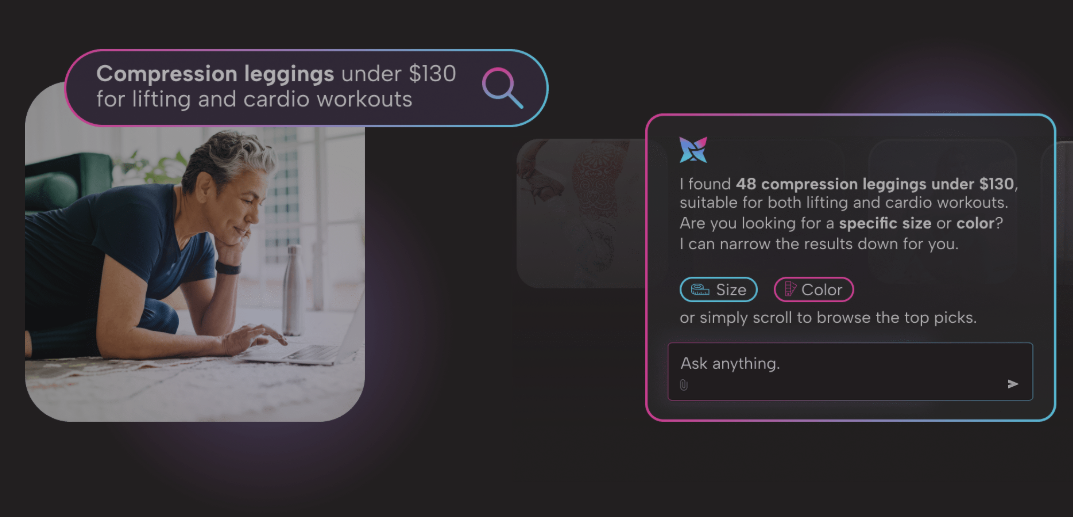
Nosto is an AI-powered commerce experience platform that delivers personalized product recommendations, dynamic content, and targeted merchandising across web, email, and mobile. It's built for mid-market to enterprise retailers who want to personalize the entire shopping journey without building custom infrastructure.
Nosto focuses on segmentation and personalization at scale rather than conversational engagement. It's best suited for brands with significant traffic looking to optimize product discovery and on-site experience through AI-driven merchandising.
Key Features
- AI Product Recommendations: Serves personalized recommendations across homepage, category pages, PDPs, and cart based on behavioral and transactional data.
- Dynamic Content & Personalization: Customizes banners, pop-ups, and on-site messaging based on shopper segments and real-time behavior.
- Merchandising Rules & A/B Testing: Combines AI automation with manual merchandising controls and built-in experimentation.
Pricing
Custom pricing based on traffic and feature requirements. Request a demo for details.
Pros
- Comprehensive personalization across the entire shopping journey
- Strong segmentation and targeting capabilities
- Robust A/B testing for optimization
Cons
- Not a conversational AI; no chat functionality
- Pricing not publicly available
- Implementation can be complex for smaller teams
8. Octane AI
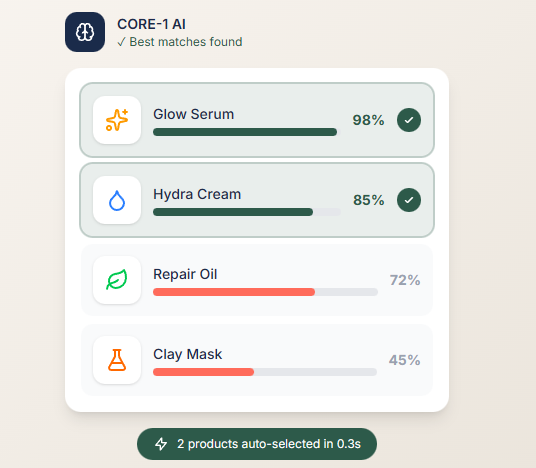
Octane AI is a quiz and zero-party data platform built for Shopify brands. It helps stores create interactive product recommendation quizzes that guide shoppers to the right products while capturing valuable customer data for personalization and marketing.
Octane AI takes a different approach to AI-assisted shopping. Instead of chat-based conversations, it uses structured quizzes to understand shopper needs and deliver tailored recommendations. This works particularly well for brands with complex product lines or customers who need guidance choosing between options.
Key Features
- Product Recommendation Quizzes: Interactive quizzes that ask shoppers about their preferences and recommend products based on responses.
- Zero-Party Data Collection: Captures explicit customer preferences and intent data that can be synced with email and SMS platforms.
- Shopify & Klaviyo Integration: Syncs quiz responses and product recommendations with your marketing stack for personalized follow-up.
Pricing
- Octane: $50/month (400 credits for engagements/AI usage)
- Octane Plus: $200/month (2,200 credits)
- Growth & Unlimited: From $500/month (7,250 credits)
Pros
- Highly effective for brands with complex product catalogs or selection-heavy categories
- Captures valuable first-party data for personalization and segmentation
- Strong Klaviyo integration for post-quiz nurturing
Cons
- Not a conversational AI; quiz-based rather than chat-based
- Engagement depends on shoppers opting into the quiz experience
- Per-engagement pricing can get expensive at scale
How to Choose an AI Shopping Assistant
1. Define Your Primary Goal
Are you focused on reducing support costs, increasing conversions, or both? Support-first tools excel at ticket deflection. Sales-first platforms drive revenue. The best options do both, but you need to know where your priorities lie.
2. Evaluate AI Capabilities
Basic chatbots follow scripts, while advanced AI understands context, detects intent, and responds naturally. The difference impacts customer experience significantly. Look for platforms that use behavioral signals, not just keywords, to engage shoppers at the right moment.
3. Assess Integration Depth
Your AI assistant needs access to real-time product data, order history, and customer information to be effective. Shallow integrations that only pull basic catalog data will limit what the AI can do. Deep Shopify integration should be non-negotiable.
4. Consider Proactive vs. Reactive Engagement
Most AI assistants wait for customers to reach out. Sales-focused platforms proactively engage high-intent visitors at pivotal moments—when they're comparing products, hesitating at checkout, or about to leave. This is where conversion lift happens.
5. Review Analytics and Intelligence
Can you track revenue influenced by AI? Identify drop-off reasons? Measure resolution rates? The best platforms do more than answer shopper questions. They surface insights that help you optimize your entire store experience.
6. Factor in Total Cost
Per-conversation fees, AI add-ons, and tier upgrades can make affordable-looking platforms expensive at scale. Session-based pricing (where you pay based on traffic rather than support volume) often provides more predictable costs as you grow.
7. Test Before You Commit
Install trial versions and verify that product sync, order data access, and cart tracking work as expected. Pay attention to response quality—does the AI feel natural, or does it give generic answers that frustrate customers?
What Separates Great AI Assistants from Average Ones
Not all AI shopping assistants are built the same. When evaluating options, look for these differentiators:
- Behavioral AI & Proactive Engagement: The best platforms detect shopper behavior in real time and engage visitors before they leave. This is fundamentally different from reactive chatbots that only respond when prompted.
- Brand Customization & Training: Generic AI responses feel robotic. The AI should be trained on your brand tone, policies, FAQs, and product catalog so responses stay on-brand and accurate.
- Natural Conversational Flow: Rule-based chatbots follow scripts. True conversational AI handles complex queries, asks clarifying questions, and guides shoppers through nuanced purchase decisions.
- Seamless Human Handoff: When issues exceed AI capabilities, the transition to human agents should be frictionless. The best platforms provide full conversation context so customers don't have to repeat themselves.
- Actionable Analytics: Beyond conversation metrics, look for platforms that surface insights on why shoppers drop off, what questions remain unanswered, and where your site experience falls short.
- Multi-Channel Support: Shoppers engage across websites, email, social media, and messaging apps. Your AI should maintain consistent conversations across all touchpoints.
- Real-Time Catalog Sync: Product availability, pricing, and details change constantly. The AI needs access to live data, not a static snapshot that goes stale.
The Bottom Line: Support Deflection vs. Sales Conversion
AI shopping assistants have evolved from basic FAQ bots to sophisticated systems that can genuinely influence purchase decisions. But the gap between platforms that deflect tickets and platforms that drive revenue remains wide.
Most tools on this list solve one piece of the puzzle, such as recommendations, personalization, quizzes, or support automation. Few combine proactive behavioral engagement, conversational AI, and shopper intelligence in a single platform.
Rep AI is built specifically for this. It combines behavioral AI that engages shoppers at the right moment with practical commerce features—visual product filtering, one-click add to cart, and real-time catalog sync—that eliminate friction and move shoppers toward purchase.
Ready to see what sales-first AI can do for your store? Start your free trial and experience the difference an Agentic Commerce OS makes.
Frequently Asked Questions
1. How Is an AI Shopping Assistant Different From a Chatbot?
Traditional chatbots follow scripted rules and respond to keywords. AI shopping assistants use natural language processing to understand intent, handle complex queries, and engage in genuinely conversational exchanges. The best ones also proactively engage shoppers rather than waiting to be prompted.
2. Can AI Shopping Assistants Actually Increase Sales?
Yes, but when built for sales, not just support. Platforms with behavioral AI that engages shoppers at critical moments (exit intent, cart hesitation, product comparison) can deliver 10–30% conversion lift. Support-first chatbots typically don't move revenue metrics.
3. What Should I Look for When Choosing an AI Shopping Assistant?
Prioritize behavioral AI capabilities, deep Shopify integration, proactive engagement features, natural conversational flow, and actionable analytics. Also consider the pricing model; per-conversation fees can get expensive at scale.
4. How Does Rep AI Differ From Other AI Assistants?
Rep AI is sales-first, not support-first. Its behavioral AI proactively engages shoppers about to leave, offers personalized product recommendations with visual carousels, and enables one-click add to cart—all within the chat interface. Traditional assistants wait for customers to initiate contact and focus primarily on ticket deflection.
5. Is AI Going to Replace Human Support Agents?
AI handles routine inquiries efficiently, but complex issues still benefit from human judgment. The best approach is AI-first with seamless human handoff—AI resolves what it can (often 70–97% of requests) while escalating edge cases to human agents with full context.
More from REP AI

AI Shopping Assistant: How It Guides Ecommerce Shoppers in 2026
When a shopper hesitates, timely guidance can help them decide what to explore next. An ai shopping assistant can answer product questions, narrow choices, and guide product discovery without taking control of checkout. Shoppers get help comparing options, while still making the purchase decision th...

Benefits of Agentic Commerce: How AI Can Help Brands Sell and Serve Better
When a shopper hesitates, a useful answer can turn a moment of uncertainty into a chance to help, rather than a sale lost or a question left unanswered. The benefits of agentic commerce come from connecting shopper intent with timely action, then learning from those interactions to improve sales gui...
Want to see what your store would do with Rep?
Run your real Shopify catalog through the simulator before you commit to anything. No sales call required.

