


Best AI Marketing Tools for eCommerce Brands [2025]
Artificial intelligence (AI) is revolutionizing the way we do marketing, and it's no surprise that eCommerce companies are embracing it rapidly. AI technology allows companies to analyze vast amounts of data and gain insights into customer behavior, preferences, and needs in a fraction of the time it take outdated tools and analog methods to do. This information helps businesses create highly personalized customer experiences, resulting in improved customer satisfaction, loyalty, and ultimately, sales.
According to Statista, the industry’s absurd growth rate has it closing in on a 2 trillion dollar valuation in just 7 years:

In this blog post, we'll explore how AI is currently being used in marketing, the definition and capabilities of AI marketing tools, and specific use cases for artificial intelligence in eCommerce marketing. Whether you're a novice, a seasoned entrepreneur, or run a multi-million dollar eCommerce brand, you'll learn how AI marketing can help you drive more sales, convert more customers, and grow your business.
What is an AI Marketing Tool?
AI marketing tools leverage capabilities like machine learning, large language models, and generative AI to collect, analyze, and use customer data to create personalized experiences and improve engagement. Some of the capabilities of AI marketing tools include:
- Text, image, and video creation
- Customer segmentation
- Search engine optimization
- Social media marketing
- Real-time customer support
How to Use Artificial Intelligence in eCommerce Marketing
As artificial intelligence continues to evolve, digitally-native businesses in industries like eCommerce can leverage this emergent technology to streamline their operations and optimize their marketing strategies.
For years online shoppers have asked — begged — for personalized experiences that more closely resemble brick-and-mortar shopping. Here are some key applications of AI marketing tools that will propel eCommerce experiences to that next level:
Content Creation
OpenAI has kicked off the AI revolution with its content generation tools ChatGPT and DALL-E. These tools can create coherent text, realistic images, and even videos based on a simple prompt. Your eCommerce brands can use this technology to generate high-quality product descriptions, promotional material, or even engaging blog posts. By automating content creation, businesses can save time and resources while maintaining a consistent brand voice.

Customer Segmentation
AI can help companies segment their customers more efficiently. The models can be trained to gather and analyze customer data like browsing habits, purchase history, and engagement with marketing campaigns. Audience analysis tools like Brandwatch are now using AIs to identify distinct customer groups with similar online shopping behaviors, product preferences, and bounce points. Brands can use this information to personalize their marketing messages and tailor on-site offerings. The result? Enhanced customer engagement levels and increased sales for your site.
Search Engine Optimization
In terms of Search Engine Optimization (SEO), AI can help you with keyword research, content optimization, user experience analysis, link building, and provide insightful SEO reporting and forecasting. By leveraging these AI-powered tools, businesses can streamline operations, personalize marketing efforts, improve customer service, and gain a competitive edge in today's dynamic digital landscape.
Ad Targeting
Some AI marketing tools have algorithms that can analyze large data sets and predict user behavior, making it easier for your eCommerce brand to hit them with targeted advertisements. This can lead to higher click-through rates and conversions. Plus, these machine learning models can adapt to changes in user behavior in real time, so you can adjust ads on the fly for more cost-effective campaigns.
Digital Sales Closers
What’s more likely to drive a sale: a flashy blog post with an FAQ section or a sales representative that can answer any customer questions in real-time?
With AI-powered eCommerce chatbots, you get a sales closer that instantly analyzes the browsing and purchasing patterns of each customer. From there, it generates on-the-money product recommendations. This not only boosts sales by increasing the likelihood of additional purchases but also enhances the shopping experience, leading to higher customer satisfaction and loyalty.
Best AI Marketing Tools for Your eCommerce Funnel
Content Generation Tools
ChatGPT

As you’ve no doubt heard, ChatGPT is the AI chatbot right now. It’s powered by a large language model that interprets inputs and provides helpful responses in a conversational and structured manner. It can answer complex questions, summarize information, and even generate human-like text based on a given prompt or conversation. Through OpenAI’s API, it can even be integrated to increase the power of existing tools.
Jasper

Jasper AI is an AI writing tool that uses machine learning algorithms to automatically generate marketing copy for everything from blog posts and product descriptions to company bios, advertising copy, and social media posts. It’s designed for marketers to quickly create high-quality content without requiring significant writing skills or experience. Jasper AI also includes a feature called "Jasper Art," that allows users to create original custom images to accompany written content.
Synthesia

Synthesia is a marketing AI that converts text into high-quality video for professional, instructional, and promotional purposes. It has 140 human-looking avatars that can simulate speech in over 120 languages, giving you a wide range of customization and personalization for video generations.
AI SEO Tools
MarketMuse

MarketMuse is an AI platform that assists with content research, planning, and optimization. It website owners improve SEO performance by identifying gaps in coverage and opportunities for improvement. It also provides personalized recommendations for content creation, keyword research, and optimization. MarketMuse even uses ML algorithms to predict content success, guiding you toward more engaging content that resonates with readers and improves your SERP position.
Surfer

Surfer is an on-page optimization and content research tool designed to help improve your SERP position. It has a range of features for content optimization, keyword research, competitive analysis, and link building. Surfer uses AI to analyze the content on your pages and provides real-time recommendations for content quality, relevance, and keyword selection. It also has an easy-to-use content editor and SEO audit tool.
Frase.io

Frase.io is an AI-powered platform that includes keyword research, content optimization, and content creation tools. Frase’s ML algorithm analyzes data related to your keywords, topics, and common questions to create content briefs optimized for your website. The platform offers various AI templates such as paragraph rewriter, summary bullets, “explain why,” and blog introductions to assist in the content creation process.
AI Chatbots
ManyChat

ManyChat is a chat marketing platform that helps you automate customer engagement and support via Facebook Messenger, SMS, and various widgets. ManyChat is popular because it enables businesses to create personalized conversational experiences with their customers, no coding experience required. It also provides businesses with analytics and reporting tools to measure their success and improve their chat marketing efforts over time.
Chatfuel

Chatfuel is a chatbot building and automation platform that automates your customer engagement and support. It uses an AI that interacts across messaging platforms like Facebook Messenger, WhatsApp and Instagram. Chatfuel even lets you create interactive bots through a drag-and-drop visual interface.
Rep AI
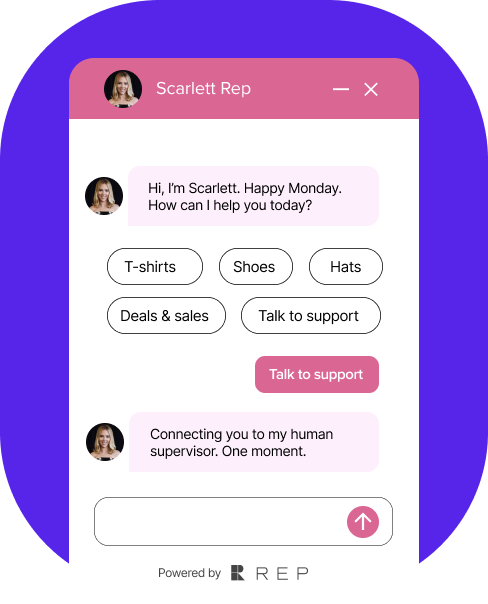
Rep AI is a complete conversational shopping assistant powered by ChatGPT and designed specifically for eCcommerce businesses. The Rep AI concierge constantly is powered by two AIs. One scans the website to keep updated on customer actions. The second AI answers high-level queries, freeing up your live agents to focus on closing deals, and guides shoppers to find products more easily and quickly — just like they would in a brick-and-mortar store.
Why use AI-Powered Marketing Tools?
The inevitable insertion of AI features into marketing and eCommerce tools isn’t the only reason you should invest in them. These algorithms have the power, right now, to transform your eCommerce business for the better in the following ways:
- Save time and money: By using artificial intelligence to automate various marketing tasks, business owners can significantly reduce the amount of time and labor spent on such tasks, leading to cost savings. For example, AI can automate tasks like A/B testing, campaign analytics, or content creation, thereby freeing up resources that can be invested elsewhere in the business.
- Real-time personalization: AI-powered tools can analyze customer data in real-time to create highly personalized marketing content. This can include personalized product recommendations based on a customer's browsing history or personalized emails based on a customer's previous interactions with the company. Such real-time personalization can enhance customer engagement and lead to higher conversion rates.
- Increase ROI: By enabling more effective targeting, personalization, and automation, AI can significantly improve the return on investment (ROI) of marketing campaigns. AI algorithms are capable of making accurate predictions about customer behavior, which can help eCommerce businesses tailor their marketing strategies in a way that maximizes customer engagement and sales, leading to a higher ROI.
You know what’s better than one marketing AI? Two. Meet all your eCommerce marketing needs with Rep AI and ChatGPT.
Quick Answers and Applications
How do AI-driven email marketing and lead generation tools help increase sales for eCommerce businesses?
AI-driven email marketing and lead generation tools supercharge eCommerce sales through hyper-personalization at scale. By analyzing customer data, these tools deliver precisely targeted messages to the right person at the optimal time, dramatically improving engagement rates. Marketing analytics capabilities provide deep insights into campaign performance, allowing for continuous optimization and more efficient allocation of marketing resources.
Strategic Application
AI transforms email marketing and lead generation for eCommerce businesses through:
Personalization That Drives Conversions
- AI analyzes purchase history, browsing behavior, and engagement patterns to create uniquely tailored content for each subscriber
- Machine learning algorithms determine product recommendations most likely to convert based on customer preferences and behaviors
- Dynamic content adjusts in real-time based on customer actions, creating relevant experiences that static emails cannot match
Optimized Campaign Timing and Delivery
- AI determines the ideal send time for each individual subscriber based on their historical engagement patterns
- Predictive analytics identifies when customers are most receptive to different types of messages and offers
- Send frequency optimization prevents email fatigue while maintaining optimal engagement levels
Advanced Segmentation Beyond Basic Demographics
- AI creates micro-segments based on predicted future behaviors like purchase likelihood or churn risk
- Behavioral triggers automatically deploy targeted messaging sequences based on specific customer actions
- Interest-based clustering groups customers with similar preferences for more relevant communications
Data-Driven Performance Optimization
- Marketing analytics platforms identify which email elements drive the highest engagement across different segments
- AI-powered A/B testing continuously optimizes subject lines, content, and CTAs for maximum performance
- Attribution modeling connects email engagement to conversion paths, revealing the true impact of campaigns
In what ways can natural language processing and sentiment analysis optimize SEO and boost conversion rates for online stores?
Natural language processing and sentiment analysis transform SEO and conversion rates for online stores by enabling more intelligent keyword targeting, enhanced search functionality, and data-driven content optimization. These AI technologies analyze how customers naturally communicate about products, allowing stores to create more relevant content that matches search intent and drives conversions through personalized experiences.
Strategic Application
NLP and sentiment analysis offer powerful advantages for eCommerce SEO and conversion optimization:
Enhanced Keyword Intelligence and Content Relevance
- Target conversational long-tail keywords that match how real customers search for products
- Analyze competitor content and customer reviews to identify high-converting semantic terms
- Create product descriptions and category pages optimized for specific user intents and questions
Intelligent On-Site Search Optimization
- Implement NLP-powered search that understands natural language queries, misspellings, and synonyms
- Analyze search patterns to identify product naming and categorization opportunities
- Prioritize search results based on sentiment analysis of product reviews and conversion rates
Data-Driven Personalization
- Dynamically adjust product descriptions based on customer preferences and previous interactions
- Create personalized landing pages that address specific search intents and customer segments
- Develop recommendation engines that suggest complementary products based on semantic relationships
Customer Feedback Intelligence
- Analyze reviews and social media mentions to identify common pain points and competitive advantages
- Incorporate positive sentiment keywords from customer feedback into product descriptions
- Address negative feedback themes proactively in FAQs and product information
More from REP AI

AI Shopping Assistant: How It Guides Ecommerce Shoppers in 2026
When a shopper hesitates, timely guidance can help them decide what to explore next. An ai shopping assistant can answer product questions, narrow choices, and guide product discovery without taking control of checkout. Shoppers get help comparing options, while still making the purchase decision th...

Benefits of Agentic Commerce: How AI Can Help Brands Sell and Serve Better
When a shopper hesitates, a useful answer can turn a moment of uncertainty into a chance to help, rather than a sale lost or a question left unanswered. The benefits of agentic commerce come from connecting shopper intent with timely action, then learning from those interactions to improve sales gui...
Want to see what your store would do with Rep?
Run your real Shopify catalog through the simulator before you commit to anything. No sales call required.

