


Modern Ecommerce CX 101: Agentic AI vs Conversational AI
Quick Summary
Most e-commerce AI either follows scripts, handles conversations without acting, or automates actions without conversational depth. Rule-based systems break down with complexity. While conversational AI talks about products, it cannot sell them. Agentic AI executes but often lacks the human-like dialogue shoppers expect. The winning architecture combines both inside the same interaction.
Why the Right Kind of AI Matters More Than Ever
The budget went up, and traffic followed, but conversions often don’t get the memo. Retailers that deployed AI saw 14.2% sales growth compared to 6.9% for those that had not (Statista). The real question was never if you should use AI. It's about which one is actually worth your time. This piece breaks down three generations of e-commerce AI, shows where each fails in real buying journeys, and explains why the hybrid model is winning.
Why Listen to Us
Rep AI powers agentic commerce experiences for 550+ Shopify and Shopify Plus brands. The platform delivers 4x site conversion and 26x client ROI, and was named Bot Solution Provider of the Year at the RetailTech Breakthrough Awards. It goes live in six clicks with a 30-day free trial and a 5X ROI money-back guarantee.
Over time, we’ve seen e-commerce teams evolve from rule-based automation to conversational AI, and now to fully agentic systems. Along the way, we’ve closely measured which technical decisions actually drive revenue, and which ones only look impressive in demos.
Three Types of E-commerce AI
Before talking about where the market is headed, you need a shared vocabulary. At the end of the day, the AI you choose shapes how your shoppers feel and what shows up in your revenue.
Rule-Based Systems
Rule-based systems are pre-programmed. If a customer says X, respond with Y. Every possible path must be manually designed. There is no learning, adaptation, or understanding of context.
A shopper on a fashion site asks, "Do you have this dress in blue?" The system checks whether "blue" plus "dress" matches an existing flow. If it does, the shopper gets a canned response. If not, they land on a generic category page with hundreds of irrelevant results and a message that reads, "I don't understand. Here are some links."
More e-commerce brands run this architecture. Tidio's flow builder approach, legacy Zendesk bots, and countless basic Shopify chat apps all operate on this logic. Many platforms that market themselves as AI are still rule-based underneath.
The scaling problem is structural. In e-commerce, shoppers ask infinite variations of questions across thousands of SKUs. A customer might ask about fabric weight, washing instructions, and whether an item runs large, all in the same conversation. Adding more rules to cover these combinations only adds complexity and failure points.
This is the architecture behind the "bad chatbot experience" that made many brands give up on AI entirely. The frustration was not with AI as a concept but with rule-based systems pretending to be intelligent.
Conversational AI
Conversational AI understands natural language, generates contextual responses, and holds multi-turn conversations that feel human. It does not need pre-built flows, and it interprets intent and responds dynamically.
A shopper says, "I'm looking for something for my mom's birthday. She likes gardening and hates anything too flashy." Conversational AI understands the context, asks a follow-up about budget, and narrows thousands of products down to a curated shortlist. That is a massive improvement over "I don't understand your question."
Most conversational AI in e-commerce is reactive. It waits for the shopper to initiate contact and can recommend a product, yet it cannot add that product to the cart. While it can sense a customer's frustration, it cannot resolve the issue autonomously. Every conversation ends with a suggestion, but not with a completed action.
There is also a deployment problem. Most conversational AI was built specifically for support deflection, like FAQs, order tracking, and return instructions. When your AI only handles post-purchase problems, you are ignoring the vast majority of visitors who never buy in the first place.
The revenue opportunity is not in the tickets your support team handles. It is in the shoppers who leave your site without ever starting a conversation, the ones who browsed, hesitated, and closed the tab. Only 1% of e-commerce visitors convert on average. Conversational AI deployed for support does nothing for the other 99%.
Agentic AI
Agentic AI does not just understand and respond. It perceives context, makes goal-oriented decisions, and takes autonomous action. Agentic AI combines reasoning with execution.
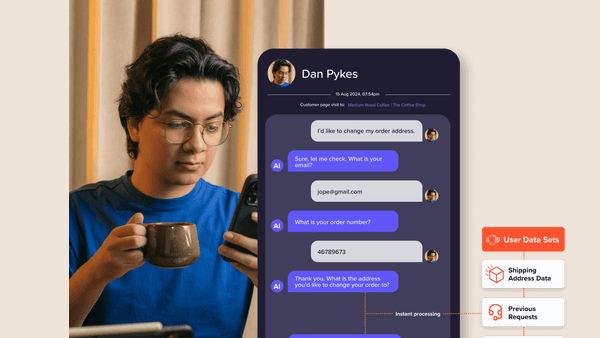
A shopper mid-conversation asks whether her loyalty points apply to the item in her cart. An agentic AI checks her account in real time, confirms the balance, applies the discount, and adjusts the cart total. Not only that, but it also suggests a complementary product that pairs well with her purchase. All of this happens inside the conversation without the shopper navigating to a separate page or waiting for a human agent.
In a single conversation, an agentic system can modify a cart, process a return, and validate a damaged product through image recognition. It can also apply a discount code, upsell a complementary item, and guide a shopper to checkout. All without breaking the conversational flow.
Google Cloud calls this the "agentic commerce era," describing it as the industry's most significant transformation. Shopify launched agentic storefronts for millions of merchants in early 2026. While Amazon built Rufus. The entire e-commerce ecosystem is moving in this direction.
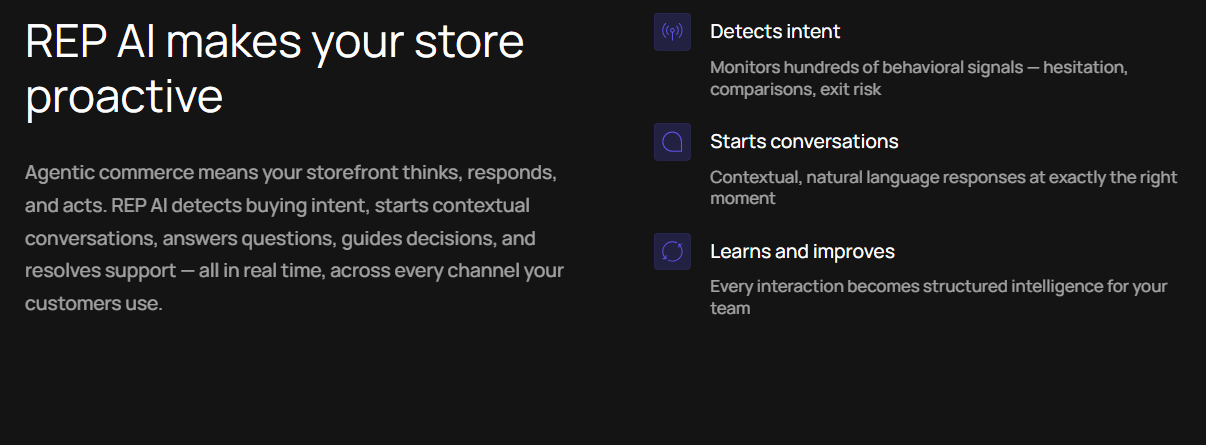
The best agentic systems also go beyond tracking clicks and scroll depth. They sense frustration, choice overload, hesitation, and buying confidence. This behavioral and emotional intelligence layer determines when a shopper is about to disengage and why, then acts on that signal in real time.
A shopper frustrated by sizing confusion gets a different intervention than one overwhelmed by too many options. Whereas a returning customer who is comparing two products gets a different conversation than a first-time visitor who has not yet found the right category. This is a compounding advantage that flow-based systems cannot replicate. This is because it requires the AI to perceive, decide, and act in real time rather than follow a predetermined path.
Where Each System Breaks in Real Buying Journeys
Definitions are useful. Seeing how each generation handles real e-commerce scenarios makes the difference feel visceral. Here are some reasons why each system breaks in real buying:
The Hesitant First-Time Buyer
Let’s say a new visitor lands on a specialty skincare brand's site. She has been browsing for six minutes, looked at three products, and has not added anything to the cart. She is about to leave.
What a Rule-Based System Does
It does nothing meaningful. No trigger exists for this specific behavioral pattern. It fires a generic "Can I help?" pop-up that is immediately closed because it is irrelevant to what she was actually looking at. The shopper leaves, and the sale is lost.
What Conversational AI Does
If she initiates a chat, it answers her questions well. It can hold a nuanced conversation about ingredients, skin types, and product differences. The problem is that it does not reach out proactively, and it waits. Most hesitant shoppers never initiate a conversation. They browse, hesitate, and leave without ever engaging.
What Agentic AI Does
Agentic AI detects the behavioral pattern of disengagement in real time. It proactively initiates a relevant conversation based on the specific products she has viewed: "Are you looking for something for sensitive skin? I noticed you've been exploring our gentle collection."
Agentic AI asks a qualifying question about her skin concerns and narrows the catalog through natural dialogue. It shows visual product recommendations with images directly in chat for easy browsing on mobile and desktop, and enables a one-click add to cart. The conversion happens inside the conversation.
The Revenue Difference
The first two approaches lose the sale, and the third captures it. Multiply that across thousands of sessions per month, and the revenue impact becomes structural, not incremental.
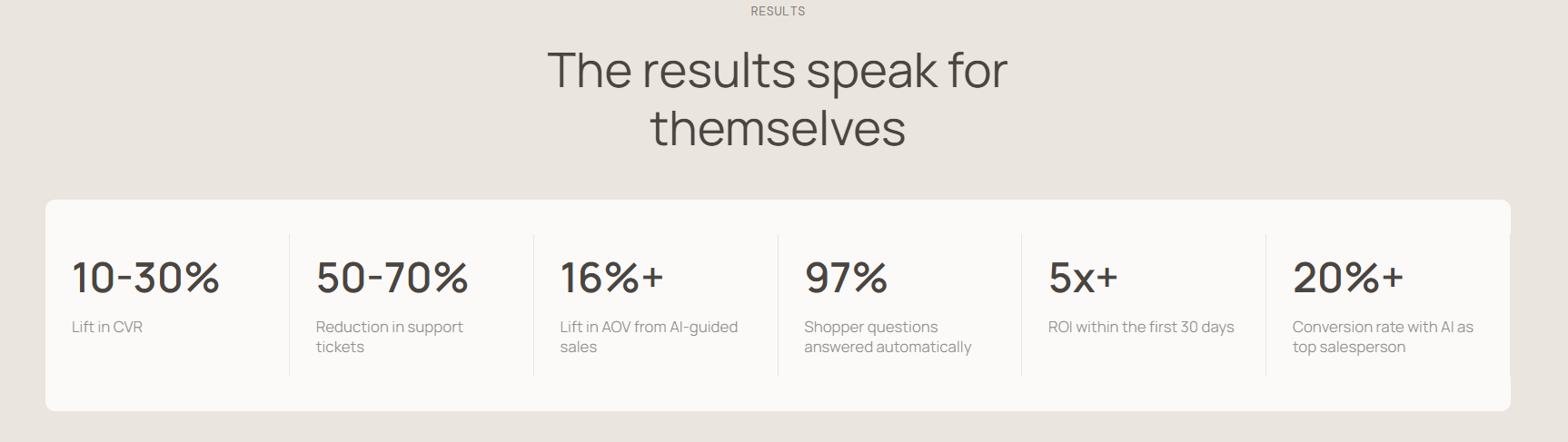
This is Rep AI's behavioral algorithm engagement at work. The platform reaches out proactively only to visitors about to disengage, based on real-time behavioral signals and buying journey context. It does not fire messages at every visitor, which would annoy high-intent buyers already heading to checkout. Brands using this approach see 10-30% conversion lift within the first 30 days.
Rep AI runs distinct sales skills per page context. A homepage skill for new visitors has a different goal and different AI behavior than a product page skill for returning customers. Each skill can be customized by the brand or left for the AI to optimize autonomously.
The Support Request That Becomes a Sale
An existing customer contacts a brand about a damaged item she received. Here’s what each system will do:
What a Rule-Based System Does
It creates a support ticket. A human agent handles it hours later, and the customer has to wait.
What Conversational AI Does
It understands the complaint, expresses empathy, and provides return instructions. The interaction resolves the immediate issue, but it does nothing beyond that. So, the customer leaves with a return label, not with a reason to buy again.
What Agentic AI Does
Agentic AI asks the customer to upload a photo of the damaged item. It validates the damage using image recognition, confirming the product matches what the customer described. The refund is processed automatically, with no human agent ever touching the case.
Then, because it knows the customer's purchase history and preferences, it offers a replacement with a loyalty discount and suggests a complementary product. What started as a support interaction becomes a sales moment. The entire flow, from complaint to refund to intelligent cross-sell, happens end-to-end without human intervention.
Why This Matters
The architectural difference defines the outcome. Support-only AI treats every interaction as a cost to minimize. Whereas Agentic AI treats every interaction as a potential revenue moment.
Rep AI's agentic support skills manage workflows like this autonomously, from image validation to refund processing to intelligent cross-sell. Brands toggle these skills inside the Rep Console with zero development and zero flow building required. The AI handles the entire workflow because it was built to act, not just respond.
From Scripts to Autonomy
E-commerce AI hasn’t evolved in a straight line. It has gone through clear phases, each redefining what’s actually possible. To understand where things are heading, it helps to look at how these systems have progressed:
The Three Generations
- Generation 1 (2015-2020): This was the era of flow builders, decision trees, and keyword matching. Configuration took weeks or months and broke the moment a shopper went off-script. This was the period of "chatbot backlash," when merchants tried chat, shoppers got frustrated by robotic dead-end responses, and many brands abandoned the technology entirely.
- Generation 2 (2020-2024): This brought natural language processing, context awareness, and generative responses. This was a real improvement. These systems could hold multi-turn conversations and handle unexpected queries. They were primarily deployed for support deflection, though. The AI could talk about products but could not sell them. It could understand a shopper's frustration but could not resolve it.
- Generation 3 (2024-present): It is defined by autonomous decision-making, multi-step task execution, and real-time action. AI that reads behavioral signals, takes initiative, and completes transactions inside the conversation. The e-commerce impact is direct with conversion lift, AOV increase, and cart recovery. These are measurable sales outcomes, not just support savings. McKinsey projects the global agentic commerce opportunity at $3 to $5 trillion by 2030.
Where Most Brands Actually Are
Most e-commerce brands believe they have Generation 2 or 3 AI when they actually have Generation 1. The platform they deployed might use an LLM for language generation, yet the underlying logic is still flow-based.
It looks like modern AI on the surface and behaves like a decision tree underneath. The gap between where the market thinks it is and where it actually is represents both a risk and an enormous opportunity for brands willing to move first.
Rep AI is already replacing approximately 5% of mobile website experiences for leading brands. This is a new layer of the shopping experience, one that was built from the ground up to be both deeply conversational and fully agentic. That dual architecture is why the platform delivers 20%+ conversion rates and 16%+ higher average order values, not just ticket deflection.
Let’s Talk About The Market Gap
The AI tools available to e-commerce brands today are not failing because of a lack of innovation. They’re limited by how they’re built. Thus, the current e-commerce AI landscape forces a choice that should not exist.
You can have conversational AI that is good at talking, or agentic AI that is good at acting. To understand the gap, you have to look at how current platforms force trade-offs that shouldn’t exist.
Support-First Platforms Miss Revenue
Platforms like Gorgias, Zendesk, and Intercom bolted conversational AI onto legacy helpdesk infrastructure. Their AI can handle tickets effectively. It cannot drive revenue in real-time chat.
Their agentic capabilities, where they exist, are limited to email workflows, not the live in-session experience where conversion actually happens. They execute actions in email. Rep AI executes actions in chat, where the buying decision is being made.
Flow-Based Platforms Lack True Agency
Platforms like Tidio and Certainly built flow-based systems and layered generative AI on top. They can converse to a degree. Their architecture remains flow-dependent, though. A flow builder with an LLM on top is still a flow builder.
The pre-set paths constrain what the AI can do, and the setup complexity, which can stretch to months for platforms like Zowie, delays time to value significantly.
Why "Or" Is the Wrong Question
No competitor delivers a truly agentic commerce experience that spans the entire buying journey while remaining deeply conversational and proactive based on real-time shopper behavior. They also fail to unify sales, support, and shopper data into a single system, resulting in fragmented experiences instead of one cohesive, intelligent interaction layer.
While everyone else is racing to automate support, the real opportunity is AI that's built to drive revenue. It requires both conversational intelligence and agentic execution working together on the same platform.
For a closer look at how this plays out against specific competitors, see Rep AI vs. Gorgias and Rep AI vs. Zendesk.
How Rep AI Bridges the Gap?
Rep AI was not built as a chatbot with agentic features bolted on, nor as an automation engine with a conversational layer added later. It was engineered from the ground up as a unified agentic commerce platform where conversation and action are inseparable. Here’s how it bridges the gap:
One Brain, Every Channel
Rep AI operates on a single AI brain that powers website chat, email, Instagram, Facebook, and WhatsApp, all from one platform. You train the AI once, and it behaves consistently across every channel, with channel-specific instructions layered on top.
Email responses are longer and more detailed. Chat responses are concise and action-oriented. The AI personality, tone, and brand knowledge carry across every touchpoint.
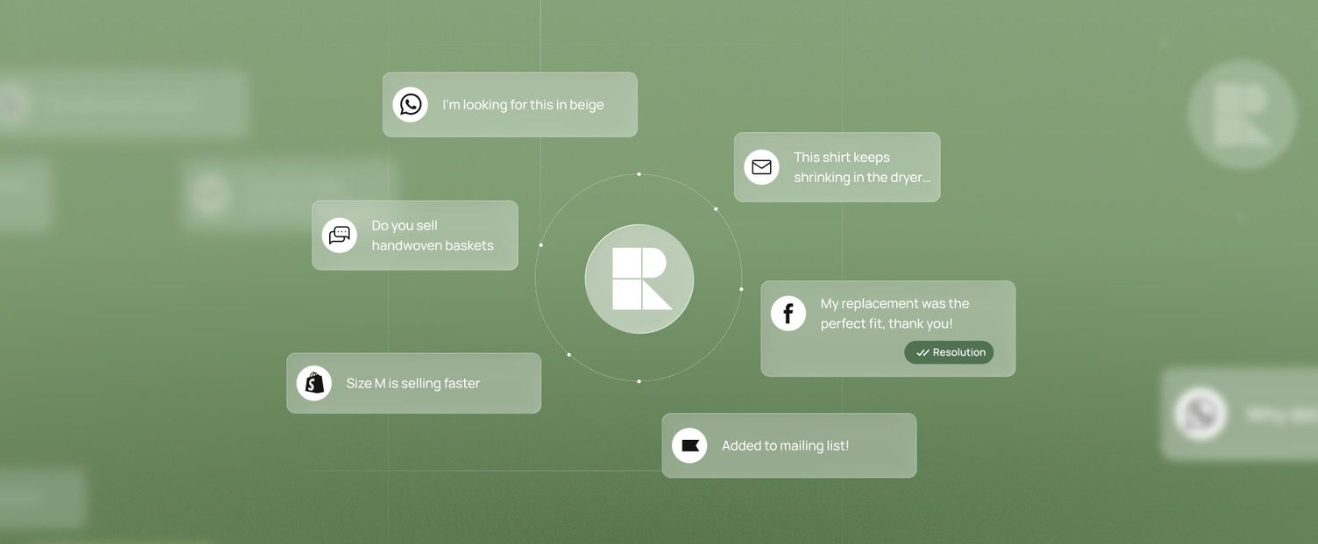
Check out the full integrations list to see how it connects to your existing stack.
Behavioral Intelligence That Acts Before Shoppers Leave
Most competitors rely on static triggers: "If a visitor is on the page for 30 seconds, fire a message." That is rule-based logic wearing a conversational costume.
Rep AI's behavioral algorithm uses adaptive AI to detect when a shopper is about to disengage. It also reads emotional signals like frustration, hesitation, choice overload, and buying confidence.
The right shoppers get the right intervention at the right time, without annoying high-intent buyers who are already heading to checkout. A shopper frustrated by sizing confusion gets a different conversation than one overwhelmed by too many options.
Real Actions Inside the Conversation
Most AI points to a product and hopes for the best. Rep AI delivers one-click add-to-cart, real-time discounts, autonomous returns, and photo-based damage validation. It offers a try-on experience that lets shoppers see themselves in your products without ever leaving the chat. On mobile or desktop, it meets them where they are.
Everything happens inside the conversation without the shopper navigating away. There are no redirects or separate browser tabs, or dead ends where the shopper has to start over.
Shopper Intelligence That Compounds
Every conversation generates intelligence that most platforms discard, like:
- What shoppers are asking about?
- Why are they dropping off?
- What information is missing from your website?
- What are your competitors doing that you are not?
Rep AI's Deep Research analytics hub turns conversation volume into strategic insight, surfacing AI-discovered topics, custom business-specific topics, and actionable recommendations.
The Klaviyo integration syncs conversation topics directly to customer profiles. Shoppers who ask about oily skin are bucketed into an oily-skin segment. Customers who mentioned a competitor get a targeted differentiation campaign. The loop between conversation, intelligence, and marketing action closes.
Full Brand Control, Zero Development
The number one concern brands raise when evaluating AI is control. Rep AI addresses this with a multi-tiered approach. Global AI instructions that apply everywhere, channel-specific overrides for email versus chat, and scenario-specific instructions for individual sales and support skills.
Built-in guardrails prevent the AI from engaging with sensitive topics, misrepresenting your brand, or providing inappropriate advice. Even without a single custom instruction, the AI will always represent your brand appropriately.
The platform is SOC 2 compliant and adheres to GDPR and CCPA requirements. It goes live in six clicks with a 30-day free trial and a 5X ROI money-back guarantee, because the platform is confident enough in the outcomes to put its pricing on the line.
Pricing is built the way the product is built, which is around growth. You pay based on visitors, and success is measured in conversion rates, order values, and how fast you're selling. It sits on the marketing P&L, where there's room to invest. The platform is for people who care about revenue, not just those counting support tickets.
What This Means for Your Business?
The shift to agentic commerce isn’t just a technology upgrade. It changes how your store converts, supports, and understands shoppers. Here’s how that plays out depending on where your business stands today:
If You Have Tried AI and It Disappointed You
You are not alone. Most e-commerce AI on the market is either rule-based or conversational-only. The experience of deploying a chatbot that frustrated shoppers and failed to deliver on its promises has made many brands skeptical of the entire category. Agentic plus conversational is a fundamentally different architecture and produces a fundamentally different result.
If Conversion Is Flat Despite Rising Ad Spend
The shoppers are arriving. Your AI should be converting them. Rep AI's behavioral algorithm engages visitors about to leave with contextually relevant conversations that guide them to make a purchase.
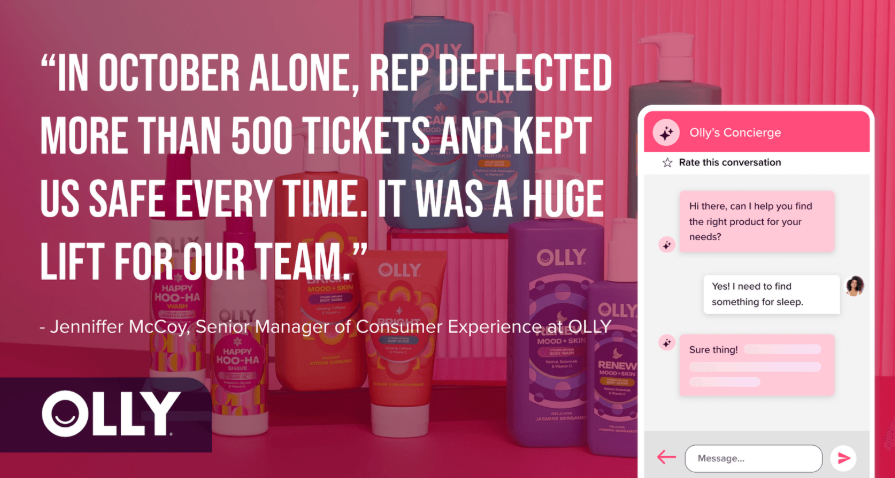
Country Wine & Spirits saw a 13% conversion rate with 97% of customer requests handled by AI. It is what happens when the AI is built to sell, not just support.
If You Do Not Know Why Visitors Leave Your Site
This is the shopper intelligence gap most brands do not know they have. You can see what pages visitors viewed. You cannot see what questions they had, what concerns held them back, or what information was missing.
Deep Research surfaces what your shoppers are asking, why they are leaving, and what information is missing from your site. Then it gives you AI-generated recommendations to fix it.
The shift from conversational to agentic commerce is not coming. It is here. Google, Shopify, and Amazon have all moved. The brands winning in e-commerce in 2026 treat AI not as a support cost center but as a revenue engine. The question for your business is whether your AI strategy is keeping pace with the shift or still optimizing for the previous generation.
Rep AI was built for this moment. An agentic commerce platform that unifies sales, support, and shopper intelligence into a single AI. It’s available on Shopify, Shopify Plus, and Salesforce Commerce Cloud, with more platform integrations coming soon. See what agentic plus conversational looks like in your store. Start your 30-day free trial. No credit card required.
Want to see it in action first? Try the AI Concierge Simulator with your own product catalog before you commit.
More from REP AI

AI Shopping Assistant: How It Guides Ecommerce Shoppers in 2026
When a shopper hesitates, timely guidance can help them decide what to explore next. An ai shopping assistant can answer product questions, narrow choices, and guide product discovery without taking control of checkout. Shoppers get help comparing options, while still making the purchase decision th...

Benefits of Agentic Commerce: How AI Can Help Brands Sell and Serve Better
When a shopper hesitates, a useful answer can turn a moment of uncertainty into a chance to help, rather than a sale lost or a question left unanswered. The benefits of agentic commerce come from connecting shopper intent with timely action, then learning from those interactions to improve sales gui...
Want to see what your store would do with Rep?
Run your real Shopify catalog through the simulator before you commit to anything. No sales call required.

