


E-commerce Quizzes: Examples, Limitations, and a Better Alternative in 2026

Quick Summary
Product recommendation quizzes guide shoppers through catalogs using rule-based questions. They work well for high-consideration products and often capture leads. However, quizzes are passive, static, and disconnected from the rest of the shopping experience. But Rep AI fixes these gaps by proactively engaging visitors. enabling in-chat purchases, and revealing shopper behavior insights.
Are Product Recommendation Quizzes Still Worth It in 2026?
Product recommendation quizzes have become one of the most widely adopted ways for e-commerce brands to personalize the shopping experience. ThirdLove, Warby Parker, Jones Road Beauty, Gainful, Sephora, and Function of Beauty all use them.
For certain products and categories, quizzes work well. They help shoppers who don't know where to start, and they give brands a way to collect emails and zero-party data in the process.
But quizzes also have structural problems that most brands run into quickly.
They rely on shoppers opting in, and can't adapt to what someone is actually doing on the site. Also, once the results page loads, the experience is over.
This article covers what e-commerce quizzes are, how the most common formats compare. It also shares real examples from DTC brands, and what a better approach to product discovery looks like in 2026.
Why Listen to Us
Rep AI powers conversational AI for 550+ e-commerce brands, with over 100 million shopping sessions analyzed. We work with Shopify Plus merchants across DTC verticals, including apparel, beauty, food and beverage, and consumer electronics.
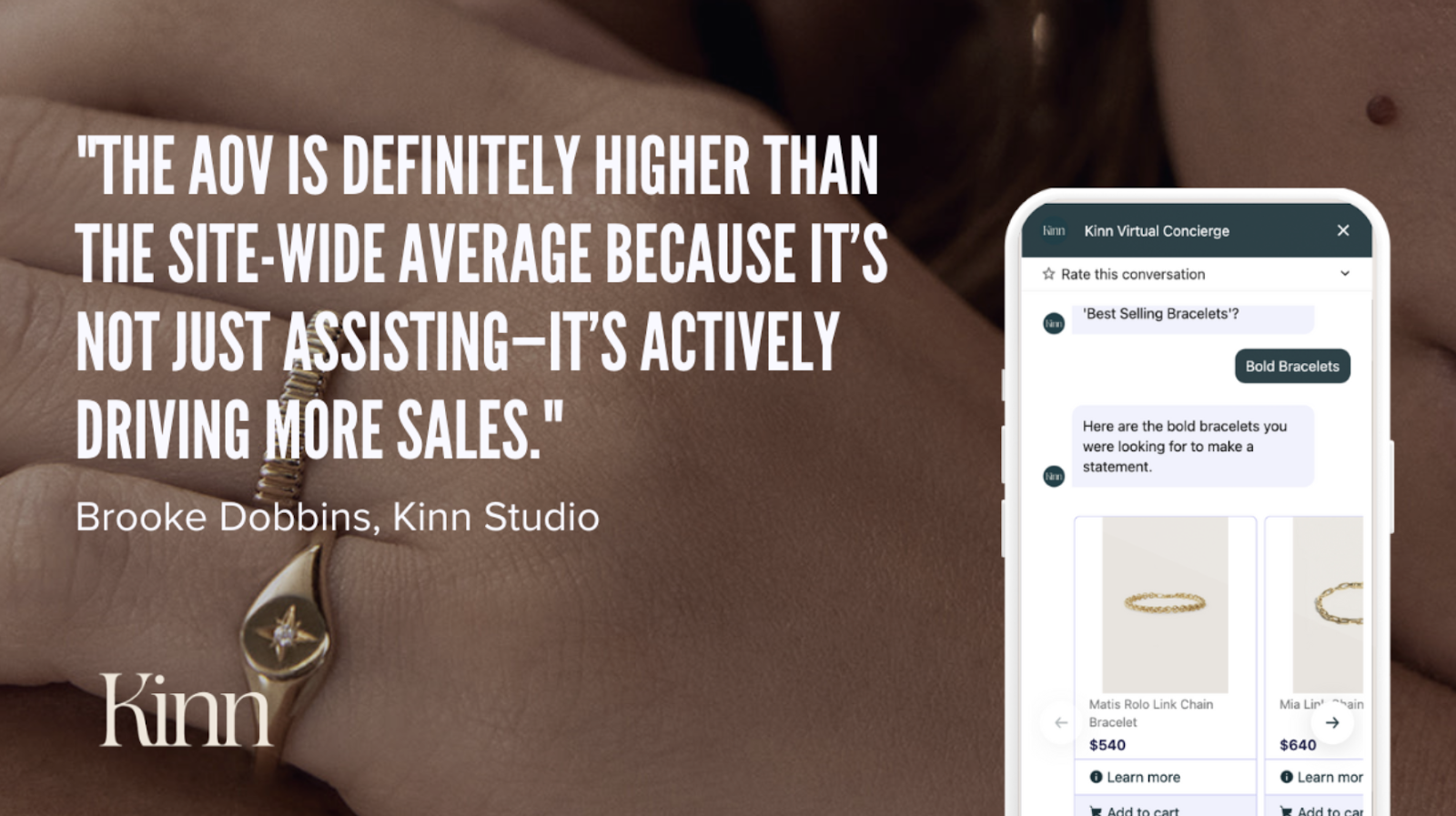
This article draws on that experience, combined with independent research, to provide an honest analysis of quizzes. It explains where quizzes are effective, where they fall short, and when an alternative approach is a better fit.
What Is a Product Recommendation Quiz for E-commerce?
A product recommendation quiz is an interactive experience embedded in an e-commerce store that asks shoppers a series of questions and uses their answers to suggest products. The logic behind it is usually rule-based. For example, if a shopper selects "dry skin" and "sensitive," the quiz maps those answers to a pre-set group of products tagged with those attributes.
Most quizzes sit on a dedicated landing page or pop up during browsing. They typically run 3-8 questions, end with a results page showing one or more product recommendations, and ask for an email address somewhere in the flow. Beyond product matching, quizzes serve two other purposes for brands:
- Lead Capture: Most quizzes require an email before showing results, feeding quiz-takers directly into post-quiz email flows.
- Zero-party Data Collection: Every answer gives brands direct insight into what shoppers care about without relying on third-party cookies or browsing history.
Common E-commerce Quiz Formats
Not all product recommendation quizzes work the same way. The format depends on what the brand sells, how complex the purchase decision is, and what the quiz is trying to accomplish. Here's how the most common formats compare:
Most e-commerce quiz apps support all of these formats with conditional logic, branching, and integrations with email platforms like Klaviyo.
Where Ecommerce Quizzes Work
Quizzes aren't broken across the board. They deliver real value in a few specific scenarios:
- High-Consideration Products That Need Guidance: Lingerie, foundation, supplements, and skincare routines are categories where shoppers genuinely don't know what to pick. A few targeted questions remove enough uncertainty to get them to check out.
- Large or Complex Catalogs: If a store carries hundreds of SKUs across multiple categories, a quiz narrows the field fast. Instead of browsing dozens of options, the shopper answers a few questions and gets one or two recommendations.
- Top-of-Funnel Lead Capture: For brands running paid traffic, especially cold traffic from TikTok or Meta, a quiz gives shoppers a reason to engage. It also encourages them to provide their email even before they’re ready to make a purchase.
Outside these scenarios, quizzes lose their value, and even within them, there are structural problems that limit what a quiz can actually do.
Four E-commerce Quiz Examples From Real Companies
Some of the biggest E-commerce brands have built entire acquisition funnels around product quizzes. Here's how four of them use quizzes today and what makes each one work:
1. ThirdLove - Fit Finder Quiz
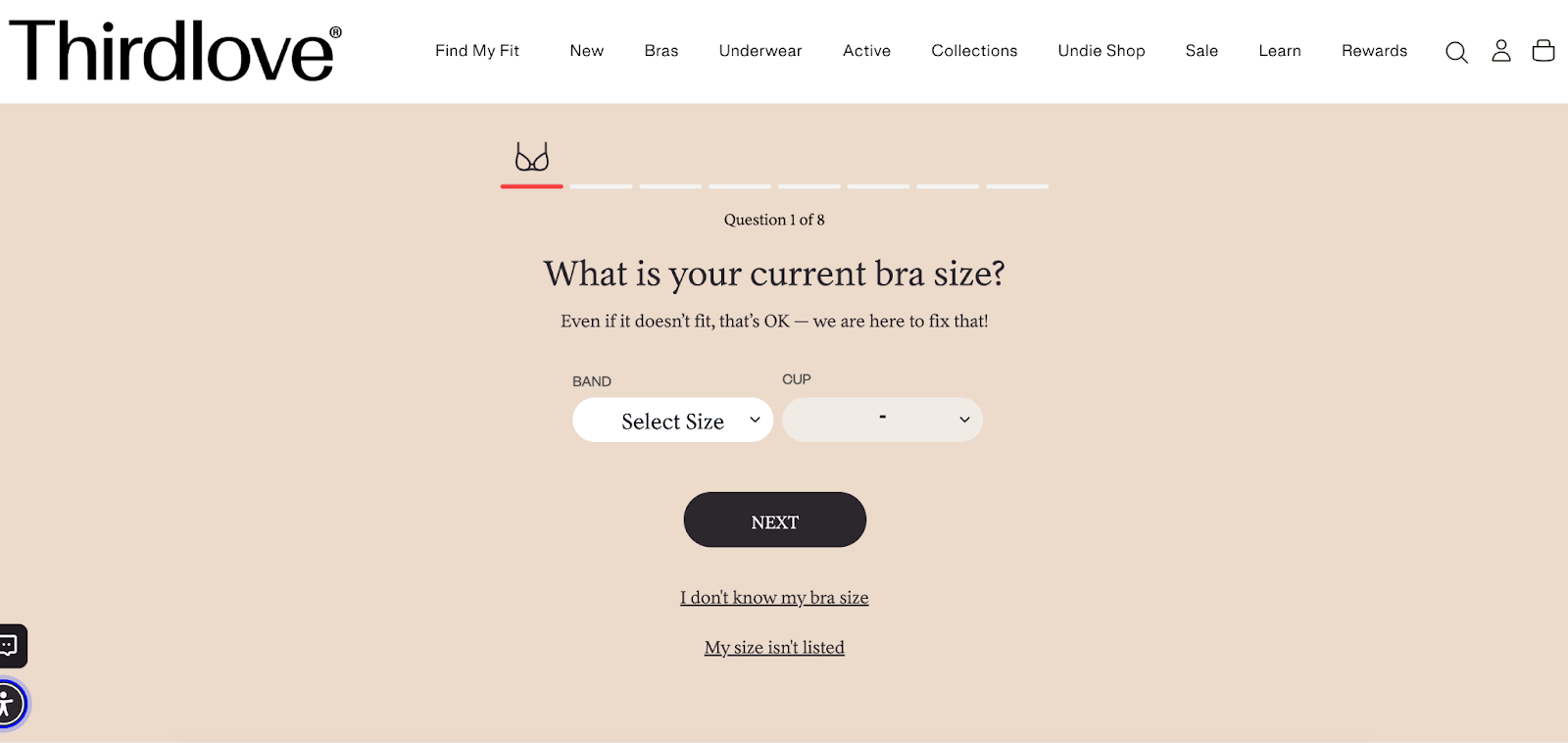
ThirdLove built its brand around taking the bra-fitting process online. Their quiz asks about current bra size, fit issues, strap comfort, and style preferences, then recommends a specific bra and size. Over 19 million people have taken it.
The quiz also feeds into abandoned cart emails with personalized picks based on quiz answers. It works because the product is hard to buy without guidance, as most women wear the wrong size and know it.
2. Jones Road Beauty — Shade Matching Quiz
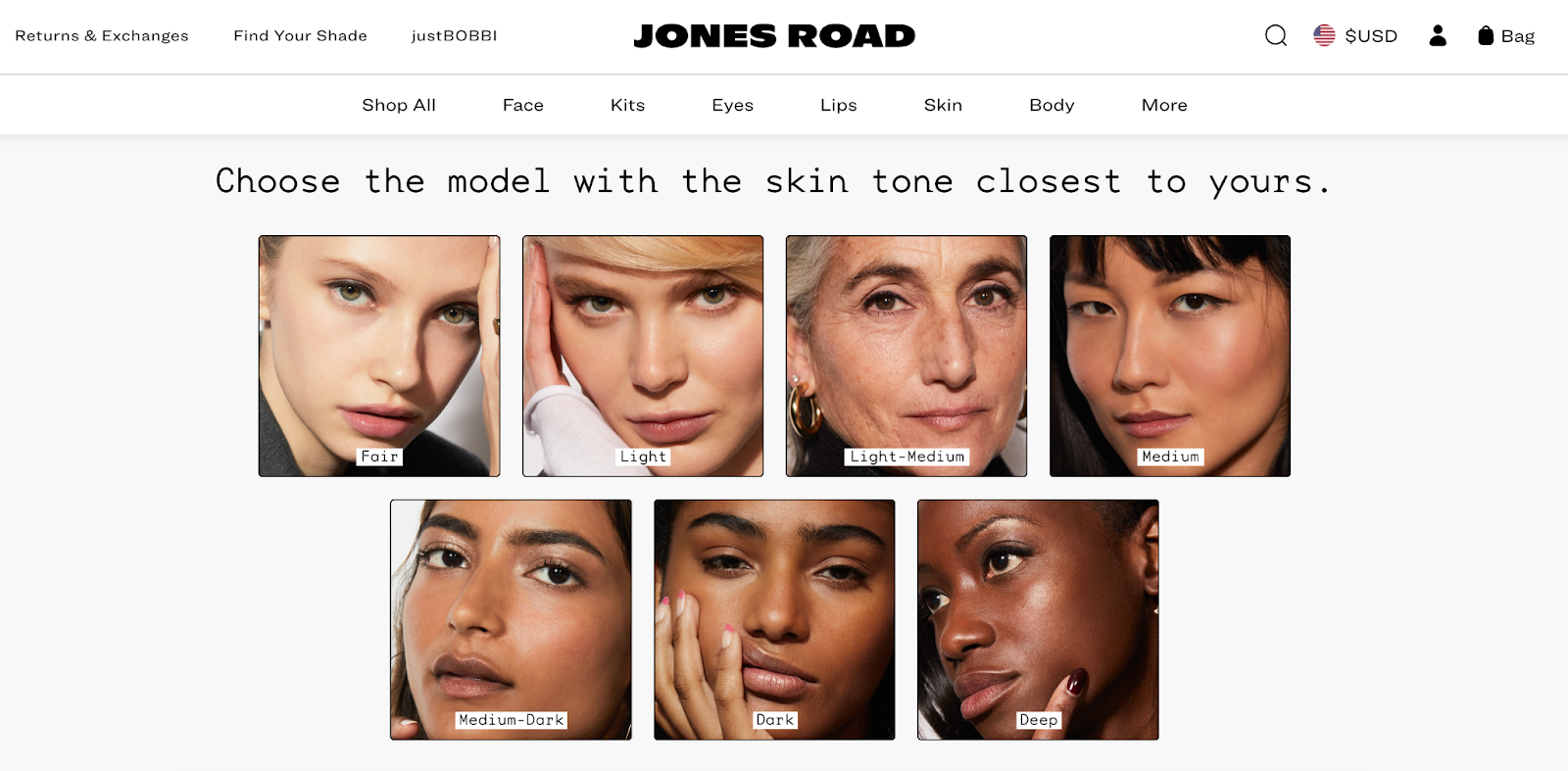
Jones Road Beauty runs multiple quizzes, one for their Miracle Balm, one for foundation, and one for face pencil. Each asks shoppers to match their skin tone to photos of real models, then recommends the closest shade.
Their Miracle Balm quiz reportedly converts at 20% and increases AOV from $60 to $90. The brand also uses quiz data to drive TikTok ad funnels, sending cold traffic to an advertorial first, then into the quiz.
3. Gainful — Personalized Supplement Quiz
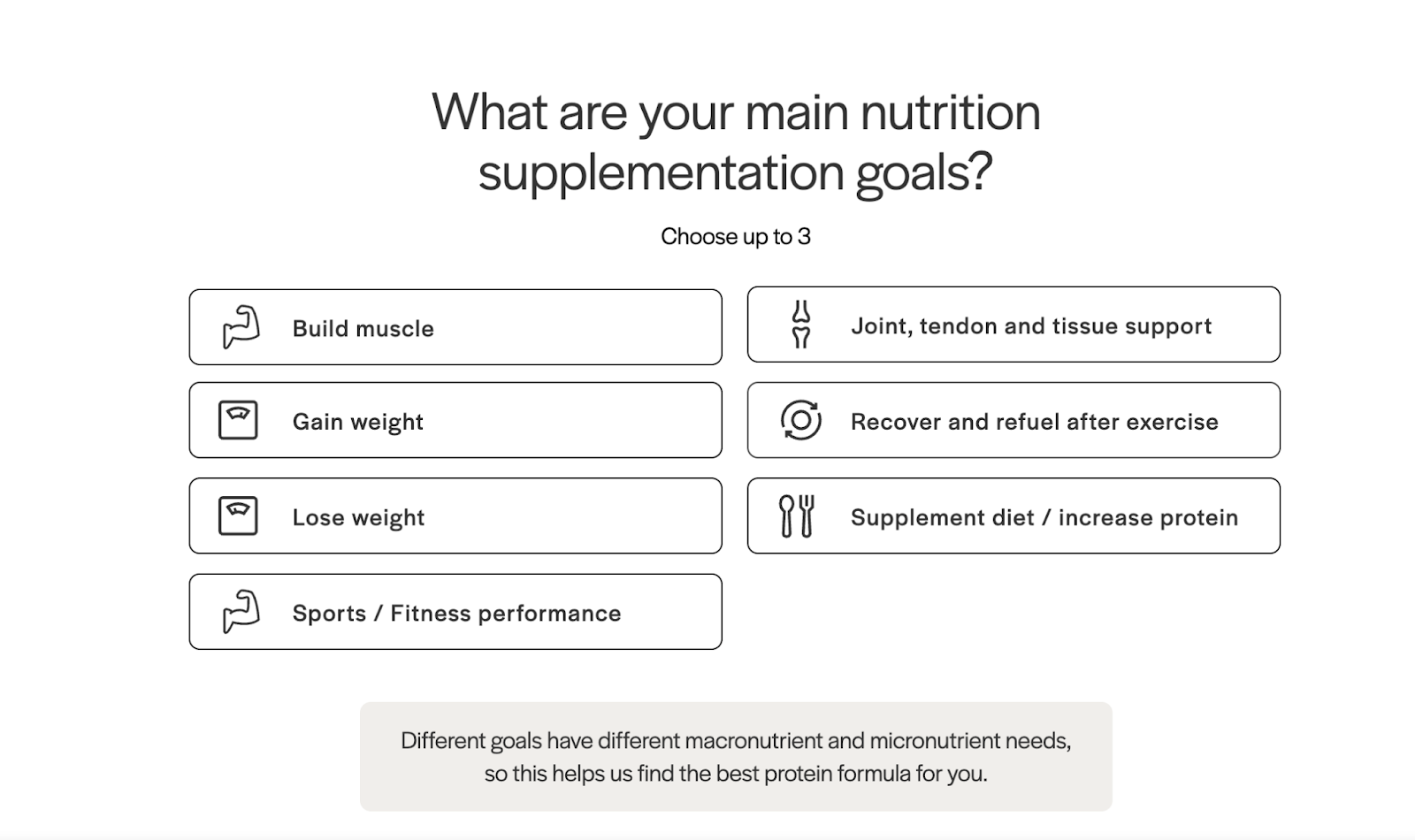
Gainful takes quizzes further than most. You can't buy their protein powder unless you take the quiz first. It asks about your fitness goals, dietary restrictions, activity level, and flavor preferences, then creates a custom formula with your name on the packaging.
This works because supplements are confusing to shop for, and shoppers want to feel like what they're buying was made for them.
4. Trade Coffee — Coffee Personality Quiz
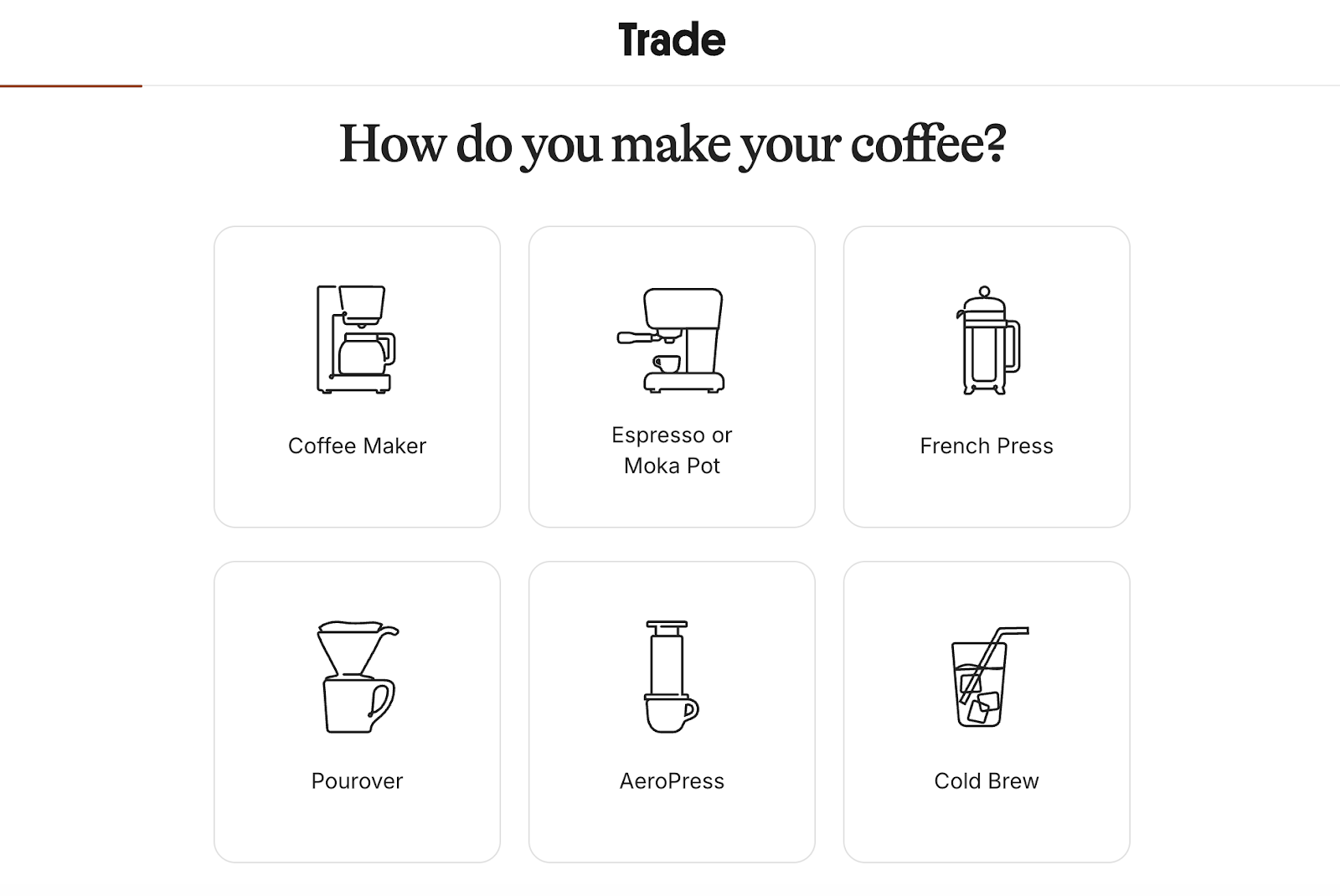
Trade Coffee's seven-question quiz asks about brewing method, roast preference, and how adventurous you are with new flavors. If you don't know your preference, you can answer "I defer to you" on certain questions.
The quiz recommends a specific roasted-to-order coffee from their catalog of independent roasters. It works well for first-time buyers who are overwhelmed by options, but repeat customers generally skip it and order directly.
Where E-commerce Quizzes Fall Short
The scenarios above are where quizzes do their best work. But even in those cases, they have structural limitations that are hard to design around. Here are some scenarios where quizzes fall short:
- They wait for Shoppers to Opt In: A quiz only works if someone clicks "Take the Quiz." That means every shopper who doesn't, the ones browsing product pages, comparing options, or about to leave, gets no guidance at all.
- Static Logic Can't Adapt in Real Time: Quiz recommendations are based on pre-mapped rules set by the brand. If a shopper's answers don't fit neatly into the logic, the recommendation is off. The quiz can't adjust based on what the shopper does after the results page, what they click on, what they hesitate on, or what they ignore.
- The Results Page Is a Dead End: Once the quiz shows its recommendations, the experience is over. There's no follow-up question, no way to say "not quite, show me something else," and no conversation. The shopper either clicks through to a product page or leaves.
- Return Visitors Get the Same Experience: A first-time visitor and a repeat customer who has already bought from a previous quiz recommendation both see the same quiz. There's no memory, no context from previous visits, and no way to adjust the experience based on purchase history or browsing behavior.
- You Get Completion Data, Not Shopper Intelligence: Quiz platforms show completion rates, drop-off points, and which products are most recommended. That helps you improve the quiz. It doesn't tell you why shoppers are leaving your site or what questions they had that your store didn't answer.
A Better Alternative: How Rep AI Replaces the Quiz Funnel
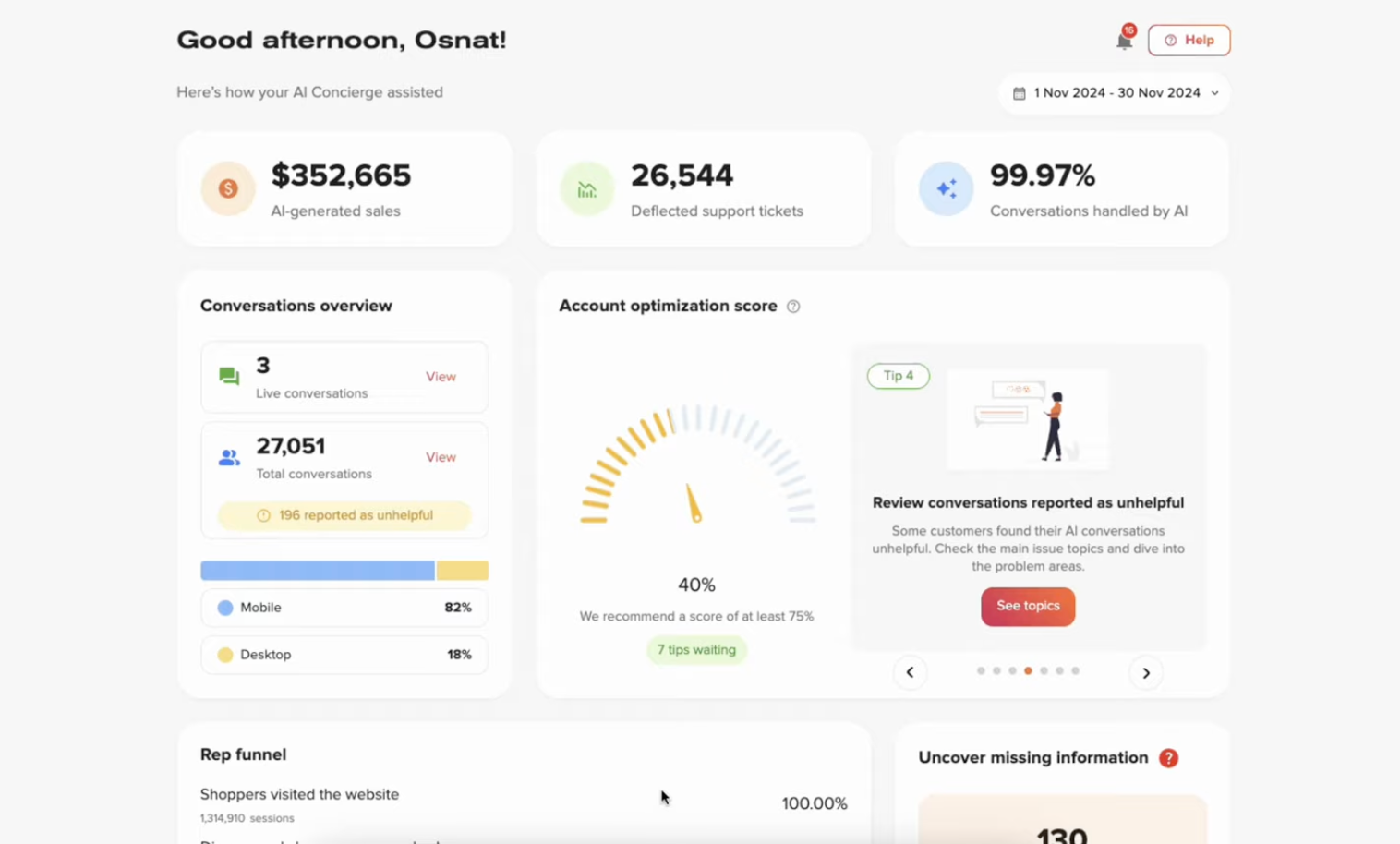
Rep AI is an agentic commerce platform built for Shopify Plus brands. Instead of waiting for shoppers to start a quiz, it uses behavioral AI to detect when visitors are disengaged, confused, or about to leave and automatically starts a conversation. Here are its key features that address the limitations quizzes can’t solve:
Behavioral AI for Proactive Engagement
Quizzes only work when a shopper clicks “Take the Quiz.” Everyone else browsing, comparing, or about to leave gets no guidance.
But Rep AI’s behavioral algorithm detects hesitation across your entire site and automatically engages visitors. This allows brands to intervene at the exact moment shoppers start dropping off.
For many brands, this is where the biggest conversion gains come from. Proof Wallets, for example, found that shoppers who were engaged by Rep AI before leaving converted at 33%, with one in eight orders traced back to a Rep-assisted conversation, none of which required a shopper to opt into anything.
Rep AI’s key capabilities include:
- Identifies exit intent with 92% accuracy.
- Engages disengaged visitors without interrupting high-intent buyers.
- Performs 4× better than traditional pop-ups.
- Helps recover carts before shoppers leave the site.
Adaptive Conversations for Real-Time Product Guidance
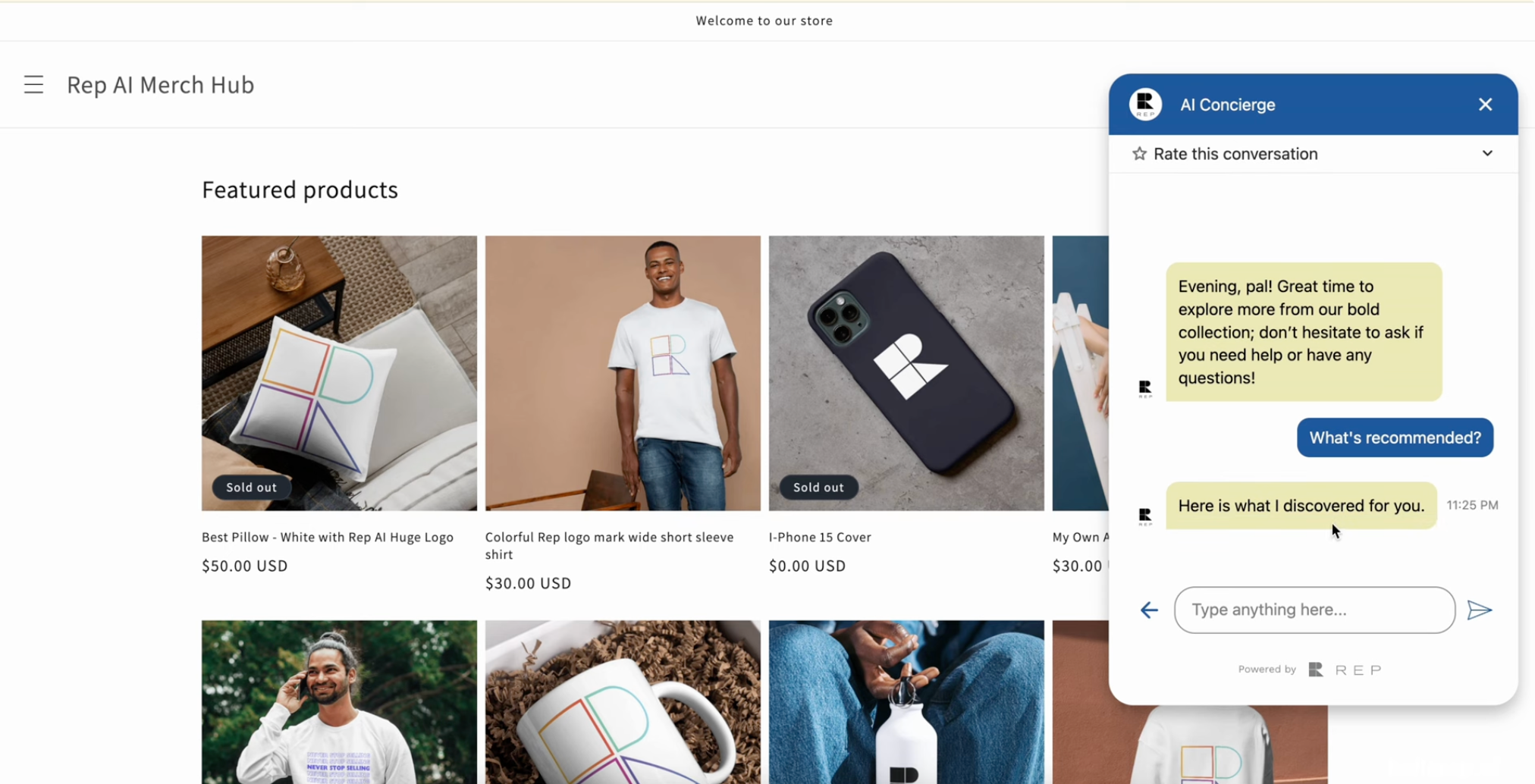
Quiz logic is static. The same answers always lead to the same results page. But Rep AI runs a real conversation that adapts based on what the shopper says and does.
Instead of forcing shoppers into a fixed flow, the AI dynamically adjusts the interaction during the conversation. It can:
- Ask follow-up questions based on shopper responses.
- Handle objections like sizing, shipping, or product comparisons.
- Recommend products based on conversation context rather than preset quiz logic.
- Suggest upsells and cross-sells during the shopping process.
- Match your brand’s tone of voice automatically.
- Support multiple languages.
For brands with large catalogs like FASS Motorsports, this becomes especially important in real time. A shopper asking about fitment for a 2018 F-250 gets a clear answer instantly, along with the option to move forward without leaving the conversation.
In-Chat Product Discovery for Frictionless Purchasing
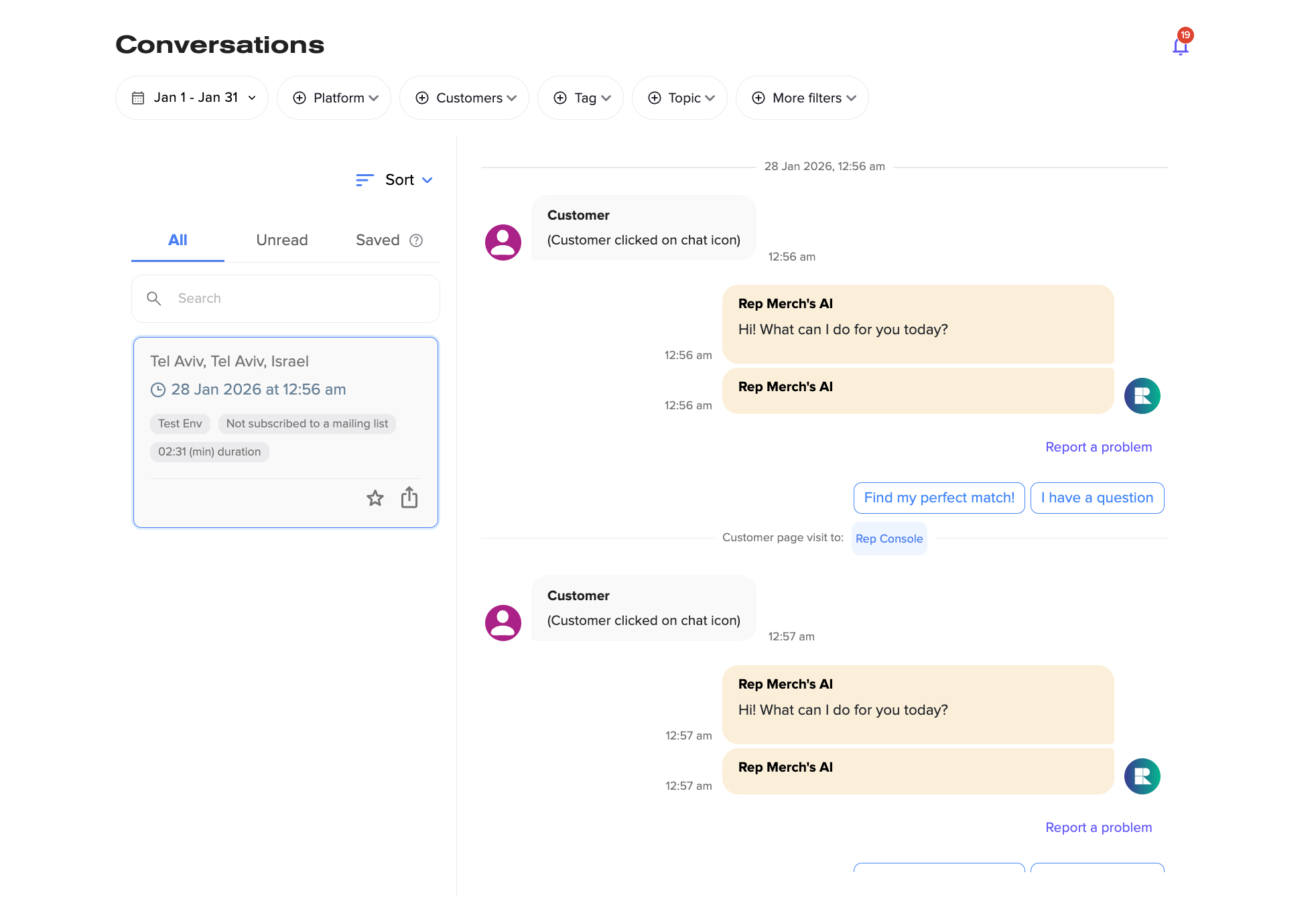
Most quizzes end with a results page that sends shoppers to product pages. If the recommendation isn’t right, the shopper has to restart their browsing journey.
Rep AI keeps the entire discovery and purchase process inside the conversation, reducing friction between recommendation and checkout. Shoppers can:
- Browse visual product carousels and chips without leaving chat.
- Add products to the cart with one click.
- Complete checkout directly inside the conversation.
- Use Virtual Try-On by uploading a selfie and viewing products on themselves.
Shopper Intelligence for Continuous Store Optimization
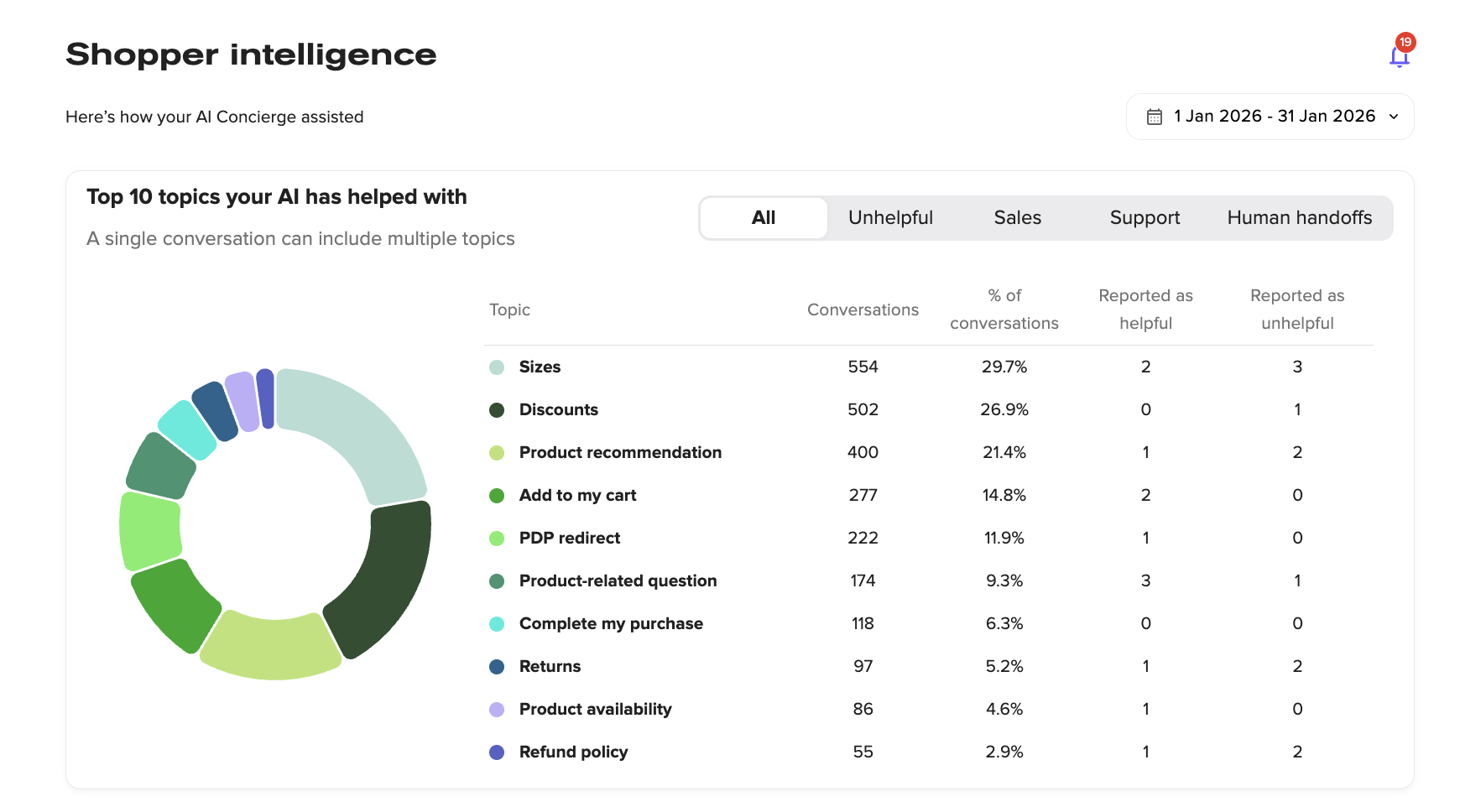
Quiz platforms mainly show completion rates and drop-off points within the quiz itself. That helps optimize the quiz, but not the overall shopping experience.
Rep AI surfaces broader insights about how visitors interact with your store. This intelligence helps teams understand what’s causing friction and what to improve next.
Insights include:
- Why visitors leave your site, broken down by category.
- What product information do customers repeatedly ask about.
- Emotional signals during conversations.
- AI-generated CX recommendations for improving the store.
- Klaviyo sync for conversation topics and segmentation.
Rep AI customers typically experience 10–30% higher conversion rates and 50–70% fewer support tickets within the first 30 days. The platform also offers a 5× ROI guarantee, backed by a 60-day money-back policy.
How the Earlier Quiz Examples Run Into Limitations (and How Rep AI Overcomes Them)
Each of the example brand quizzes we shared earlier hit a specific structural limitation at a certain point. Here's how those limitations compare to what Rep AI does differently:
E-commerce Quizzes vs. Agentic AI: Where Should Brands Invest in 2026?
Quizzes and conversational AI aren't mutually exclusive. Some brands run both:
- A quiz for cold traffic lead capture and collecting emails.
- Agentic AI for real-time product guidance, conversion, and shopper intelligence.
What matters is knowing what each one can and can't do. A quiz won't help the shopper who lands on a product page, hesitates for 40 seconds, and leaves. It won't tell you that 18% of your visitors are asking about shipping times, and your site doesn't answer that question anywhere. In addition to this, it won't adapt when a shopper says, "That's not quite what I'm looking for."
In contrast, an Agentic AI, like Rep AI, proactively engages hesitant shoppers. It adapts conversations in real time, guides product discovery, enables in-chat purchases, and surfaces actionable shopper intelligence. Unlike static quizzes, it captures insights about why visitors leave, answers repeated questions automatically, and personalizes the experience for returning customers. In short, quizzes are good for initial engagement, but Rep AI drives conversions, AOV, and retention throughout the full shopping journey.
So, if your current setup stops at the results page, it’s time to see how Rep AI can transform your store. Start a 30-day free trial or run the simulator to see how Rep AI works on your store.
More from REP AI
AI Shopping Assistant: How It Guides Ecommerce Shoppers in 2026
When a shopper hesitates, timely guidance can help them decide what to explore next. An ai shopping assistant can answer product questions, narrow choices, and guide product discovery without taking control of checkout. Shoppers get help comparing options, while still making the purchase decision th...
Benefits of Agentic Commerce: How AI Can Help Brands Sell and Serve Better
When a shopper hesitates, a useful answer can turn a moment of uncertainty into a chance to help, rather than a sale lost or a question left unanswered. The benefits of agentic commerce come from connecting shopper intent with timely action, then learning from those interactions to improve sales gui...
Want to see what your store would do with Rep?
Run your real Shopify catalog through the simulator before you commit to anything. No sales call required.

