


8 Best Ecommerce Personalization Software and Platforms for 2026 [Reviewed By Category!]
Quick Summary
Compare 8 leading e-commerce personalization platforms that help brands increase conversion and revenue. Some platforms use real-time behavioral AI to engage shoppers before they abandon your site. Others focus on lifecycle marketing across email, SMS, and ads, with comparisons on features, pricing, integrations, and real-world ROI. So, you can choose the right solution for your store.
Why E-commerce Personalization Platforms Matter in 2026
Product recommendations now account for up to 31% of e-commerce revenue when shoppers engage with them, proof that personalization directly impacts sales. But today’s brands care about more than traffic. They want higher conversion rates, bigger average order value, and more revenue per visitor.
The issue is that most personalization tools operate in silos. Some focus on email and SMS after the visit. Others show product recommendations based on past behavior. But few respond to what shoppers are doing right now, while they’re browsing, comparing, or about to leave.
The biggest growth opportunity is in-session personalization, which is reacting in real time, spotting buying intent, and engaging shoppers before they drop off. This guide compares eight platforms based on real-time capabilities, integrations, ease of setup, and measurable revenue impact. So, you can choose a platform that drives real growth, not just more traffic.
Why Trust Us?
Rep AI serves Shopify Plus brands generating $10M–$250 M in annual revenue. We analyze shopper behavior across millions of sessions and see which platforms drive 10-30% conversion lifts vs. which max out at 2-3%.
We know what exit intent detection accuracy looks like because we built the algorithm. This guide reflects real-world performance data, not vendor marketing claims. We accept no payment for platform placement.
What Is an E-Commerce Personalization Platform?
An e-commerce personalization platform adapts the shopping experience to each visitor based on their behavior, preferences, and intent. The goal is to show the right products, content, and offers to the right shopper at the right moment, increasing conversion, average order value, and customer lifetime value.
These platforms connect to your e-commerce stack via APIs, JavaScript snippets, or app integrations. They track shopper behavior in real time and deploy targeted interventions based on that data.
But the best platforms go beyond reactive personalization. They use behavioral signals to identify intent and friction before shoppers abandon, giving brands a chance to address hesitation in the moment.
Types of E-commerce Personalization Platforms
E-commerce personalization platforms fall into four categories based on when and how they intervene:
Real-Time Behavioral Personalization
Behavioral platforms detect what each shopper does during their active session. This includes hesitation on product pages, comparison shopping behavior, and exit-intent signals.
Conversational Personalization
Conversational platforms use AI agents to engage shoppers in natural language dialogue. Instead of showing product grids, the platform asks questions, understands intent, and guides shoppers through discovery, comparison, and purchase. The key distinction is between scripted chatbots and genuinely conversational AI that adapts based on context.
Lifecycle Personalization
Lifecycle platforms engage shoppers throughout their relationship with your brand via email, SMS, push notifications, and retargeting ads. Abandoned cart sequences, browse abandonment follow-ups, and win-back campaigns all fall under lifecycle personalization.
Segment-Based Personalization
Segment-based platforms group shoppers into categories (new versus returning, high spenders versus budget shoppers) and show each segment predefined content. This works for broad patterns but misses individual intent at the moment.
Benefits of E-commerce Personalization for Your Store
Personalization delivers measurable impact across multiple dimensions of your business:
- Higher Conversion Rates from Existing Traffic: Personalization platforms that engage shoppers at moments of hesitation convert more visitors without increasing ad spend
- Increased Average Order Value Through Contextual Upsells: Personalized recommendations timed to high-intent moments drive larger baskets. Shoppers who engage with post-add-to-cart upsell features increase AOV by surfacing complementary products at the exact moment purchase intent is highest.
- Recovered Revenue from Abandoned Sessions: Post-session personalization through email and SMS recovers 5-15% of abandoned carts on average. Pairing recovery with prevention captures significantly more revenue than recovery alone.
- Reduced Friction in the Buying Journey: Conversational personalization answers questions and addresses objections without forcing shoppers to hunt through FAQs or contact support. This is particularly valuable for complex product categories where shoppers need guidance.
- Support Deflection Through Automated Assistance: Conversational AI platforms handle up to 97% of customer support requests, like order tracking, returns, sizing questions, and shipping policies. This reduces support ticket volume by 50-70% while maintaining customer satisfaction.
- Understanding Why Shoppers Leave: The best platforms surface drop-off reasons, missing website information, and friction points that cause abandonment. This intelligence feeds directly into site optimization, creating compounding returns over time.
The 8 Best Ecommerce Personalization Platforms for 2026
1. Rep AI
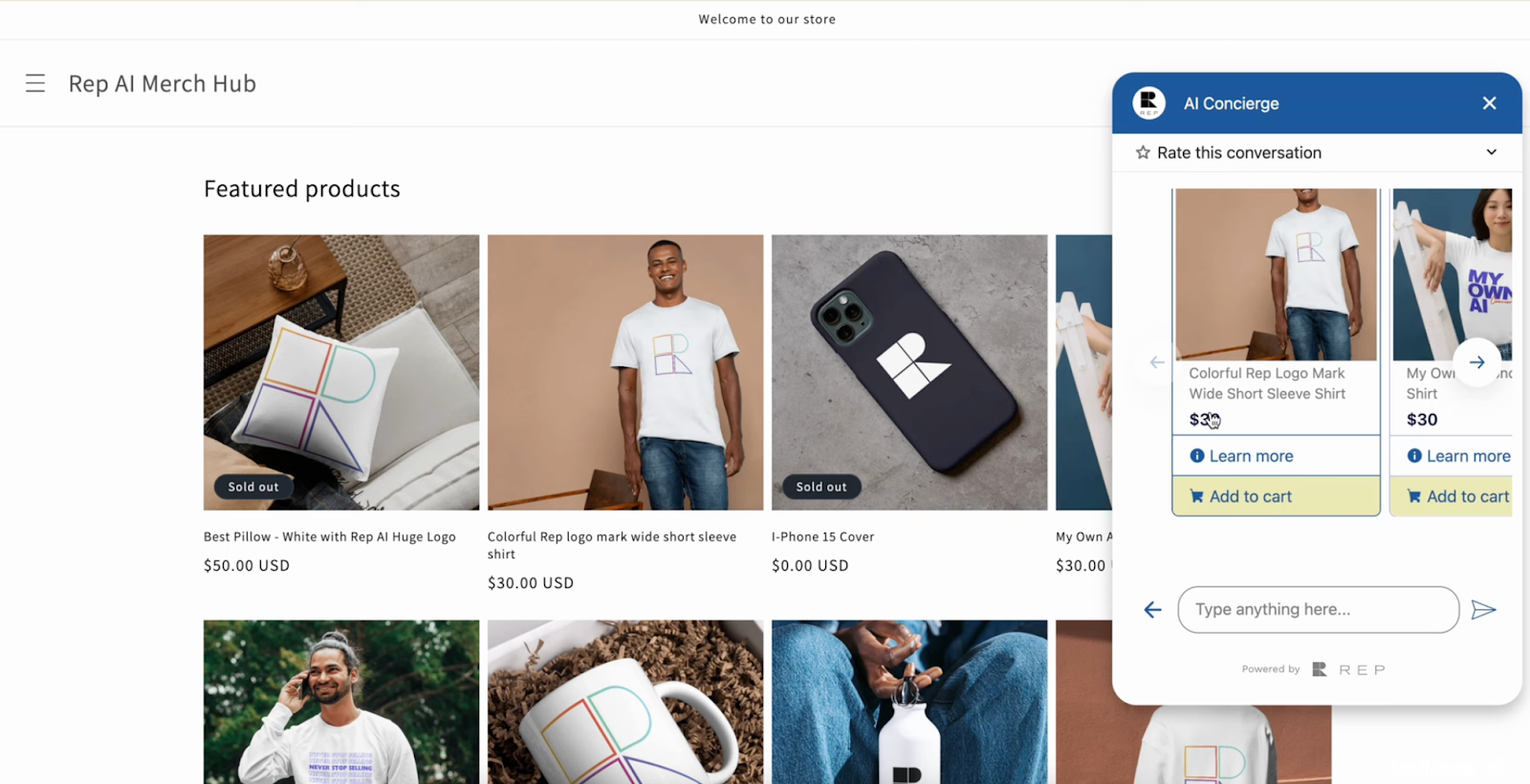
Rep AI delivers 1:1 personalization through a conversational AI agent that adapts to each shopper’s intent in real time.
Unlike product recommendation widgets or rule-based pop-ups, Rep AI’s behavioral algorithm detects hesitation and drop-off signals with 92% accuracy.
Product discovery, comparison, upselling, abandoned cart recovery, and checkout all happen within the conversation. Shoppers browse visual product carousels, filter by attributes, add items with one click, and proceed to checkout without leaving the chat.
Rep AI also bridges on-site behavior with post-session marketing. Klaviyo Topic Sync pushes conversation topics into customer profiles as custom properties, enabling marketing teams to segment based on what shoppers actually discussed.
Beyond personalization, Rep AI handles up to 97% of customer support requests automatically, including order tracking, returns, and FAQs. This reduces support ticket volume by 50–70% while keeping sales and support unified in one platform.
Notable clients include Unilever, Olly, VIBA, Unclaimed Baggage, and Lashify. Brands typically see a 10–30% lift in conversion rate within the first 30 days.
Key Features
- Behavioral AI Sales Agent: Detects drop-off with 92% accuracy and engages shoppers showing exit intent before they leave.
- Proactive Engagement Algorithm: Reaches out only to visitors who show hesitation, confusion, or high purchase intent, and never interrupts ready buyers.
- One-Click Add to Cart: Shoppers add products directly in chat without browser redirects or leaving the conversation.
- Visual Product Carousels: Browse and compare products inside chat with images, prices, and variant options.
- Go to Checkout in Chat: Navigates shoppers to checkout within the conversation, without opening new tabs or windows.
- Virtual Try-On: Customers upload a selfie and see themselves wearing products, then switch variants instantly without re-uploading.
- Upsell After Add-to-Cart: Surfaces complementary recommendations at the highest-intent moment in the session.
- Shopper Intelligence & Drop-Off Analytics: Reveals why visitors leave, what information is missing from your site, and AI-powered CX recommendations.
- Klaviyo Conversation Sync: Pushes full conversation transcripts and topics into Klaviyo profiles as custom properties for targeted email and SMS campaigns.
- Automated Brand Voice Training: AI learns your brand's tone, products, and customer base in 3-10 minutes.
Pricing
Pricing tiers scale with monthly sessions. All include a 30-day free trial, plus an ROI money-back guarantee.
- Pay As You Grow: Starts at $12/month
- AI Sales Agent: Starts at $79/month
- AI Support Agent: Starts at $39/month
- AI Concierge Bundle: Starts at $95/month
- Enterprise (500K+ sessions): Custom pricing
Integrations
Klaviyo (conversation and topic sync), Postscript, Omnisend, Attentive, Mailchimp, Loop, Gorgias, Freshdesk, Richpanel, Kustomer, Zendesk, Yotpo, Tapcart, Meta, WhatsApp, Slack, and Shopify,
Pros
- One of the few platforms in this category with proactive behavioral triggers that identify disengaged shoppers in real time.
- Genuinely conversational AI that feels human, not scripted product recommendation widgets.
- Superior shopper intelligence capabilities, including emotion analysis and drop-off detection.
- Replaces multiple point solutions (product recommendations, support deflection, session analytics).
- Longest free trial period (30 days) with a 60-day money-back ROI guarantee.
- Conservative 3-hour same-session attribution window.
Cons
- Currently limited to Shopify and Salesforce Commerce stores with more platform integrations coming soon.
- Language support is limited to English and Spanish.
2. Bloomreach
Bloomreach is an enterprise-grade platform that unifies customer data, content management, and omnichannel personalization under one roof. Powered by Loomi AI, the platform connects first-party customer and product data with business metrics to deliver lifecycle personalization across email, SMS, web, mobile app, and paid ads.
Bloomreach's strength is post-purchase engagement and long-term customer journey orchestration. It's built for brands that need a full customer data engine to power automated campaigns at scale across 13+ channels.
For brands that already have strong on-site conversion strategies and want to centralize customer data for cross-channel personalization, Bloomreach delivers enterprise-level CDP capabilities.
Key Features
- Loomi AI: An intelligence platform that connects customer and product data with business metrics in real time.
- Customer Data Engine: Full CDP with unified customer profiles across channels.
- Omnichannel Personalization: Email, SMS, mobile app, web, ads, and push notifications.
- Marketing Automation: Journey orchestration, automated campaigns, and behavioral segmentation.
- AI-Powered Search: Self-learning site search that adapts to user intent beyond keyword matching.
- Content Management System: Headless CMS for content personalization.
Pricing
- Three product modules are available: Autonomous Marketing, Autonomous Search, and Conversational Shopping.
- Custom Pricing.
- Usage-based fees scale with customer volume and events.
Integrations
Shopify, Salesforce, Magento, SAP, Adobe Commerce, major CRMs, data warehouses, and marketing platforms.
Pros
- Comprehensive CDP with unified customer and product data across all touchpoints.
- True omnichannel personalization (13+ channels) with consistent customer experience.
- Real-time data processing (5ms-2s) for instant personalization.
- Flexible modular pricing (pay only for features you use).
Cons
- Complex implementation requiring dedicated technical resources.
- Primarily lifecycle/post-purchase, not real-time session intervention.
- Steeper learning curve than competitors.
3. Dynamic Yield (by Mastercard)
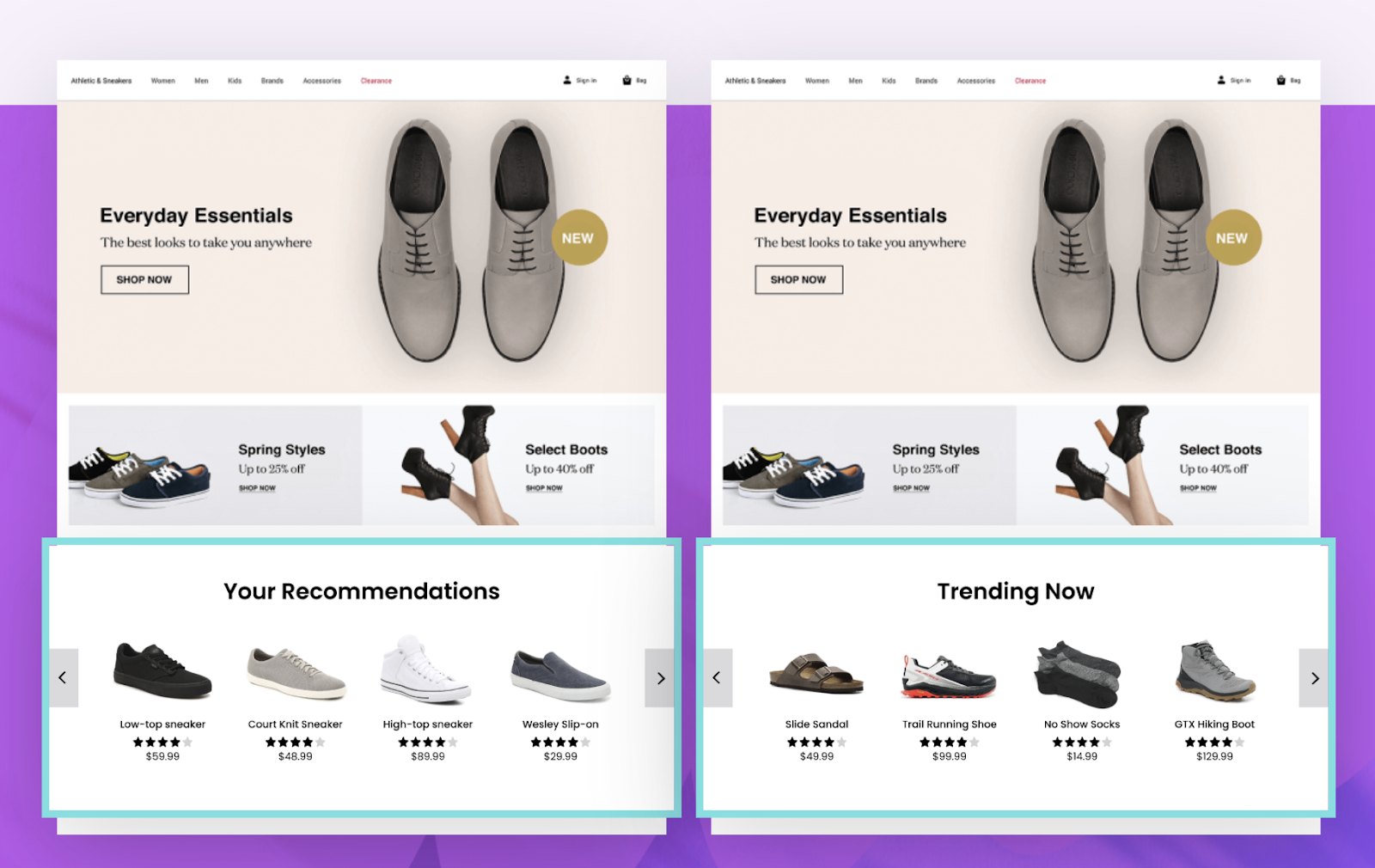
Dynamic Yield combines enterprise-grade experimentation with algorithmic personalization, backed by Mastercard's proprietary transaction data and AI models. The platform is good at segment-based personalization and testing at scale, particularly for multi-region retailers and financial services brands.
Dynamic Yield's algorithmic decisioning engine allows brands to create personalized experiences based on custom KPIs and business rules. The platform recently launched Experience Search (AI-powered search) and Shopping Muse (conversational chatbot), expanding beyond its core testing and optimization capabilities.
For brands with mature experimentation programs that want to layer personalization on top of their testing infrastructure, Dynamic Yield offers a comprehensive solution.
Key Features
- Experience OS: Modular framework for personalization across web, mobile, email, and ads.
- A/B and Multivariate Testing: Robust experimentation infrastructure with statistical significance tracking.
- Algorithmic Decisioning Engine: AI-driven optimization based on custom KPIs.
- Experience Search: Handles complex, multi-word search queries with AI.
- Shopping Muse: Conversational chatbot for product discovery.
- Element (Mastercard Integration): Proprietary prediction models and aggregated consumer spend insights.
Pricing
Pricing not publicly available.
Integrations
Shopify, Salesforce, Magento, SAP, Adobe Commerce, CDPs, tag managers, ESPs, and DMPs.
Pros
- Powerful experimentation capabilities (A/B, multivariate, full-stack testing).
- Mastercard data and AI models provide unique consumer spend insights.
- Strong multi-region and omnichannel support.
- Marketer-friendly interface with minimal IT dependency.
Cons
- Complex pricing structure and not transparent upfront.
- The Shopping Muse chatbot is relatively new and still evolving.
- Primarily segment-based personalization, not real-time conversational engagement.
- Best suited for high-traffic enterprise brands only.
4. Klevu
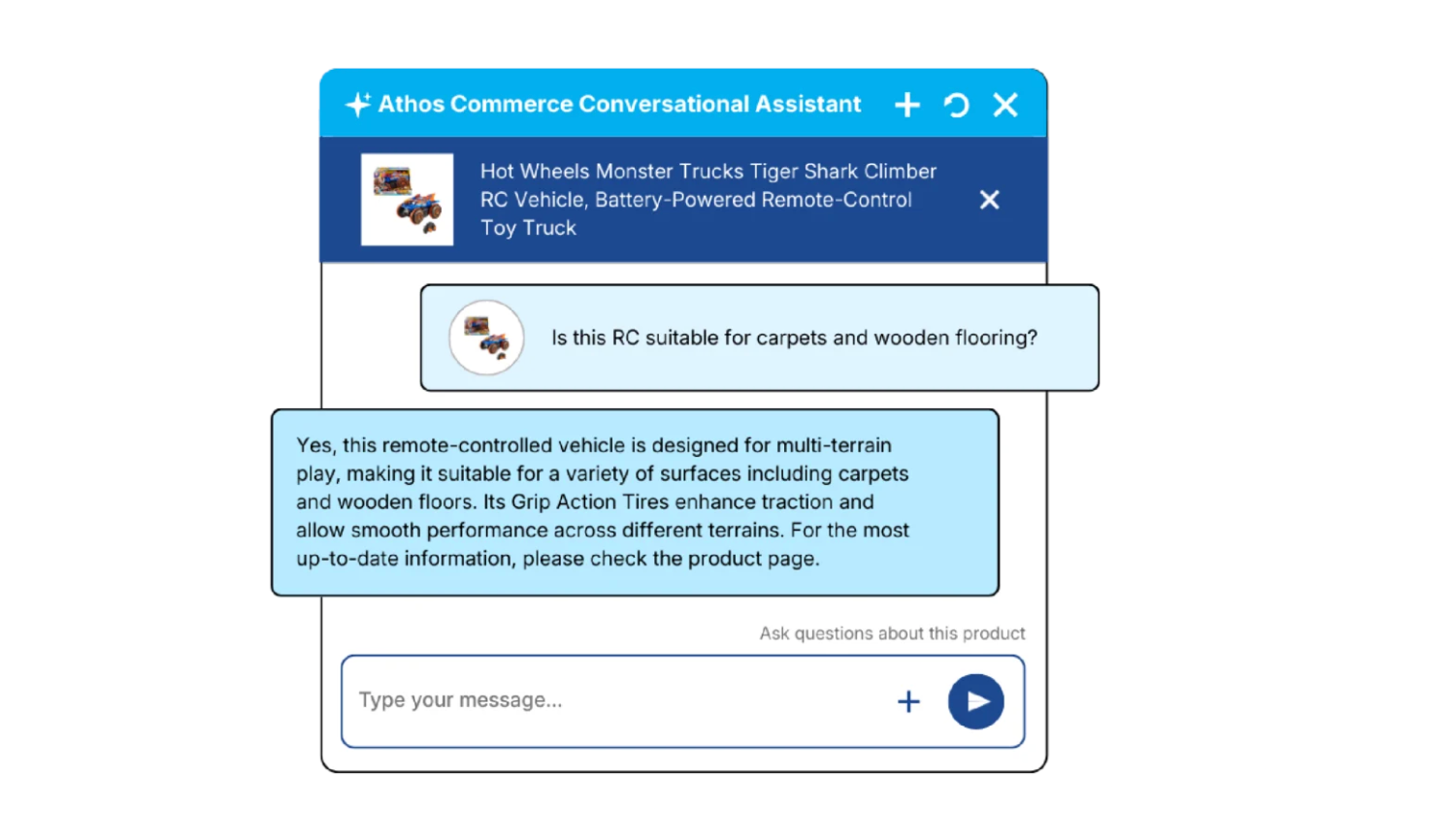
Klevu specializes in AI-powered site search and product discovery for e-commerce. Using natural language processing and machine learning, the platform delivers hyper-relevant search results that improve as shoppers interact with your site.
Recently rebranded as part of Athos Commerce (merger with Searchspring and Intelligent Reach), Klevu's core strength remains in making product discovery smooth through intelligent search.
The platform offers merchandising tools and personalization, but its primary value is in search-led conversions. For brands where search drives significant traffic and revenue, Klevu's NLP capabilities deliver measurable conversion lift.
Key Features
- AI-Powered Site Search: NLP and ML for intent-based search.
- Merchandising Dashboard: Visual tools for boosting products, scheduling campaigns, and managing promotions.
- 1:1 Search Personalization: Results adapt based on browsing history and behavior.
- Advanced Filtering and Facets: Smart navigation for product listing pages.
- Visual Search: Image-based product discovery.
- Klaviyo Deep Integration: Shares detailed search behavior data for email personalization.
Pricing
- Pricing tiers include Essential, Advanced, and Expert.
- Pricing scales with domains, sessions, and SKUs.
- All plans require a demo and a custom quote.
Integrations
Shopify, Shopify Flow, Klaviyo, Yotpo, Trustpilot, BigCommerce, Magento, and custom APIs/SDKs.
Pros
- Best-in-class site search with robust NLP (handles typos, synonyms, and complex queries).
- Excellent Shopify Markets support for international stores.
- Strong Klaviyo integration for email personalization based on search behavior.
- Responsive customer support.
Cons
- Pricing is not fully transparent.
- More expensive than competitors for similar search functionality.
- Primarily search-focused, not full-stack personalization.
- No proactive engagement or conversational interface.
- Setup and optimization can require technical resources.
5. LimeSpot
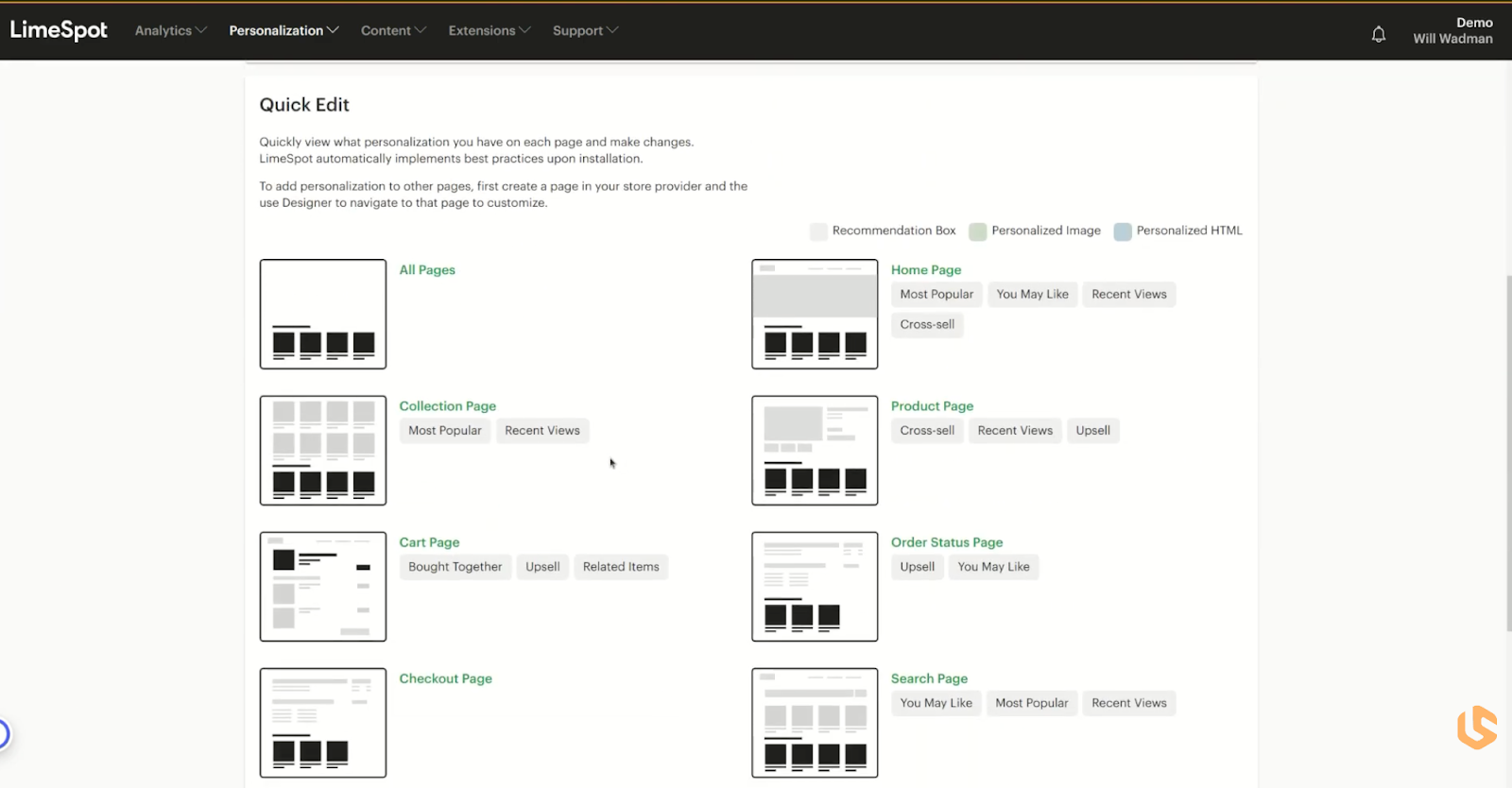
LimeSpot is a Shopify-native personalization platform focused on AI-powered product recommendations, bundles, and upsells. Built specifically for Shopify's ecosystem with deep theme integration and no-code setup, LimeSpot makes personalization accessible to SMB merchants without developer resources.
The platform uses collaborative filtering and AI to generate "frequently bought together" related products and personalized recommendations throughout the customer journey.
LimeSpot's Max Personalizer also adds a personalization layer to every recommendation and bundle, adapting content based on shopper behavior and purchase history.
Key Features
- AI Product Recommendations: Personalized suggestions on the homepage, product pages, cart, checkout, and post-purchase.
- Bundle Builder: Create cart upsells, post-purchase offers, and "bought together" bundles.
- Audience Segmentation: Real-time segmentation based on behavior and purchase history.
- Email and SMS Personalization: Personalized content for lifecycle campaigns.
- A/B Testing: Multivariate testing across the customer journey.
- Shopify OS 2.0 Integration: Automatic styling and theme editor compatibility.
Pricing
- A free plan is available with limited features.
- LimeSpot Turbo is $6.99/month.
- LimeSpot Max scales with monthly store revenue (e.g., $150/month for stores doing up to $50,000 in monthly revenue).
- Pricing increases as revenue grows.
- 15-day free trial.
Integrations
Shopify (deep integration), Klaviyo, Google Ads, BigCommerce, and 50+ ecommerce and marketing tools.
Pros
- Easy no-code setup with Shopify OS 2.0 auto-styling.
- Comprehensive product recommendations across the entire journey.
- Responsive customer support.
Cons
- Turbo Plan is not available for Shopify Plus (forces upgrade to Max).
- Can slow site performance with heavy segmentation.
- Limited to Shopify and BigCommerce ecosystems.
- No real-time behavioral triggers or conversational interface.
6. Nosto
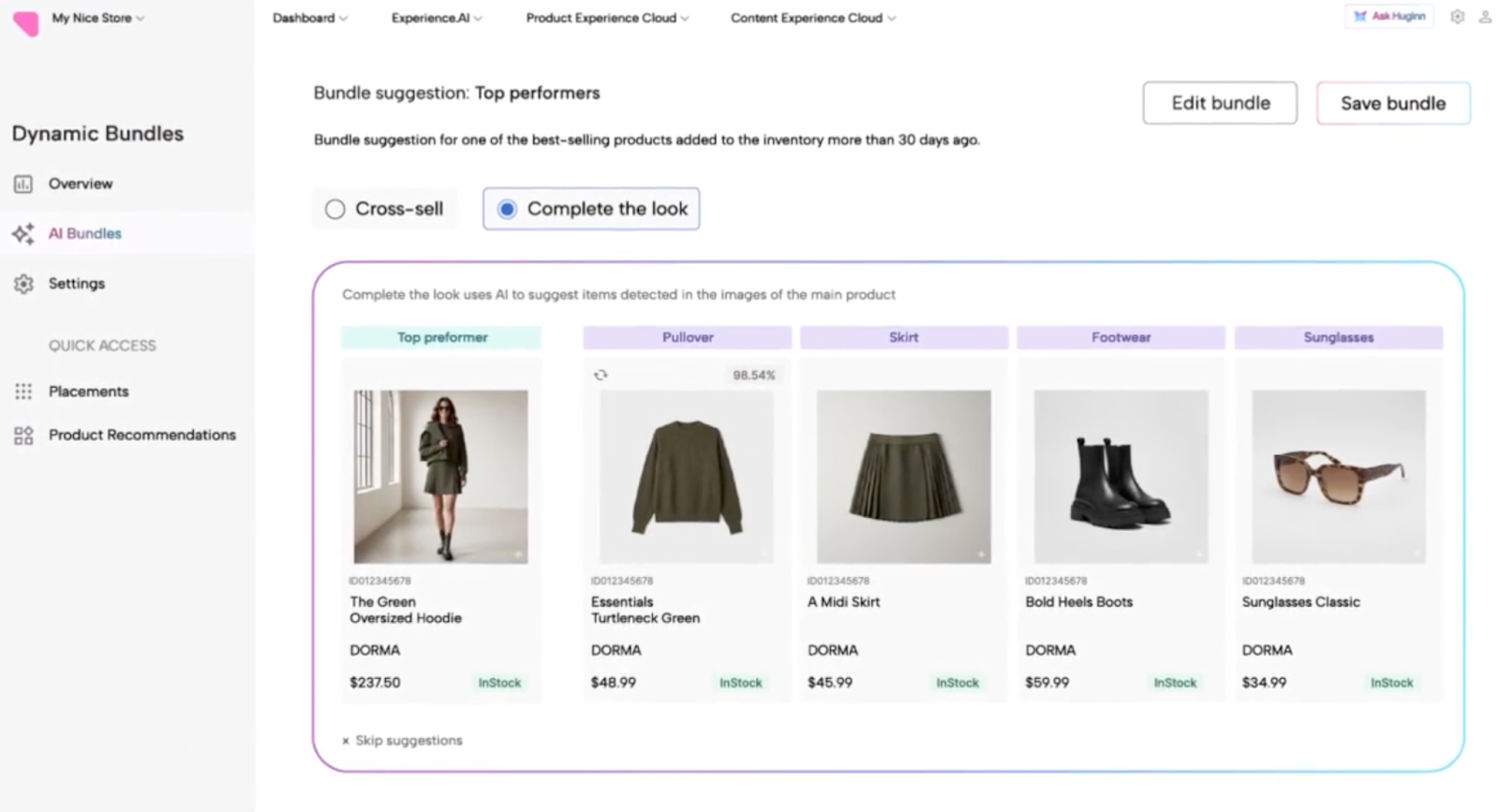
Nosto is an AI-powered Commerce Experience Platform that delivers end-to-end personalization across product recommendations, search, merchandising, content, and A/B testing.
It’s experience AI engine unifies customer, product, and content data to power its personalization features. The platform recently launched Huginn, an AI agent that operates 24/7 to uncover revenue opportunities and provide strategic insights.
For brands seeking a comprehensive personalization suite with an intuitive interface, Nosto delivers strong merchandising control and AI-driven recommendations.
Key Features
- Experience.AI Engine: Unifies customer, product, and content data for personalization.
- Product Recommendations: Predictive AI for homepage, PDP, cart, email, and ads.
- AI-Powered Search: Intent-based search with personalized results.
- Category Merchandising: Automated merchandising based on performance metrics and shopper preferences.
- Content Personalization: Behavioral pop-ups, overlays, and triggered content.
- Huginn AI Agent: 24/7 AI assistant for revenue optimization and strategic insights.
Pricing
Pricing not publicly available.
Integrations
Shopify, Adobe Commerce, Klaviyo, VTEX, Yotpo, BigCommerce, Salesforce, and major ESPs.
Pros
- Intuitive, marketer-friendly interface requiring minimal IT involvement.
- Quick deployment and time to value.
- Strong balance of automation and manual control.
- Comprehensive suite (search, merchandising, recommendations, testing).
- Dedicated customer success teams.
Cons
- Pricing is not transparent upfront.
- Limited deeper testing features (no theme testing or price testing).
- Primarily product-focused, not conversational or real-time behavioral.
- No proactive engagement capabilities.
7. Optimizely
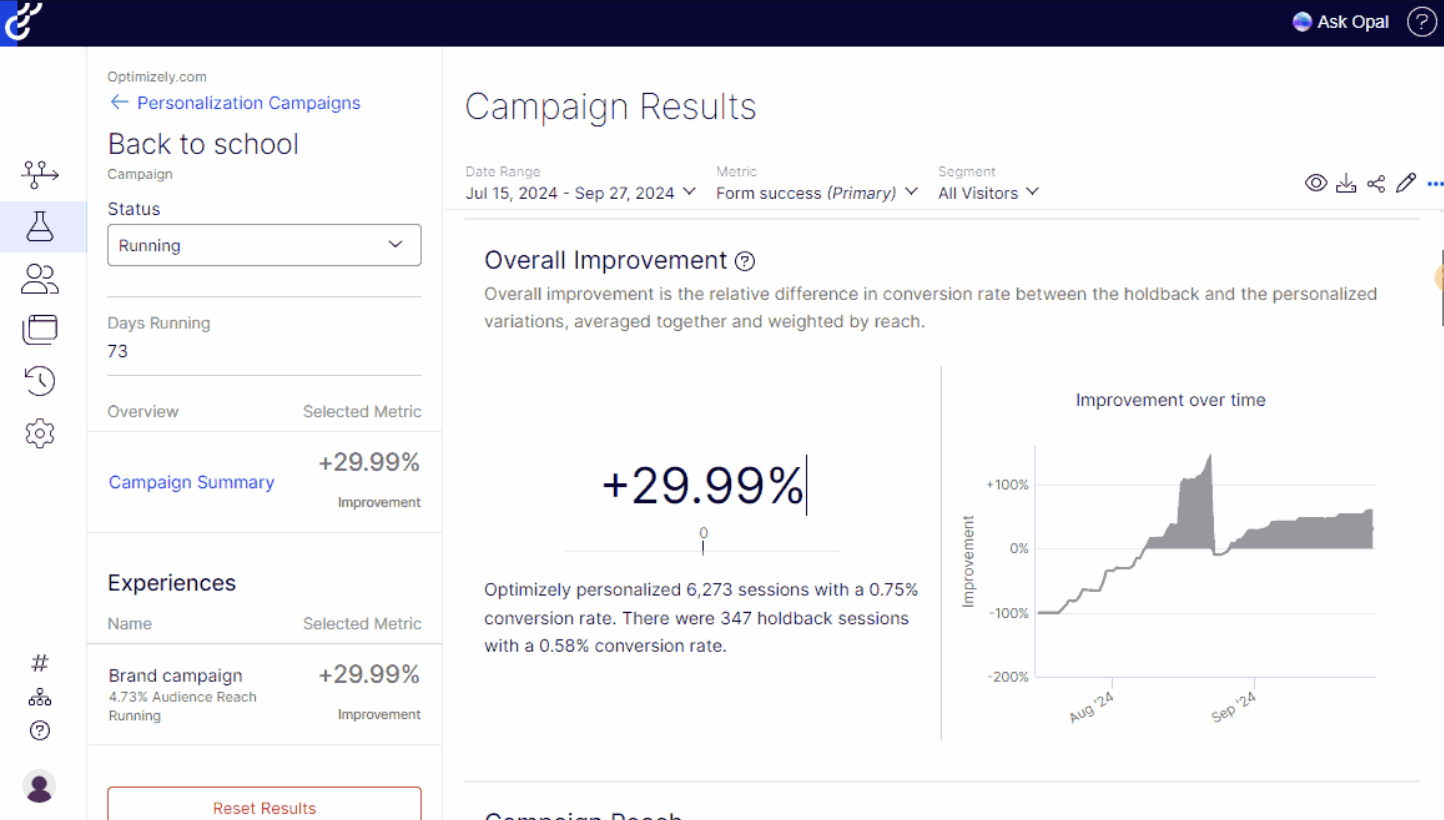
Optimizely is an enterprise digital experience platform built for experimentation, testing, and data-driven optimization at scale. The platform combines A/B testing, multivariate testing, feature flagging, and personalization under "Optimizely One," a composable DXP for content orchestration and experience-led commerce.
Optimizely is good at structured testing programs for brands with dedicated CRO teams. The platform recently introduced Opal AI for variation development and contextual bandits for algorithmic personalization.
For brands with mature experimentation programs and high website traffic, Optimizely provides enterprise-grade testing infrastructure with robust statistical analysis.
Key Features
- Web Experimentation: A/B testing, multivariate testing, and advanced targeting.
- Feature Experimentation: Feature flagging and rollout control for product teams.
- Personalization: Audience builder, visual editor, and experience templates.
- Contextual Bandits: Algorithmic 1:1 personalization that dynamically adjusts.
- Opal AI: AI agent for variation creation and optimization suggestions.
- Stats Engine: Robust analytics and reporting for faster learning.
Pricing
- Three product plans: Opal AI, Experimentation, and Content Management.
- Pricing available on request.
Integrations
Shopify, Salesforce, Adobe, Magento, major CDPs, tag managers, and analytics platforms.
Pros
- Industry-leading experimentation and testing infrastructure.
- Robust statistical engine for reliable results.
- Opal AI reduces dependence on developers for variations.
- Strong program management tools for large-scale testing.
Cons
- Very expensive ($36k–$400k+ annually).
- Gated pricing with no transparency upfront.
- Complex implementation and a steep learning curve.
- Pricing penalizes traffic growth and concurrent experiments.
- Primarily testing-focused, with limited real-time behavioral intervention.
8. Rebuy
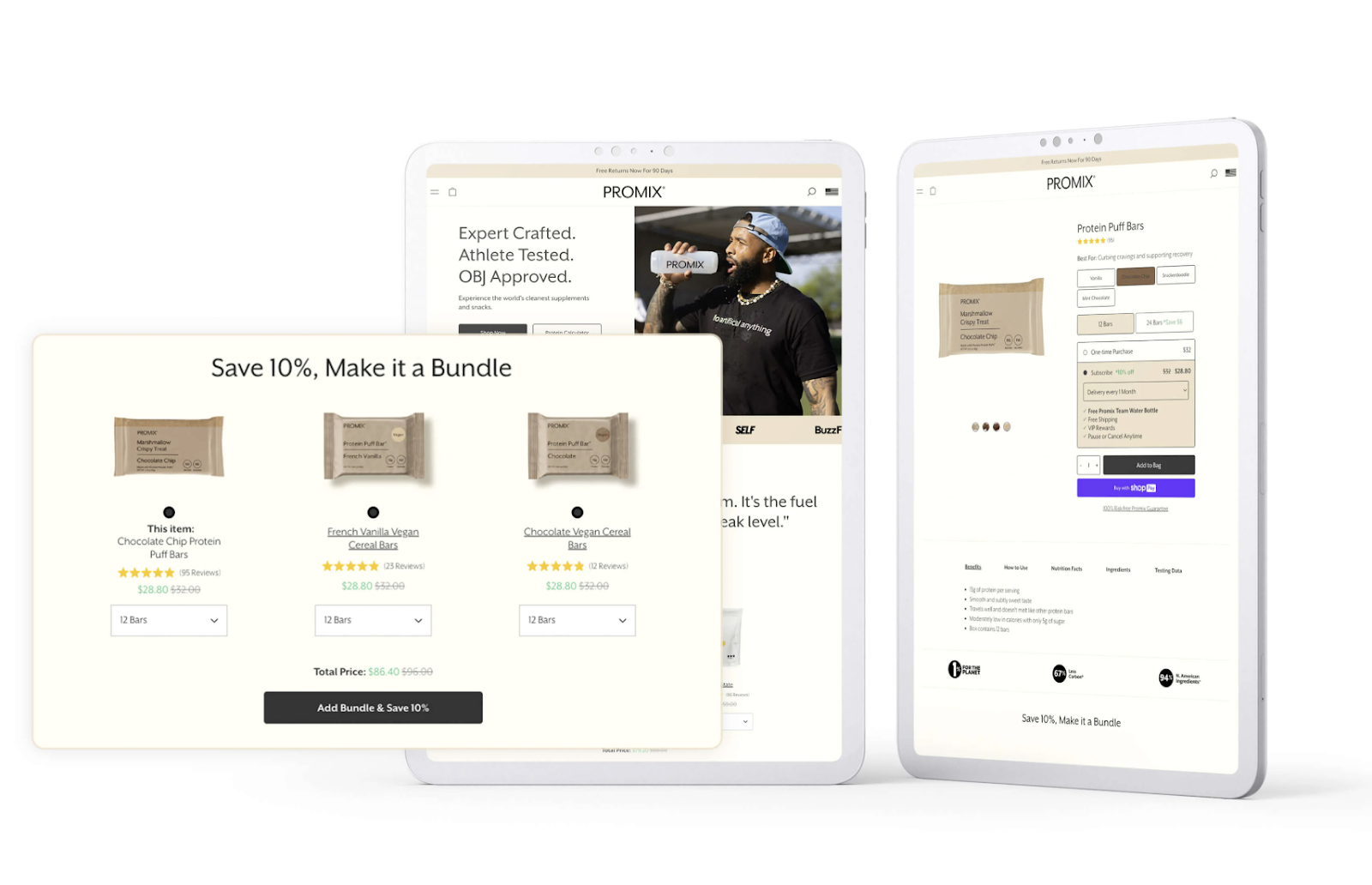
Rebuy is a Shopify-native personalization platform laser-focused on cart, checkout, and post-purchase optimization. The platform's Smart Cart is its flagship feature, a fully customizable, AI-powered slide-out cart with 35+ pre-built integrations.
Rebuy is good at increasing AOV through strategic upsells, cross-sells, and bundles timed to moments of high purchase intent.
The platform combines no-code simplicity with powerful merchandising rules and AI recommendations. Rebuy Monetize, a recent addition, unlocks incremental post-purchase revenue by displaying offers from major brands (like Disney+) on thank-you and order-status pages at zero additional cost to merchants.
Key Features
- Smart Cart: Fully customizable slide-out cart with progress bars, announcements, and AI upsells.
- Checkout Extensions: Drag-and-drop checkout personalization for Shopify Plus.
- Post-Purchase Offers: Upsells between checkout and thank you page at peak intent.
- AI Product Recommendations: Personalized suggestions across homepage, PDP, cart, and checkout.
- Smart Collections: Merchandised category pages with custom filters and sorting.
- Rebuy Monetize: Post-purchase offers from major brands for incremental profit.
Pricing
- Rebuy Monetize is free.
- Build Your Own Plan starts at $25/month per package.
- Platform One costs $598/month.
- Usage-based pricing scales with orders per month.
- 14-day free trial for Build Your Own, 30-day free trial for Platform One.
Integrations
35+ pre-built Shopify integrations, including ReCharge, Klaviyo, Yotpo, loyalty programs, and subscription apps.
Pros
- Best-in-class Smart Cart specifically for Shopify.
- Quick wins from day one (3x ROI reported even with basic setup).
- No-code, low-code, and custom code flexibility.
- Strong checkout personalization for Shopify Plus.
- Clear attribution and analytics.
- Rebuy Monetize adds incremental profit at zero cost.
Cons
- Shopify-only (not cross-platform).
- Can get expensive with high order volume (usage-based pricing).
- Heavy segmentation can slow site performance.
- Primarily cart/checkout focused, not full-journey personalization.
- No proactive behavioral triggers or conversational interface.
- No lifecycle sync capabilities.
Key Features to Look for in an E-Commerce Personalization Platform
In building this list, we assessed each platform across eight core criteria:
- Real-Time Behavioral Triggering Capability: Can the platform detect and respond to shopper behavior as it happens? Platforms using real-time signals like hesitation, exit intent, and buying friction intervene at moments that matter most. Proactive detection is the strongest differentiator in this category.
- In-Session Intervention Depth: Does the platform simply display different products, or can it guide shoppers through the entire buying journey? The gap between a product carousel and a conversational agent that answers questions, addresses objections, and completes checkout inside the conversation determines effectiveness.
- Personalization Scope Per Session: How much of the shopping experience can be personalized? Some platforms only personalize product recommendations. Whereas the most comprehensive solutions personalize across the entire journey from first visit through post-purchase.
- Conversational Interface Quality: If the platform offers conversational features, how natural does it feel? True conversational AI understands intent, asks follow-up questions, and adapts based on context. Most "AI chatbots" are scripted response trees that frustrate shoppers.
- Lifecycle Sync Capabilities: Does the platform connect on-site behavior with post-session marketing? Most platforms require manual integration or don't sync behavioral data at all. But the best solutions convert session data into custom properties for targeted email and SMS campaigns.
- Revenue Attribution Accuracy: How does the platform measure impact? Conservative same-session attribution windows provide accurate ROI. While multi-day attribution windows inflate results and make platform comparisons misleading. So, always ask what attribution model a platform uses before comparing performance claims.
- Integration Depth with E-Commerce Stack: Does the platform work with your existing tools? Native Shopify integration matters for data access and automation reliability, and connections to your ESP, helpdesk, and analytics tools determine workflow fit.
- Implementation Timeline and Complexity: How quickly can you launch and see results? Self-service platforms deploy in hours. Whereas managed solutions launch in days, and enterprise platforms require weeks or months.
How to Choose an E-commerce Personalization Platform for Your Business
Here's how to choose a personalization platform that addresses your specific revenue challenge:
Define Your Primary Revenue Problem
Most teams start by comparing feature lists. Start instead with the specific revenue problem you need to solve, such as:
- If shoppers abandon products during product discovery, search, and navigation, personalization should lead your evaluation.
- If they drop off at checkout, cart-focused solutions like Rebuy deliver faster impact.
- If the gap is post-session follow-up, lifecycle platforms like Klaviyo or Omnisend address that directly.
For brands with high in-session abandonment before contact capture, real-time behavioral engagement becomes essential.
Assess Your Data Infrastructure and Internal Resources
Personalization effectiveness depends on the data foundation you already have. Brands operating a CDP with unified customer profiles should prioritize platforms that integrate with that system. Those without that foundation benefit from solutions that bring their own intelligence layer rather than depending entirely on historical data.
Evaluate internal capabilities honestly. Teams with developers can configure APIs and tune algorithms using platforms like Optimizely and Dynamic Yield. While marketing teams without technical support need drag-and-drop interfaces from solutions like Nosto and LimeSpot.
Prioritize Essentials Before Advanced Capabilities
Avoid overbuying functionality you won't use. Divide requirements into essentials and differentiators. Essential capabilities include product recommendations, behavioral segmentation, and basic personalization across key touchpoints.
While advanced features like generative content, real-time decisioning across channels, and conversational AI create a competitive advantage but require more investment and change management.
Many brands pay for advanced features they never fully implement while neglecting foundational personalization that drives immediate results.
Evaluate Vendors Within Their Categories
Match vendor strengths to your primary use case:
- Conversational platforms like Rep AI address in-session friction through dialogue.
- Product recommendation engines like Nosto optimize merchandising.
- Lifecycle platforms like Klaviyo excel at post-session recovery.
- Testing platforms like Optimizely focus on experimentation infrastructure.
These categories solve different problems. Thus, comparing them directly creates confusion. Identify which category addresses your core challenge, then evaluate vendors within that space.
Create a Weighted Evaluation Scorecard
To avoid decisions driven by flashy demos or sales pressure, define clear evaluation criteria upfront. Score each platform across the factors that directly affect success:
- Feature completeness for your specific use case.
- Ease of implementation and ongoing management.
- Integration quality with your existing stack.
- Scalability for traffic and catalog growth.
- Onboarding support and customer success resources.
- Total cost, including required add-ons and hidden fees.
Finally, assign weights to each criterion based on its importance to your team and expected impact on results. This keeps comparisons objective and aligned with real business priorities.
Choosing the Right E-commerce Personalization Platform
E-commerce personalization has moved beyond product carousels. Platforms that drive measurable results detect shopper intent in real time, address friction before abandonment, and connect on-site behavior to post-session marketing.
Most solutions in this guide specialize in one area: product recommendations, site search, email recovery, cart optimization, or A/B testing. Whereas few platforms handle both in-session engagement and lifecycle marketing under one roof.
Rep AI addresses both. It uses behavioral AI to detect hesitation with 92% accuracy, conversational commerce to complete transactions inside the chat, and shopper intelligence to reveal why visitors leave. The Klaviyo integration also pushes conversation data directly into customer profiles for targeted email and SMS campaigns.
So, ready to see how behavioral AI affects your conversion rate? Start your 30-day free trial.
FAQs
What's the difference between behavioral and segment-based personalization?
Segment-based personalization groups customers into categories and shows each segment predefined content. Whereas behavioral personalization responds to real-time actions such as hesitation, exit intent, or product comparisons. This dynamically adapts the experience based on what each shopper does in the moment.
Can personalization platforms integrate with Shopify?
Yes. Most platforms in this guide integrate with Shopify, though the depth varies. Rep AI, Rebuy, and LimeSpot are built specifically for Shopify with native integrations and automatic catalog syncing. While Enterprise platforms like Bloomreach, Dynamic Yield, and Optimizely support Shopify, they may require more technical setup. So, always check the platform's integration page before committing.
What ROI can I expect from personalization?
ROI varies by platform type and implementation quality. Rep AI customers typically see a 10-30% lift in conversion rate within the first 30 days, with a 5X ROI guarantee. LimeSpot reports an average revenue uplift of 12-18%, while Rebuy users see 3x ROI even with a basic setup. The highest ROI comes from platforms that combine prevention (engaging shoppers before they leave) with recovery (following up after the session), such as Rep AI.
More from REP AI

How to Automate Support Tickets to Save Revenue in 2026
Industry data suggests that up to 80% of routine e-commerce inquiries can now be autonomously resolved through specialized agentic workflows. For most mid-market brands, the challenge isn't finding a tool to automate customer service tickets, it's finding a system that doesn't sacrifice the customer...

AI in B2C Sales: Rescuing Revenue with Agentic Commerce in 2026
Your current helpdesk isn't a sales tool; it's a digital waiting room where your most valuable customers go to lose interest. While 81% of sales teams have adopted some form of AI in B2C sales by 2026, most still rely on reactive systems that wait for a customer to ask a question. This gap between p...

Automated Customer Journey Optimization: Rescuing Revenue in 2026
Industry research from the Anchor Group indicates that brands implementing AI-driven personalization earn 40% more revenue than those stuck with static experiences. This performance gap is exactly why automated customer journey optimization has become the standard for growth-focused brands. You've l...
Want to see what your store would do with Rep?
Run your real Shopify catalog through the simulator before you commit to anything. No sales call required.

