


Advanced Shopping Assistance: A Guide to Agentic Commerce in 2026
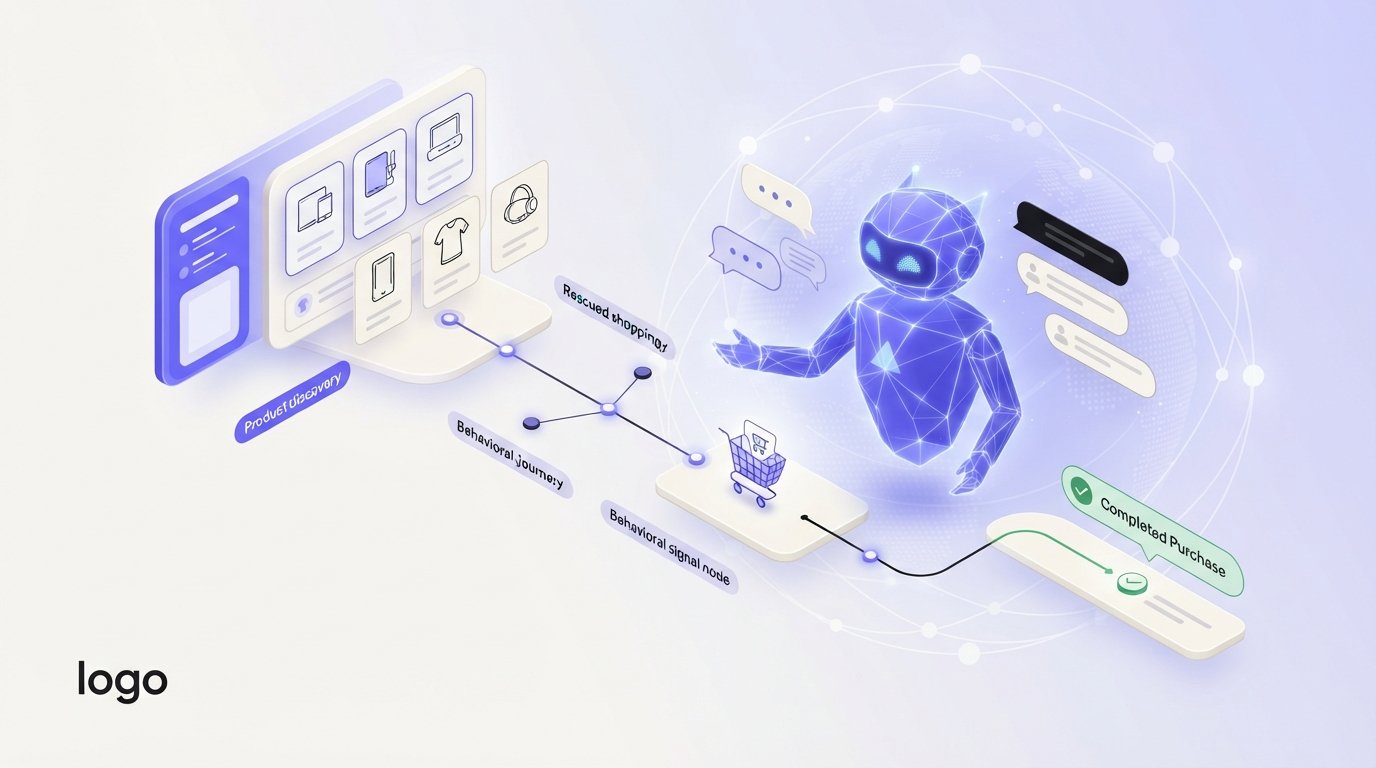
Most DTC brands are bleeding revenue through a thousand tiny cuts, and their legacy helpdesks are simply handing out bandages. You've likely felt the frustration of watching high cart abandonment rates climb while your support team remains buried under repetitive tickets. Reactive tools serve a purpose, but they don't sell. They wait for a problem to occur rather than preventing a lost opportunity. To scale in an increasingly competitive landscape, your brand needs advanced shopping assistance that functions as a proactive sales force rather than a digital filing cabinet.
We understand that fragmented tools and siloed data are stalling your growth. This guide explores the transition to agentic commerce, where AI agents move beyond simple deflection to active revenue generation. You'll discover how Rep AI uses Shopper Intelligence and behavioral signals to identify exit intent before the customer leaves your site. We'll outline the path to a unified platform that combines Rep Sales and Rep Support to lower your cost per ticket while rescuing revenue that traditional systems ignore. It's time to stop reacting to support issues and start driving measurable sales outcomes.
Key Takeaways
• Understand the transition from reactive chatbots to agentic commerce, where AI operates as a proactive digital salesperson to guide the customer journey.
• Learn how advanced shopping assistance uses a rescue algorithm and behavioral signals to capture revenue at the exact moment of exit intent.
• Discover why a unified AI Operating System for Brands outperforms reactive legacy helpdesks and narrow point-solution tools by centralizing sales and support data.
• See how to deploy Rep AI via a one-click install for Shopify Plus to sync product catalogs and configure specific behavioral Skills.
• Explore how integrating Rep Sales and Rep Support creates a high-performance environment that lowers cost per ticket while scaling DTC brand growth.
What is Advanced Shopping Assistance? Defining Agentic Commerce
Advanced shopping assistance is not a consumer loyalty scheme or a simple rewards program. It is a proactive, merchant-side AI framework designed to guide shoppers from initial discovery to the final checkout. While legacy tools focus on post-purchase support, this technology prioritizes the pre-purchase journey. It marks the definitive shift toward agentic commerce. In this model, AI isn't just a widget on a screen; it's a digital salesperson capable of autonomous decision-making. The core objective is to turn passive browsing into rescued revenue by intervening the moment a shopper shows signs of hesitation.
Unlike consumer-facing apps that focus on earning miles or points, this is a growth tool for the brand. It functions as a strategic layer that sits on top of your storefront, monitoring every interaction to ensure no sales opportunity is missed. By moving away from reactive models, brands can finally address the inefficiencies that plague traditional e-commerce funnels.
The Evolution from Chatbots to AI Sales Agents
Traditional chatbots are fundamentally limited by their architecture. They rely on static decision trees that can only answer pre-defined questions. If a shopper strays from the script, the experience breaks. This is reactive support at its most basic. AI Sales Agents operate differently. They utilize sophisticated LLMs to interpret nuanced shopper intent and deliver tailored recommendations. Instead of just deflecting tickets, they actively close sales. This capability is what makes Rep AI the AI Operating System for Brands. It provides a unified platform where sales and support data live together, creating a new standard for DTC efficiency and growth.
Why Mid-Market DTC Brands Need Proactive Assistance
For brands generating between $5M and $100M in annual GMV, scaling human support is often a losing game. Human BPO teams are expensive, slow to train, and unable to provide the instant response times modern shoppers demand. The cost of missed opportunities is staggering. Industry data suggests that a significant portion of cart abandonment happens because simple questions go unanswered in real-time. Waiting for a customer to initiate a chat is often too late; they've already decided to leave.
Rep Sales bridges this gap by using Shopper Intelligence to identify behavioral signals before a visitor exits. By providing advanced shopping assistance, it rescues revenue that would otherwise be lost to competitors. This level of intervention is the only way for mid-market brands to scale effectively without ballooning their overhead or compromising the customer experience.
The Mechanics of Revenue Rescue: How Behavioral Signals Work
Advanced shopping assistance doesn't rely on simple countdown timers or generic exit-intent triggers. Those methods are blunt instruments that often annoy shoppers rather than helping them. Instead, a sophisticated "Rescue" algorithm monitors the subtle interactions that occur during a session. It identifies the exact moment a shopper decides to leave based on real-time data rather than outdated cookies. This precision allows for intervention that feels like a helpful suggestion from a floor manager rather than a digital roadblock.
By shifting the focus to real-time session data, brands can personalize the experience without relying on invasive third-party tracking. This approach ensures that every interaction is contextually relevant to what the shopper is looking at right now. It transforms passive observation into a strategic sales opportunity.
Decoding 500+ Behavioral Signals
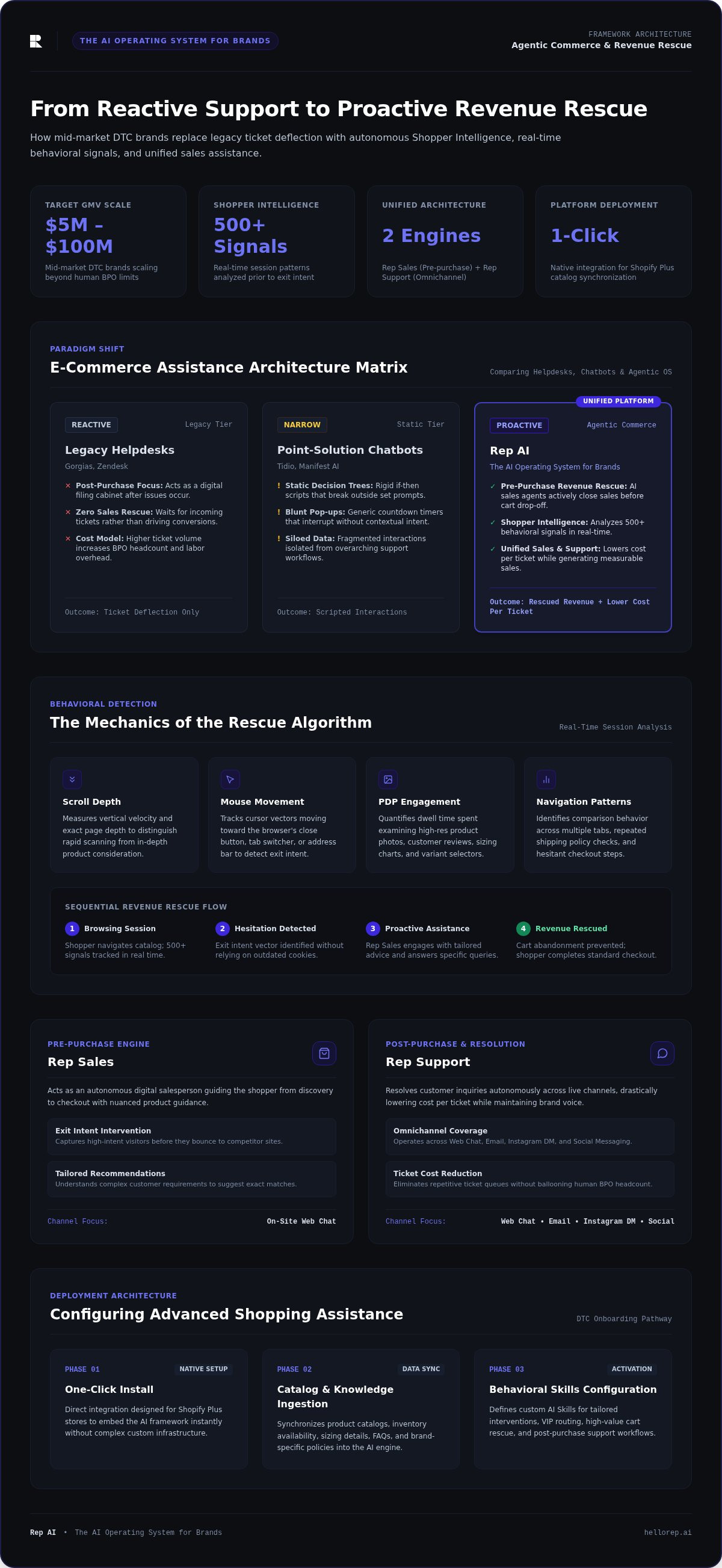
The difference between a customer who is "bouncing" and one who is "considering" lies in the details. Rep AI tracks over 500 specific signals to determine intent. These include:
Scroll depth
How far down the page did they go?
Mouse movement
Is the cursor heading toward the browser's close button or the search bar?
PDP engagement
How much time was spent on specific product photos or reviews?
Navigation patterns
Are they comparing two similar items or looking for shipping info?
Behavioral signals are the foundation of proactive commerce. By analyzing these patterns, the AI Operating System for Brands can predict abandonment before it happens, allowing for a timely and relevant response.
Proactive Intervention vs. Annoying Pop-ups
Timing determines whether an intervention rescues revenue or drives a customer away. The Rescue algorithm only fires when it detects a high probability of abandonment. This isn't a random pop-up; it's a strategic entry by a digital sales agent. Personalization at scale requires matching the AI response to the specific context of the Product Detail Page (PDP).
If a customer is hesitating on a high-ticket item, the agent might offer a detailed comparison or answer a specific technical question. Shopper Intelligence reveals exactly why customers leave, allowing the system to adjust its "Skills" accordingly. This level of insight transforms passive data into active sales strategies. To see how these signals can be optimized for your store, you can schedule a walkthrough of the platform.
Legacy Helpdesks vs. Point-Solutions vs. AI Operating Systems
Legacy helpdesks like Gorgias or Zendesk were built for a different era of commerce. They prioritize ticket management, resolution times, and agent efficiency. While these metrics are important for operational stability, they aren't designed to drive growth. Point-solution chatbots like Tidio or Manifest AI attempt to bridge the gap, but they often fall short because their data remains siloed and their functionality narrow. A true AI Operating System for Brands integrates sales, support, and omnichannel presence into a single engine. This unified approach moves the needle from simple ticket deflection to actual revenue generation.
Why Reactive Support is Losing You Money
Every support ticket represents friction in the customer journey. If a shopper reaches the point where they must manually initiate a chat to ask a question, you've already risked losing them. Advanced shopping assistance identifies these hurdles before they result in a ticket. By shifting from a reactive stance to a proactive one, brands can transform a simple inquiry about shipping into a strategic cross-sell opportunity. This is the "Support-to-Sales" pipeline. Legacy tools wait for the fire; Rep AI prevents it. This transition significantly lowers the cost per resolved ticket while simultaneously increasing the average order value by addressing concerns in real-time.
The Problem with Fragmented Tech Stacks
Fragmented tech stacks create data silos that cripple your efficiency. When your sales chatbot doesn't know what your support helpdesk is doing, the customer experience feels disjointed and unprofessional. A single data layer allows for deep research and more effective Klaviyo segmentation. Rep Support works in tandem with Rep Sales to provide a 360-degree view of the customer. This integration ensures that every interaction is informed by behavioral signals and historical data. Instead of managing five different tools that don't share information, you operate from a unified platform that turns passive data into active results. This efficiency is essential for mid-market brands looking to scale without adding unnecessary complexity to their operations.
Implementing Advanced Assistance: Configuring AI Skills
Implementing advanced shopping assistance is a streamlined process built for rapid ROI. For Shopify Plus brands, it begins with a one-click install that instantly syncs product catalogs and historical order data. This removes the need for manual data entry and ensures the AI has complete context from day one. You then move to configuring "Skills," which are the specific behaviors your agent will perform during a session. Training follows this, where you define your brand voice to ensure the AI speaks with the authority and personality of your best human salesperson. Once launched across web chat, email, and social messaging, the Shopper Intelligence dashboard provides real-time analysis of rescued revenue and performance metrics.
This methodical approach replaces the months of technical overhead associated with legacy helpdesks. By focusing on outcomes rather than just installation, brands can move from setup to sales in a fraction of the time. The goal is a unified system that is ready to sell as soon as it goes live.
Defining AI Skills for Your Brand
Skills are the functional building blocks of your AI agent. Instead of a generic bot, you deploy specialists tailored to your store's specific needs. These behaviors are designed to intervene at critical moments in the buyer journey. For instance, the Product Expert skill answers technical questions about categories like health, beauty, or home goods. The Objection Handler skill addresses concerns regarding price, shipping, or compatibility in real-time. Finally, the Concierge skill guides users through search and discovery on your Product Detail Pages. These behaviors ensure that the AI acts as a strategic asset rather than a simple support tool, providing the precise assistance required to close a sale.
Omni-channel Deployment Strategy
Consistency is vital for a professional brand experience. Your Instagram DMs and social messaging must share the same intelligence as your website. This unified engine ensures that a customer receives the same high-quality assistance regardless of where they choose to engage. Fragmented tools often lead to conflicting information; a unified platform eliminates this risk. This approach achieves an omnichannel resolution benchmark of $0.75 per ticket, drastically reducing overhead while maintaining high performance. You can check out our pricing for helpdesk and omnichannel solutions to see how this fits your growth model.
By centralizing your support and sales efforts, you create a more efficient operation that scales without adding headcount. To see how these skills can be tailored to your specific product catalog and brand voice, book a demo with our team today.
The Future of Agentic Commerce with Rep AI
Rep AI stands as the AI Operating System for Brands, providing the unified solution mid-market DTC companies require to maintain a competitive edge. The reliance on human BPOs is reaching a tipping point where they can no longer keep pace with shopper expectations. These traditional teams often lack the speed and technical depth to provide consistent advanced shopping assistance at the exact moment of shopper intent. By 2026, moving beyond reactive helpdesks will be a fundamental requirement for brands that intend to scale effectively. Your digital storefront must do more than display products. It should function like your most talented salesperson, operating 24/7 to ensure no opportunity is missed.
This shift toward agentic commerce represents a departure from the fragmented tools of the past. Instead of managing a dozen different point solutions that don't share data, brands are adopting unified platforms that prioritize sales outcomes. The goal is simple: create a shopping environment that is as responsive and intelligent as a high-end physical retail experience.
A New Standard for DTC Performance
Rescued revenue has emerged as the primary KPI for e-commerce success in an era of rising acquisition costs. While legacy helpdesks focus on ticket deflection, agentic commerce focuses on the bottom line. The Rep AI Inbox acts as a strategic migration wedge, allowing brands to transition away from reactive tools without disrupting their current workflow. It centralizes sales and support data into a single, high-performance engine. This consolidation ensures that every interaction is an opportunity for growth rather than just a cost center to be minimized. You can book a demo to see how the rescue algorithm monitors behavioral signals to intervene before a customer leaves your site.
The Power of Deep Research and Shopper Intelligence
True growth comes from understanding the "why" behind shopper behavior, not just the "what." Shopper Intelligence provides the deep research capabilities needed to move beyond basic session counts and click maps. By identifying specific friction points and product interests, you can use these AI-discovered topics to fuel your Klaviyo email segmentation. This ensures that your post-visit marketing is as personalized as the on-site experience. Instead of guessing what your customers want, you have a direct line into their intent. This data-driven approach turns passive observation into a proactive sales strategy that scales. Explore our case studies to see how other DTC leaders are using these insights to drive significant revenue rescue across their entire omnichannel presence.
Securing Your Brand's Growth in the Agentic Era
The shift toward agentic commerce is an operational necessity for brands that refuse to leave money on the table. By moving beyond the limitations of reactive helpdesks and narrow point-solutions, you transform your storefront into a high-performance sales engine. Implementing advanced shopping assistance allows you to identify exit intent and deploy specific Skills that rescue revenue before a shopper bounces.
As OpenAI's first ecommerce partner, Rep AI provides the infrastructure to analyze over 500 behavioral signals in real-time. You don't have to wait months for a complex integration. With a one-click install, your brand can be live in days, providing a unified experience across web chat, email, and social messaging. It's time to stop managing tickets and start scaling your DTC performance with a platform built for growth.
Book a demo to see how Rep AI rescues your revenue and take control of your customer journey today.
Frequently Asked Questions
What is the difference between a chatbot and advanced shopping assistance?
The difference lies in proactivity and intelligence. Traditional chatbots wait for a user to type a question, but advanced shopping assistance uses a proactive engine to guide the entire buyer journey. Rep AI functions as the AI Operating System for Brands, moving beyond simple ticket deflection to active revenue generation. It interprets complex intent to act as a digital salesperson rather than a basic support widget, creating a true agentic commerce environment.
How does the rescue algorithm detect exit intent?
The rescue algorithm reads over 500 behavioral signals in real-time to identify the exact moment a shopper hesitates. These signals include scroll depth, mouse movement toward the browser's close button, and time spent on specific product pages. By analyzing these patterns, Rep AI can predict abandonment before it happens. This allows the system to intervene with relevant Skills that address the specific reason a customer might be leaving your store.
Does Rep AI support omnichannel platforms like Instagram and WhatsApp?
Yes, Rep AI provides comprehensive omnichannel support across Facebook, Instagram, WhatsApp, and Email. This ensures your brand maintains a unified presence across all social messaging and digital channels. Every interaction is powered by the same adaptive engine, allowing your AI sales agents to provide consistent answers and recommendations regardless of where the conversation starts. This centralized approach eliminates the data silos common in fragmented support tools.
Can the AI agent process payments or complete checkouts?
No, the AI agent doesn't process payments or complete checkouts natively. Its primary role is to engage shoppers, answer technical questions, and provide personalized product recommendations. Once the customer is ready to buy, Rep AI hands them off to your store's existing checkout process. This ensures a secure transaction while the AI focuses on the pre-purchase journey and revenue rescue strategies that keep shoppers engaged until they are ready to purchase.
What eCommerce platforms does Rep AI integrate with?
Rep AI is specifically built for mid-market Shopify Plus DTC brands. It features a one-click install that allows for rapid deployment, syncing your entire product catalog and historical data in just a few days. While the platform is optimized for the Shopify ecosystem, it doesn't currently offer native support for WooCommerce or integration with Salesforce Service Cloud. This focus ensures deep technical compatibility and high performance for brands looking to scale quickly.
How much does advanced AI support cost per ticket?
Rep AI offers a highly efficient pricing model for omnichannel support. The cost is approximately $0.75 per resolved ticket, which is about 25% below typical market rates for automated support. Additionally, the Rep AI Inbox is priced at $20 per seat, with the first three months offered for free. This results-driven pricing ensures that brands can scale their support operations while significantly lowering their overall cost per resolution and improving ROI.
Is a "Built for Shopify" badge available for Rep AI?
The "Built for Shopify" badge isn't yet earned, as the platform is currently in the QA phase of the certification process. However, Rep AI was founded in 2020 as OpenAI’s first ecommerce partner and maintains deep technical roots within the Shopify Plus ecosystem. Merchants can still use the one-click install to deploy the AI Operating System for Brands and begin rescuing revenue immediately without waiting for specific app store certifications.
Can I use Rep AI for voice or SMS support?
Voice and SMS aren't currently supported as live channels. Rep AI focuses its intelligence on web chat, email, Instagram DM, and social messaging where behavioral signals are most accessible. By prioritizing these digital touchpoints, the platform can more effectively identify exit intent and deploy proactive sales Skills. Brands looking for advanced shopping assistance should focus on these high-traffic digital channels to maximize their rescued revenue and support efficiency.
More from REP AI

AI Sales Automation for B2C: 2026 Agentic Commerce Guide
What if your storefront could identify a customer's hesitation before they ever clicked away? Most B2C brands treat support as a reactive cost center, waiting for a ticket to arrive while revenue slips through the cracks. It's an expensive cycle of high cart abandonment and rising BPO costs that oft...

How to Automate Support Tickets to Save Revenue in 2026
Industry data suggests that up to 80% of routine e-commerce inquiries can now be autonomously resolved through specialized agentic workflows. For most mid-market brands, the challenge isn't finding a tool to automate customer service tickets, it's finding a system that doesn't sacrifice the customer...

AI in B2C Sales: Rescuing Revenue with Agentic Commerce in 2026
Your current helpdesk isn't a sales tool; it's a digital waiting room where your most valuable customers go to lose interest. While 81% of sales teams have adopted some form of AI in B2C sales by 2026, most still rely on reactive systems that wait for a customer to ask a question. This gap between p...
Want to see what your store would do with Rep?
Run your real Shopify catalog through the simulator before you commit to anything. No sales call required.

