


How to Reduce Customer Support Response Time and Rescue Revenue in 2026

Every minute a high-intent shopper waits for a reply, your conversion readiness drops by roughly 10 percent. For most brands, the traditional helpdesk has become a bottleneck where revenue goes to die. You likely recognize the pattern: your team is overwhelmed during peak seasons, the pressure to accelerate resolution speed feels impossible, and abandoned carts pile up because simple questions went unanswered. It is a frustrating cycle that treats support as a cost center rather than a growth engine.
The goal is no longer just to deflect tickets; it is to capture every opportunity in real time. In this guide, you will discover how to eliminate wait times and transform every support interaction into a sales opportunity using the Agentic Commerce OS. We will examine how Rep Support and Rep Sales use Shopper Intelligence and behavioral signals to provide instant, human-like resolution 24/7. You will learn to move beyond reactive legacy systems and adopt a proactive strategy that rescues revenue and minimizes reliance on expensive BPO services.
Key Takeaways
• Understand why high-intent shoppers abandon carts during wait times and how to bridge the gap between traditional support and instant resolution.
• Learn how to reduce customer support response time by replacing reactive legacy helpdesks with a proactive Agentic Commerce OS.
• Discover how the Rescue algorithm reads 500+ behavioral signals to predict exit intent and address shopper friction points before they become support tickets.
• Implement a unified omnichannel strategy that delivers human-like resolution across web chat, email, and social messaging platforms.
• Evaluate the transition to Rep AI Inbox as a cost-effective migration wedge to scale your brand without the overhead of high-cost BPO services.
Why Slow Response Times Are Killing Your DTC Revenue
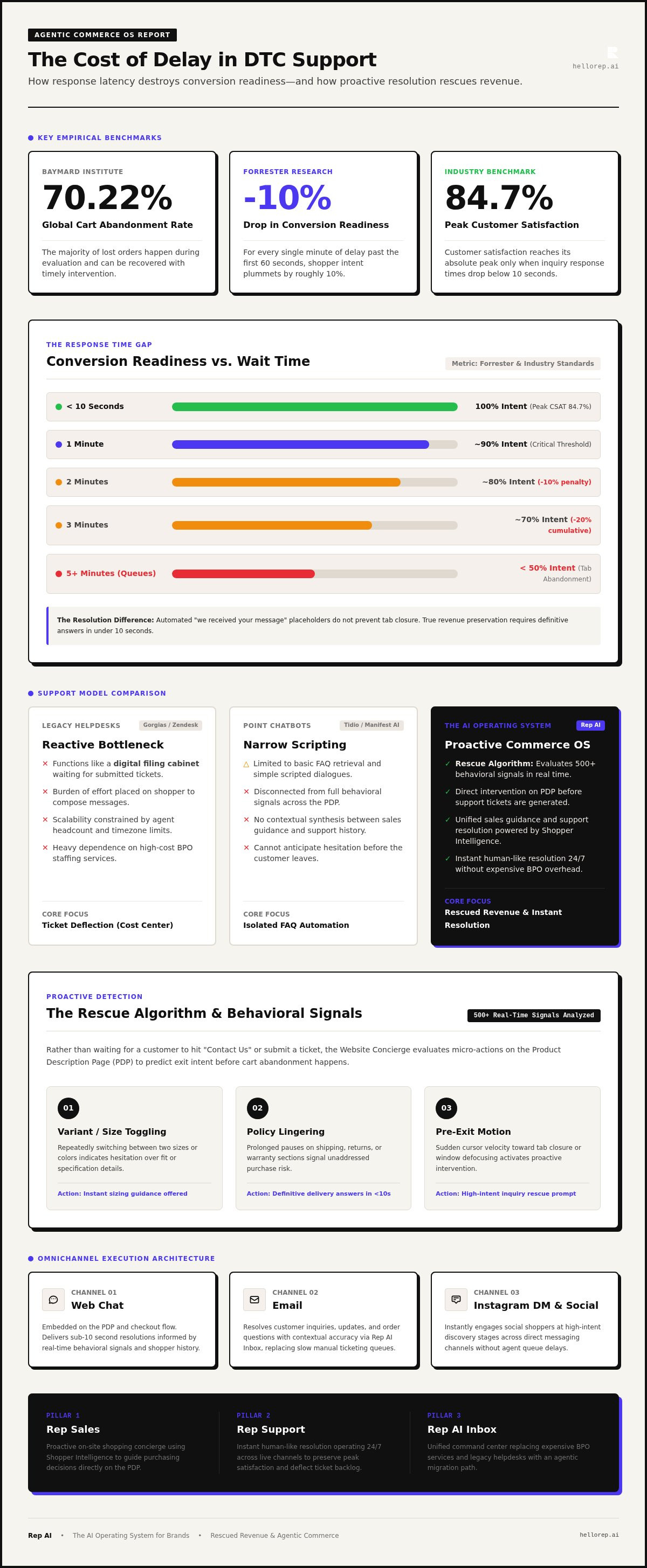
Modern DTC brands are bleeding money because they treat support as a cleanup crew rather than a sales team. The "Response Time Gap" is the distance between a shopper's moment of high intent and your brand's ability to provide an answer. In 2026, this gap has shrunk to seconds. Shoppers no longer compare your brand to your direct competitors; they compare you to the fastest digital experience they had today. If your response isn't immediate, the customer is gone.
Data from the Baymard Institute shows that the global cart abandonment rate sits at 70.22 percent. A significant portion of these lost orders is recoverable, but only if you intervene during the moment of evaluation. Waiting for a human agent to reduce customer support response time is a strategy designed for failure. By the time a reactive helpdesk notifies an agent, the shopper has already closed the tab. This is why high-performing brands have shifted their focus to "Rescued Revenue" as the primary KPI. Every interaction is a chance to save a sale that would otherwise be lost to friction or hesitation.
The Hidden Cost of Reactive Support
Reactive support is a structural liability. When you rely on human agents, your ability to convert is limited by your headcount and your time zone. Missed sales during off-hours or sudden traffic spikes represent pure lost profit. Traditional BPO services often fail to scale effectively during these peaks, leading to long queues and frustrated buyers. According to research cited by Forrester, every minute of delay past the first 60 seconds slashes conversion readiness by roughly 10 percent. You aren't just losing a ticket; you're losing a customer lifetime value.
Response Time vs. Resolution Time
It's vital to distinguish between a fast reply and a real answer. An automated "we've received your message" email is a placeholder that shoppers recognize as a delay tactic. It does nothing to stop a customer from leaving your site. Resolution is the only metric that preserves revenue. The psychological impact of an instant, human-like interaction is profound. When a shopper gets a definitive answer about shipping or product compatibility in under 10 seconds, their trust in the brand spikes. Industry benchmarks indicate that customer satisfaction peaks at 84.7 percent only when response times drop below that 10-second threshold. Agentic commerce delivers these resolutions at scale, ensuring that curiosity turns into a checkout rather than a support ticket.
Instant Intervention
Capturing shoppers at the peak of their interest.
24/7 Availability
Rescuing revenue while your human team sleeps.
Friction Removal
Addressing behavioral signals before they lead to exit intent.
Reactive vs. Proactive: Shifting to Agentic Commerce
Legacy helpdesks like Gorgias or Zendesk are fundamentally reactive systems. They function as digital filing cabinets, waiting for a customer to struggle, compose a message, and submit a ticket before any action is taken. This model is inherently slow and places the burden of effort on the shopper. In contrast, Rep AI provides the Agentic Commerce OS, a system that transforms support from a passive queue into a proactive sales force. Instead of relying on narrow, bolted-on chatbots that only handle basic FAQs, this is one adaptive engine designed to understand the entire shopper journey.
The Power of Proactive Rescue
The core of this shift lies in the Website Concierge. While reactive tools wait for a "Contact Us" click, Rep AI engages shoppers directly on the Product Description Page (PDP). The system analyzes over 500 behavioral signals to detect frustration or hesitation in real time. If a shopper repeatedly toggles between two sizes or lingers on a shipping policy without moving to checkout, the AI identifies this as exit intent. By intervening at that exact moment, the system provides a resolution before a formal inquiry is ever generated. This is the most efficient way to reduce customer support response time, as it eliminates the wait entirely. It doesn't just manage tickets; it prevents them by rescuing the sale at the point of friction.
Unified Sales and Support Strategy
Siloing sales and support is a primary cause of inefficiency in modern e-commerce. When these functions are separated, response times suffer because data is fragmented across different platforms. Rep AI solves this by combining real-time behavioral data with a customer's full support history. This unified intelligence ensures that every interaction is informed by context. For example, if a returning customer has a question about a previous order while browsing a new product, the system handles both the service inquiry and the sales guidance simultaneously. You can learn how Rep Sales drives revenue by providing this level of integrated shopper assistance.
This approach moves beyond simple ticket deflection. It uses Shopper Intelligence to predict needs and offer tailored solutions that drive conversion. When support and sales operate as a single unit, the brand projects a sense of modern authority and reliability. To see how this unified platform can transform your operations, book a demo of the Agentic Commerce OS today.
Using Behavioral Signals to Predict and Resolve Inquiries
Most brands wait for the customer to break the silence. They rely on the shopper to identify their own problem, find the chat icon, and articulate a question. This reactive approach is the primary reason brands struggle to reduce customer support response time during high-traffic periods. Rep AI reverses this dynamic through the Rescue algorithm. Instead of waiting for a ticket, the system monitors over 500 behavioral signals in real time to understand exactly where a shopper is stuck. This isn't just tracking clicks; it's a sophisticated analysis of browsing velocity, scroll depth, and interaction patterns that transforms passive data into actionable Shopper Intelligence.
By anticipating questions before they are typed, the Agentic Commerce OS eliminates the need for the customer to reach out at all. If the system detects a shopper lingering on a sizing chart for an unusual duration, it can proactively offer a fit guide. This preemptive resolution ensures that the "response time" is effectively zero, as the information is delivered at the exact moment of need. It moves the brand away from the traditional helpdesk model and toward a future of unified, intelligent commerce.
Identifying Exit Intent Before the Bounce
The Website Concierge doesn't just sit on the page; it watches for specific patterns that signal a need for support. Mouse movement toward the browser's close button, rapid "rage clicking," or excessive dwell time on a complex checkout page are all triggers for intervention. In the context of agentic commerce, exit intent is the specific moment a shopper's behavioral signals indicate a high probability of abandoning their session without completing a purchase. When the AI detects these signals, it triggers a "Rescue" event. By providing an immediate answer to a hidden friction point, the system captures revenue that would otherwise be lost to a bounce. This proactive intervention is a cornerstone of a high-performance sales and support strategy.
Skills: Training Your AI to Act Like Your Best Salesperson
To move beyond simple keyword matching, Rep AI uses "Skills." These are pre-configured logic sets that allow the AI to handle complex customer journeys with the nuance of a human expert. Skills go beyond basic FAQs by understanding the deep context of an inquiry. For example, a "Product Recommendation Skill" doesn't just look for product names; it analyzes the shopper's current cart and browsing history to suggest the perfect upsell. These Skills drastically reduce customer support response time by resolving multi-step inquiries without ever involving a human agent. Because the AI is trained on your specific brand data and policies, it delivers authoritative answers that drive conversion while maintaining a consistent brand voice across every interaction.
Implementing an Omni-channel AI Strategy for 2026
Legacy helpdesks often force brands into a fragmented reality. You might have one tool for web chat, another for social DMs, and a third for email. This fragmentation is a primary driver of inefficiency. When data is siloed, your team spends more time context-switching than resolving issues. To truly reduce customer support response time, you need a unified data layer that recognizes a shopper whether they are on your site or in your Instagram DMs. Rep AI provides this through a unified platform for proactive sales and omnichannel support, ensuring that every channel is powered by the same Shopper Intelligence.
This cross-channel recognition means that a customer's history and behavioral patterns follow them across platforms. If a shopper asks a question on your site and later follows up via WhatsApp, the AI maintains the context of the previous interaction. This level of continuity is impossible with narrow point-solutions that only handle one channel at a time. By centralizing your operations on the Agentic Commerce OS, you deliver a professional and authoritative experience that treats every channel as a high-end sales floor.
Automating Social Messaging and Email
Social messaging is no longer a secondary channel; it's a primary destination for high-intent buyers. Shoppers expect instant resolution when they message your brand on Instagram or Facebook. Rep Support resolves these inquiries immediately, preventing the delay that leads to abandonment. For high-volume email channels, the system handles tickets with significantly higher efficiency. Industry data suggests that Rep AI’s omnichannel resolution costs are approximately 25 percent below market rates for automated resolutions. For a deeper dive into these strategies, see our Omnichannel AI Customer Support Software Guide.
The One-Click Install Advantage
Speed of deployment is just as critical as speed of response. Mid-market brands cannot afford months of implementation or heavy technical debt. Rep AI offers a one-click install that integrates directly with Shopify Plus. This allows the system to pull real-time product and order data instantly. Because it functions as the AI Operating System for Brands, it replaces narrow point-solutions with a single, high-performance engine. You get the benefit of advanced behavioral tracking and automated resolution without the complex setup usually associated with enterprise-grade tools. This allows your team to focus on strategic growth while the AI handles the heavy lifting of real-time resolution.
This unified approach ensures that your brand is always available, regardless of where the customer chooses to engage. By centralizing your strategy around agentic commerce, you remove the friction points that kill conversion. If you're ready to unify your sales and support across every channel, schedule a walkthrough of our omnichannel capabilities.
Scaling Your Brand with Rep Support and Rep AI Inbox
Scaling a DTC brand often hits a ceiling when support costs grow linearly with revenue. If you want to reduce customer support response time while maintaining healthy margins, you need a system that breaks this dependency. The Rep AI Inbox serves as the primary migration wedge for brands moving away from reactive legacy helpdesks. By offering a unified interface at $20 per seat, it removes the financial friction typically associated with high-performance support. This isn't just another tool in your stack; it is the AI Operating System for Brands, designed to consolidate fragmented workflows and unify your customer data into a single, actionable stream.
The transition to agentic commerce allows you to move beyond the limitations of traditional support models. Instead of managing a growing pile of tickets, you manage a system that resolves them autonomously. This shift ensures that your brand remains responsive even during massive traffic spikes or holiday rushes. By centralizing your operations, you ensure that every shopper receives the same high-end service, regardless of whether they are a first-time visitor or a loyal advocate. It is about building a foundation for growth that doesn't require a proportional increase in human overhead.
Replacing Human BPO with Intelligent Automation
DTC brands often turn to human BPO services to handle volume, but this introduces variable quality and rising costs. The math of agentic commerce is significantly more favorable. While human labor costs continue to climb, the cost of an automated resolution with Rep AI sits at approximately $0.75 per ticket. This efficiency allows mid-market brands to scale to 50,000 or even 100,000 sessions per month without adding a single human agent. You can explore our case studies on scaling DTC brands to see how this transition looks in practice. The system doesn't just deflect inquiries; it resolves them with human-like precision, freeing your internal team to focus on strategic initiatives rather than repetitive ticket management.
Turning Every Conversation into Behavioral Data
Every support interaction is a rich source of data that most brands let go to waste. Rep AI uses Deep Research to capture these insights and feed them back into your marketing ecosystem. By integrating with Klaviyo, the system ensures that support interactions directly inform your email and SMS flows. If multiple customers ask about a specific product feature via chat, that is a behavioral signal telling you to update your PDP or adjust your marketing copy. This closes the loop between support, sales, and marketing. Using Shopper Intelligence, you can identify precisely why customers are leaving and resolve the root cause in real time. This proactive approach ensures that you reduce customer support response time while simultaneously improving the overall brand experience and driving higher lifetime value.
Future-Proof Your Brand with Agentic Commerce
The shift from reactive support to agentic commerce is no longer optional for brands that prioritize growth. By moving beyond legacy helpdesks and adopting the Agentic Commerce OS, you transform every interaction into a sales opportunity. You've seen how Shopper Intelligence and behavioral signals allow you to intervene at the moment of exit intent; this ensures that no high-intent customer is left waiting. This proactive approach is the only sustainable way to reduce customer support response time while scaling your brand without ballooning human overhead.
As OpenAI's first ecommerce partner, Rep AI delivers a high-performance system that you can launch in days via a one-click install. We're committed to your success, which is why the first three months of the Rep AI Inbox are free for new partners. It's time to stop treating support as a cost center and start treating it as your most powerful revenue engine. Take control of your customer experience and ensure every friction point is met with an immediate, intelligent resolution.
Ready to rescue your revenue? Book a demo with Rep AI today.
Frequently Asked Questions
How does AI reduce customer support response time?
AI eliminates the queue by providing instant resolutions across all digital channels. By using the Rep AI Rescue algorithm, the system identifies shopper friction points before a ticket is even filed. This proactive approach allows brands to reduce customer support response time to zero for common inquiries. The platform acts as one adaptive engine that recognizes behavioral signals, providing answers within seconds rather than forcing customers to wait for a human agent.
What is a good average response time for DTC brands in 2026?
In 2026, the benchmark for high-performing brands is a response time of under 10 seconds. Research indicates that customer satisfaction peaks at 84.7 percent only when replies are nearly instantaneous. Beyond 60 seconds, conversion readiness drops by roughly 10 percent every minute. Modern brands aim for sub-ten-second resolution on web chat and social DMs, ensuring that the shopper's moment of high intent is captured before they abandon their cart or browse elsewhere.
Can Rep AI handle complex support inquiries without human help?
Skills allow Rep AI to manage complex, multi-step customer journeys that go beyond simple FAQs. These configurable logic sets enable the system to understand deep context and provide definitive answers about product compatibility or shipping policies. If an inquiry requires a human touch, the platform passes the conversation to the Rep AI Inbox. This ensures a professional handoff where human agents have full visibility into the behavioral data and previous interaction history.
Does reducing response time actually increase sales?
Speed is directly correlated with conversion. Every minute a shopper waits past the first 60 seconds slashes their readiness to buy by roughly 10 percent. By providing instant resolutions, you effectively rescue revenue that would otherwise be lost to exit intent. Proactive AI engagement captures shoppers at the peak of their interest, turning a potential support ticket into a completed checkout. This outcome-oriented approach prioritizes rescued revenue over simple ticket deflection.
How long does it take to implement an AI support desk?
Implementation is designed for speed. With a one-click install for Shopify Plus, most mid-market brands can go live in days rather than months. The platform integrates directly with your existing digital ecosystem to pull product and order data immediately. This rapid deployment minimizes technical debt and allows you to start seeing the impact on your response times and conversion rates almost instantly, without a long development cycle or complex store modifications.
What is the difference between a legacy chatbot and an AI agent?
Legacy chatbots are reactive and narrow, relying on rigid trees and keyword matching. They wait for the customer to struggle first. An AI agent, or agentic commerce system, is proactive. It uses Shopper Intelligence to read 500+ behavioral signals and intervene before a struggle becomes a ticket. While chatbots are often bolted-on tools, Rep AI is a unified operating system that combines sales, support, and behavioral research into one adaptive engine.
How much does it cost to resolve a ticket with Rep AI?
Rep AI offers a cost-effective model compared to traditional BPO services or legacy helpdesks. Resolving an automated ticket via Omni-Channel AI costs approximately $0.75. This efficiency helps brands reduce customer support response time at scale. Additionally, the Rep AI Inbox is priced at $20 per seat, providing a high-performance migration wedge for brands looking to scale their support operations without a proportional increase in human labor costs or overhead.
Can AI support integrate with my existing Shopify store?
Integration is built for mid-market DTC brands on Shopify Plus. It integrates directly with your store and tools like Klaviyo to synchronize product data, order history, and customer segments. This connectivity allows the AI to provide accurate, real-time answers about order status and inventory levels. While the system focuses on Shopify, its ability to unify data across Instagram, Facebook, and WhatsApp ensures a consistent omnichannel experience for every high-intent shopper.
More from REP AI
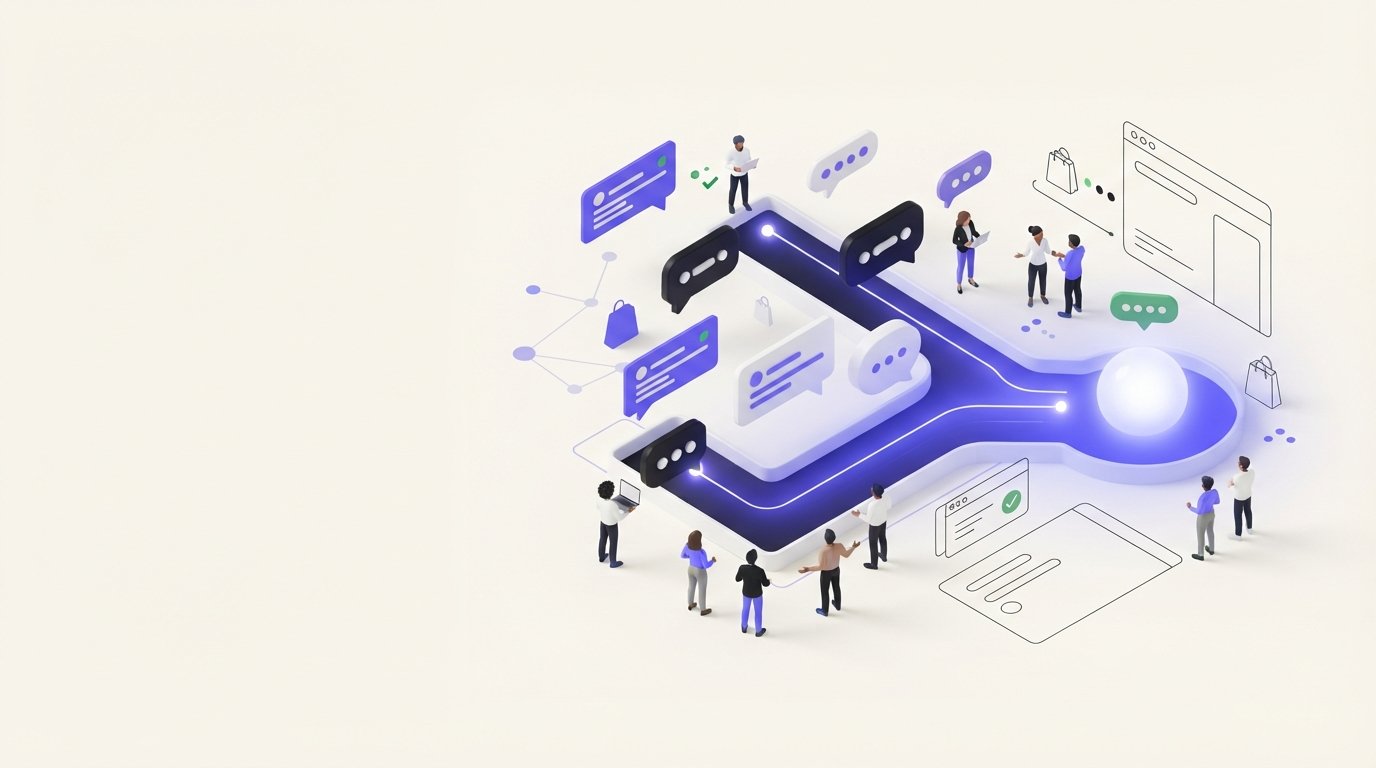
Customer Support Backlog Management: Beyond Reactive Deflection in 2026
A support backlog isn't a staffing crisis; it's a structural failure of a reactive commerce engine. When response times stretch past 48 hours, you aren't just losing sleep. You're losing customers who expect immediate resolution. Legacy helpdesks like Gorgias and Zendesk were built for a reactive er...
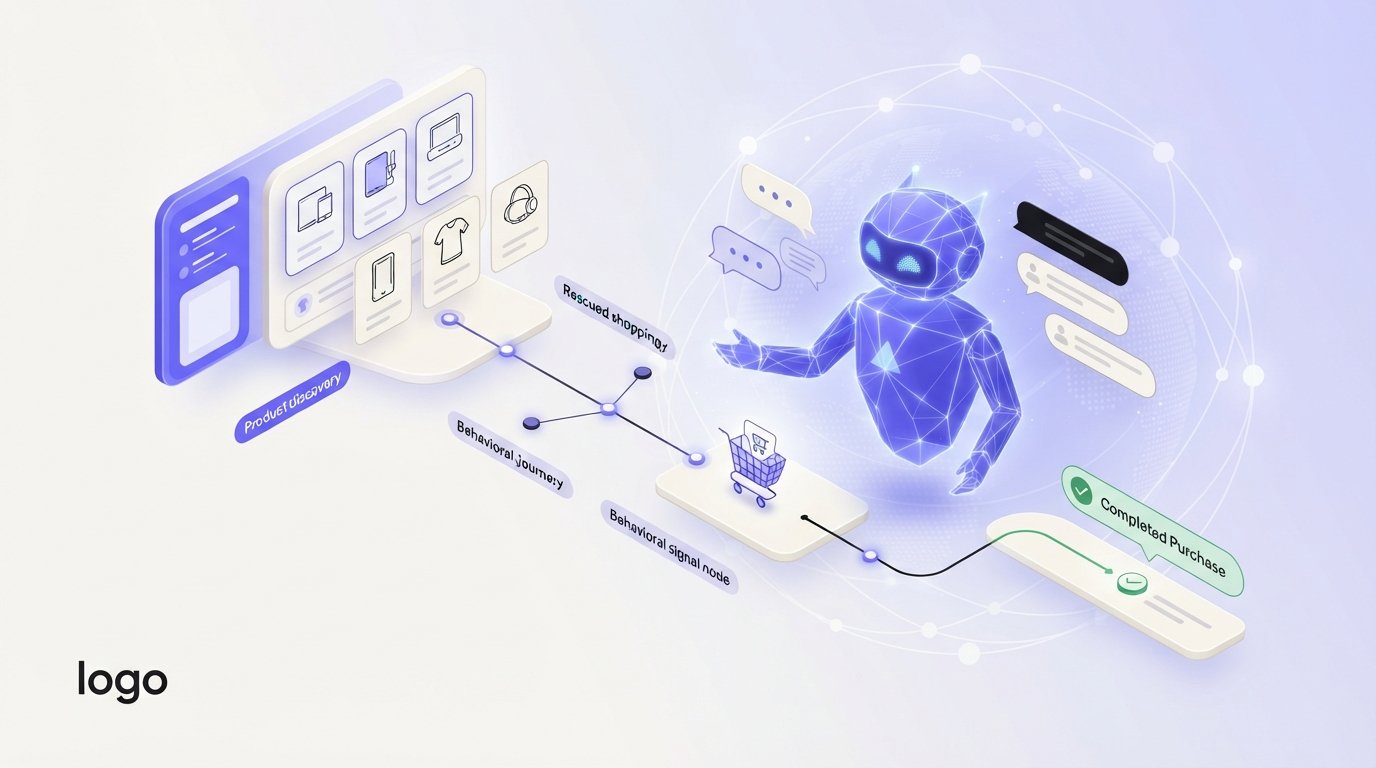
Advanced Shopping Assistance: A Guide to Agentic Commerce in 2026
Most DTC brands are bleeding revenue through a thousand tiny cuts, and their legacy helpdesks are simply handing out bandages. You've likely felt the frustration of watching high cart abandonment rates climb while your support team remains buried under repetitive tickets. Reactive tools serve a purp...

AI Sales Automation for B2C: 2026 Agentic Commerce Guide
What if your storefront could identify a customer's hesitation before they ever clicked away? Most B2C brands treat support as a reactive cost center, waiting for a ticket to arrive while revenue slips through the cracks. It's an expensive cycle of high cart abandonment and rising BPO costs that oft...
Want to see what your store would do with Rep?
Run your real Shopify catalog through the simulator before you commit to anything. No sales call required.

