


7 Best Guided Selling Solutions for Ecommerce in 2026

Quick Summary
Guided selling helps e-commerce brands turn browsers into buyers with conversational AI, interactive product finders, quiz-based recommendations, and enterprise personalization. The best solutions reduce overwhelm, deliver tailored product suggestions, boost conversions, and create seamless, data-driven shopping experiences.
Why Guided Selling Matters for Ecommerce
Large catalogs and decision fatigue lead visitors to abandon stores without making a purchase. In physical retail, a sales associate would step in, ask a few questions, and narrow the options. But online, most stores leave shoppers to figure it out on their own.
However, guided selling solves that problem.
It replicates the in-store advisory experience digitally, using interactive questions, behavioral signals, or AI-driven conversations to understand each shopper's needs. This leads to faster purchasing decisions, fewer returns, and higher average order values.
Here we’ll share 7 guided solutions for e-commerce. So, keep reading!
Why Listen to Us?
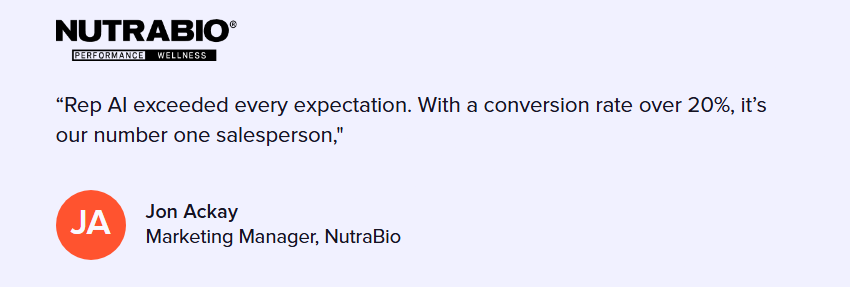
At Rep AI, we built the first Agentic Commerce OS to provide sales guidance, automate processes, and deliver shopper intelligence to Shopify brands from a single platform.
Our platform analyzes real-time shopper behavior and identifies where visitors get stuck. It helps e-commerce brands boost conversion by 10–30% in the first 30 days, turning browsing into buying with AI-driven, personalized guidance.
What Is a Guided Selling SaaS Solution?
A guided selling SaaS solution offers online shoppers a structured, personalized experience as they make product choices. It engages them in a needs-based dialogue by asking questions about their preferences, intended use, budget, or requirements. Then it surfaces tailored product recommendations based on their answers.
Guided selling SaaS solutions range from simple interactive product finders to fully conversational AI platforms that understand natural language and detect behavioral intent.
The advanced agentic platforms even cross-sell complementary items, handle support inquiries, and generate actionable intelligence about what your customers actually care about.
Benefits of Guided Selling for Your Ecommerce Store
Here are the core benefits of guided selling for your e-commerce store, highlighted in detail:
- Higher Conversion Rates: By reducing choice overload, guided selling removes friction, making shoppers more likely to purchase.
- Increased Average Order Value: When you understand what a shopper needs, recommending add-ons and upgrades feels helpful rather than pushy.
- Fewer Returns: Guided selling helps shoppers buy products that genuinely match their needs, so they’re less likely to return them.
- Zero-Party Data Collection: Guided selling solutions capture valuable shopper preference data directly, like what they’re looking for, their concerns, and the price range they’re comfortable with.
- Reduced Support Load: Guided selling answers pre-purchase support tickets proactively, freeing your team to focus on complex issues.
The Best Ecommerce Guided Selling Solutions Compared
Here’s a side-by-side comparison of the 7 guided selling solutions covered in this guide:
1. Rep AI
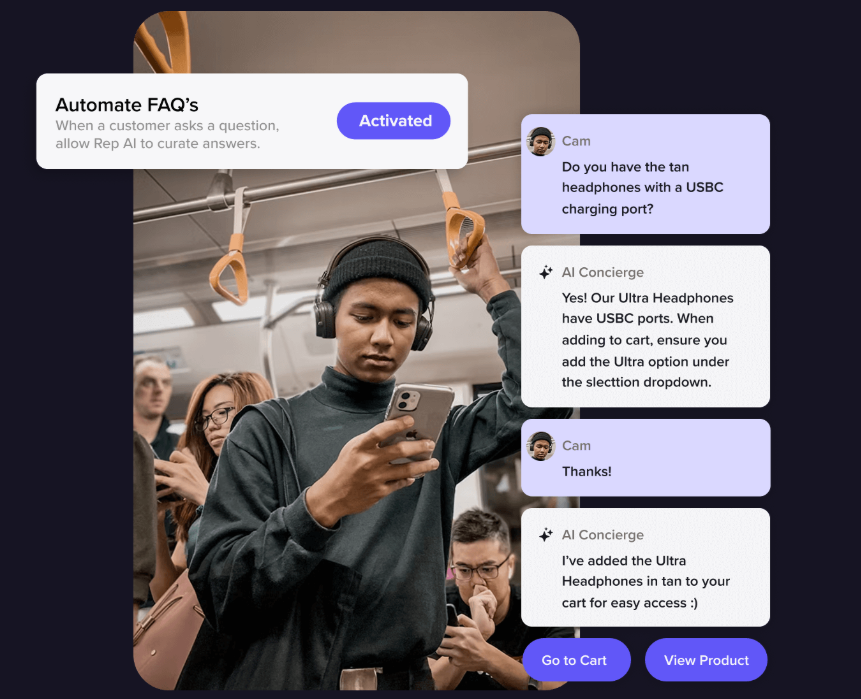
Rep AI is an AI-powered Agentic Commerce platform that delivers guided selling through real-time conversation. Unlike traditional quizzes or static recommendation engines, Rep AI’s behavioral AI detects when visitors are hesitating, comparing products, or about to leave.
The agentic AI asks contextual questions, understands natural-language responses, and recommends products through a conversational interface to reduce high drop-off.
What sets Rep AI apart is that it’s more than a product recommendation solution. It’s a unified platform for sales guidance, automated support, and shopper intelligence, handling up to 97% of support inquiries while surfacing insights about visitor behavior. Every conversation integrates seamlessly with your marketing stack, powering smarter segmentation and data-driven growth.
Key Features
- Behavioral AI Sales Agent: Proactively engages shoppers who are about to disengage with personalized, conversational product guidance.
- One-Click Add-to-Cart & Visual Product Filtering: Shoppers browse carousels, compare, and add items directly in chat.
- Virtual Try-On: Customers upload a selfie and see a realistic image of themselves wearing your products within the chat interface.
- Klaviyo Conversation Sync: Every AI conversation automatically syncs to customer profiles in Klaviyo, enabling segmentation based on what customers actually said.
- Shopper Intelligence & Drop-Off Analytics: Surfaces actionable insights on visitor behavior, unanswered questions, and missing website information so teams can optimize UX and product placement.
- Automated Support Resolution: Handles orders, returns, cancellations, WISMO inquiries, and FAQs autonomously.
Pricing
Pricing tiers scale with monthly sessions. All include a 30-day free trial, plus an ROI money-back guarantee.
- Pay As You Grow: Starts at $12/month
- AI Sales Agent: Starts at $79/month
- AI Support Agent: Starts at $39/month
- AI Concierge Bundle: Starts at $95/month
- Enterprise (500K+ sessions): Custom pricing
Integrations
Connects with Shopify, Klaviyo, Gorgias, Zendesk, Freshdesk, and other marketing platforms, with real-time catalog sync and custom tag transmission for segmentation.
Pros
- Sales-first AI that actively drives conversion and AOV.
- Easy one-click setup with automatic brand voice and tone calibration.
- Deflects 50–70% of inbound tickets within the first 30 days.
- Real-time catalog sync keeps product recommendations accurate without manual updates.
- Dedicated CSM support and detailed analytics for data-driven optimization.
- 24/7 support and sales assistance.
Cons
- Currently only available for Shopify and Salesforce Commerce with more integrations coming soon.
2. Zoovu
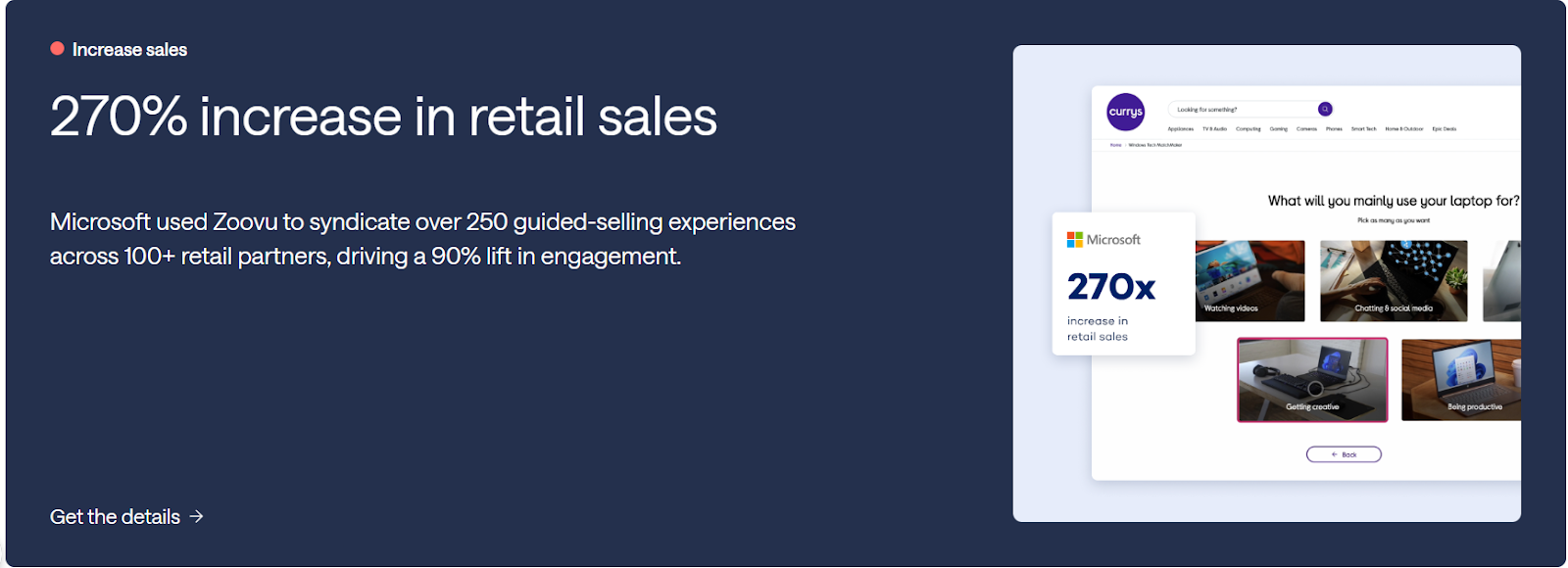
Zoovu is an enterprise-grade platform designed for brands with complex catalogs. It shortens decision time and lifts AOV by matching complex catalogs to buyer intent. The platform uses AI advisors, natural language search, and visual configurators to transform large catalogs into easy, guided shopping experiences for global brands with millions of products.
Key Features
- AI Product Advisors: Dynamic question flows that map shopper intent to the correct SKUs across huge catalogs.
- Visual Product Configurators: Real-time customization or bundle configuration with visual feedback.
- AI Conversational Search: Natural language search that interprets buyer intent and offers results tuned to enriched product attributes.
Pricing
Custom pricing based on product catalog, product discovery, traffic volume, and shopper interactions.
Integrations
Shopify Plus, Salesforce Commerce Cloud, SAP, BigCommerce, and Magento, plus PIM, ERP, CRM, and CDP systems.
Pros
- Scales to millions of SKUs and multiple languages and regions.
- Built-in data enrichment reduces launch time and manual cleanup.
- Modular pricing lets enterprise teams align cost to impact.
Cons
- Custom pricing requires contacting sales.
- Implementation complexity needs teams with dedicated e-commerce resources.
- Likely overkill for straightforward DTC stores.
- Some users report variability in AI accuracy and relevancy.
3. Octane AI
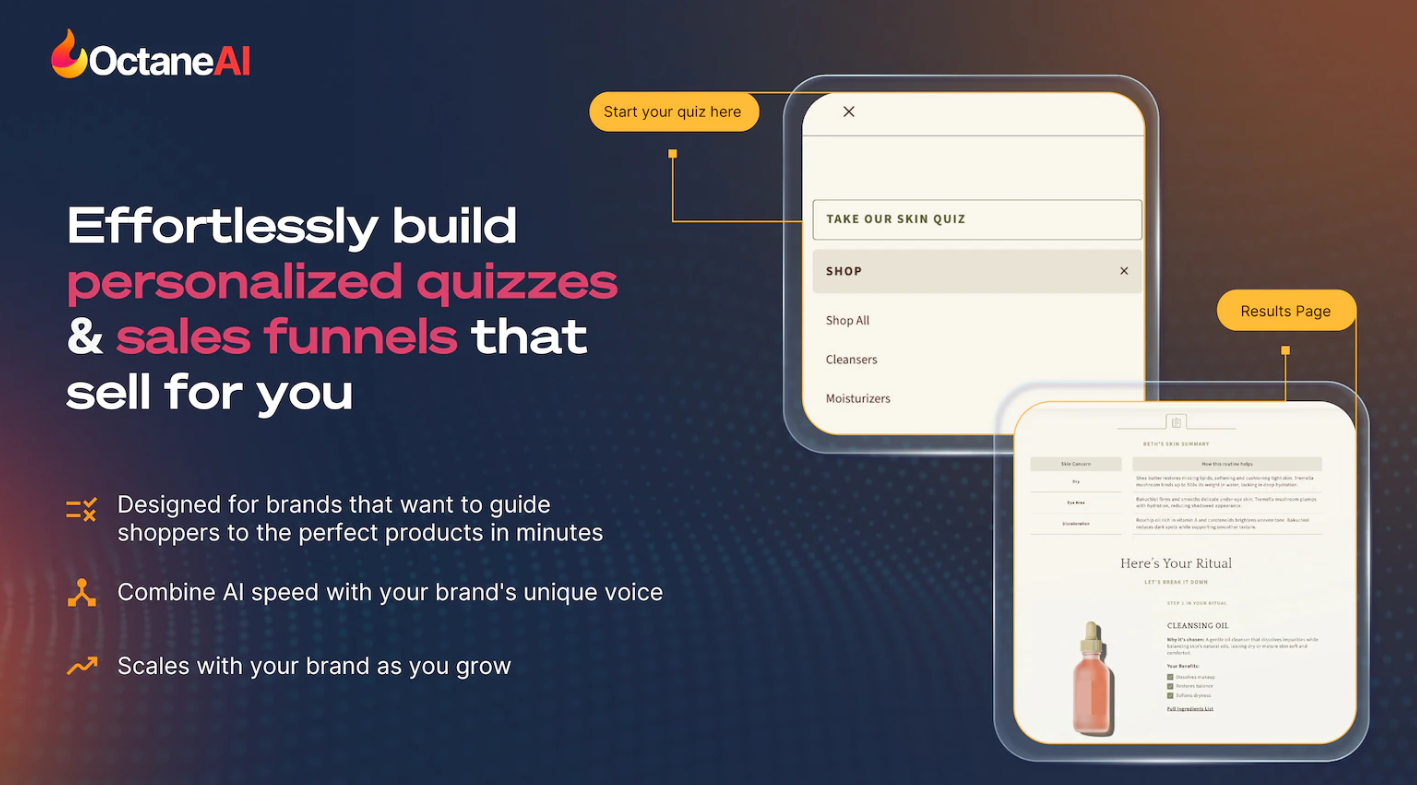
Octane AI is a guided selling platform focused on quiz‑driven product recommendations and zero‑party data collection for Shopify direct‑to‑consumer brands. It captures explicit shopper preferences and syncs them with Klaviyo and SMS platforms to power personalized email and text marketing campaigns.
Key Features
- AI Quiz Builder: No-code, drag-and-drop builder flows with branching logic and templates.
- Zero-Party Data Collection: Quiz responses capture explicit preference data that feeds directly into customer profiles for personalized marketing.
- A/B Testing & Analytics: Iterate flows and recommendation logic to boost conversion.
Pricing
- Octane: $50/month.
- Octane Plus: $200/month.
- Growth & Unlimited: $500+ per month.
Integrations
Shopify, Klaviyo, Attentive, Postscript, Recharge, Yotpo, Gorgias, Google Analytics, and 50+ tools.
Pros
- Deep Shopify product sync and real-time catalog mapping.
- Converts quiz responses into high-value Klaviyo segments for revenue-driving campaigns.
- Highly visual, brandable quiz experiences that feel native to your store.
Cons
- A quiz-based approach doesn’t adapt to live browsing as naturally as conversational assistants.
- High-traffic stores can see unexpectedly higher bills.
- Limited outside Shopify support.
4. Outfindo
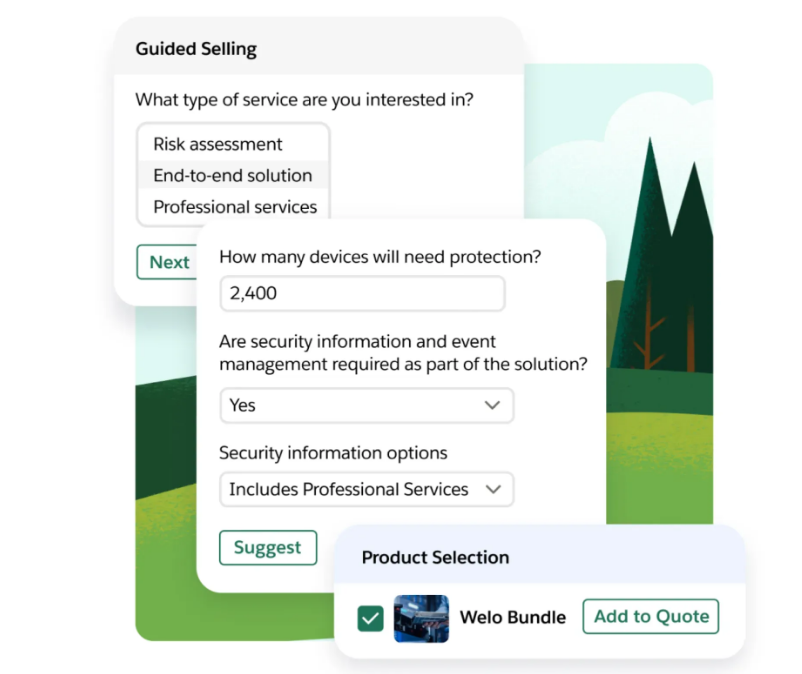
Outfindo positions itself as a plug-and-play guided-selling solution that behaves like an AI sales agent. It builds interactive product finders using customer behavior analysis, while guiding shoppers through a structured decision flow.
Key Features
- AI Product Finders: Guided question flows that match shoppers to relevant products.
- Customer Behavior Analysis: Uses interaction data to refine recommendations over time.
- Plug-and-Play Deployment: Pre-built flows for fast implementation without custom development.
Pricing
- Essential: €99/month.
- Plus: €599/month.
- Custom pricing: Based on catalog size and traffic.
Integrations
Shopify, WooCommerce, Magento, and custom e-commerce platforms via API and JavaScript integration.
Pros
- Fast deployment with minimal technical requirements.
- Behavior analysis improves recommendation quality without constant manual tuning.
- Platform-agnostic for most stores.
Cons
- Smaller market presence.
- No native conversational AI.
- Custom pricing means buyers must contact sales to evaluate ROI.
5. Nosto
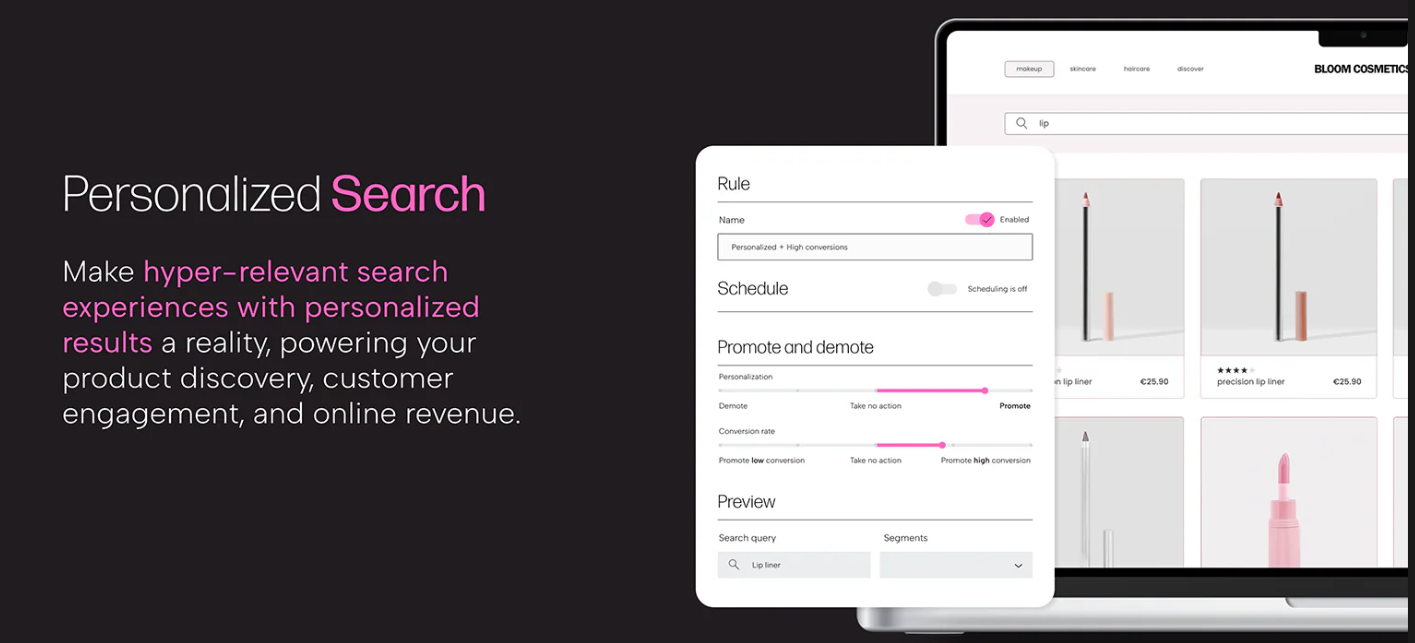
Nosto is a personalization platform that uses real-time behavioral signals for AI-driven product recommendations. Without asking shoppers extra questions, it personalizes the entire storefront based on browsing patterns, purchase history, and visitor segments.
Key Features
- AI Product Recommendations: ML-driven product suggestions across PDPs, category pages, and cart.
- Dynamic Bundles: Auto-generates product bundles tailored to each visitor’s browsing patterns and predicted preferences.
- Content Personalization: Targeted banners, pop-ups, and on-site messaging by segment and behavior.
Pricing
Custom pricing based on traffic volume and feature requirements.
Integrations
Shopify Flow, Shopify Plus, Checkout, LoyaltyLion, Adobe Commerce, BigCommerce, Salesforce Commerce Cloud, Klaviyo, and major marketing platforms.
Pros
- Enterprise-level personalization that adapts to individual visitor behavior in real time.
- Covers product recommendations, along with content and email personalization.
- Strong analytics and A/B testing to measure impact.
Cons
- Not a dedicated guided selling solution.
- Pricing can be opaque.
- Implementation may need developer or agency support for complex setups.
6. Crobox
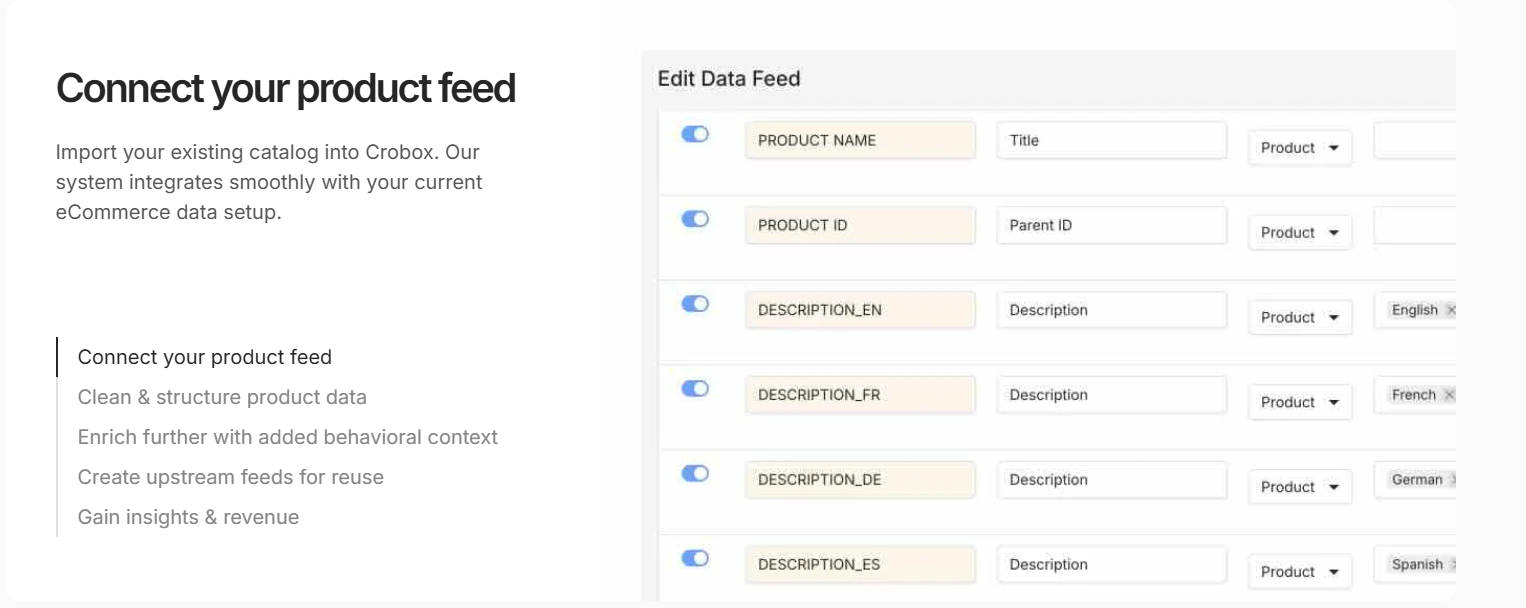
Crobox steers shoppers toward higher-value products through behavioral profiling and psychological nudges. By identifying motivations such as urgency, social proof, and scarcity, the platform improves conversion with persuasive messaging and tailored recommendations across e‑commerce sites.
Key Features
- Behavioral Profiling: Identifies shopper motivations and applies targeted triggers, like urgency, social proof, and scarcity.
- Product Recommendations & Bundles: Surfaces AI-driven product suggestions and bundles based on behavioral data and campaign rules.
- A/B Testing & Experimentation: Measure which messaging and nudges actually move conversion.
Pricing
Custom pricing. Contact sales for a quote based on your traffic and requirements.
Integrations
Shopify, WooCommerce, Magento, Salesforce, Miva, Klaviyo, and custom platforms via JavaScript and API integration.
Pros
- The behavioral science approach differentiates it from standard recommendation engines.
- Strong experimentation features to prove lift.
- Works across multiple e-commerce platforms.
Cons
- The campaign-focused approach lacks persistent question-flow guided selling.
- No conversational AI.
- Smaller brand presence outside European markets.
7. Aiden
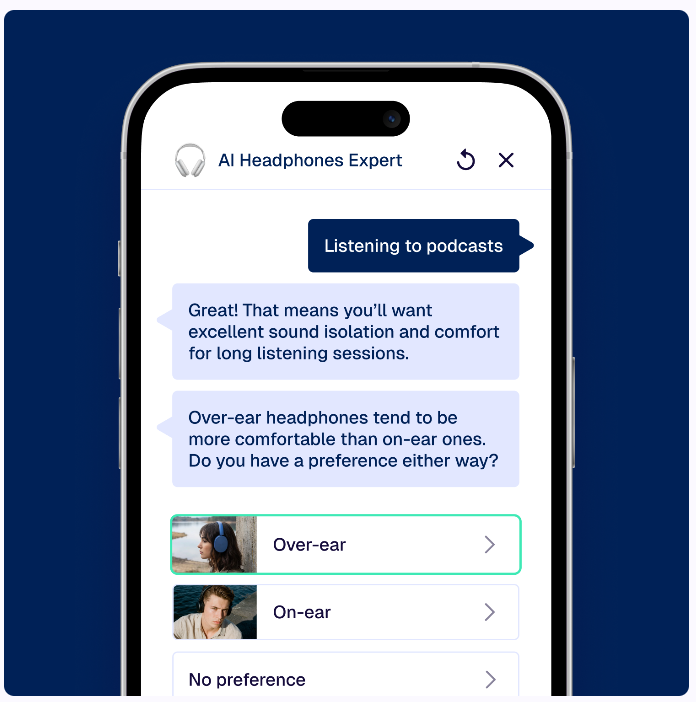
Aiden builds question-based product finders that replicate an in-store sales conversation. It asks a few targeted questions, then presents a curated product shortlist with clear reasoning for each recommendation.
Key Features
- Interactive Product Finders: Question-based flows that lead to curated recommendations in a few clicks.
- Aiden AI Setup: AI assistance cuts the build and launch time for guided selling experiences.
- Performance Analytics: Track usage, conversion lift, and recommendation accuracy.
Pricing
Custom pricing upon request.
Integrations
Shopify, Magento, WooCommerce, Shopware, and custom platforms via JavaScript integration.
Pros
- Purpose-built for guided selling.
- Strong European presence with proven results.
- Clean product finder UX that’s easy for shoppers to navigate.
Cons
- Less established in North American markets.
- Guided selling isn’t conversational.
- Custom pricing with no transparent plans makes it difficult to compare costs upfront.
Key Features to Look for in a Guided Selling Solution
When evaluating guided selling solutions for your e-commerce store, prioritize these factors:
- AI Depth vs. Rule-Based Logic: Simple product finders follow scripted question flows. But advanced platforms use machine learning and behavioral AI to adapt recommendations in real-time.
- Conversational vs. Structured Flows: Some solutions present a linear quiz that works well for specific product categories. While others engage shoppers through open-ended conversations to handle ambiguity and follow up with questions more accurately.
- Integration Depth: Your guided selling solution should connect to your product catalog, CRM, and marketing stack. Real-time catalog sync prevents recommending out-of-stock products. While marketing integrations let you act on the preference data you collect.
- Analytics & Revenue Attribution: Solutions with built-in analytics and A/B testing give you the data to measure conversions and optimize performance.
- Implementation Speed: Some platforms launch in hours with no-code builders. Others require weeks of configuration and developer resources. Match the complexity to your team’s capacity.
How to Choose a Guided Selling Solution for Your Ecommerce Business
1. Assess Your Catalog Complexity
Stores with a handful of products may need a simple product finder. But large catalogs with technical specifications, multiple variants, or configuration options demand AI-powered product matching.
2. Define the Experience You Want
Do you want shoppers to take a structured quiz, interact with a conversational AI, or receive implicit guidance through behavioral personalization? Each approach suits different shopping contexts.
3. Evaluate Your Technical Resources
No-code platforms let marketing teams deploy guided selling independently. But enterprise solutions may require developer involvement for integration and customization.
4. Consider What Happens After the Recommendation
Does the platform let shoppers add to the cart directly? Does it capture data for follow-up marketing? The best guided selling solutions for e-commerce always recommend a clear path to boost conversion.
5. Think Beyond Product Matching
Look for a unified platform that handles sales guidance, support, and analytics to deliver more value.
Which Guided Selling Platform Fits Your E-Commerce Store?
The right guided selling solution depends on your catalog complexity, team resources, and what kind of experience you want to create.
Quizzes and product finders work for simpler stores, enterprise discovery tools help huge catalogs, and personalization platforms nudge behavior without explicit Q&A.
But if you need a unified system that both guides shoppers and reduces support load, Rep AI is the only platform on this list built to do that.
Its Agentic Commerce OS detects when a shopper hesitates or compares products, engages them proactively, and recommends products through dialogue rather than a static quiz. Shoppers enjoy a smooth experience with one-click add-to-cart, visual product browsing, and even virtual try-on, all within chat.
So, ready to see conversational guided selling in action? Start your 30-day free trial and experience how Rep AI can turn browsing into buying.
Frequently Asked Questions
1. What Is the best guided selling solution for ecommerce?
For conversational, AI-driven guided selling that integrates sales, support, and intelligence, Rep AI offers the most comprehensive approach. But for quiz-based guidance on Shopify, Octane AI is a strong choice. However, for enterprise product discovery, Zoovu handles complex catalogs at scale.
2. How does guided selling differ from product recommendations?
Product recommendations display items based on shoppers’ browsing history or purchase patterns. But guided selling actively engages shoppers in a dialogue and asks questions about their needs to provide tailored advice.
3. Can guided selling reduce return rates?
Yes, guided selling ensures customers buy the right product the first time. Return rates drop when shoppers receive products that fit their preferences.
4. What Is conversational guided selling?
Conversational guided selling is a full Agentic OS, which understands shopper needs through natural dialogue rather than structured question flows. The AI agent adapts to each response, asks follow-up questions, and recommends products within the conversation.
More from REP AI

How to Automate Support Tickets to Save Revenue in 2026
Industry data suggests that up to 80% of routine e-commerce inquiries can now be autonomously resolved through specialized agentic workflows. For most mid-market brands, the challenge isn't finding a tool to automate customer service tickets, it's finding a system that doesn't sacrifice the customer...

AI in B2C Sales: Rescuing Revenue with Agentic Commerce in 2026
Your current helpdesk isn't a sales tool; it's a digital waiting room where your most valuable customers go to lose interest. While 81% of sales teams have adopted some form of AI in B2C sales by 2026, most still rely on reactive systems that wait for a customer to ask a question. This gap between p...

Automated Customer Journey Optimization: Rescuing Revenue in 2026
Industry research from the Anchor Group indicates that brands implementing AI-driven personalization earn 40% more revenue than those stuck with static experiences. This performance gap is exactly why automated customer journey optimization has become the standard for growth-focused brands. You've l...
Want to see what your store would do with Rep?
Run your real Shopify catalog through the simulator before you commit to anything. No sales call required.

