


AI for Customer Interaction: Moving Beyond Support to Revenue Rescue in 2026

Most brands treat customer engagement as a cost to be minimized rather than a revenue stream to be captured. It's a fundamental misunderstanding of the digital storefront. You've likely seen the data showing that over 50% of customers switch to a competitor after a single bad experience, yet many businesses still rely on reactive tools that frustrate more than they help. These narrow systems might deflect a few tickets, but they do nothing to stop high cart abandonment rates or fragmented data from killing your margins.
We agree that your support team shouldn't be a bottleneck for growth. This article demonstrates how mid-market brands are deploying AI for customer interaction through agentic commerce to rescue revenue and scale efficiently. You'll discover how to replace robotic scripts with proactive Rep Sales and Rep Support tools that understand behavioral signals. We'll examine the shift toward a unified AI Operating System that turns every chat into Shopper Intelligence, ensuring you never miss an opportunity to convert a visitor at the point of exit intent.
Key Takeaways
• Transition from reactive ticket management to agentic commerce, prioritizing proactive sales outcomes over simple ticket deflection.
• Deploy a "Rescue" algorithm that analyzes 500+ behavioral signals to intervene at the exact moment of exit intent.
• Understand why a unified platform for AI for customer interaction is more effective than narrow chatbots or reactive legacy helpdesks.
• Identify interaction gaps in your digital storefront and deploy a Website Concierge on high-value pages to capture lost sales.
• Consolidate cross-channel data into a single layer of Shopper Intelligence to drive personalized, high-conversion interactions.
Beyond Reactive Support: Defining AI for Customer Interaction in 2026
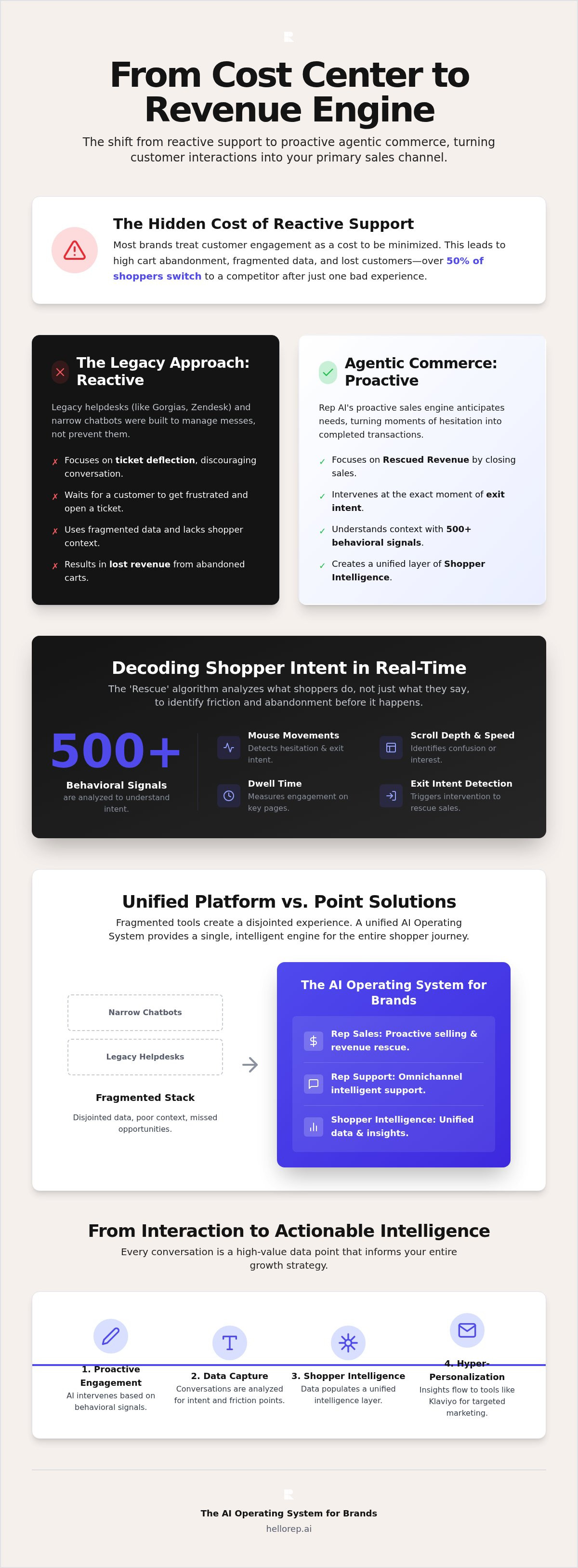
The standard definition of customer service is dying. In 2026, AI for customer interaction isn't a cost center or a ticket queue. It's a proactive sales engine. Legacy interaction models wait for a customer to experience enough friction to open a ticket. By then, the damage is done. Agentic interaction flips this script. It uses behavioral signals to anticipate needs before a shopper even realizes they have a question. This is the core of agentic commerce. It's the difference between a clerk who hides in the back room and a top tier salesperson who greets you at the door.
The Shift from Deflection to Revenue Rescue
Traditional metrics like ticket deflection are fundamentally flawed for growth focused brands. When you prioritize deflection, you're essentially telling the customer to stop talking to you. This approach hurts long term brand loyalty and ignores the potential value of the conversation. Modern AI for customer interaction shifts the focus to rescued revenue. Instead of simply closing a ticket, Rep Sales focuses on closing the sale. In the 2026 retail landscape, conversational commerce is the baseline. If your AI isn't actively rescuing shoppers at the point of exit intent, you're leaving money on the table. It's about turning a moment of hesitation into a completed transaction.
Why Legacy Helpdesks are Failing Mid-Market DTC
Reactive platforms like Gorgias and Zendesk were built to manage messes, not prevent them. They are excellent at organizing incoming complaints, but they lack the proactive capabilities required for modern retail. Fragmented, "bolted-on" AI tools create a disjointed experience where the bot doesn't know what the customer was looking at five seconds ago. These narrow point-solutions lack the Shopper Intelligence necessary to drive growth. They can't see the behavioral signals that indicate a shopper is about to bounce. The hidden cost of these tools is the revenue lost to cart abandonment. Mid-market brands are moving toward a unified AI Operating System for Brands. This approach integrates Rep Support and sales into one cohesive layer, replacing fragmented workflows with a single, intelligent engine that understands every touchpoint of the shopper journey.
Decoding Shopper Intent: The Science of Behavioral Signals
Most digital interactions fail before they even begin because they lack context. Legacy bots rely on static keyword matching, waiting for a shopper to type a specific phrase before offering a canned response. This is a reactive relic of the past. True AI for customer interaction requires a deep understanding of intent. Rep AI uses a proprietary Rescue algorithm that monitors over 500 behavioral signals in real time. It doesn't just read what a shopper says; it analyzes what they do.
By tracking mouse movements, scroll depth, and dwell time, the system identifies abandonment before it happens. Rapid movement toward the browser tab or excessive time spent on a shipping policy page are clear indicators of friction. While a narrow chatbot waits for a question, agentic commerce detects these patterns and intervenes. This proactive approach ensures you aren't just managing tickets, but actively preventing lost sales through behavioral intelligence.
Intervening at Exit Intent
A digital shopper's journey is fragile, and hesitation is the enemy of conversion. When a shopper feels confused or overwhelmed, they don't usually ask for help; they simply leave. Rep AI allows you to configure specific Skills that trigger when the system detects high friction or specific intent. Exit intent rescue is the strategic process of using 500+ behavioral signals to proactively engage a shopper at the precise millisecond they intend to bounce from your site. This intervention turns a potential exit into a conversation, and that conversation into rescued revenue.
From Interactions to Shopper Intelligence
Every conversation is a high-value data point that should inform your broader strategy. Rep AI's Shopper Intelligence platform captures these insights, uncovering the hidden reasons why shoppers leave without buying. This data doesn't sit in a silo. It flows directly into your Klaviyo segments, allowing for hyper-personalized email and social messaging based on actual conversation topics rather than just generic page views.
You can also use these discovered topics for Deep Research to optimize your product detail pages (PDP). If the data shows that 15% of your shoppers are asking the same question about product dimensions, your PDP isn't doing its job. By updating your content based on real shopper intelligence, you resolve the friction at the source. If you want to see how these signals translate into actual sales, see the platform in action.
Unified Platform vs. Point Solutions: Finding Your Interaction Framework
Most mid-market brands struggle with a fragmented technology stack that kills conversion. They use a legacy helpdesk for tickets, a narrow chatbot for basic site questions, and a separate platform for marketing data. This siloed approach makes true AI for customer interaction impossible. Without a unified data layer, your AI can't understand the context of a shopper's journey. A unified engine like Rep AI combines Rep Sales and Rep Support into a single Agentic OS, ensuring that every touchpoint informs the next. When your support system knows exactly what your sales agent promised, the shopper experience remains consistent and professional.
Legacy Helpdesks vs. Agentic OS
Bolting AI onto a decade-old helpdesk architecture is an inefficient strategy. Legacy platforms like Gorgias and Zendesk were built for a reactive era where brands waited for shoppers to complain. In contrast, an ecommerce helpdesk designed for 2026 is proactive by design. Many growth-focused brands are adopting the "Migration Wedge" strategy. They keep their legacy systems for back-office logistics while moving all front-end shopper interactions to an AI-first inbox. This transition is cost-effective, with AI-first seats starting at $20, allowing teams to scale without the overhead of traditional human BPO services.
The Omnichannel Advantage
Consistency across channels is no longer optional. Shoppers expect the same level of intelligence whether they are interacting via Instagram DM, Facebook, Email, or web chat. Research from early 2026 indicates that the median cost for an agent-assisted interaction is $13.50, whereas AI-native platforms resolve issues for a fraction of that cost. By using a unified engine, brands find that resolved tickets are 25% more cost-effective than those handled by fragmented point solutions. This efficiency doesn't come at the expense of quality; it's the result of having a single source of Shopper Intelligence across every channel.
Speed to market is your greatest competitive advantage. While enterprise ecosystems take months to deploy, Rep AI utilizes a one-click install that gets your brand live in days. This rapid deployment allows you to start capturing rescued revenue immediately rather than waiting on a lengthy integration cycle. For a deeper look at how to structure your tech stack, read our 2026 guide to agentic commerce. This framework ensures your AI for customer interaction is built for growth, not just ticket deflection.
5 Steps to Implementing an AI Interaction Strategy for Growth
Implementing a high performance strategy for AI for customer interaction isn't a months-long engineering project. It's a strategic shift toward proactive engagement. For Shopify Plus brands, this means moving beyond the limitations of static pages and reactive support queues. Follow these five steps to deploy an agentic commerce framework that prioritizes growth and rescued revenue.
Step 1: Identifying the Intent Gap
Static product pages are often where sales go to die. When a shopper has a specific question that isn't answered in your bullet points, they don't hunt for a FAQ page. They leave. The Intent Gap in digital commerce is the disconnect between a shopper's specific need and the static content provided on a product page. Auditing these gaps requires looking at high intent pages like the PDP and identifying where abandonment spikes. Establish clear benchmarks for rescued revenue and resolution rates. If you aren't tracking how many shoppers bounce due to unanswered questions, you're flying blind.
Step 2: Rapid Deployment and Skill Configuration
Speed is a requirement, not a luxury. Rep AI offers a one-click install that allows brands to go live in days. Once installed, you configure specific Skills to ensure your AI talks like a human professional. You don't want a robot reciting a script. You want an expert who understands your catalog. By training your Rep Sales agent details on brand specific nuances, you create an interaction layer that feels authentic. This configuration allows the system to handle common inquiries autonomously, freeing your human team for high complexity tasks.
Step 3: Unified Social Messaging
Your interaction strategy must extend beyond your website. Integrate social messaging channels like Instagram DM and social messaging apps into a unified response system. This ensures that a shopper receives the same level of intelligence and brand voice regardless of where they choose to engage. A unified system prevents the fragmented experience that often occurs when brands treat social as a secondary channel.
Step 4: Autonomous Resolution
Configure your Skills to resolve support issues without human intervention. Whether it's tracking an order or handling a return inquiry, Rep Support should provide immediate resolution. This isn't about deflection. It's about providing the speed that 51% of consumers now prefer for immediate service, as indicated by 2026 consumer behavior data. High quality AI for customer interaction prioritizes the shopper's time over the agent's ticket count.
Step 5: Marketing Refinement
The final step is turning interaction data into Shopper Intelligence. Use the behavioral signals captured during conversations to refine your Klaviyo segments. When you know exactly what a shopper asked or what caused their hesitation, your follow up marketing becomes significantly more effective. You're no longer guessing. You're responding to documented intent. This closed loop system ensures that every interaction feeds back into your growth engine.
If you're ready to bridge the intent gap and start rescuing revenue, schedule a walkthrough of the AI Operating System.
The Future of Customer Interaction: Choosing the Right OS
The digital landscape of 2026 demands a shift in how brands perceive every visitor touchpoint. Treating AI for customer interaction as a mere cost-saving tool for support is a strategic error that leaves significant revenue on the table. Mid-market DTC brands need a unified infrastructure that bridges the gap between support and sales. Rep AI serves as the AI Operating System for Brands, providing a single, intelligent layer that manages the entire shopper journey. By adopting agentic commerce, you move beyond the limitations of reactive helpdesks and narrow chatbots that fail to understand behavioral context.
Why Waiting for Legacy Platforms is Risky
This shift in perception is happening across all industries, including the public sector. To see how these communication principles are applied to modernize services in a different context, check out TextGov LLC.
The speed of AI evolution has made lengthy integration cycles obsolete. While legacy platforms often require months of professional services to implement basic automation, Rep AI offers a one-click install that gets your brand live in days. This speed is a competitive necessity. Early adopters in high-growth verticals like Beauty and Wellness are already dominating market share by providing 24/7 proactive engagement. Waiting for your legacy helpdesk to "catch up" with bolted-on AI features results in missed opportunities and high cart abandonment. You can see the impact of proactive interaction in our Rep AI case studies, where brands have successfully turned hesitation into rescued revenue.
Scaling Without Human BPO Limits
Growth focused brands often hit a ceiling when their session volume outpaces their support team's capacity. Traditional human BPO services are expensive to scale and lack the real-time behavioral intelligence required for modern sales rescue. Rep AI allows you to handle 50k+ sessions per month without increasing your support headcount. This is the transition to a 24/7 proactive salesperson that never sleeps, never misses a signal, and always maintains your brand voice.
The choice for 2026 is clear. You can continue to manage a fragmented stack of reactive tools, or you can deploy a unified system designed for revenue rescue. Stop focusing on how many tickets you can deflect and start measuring how much revenue you can capture. The infrastructure for agentic commerce is ready. If you are prepared to see how Shopper Intelligence can transform your storefront, request a custom demo of the Rep AI Operating System today.
Scale Your Interaction into a Growth Engine
The shift from reactive ticket management to agentic commerce is no longer a luxury for Shopify Plus brands. It's a requirement. By moving beyond simple deflection, you transform every conversation into an opportunity for rescued revenue. You've seen how behavioral signals and exit intent rescue can bridge the intent gap on static product pages. Optimizing your AI for customer interaction is the most direct path to sustainable growth in 2026.
Rep AI provides the unified Operating System your brand needs to scale without the overhead of human BPO services. With a one-click install that gets you live in days, you can immediately begin automating sales and support. At a cost of $0.75 per resolved ticket, the efficiency of our platform is unmatched in the mid-market. Don't let your competitors capture the market share while you wait for legacy platforms to catch up.
Book a Demo to see how Rep AI rescues revenue for your brand and take control of your digital storefront today. Your shoppers are waiting for a more intelligent experience.
Frequently Asked Questions
What is the difference between a chatbot and an AI sales agent for customer interaction?
A traditional chatbot is a reactive, rule-based tool that waits for a specific keyword to trigger a canned response. In contrast, an AI sales agent like Rep Sales is a proactive engine designed for AI for customer interaction that prioritizes revenue. It uses a Rescue algorithm to monitor behavioral signals and intervene before a shopper leaves. While bots deflect tickets, sales agents rescue revenue by guiding shoppers through the conversion funnel with human intelligence.
Does Rep AI support SMS or voice channels for customer support?
Rep AI does not currently support SMS, voice, or phone channels for live customer support. Our platform is strictly focused on digital messaging channels where we can provide the most intelligent and context-aware service. Supported channels include website chat, email, Instagram DM, and social messaging apps. This focus ensures that our agentic commerce engine remains highly effective at interpreting visual and behavioral cues that aren't present in voice-only interactions. However, for brands that need to automate their telephone presence, you can visit Hello Voice AI to learn more about their 24/7 virtual receptionist.
How much does a unified AI customer interaction platform cost?
Pricing for a unified AI for customer interaction platform is structured to be more cost-effective than traditional human BPO services. The Rep AI Inbox is priced at $20 per seat, and we offer the first three months free to help brands transition from reactive helpdesks. For omnichannel support, resolved tickets are priced at approximately $0.75 each. This model ensures that mid-market brands only pay for successful outcomes rather than just seat capacity.
Can Rep AI handle checkouts or process payments directly in the chat?
No, Rep AI does not process payments or complete checkouts directly within the chat widget. Our agents are designed to engage shoppers, answer complex product questions, and provide personalized recommendations that lead to a sale. Once the shopper is ready to purchase, the AI hands them off to your store's native checkout process. This ensures that your existing payment security and order management workflows remain the single source of truth for transactions.
How long does it take to deploy an AI for customer interaction on Shopify?
Deployment is designed for speed and simplicity. For Shopify Plus brands, we offer a one-click install process that eliminates the need for complex store development. Most brands are fully live in days, not months. This rapid timeline includes the configuration of brand-specific Skills, ensuring your AI is trained on your product catalog and voice immediately. It's an efficient way to start capturing rescued revenue without a lengthy technical implementation.
What channels are supported by Rep AI's omnichannel integration?
Rep AI provides a unified response system across the most high-impact digital channels. Our omnichannel integration currently supports Facebook, Instagram DM, WhatsApp, Email, and website chat widgets. By consolidating these channels into a single AI Operating System, brands ensure that Shopper Intelligence is shared across every touchpoint. This prevents the fragmented data issues that occur when using narrow point-solutions for different social platforms or support queues.
How does the 'Rescue' algorithm identify shoppers who are about to leave?
The Rescue algorithm monitors over 500 behavioral signals in real time to understand shopper intent. It tracks specific patterns such as rapid mouse movements toward the browser's exit button, scroll depth, and excessive dwell time on policy pages. When these signals indicate a shopper is about to bounce, the AI intervenes with a proactive message. This allows the system to address friction points immediately, turning potential abandonment into a successful revenue rescue.
Is Rep AI compatible with WooCommerce or Salesforce Service Cloud?
Rep AI is not compatible with WooCommerce, and our integration with Salesforce Service Cloud is currently paused. We are specifically optimized for mid-market Shopify Plus brands that require a high-performance, sales-driven platform. While legacy helpdesks try to be everything to everyone, we focus on delivering the most sophisticated agentic commerce experience for the Shopify ecosystem. This specialization allows us to provide deeper behavioral insights and faster deployment for growth-focused DTC brands.
More from REP AI
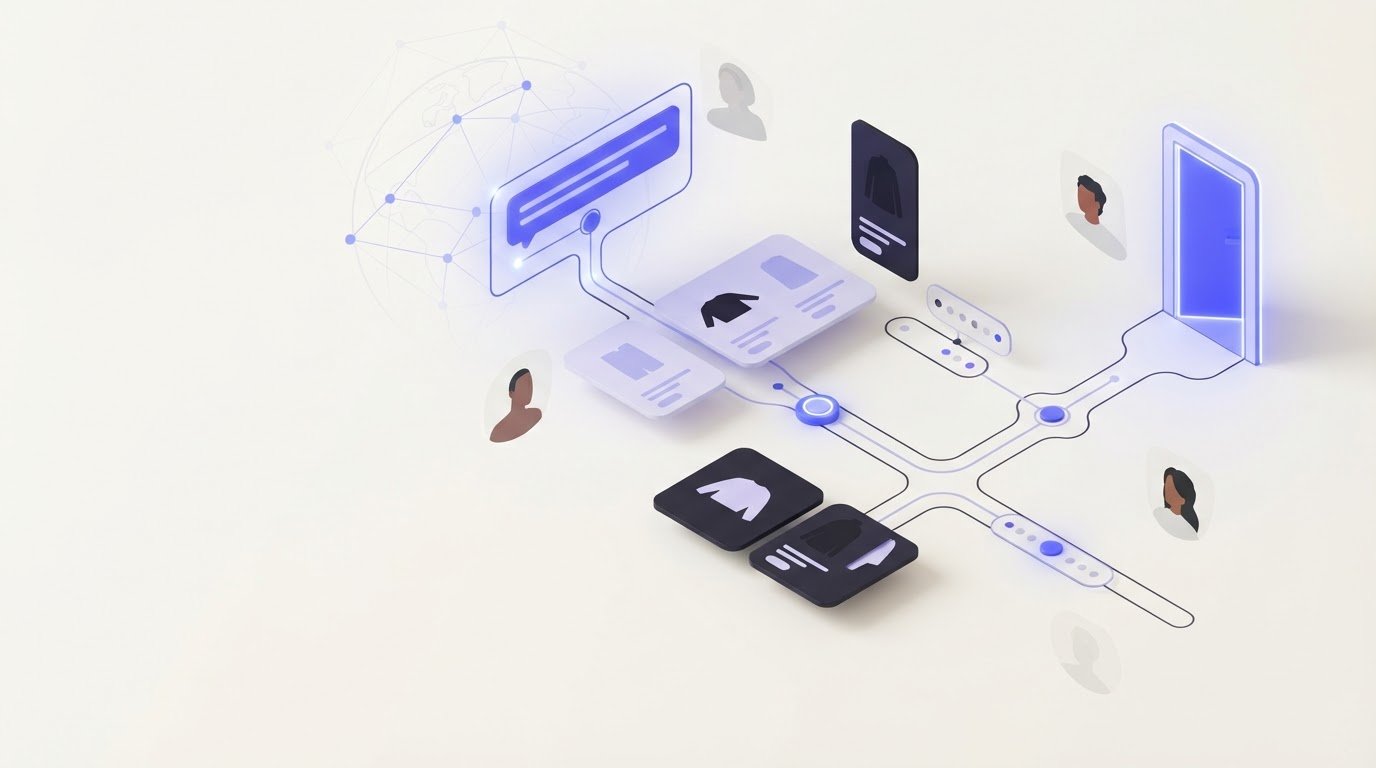
AI Shopping Assistant: How It Guides Ecommerce Shoppers in 2026
When a shopper hesitates, timely guidance can help them decide what to explore next. An ai shopping assistant can answer product questions, narrow choices, and guide product discovery without taking control of checkout. Shoppers get help comparing options, while still making the purchase decision th...
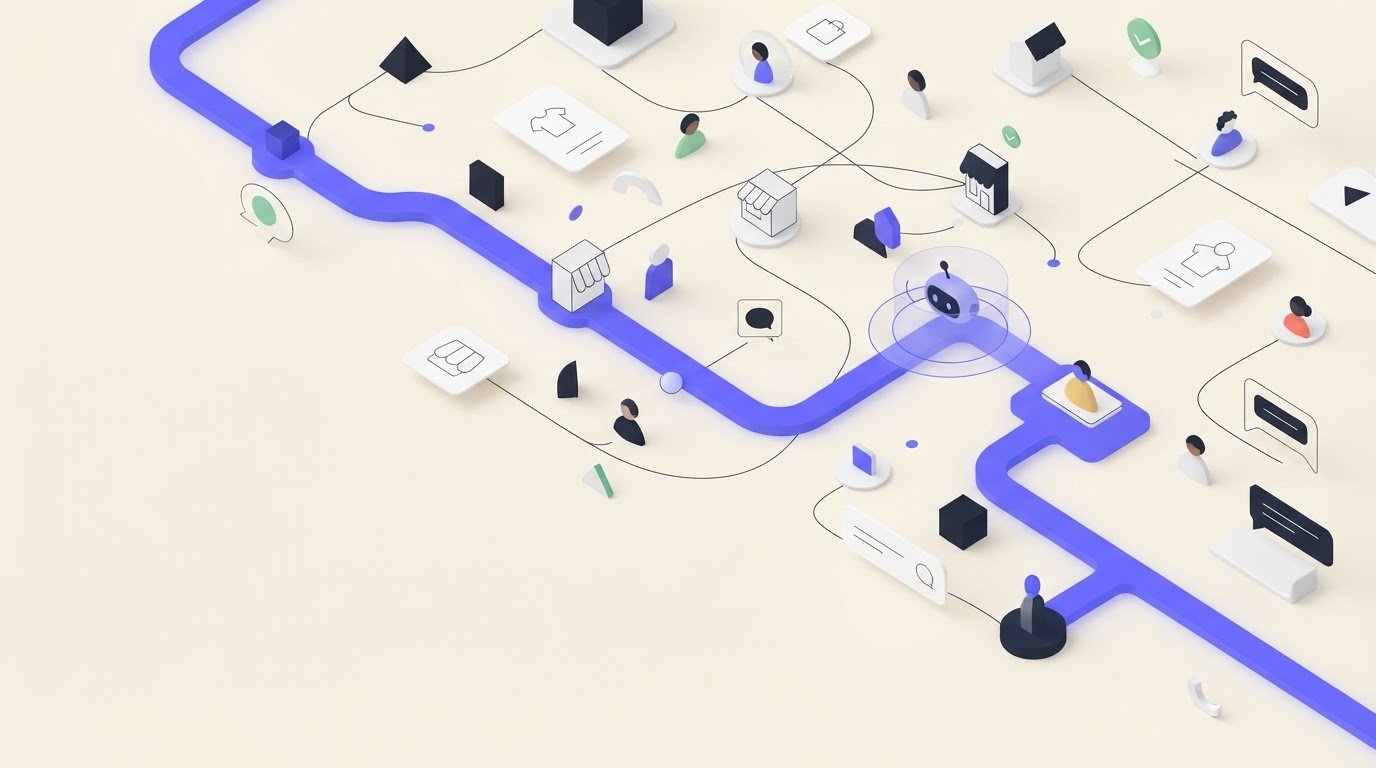
Benefits of Agentic Commerce: How AI Can Help Brands Sell and Serve Better
When a shopper hesitates, a useful answer can turn a moment of uncertainty into a chance to help, rather than a sale lost or a question left unanswered. The benefits of agentic commerce come from connecting shopper intent with timely action, then learning from those interactions to improve sales gui...
Want to see what your store would do with Rep?
Run your real Shopify catalog through the simulator before you commit to anything. No sales call required.

