


9 Best AI Helpdesk Software for E-commerce in 2026 (Features, Pricing, Reviews)
Quick summary
Ecommerce brands struggle with high volumes of repetitive customer support queries, resulting in slow response times, overloaded teams, and missed sales opportunities. AI-powered helpdesk platforms solve this by automating common inquiries, improving response speed, reducing ticket volume, and enabling 24/7 support while also enhancing conversions and customer experience.
Why does your ecommerce brand need an AI helpdesk in 2026?
AI is quietly taking over customer support, and for ecommerce brands, that's mostly good news. Gartner predicts that by 2029, agentic AI will autonomously resolve 80% of common customer service issues without any human involvement.
Done right, it means dramatically faster response times, a sharp drop in repetitive tickets, and support that protects and helps increase revenue. Here are nine agentic AI helpdesk solutions built for ecommerce, each broken down to show what it does best so you can find the right fit without the guesswork.
Why listen to us
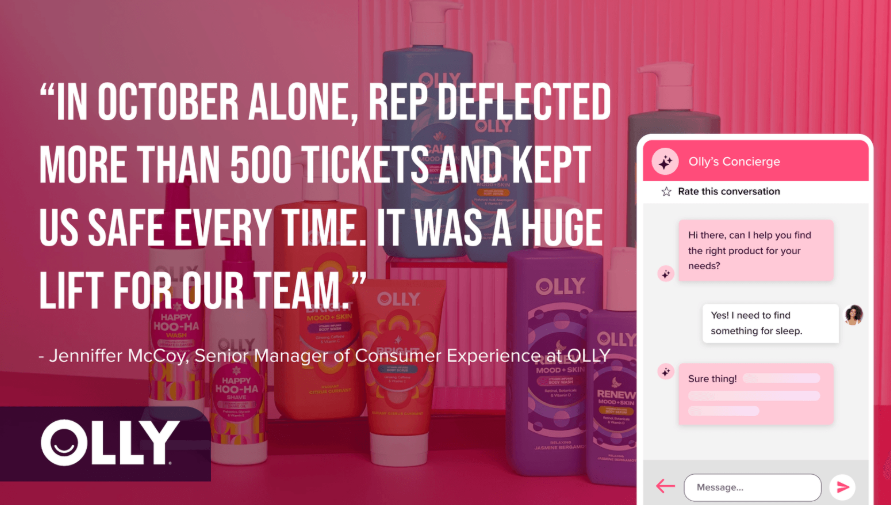
At Rep AI, we have compiled this list from direct experience powering support for over 550 ecommerce brands across Shopify, Salesforce, and BigCommerce. Having processed more than 110 million shopper sessions for brands like OLLY and Underoutfit, Rep AI brings an insider's perspective to evaluating the broader helpdesk landscape.
Each quarter, our team benchmarks helpdesk integrations against the same eight criteria that surface consistently in real e-commerce RFPs. These include alerts, escalation, automated routing, multi-channel coverage, reporting, real-time notifications, prioritization, and depth of customer history.
What is an AI helpdesk for ecommerce?
An AI helpdesk for ecommerce is a unified support platform that combines ticket management with autonomous AI agents. The agents are trained on your store, catalog, and policies to handle conversations end-to-end.
Generic helpdesks were built for IT teams. While ecommerce variants connect natively to Shopify, BigCommerce, or marketplace data. So every reply ships with the order context attached.
How does an AI helpdesk help ecommerce brands grow?
A well-chosen AI helpdesk delivers measurable gains across support, sales, and ops. Here is what to expect when the platform is set up well:
- Ticket reduction of 50% to 70% in the first 30 days through autonomous resolution of order tracking, returns, and cancellations.
- 24/7 coverage without weekend staffing, since AI agents handle peak overflow during Black Friday or product launches with no overtime cost.
- Higher AOV and conversion when the same AI handles pre-purchase questions, recommends products, and recovers carts inside chat.
- Faster first response time, dropping from hours to seconds, which directly improves CSAT and reduces refund requests.
- Unified shopper intelligence across sales and support, so one customer profile drives marketing, support context, and merchandising decisions.
- Lower per-resolution cost than human-only teams, since agentic AI scales without seat-based pricing tax.
The combined effect is operational. Fewer tickets in the queue, faster handle times, and shopper data feeding straight back into your growth engine.
How do the 9 AI helpdesk solutions compare?
The table below summarizes the nine platforms across G2 ratings, starting prices, features, and more:
9 best AI helpdesk software for ecommerce
The following are the top 9 AI helpdesk software for ecommerce platforms, including their main features, pros, cons, and pricing:
1. Rep AI: Best overall AI helpdesk for commerce-led brands
Rep AI is an agentic AI operating system that handles sales, support, and shopper intelligence within a single platform. It powers more than 550 ecommerce brands, including OLLY, Underoutfit, Lashify, Country Wine & Spirits, and Books2Door. The proprietary behavioral AI is trained on 110 million-plus shopper sessions, predicting and acting on shopper intent in real time.
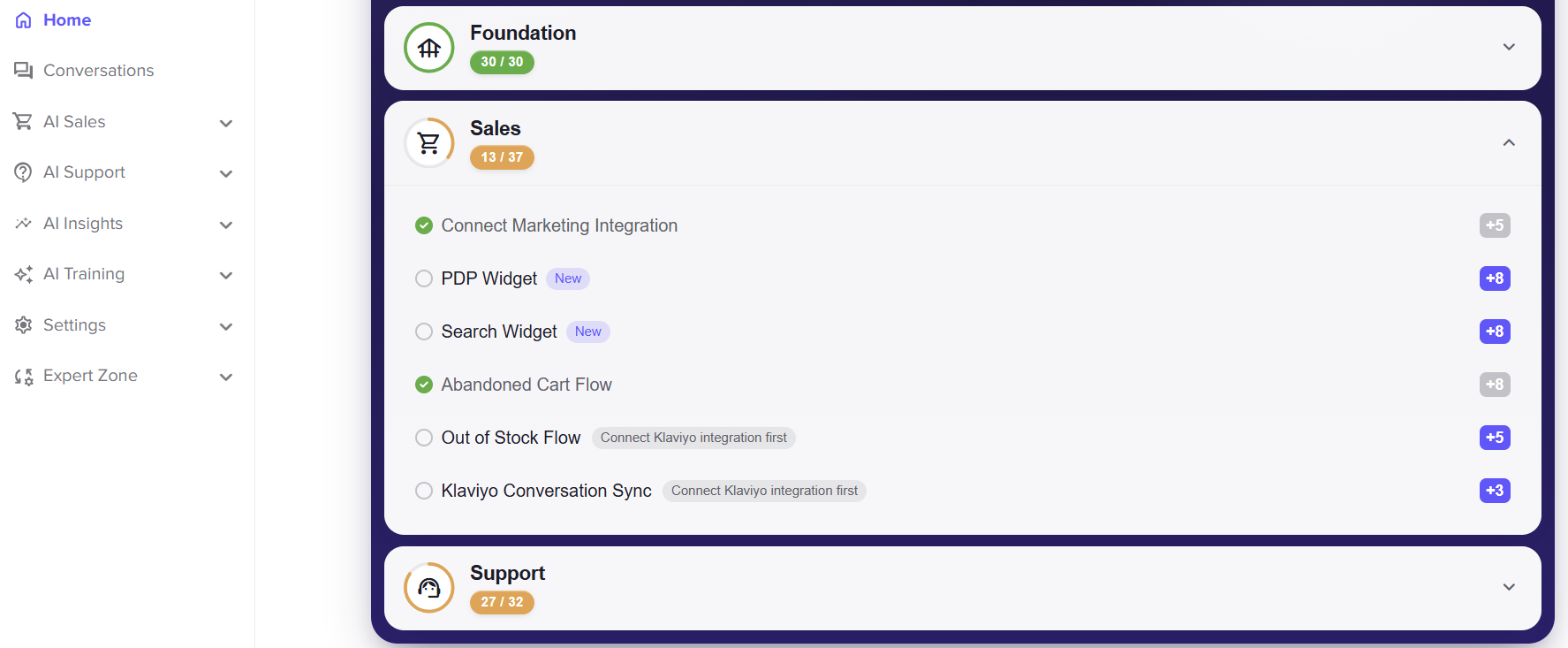
Its newly launched helpdesk module unifies tickets across chat, email, and social with full Shopify order context attached. Unlike support-first tools that bolt AI onto legacy ticketing, Rep AI was built for marketing-led commerce where conversion rate, AOV, and sales velocity sit alongside ticket deflection.
Key features
- Multi-channel communication: Unified helpdesk module covering chat, email, Instagram, Facebook, and WhatsApp.
- Customer database: Single shopper profile with RFM segments, lifetime spend, subscription status, and tags.
- Customer history: Live Shopify order timeline plus full chat history visible inside every ticket.
- Automated routing: AI brain auto-routes complex tickets to humans with full conversation summaries attached.
- Alerts and escalation: SLA breach alerts, sentiment dips, and refund disputes flagged in real time.
- Real-time notifications: Push and email alerts when AI confidence drops, or VIP shoppers write in
- Prioritization: Ticket scoring by urgency, sentiment, AOV, lifetime spend, and SLA proximity.
- Reporting and analytics: Helpdesk dashboard tracking AI deflection, FRT, CSAT, and revenue from support.
Pros
- Single platform replaces chatbot, helpdesk, and shopper-insight tools in one stack.
- Behavioral AI proactively engages shoppers about to drop off, lifting conversion and AOV.
- Session-based pricing scales with sessions and catalog size, not seats.
- Plug-and-play setup goes live in 6 clicks across Shopify.
- 5X ROI guarantee in the first 30 days, backed by published case studies.
Cons
- AI training needs some initial guidance, but the Rep AI support team makes it easier.
Why we picked Rep AI
Rep AI is the only platform on this list built for ecommerce. It targets conversion and AOV alongside ticket deflection, and the AI brain runs across your catalog, conversations, and channels from one source.
What customers are saying
HigherDOSE implemented Rep AI not to fix support, but to turn it into a revenue-generating function, and the results speak for themselves. 45% of website visitors engaged with chat, 2.5% drove a sales action, and 6% converted to a purchase.
Co-founder Katie Kaps put it simply: “Customer conversations are one of the most valuable moments in the shopping journey. REP changed how we think about chat on the website. Instead of being purely a support tool, it’s now part of how we guide customers toward the right product”.
Pricing
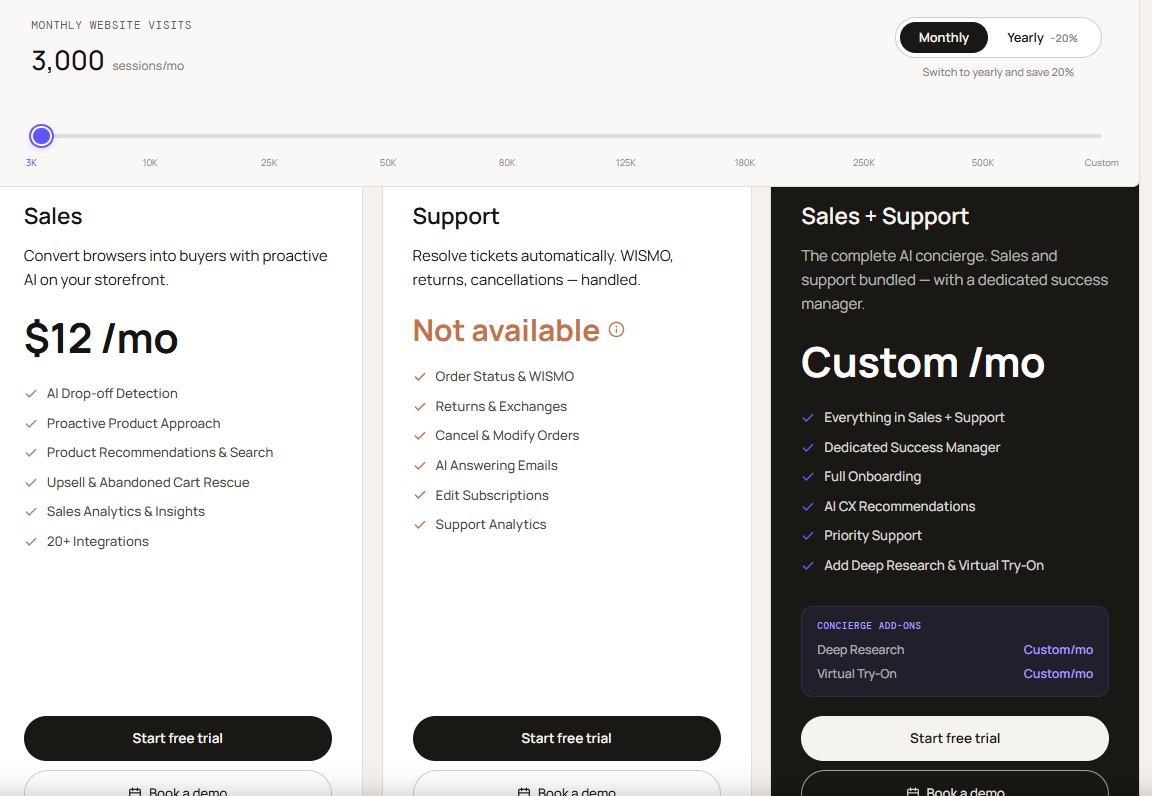
Rep AI plans start at $12/month and follow the pay-as-you-grow formula. Paying customers can get the help desk as an add-on feature for $20 per user
Free trial
30-day free trial, no credit card required.
2. Gorgias: Best for Shopify-Native Ticket Workflows
Gorgias is an ecommerce-focused helpdesk used by 17,000-plus Shopify, BigCommerce, and Magento brands. The platform centralizes email, chat, SMS, voice, and social with native Shopify order actions inside each ticket. Refunds, edits, and cancellations all happen from the conversation view.
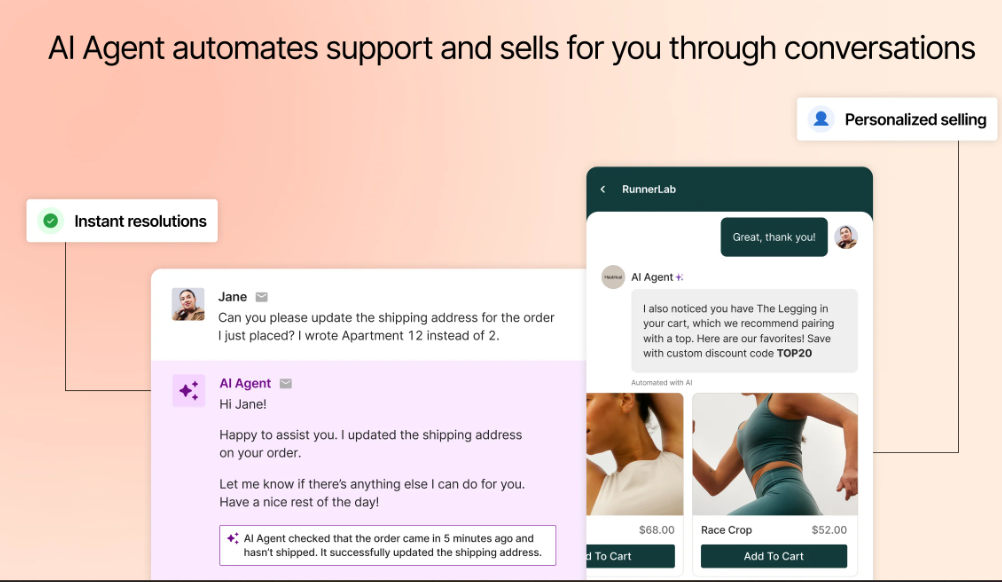
Gorgias recently layered an AI Agent on top of its ticketing core for autonomous email and chat resolution. Its ecosystem of 300-plus apps connects deeply with Klaviyo, Postscript, Loop Returns, and Recharge.
Key features
- Multi-channel communication: Unified inbox for email, chat, SMS, voice, Instagram, Facebook, and TikTok.
- Customer database: Shopper profile with order history, tags, and Shopify customer data inside each ticket.
- Customer history: Full Shopify order, refund, and chat history visible during conversations.
- Automated routing: Rule-based assignment by tags, intent, channel, and skill.
- Alerts and escalation: SLA tracking with breach alerts and macros for escalation paths.
- Real-time notifications: Live notifications for new tickets, mentions, and SLA at-risk warnings.
- Prioritization: Tag-based ticket sorting plus AI Agent picks only confidence-scored conversations.
- Reporting and analytics: Revenue and CSAT dashboards with first-response and resolution time metrics.
Pros
- Excellent Shopify integration for refund and order actions within the helpdesk.
- Unlimited agent seats on ticket-based pricing, useful for collaborative support teams.
- Mature ecosystem of 300-plus apps connecting Klaviyo, Postscript, Loop Returns, and Recharge.
Cons
- Support can take some time to respond.
- Reopened tickets after a few days can be counted as new tickets, causing peak-season bill spikes.
Why we picked gorgias
Gorgias is the right pick if you sell only on Shopify and want order actions inside the ticket. For brands that also need behavioral sales engagement before the ticket exists, Rep AI fills the upstream gap.
What customers are saying
Gorgias’ users consistently praise its ability to consolidate every customer touchpoint. The automation capabilities receive particular recognition, with teams able to deflect common FAQs and free up agents to handle more complex issues.
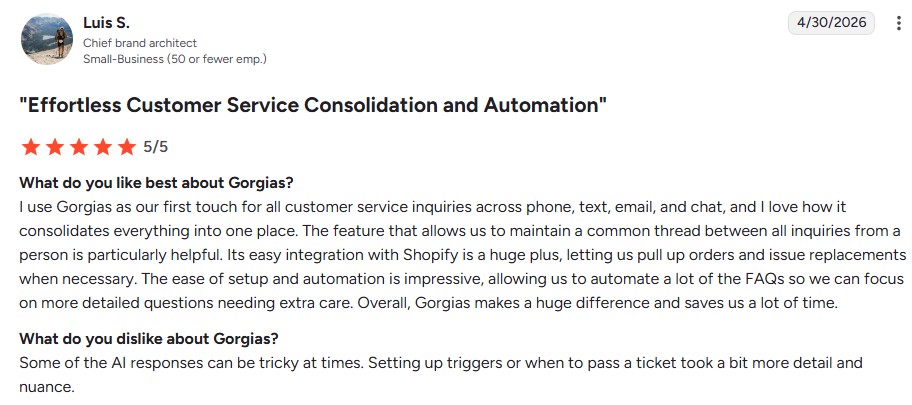
The one noted learning curve is around configuring AI triggers and ticket escalation rules, which can require some fine-tuning to get right.
Pricing
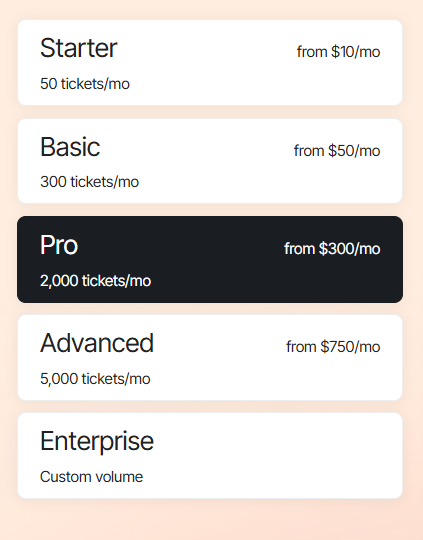
Pricing starts at $10 per month for 50 tickets (Starter), $50 per month for 300 tickets (Basic), $300 per month for 2,000 tickets (Pro), and $750 per month for 5,000 tickets (Advanced). Custom enterprise quotes are available on request.
Free trial
7-day free trial with full feature access.
3. Tidio with Lyro AI: Best budget AI helpdesk for SMBs
Tidio combines live chat, helpdesk ticketing, and the Lyro AI Agent into a single platform used by 300,000-plus businesses worldwide. It targets small- and mid-sized stores seeking AI deflection without enterprise pricing.
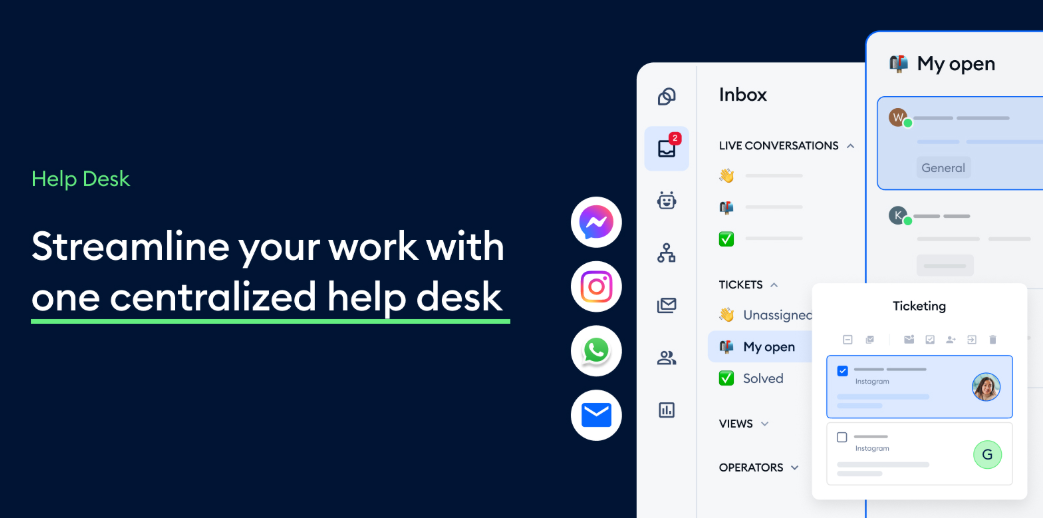
The free tier includes 50 lifetime Lyro conversations and unlimited live chat, making Tidio one of the lowest-friction starting points for ecommerce. Moreover, Lyro pulls product, inventory, and order data directly from Shopify without a separate setup. Tidio publishes a 67% average Lyro resolution rate across its customer base.
Key Features
- Multi-channel communication: Unified inbox spanning live chat, email, Instagram DMs, and Messenger.
- Customer database: Shopify shopper profile with tags, browsing data, and order context.
- Customer history: Full chat and order history visible alongside every ticket.
- Automated routing: Flows builder with 40-plus ecommerce templates for triggered actions.
- Alerts and escalation: SLA policy assignment with hand-off to human agents on low-confidence Lyro replies.
- Real-time notifications: Desktop and mobile push alerts on new conversations and assignments.
- Prioritization: Ticket statuses, custom views, and Lyro confidence-based handoff.
- Reporting and analytics: Dashboards covering Lyro resolution rate, deflection, FRT, and CSAT.
Pros
- Free plan covers 50 Lyro conversations and unlimited live chat for early-stage stores.
- Lyro AI integrates natively with Shopify, pulling product, inventory, and order data.
- Visual flow builder can be used by non-technical founders and comes with ready, out-of-the-box ecommerce templates.
Cons
- Navigation is less intuitive.
- Pricing structure needs improvement.
Why we picked tidio
Tidio is the right pick for stores under 500 monthly tickets that want AI deflection without enterprise pricing. Brands ready to combine support automation with conversion lift in the same shopper sessions should look into Rep AI.
What customers are saying
Mudit J, a professional services business owner, praises Tidio for building instant trust with website visitors through responsive live chat and Lyro AI's natural, accurate replies.
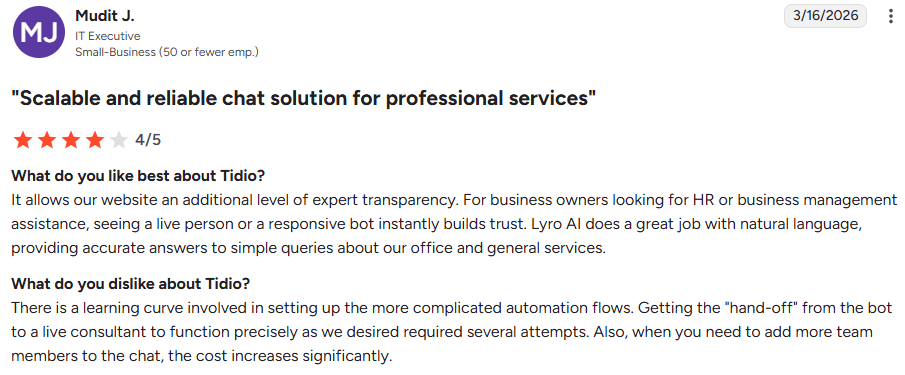
The noted downsides are the learning curve around complex automation flows and getting the bot-to-human handoff dialed in. Costs also scale up noticeably as you add more team members.
Pricing
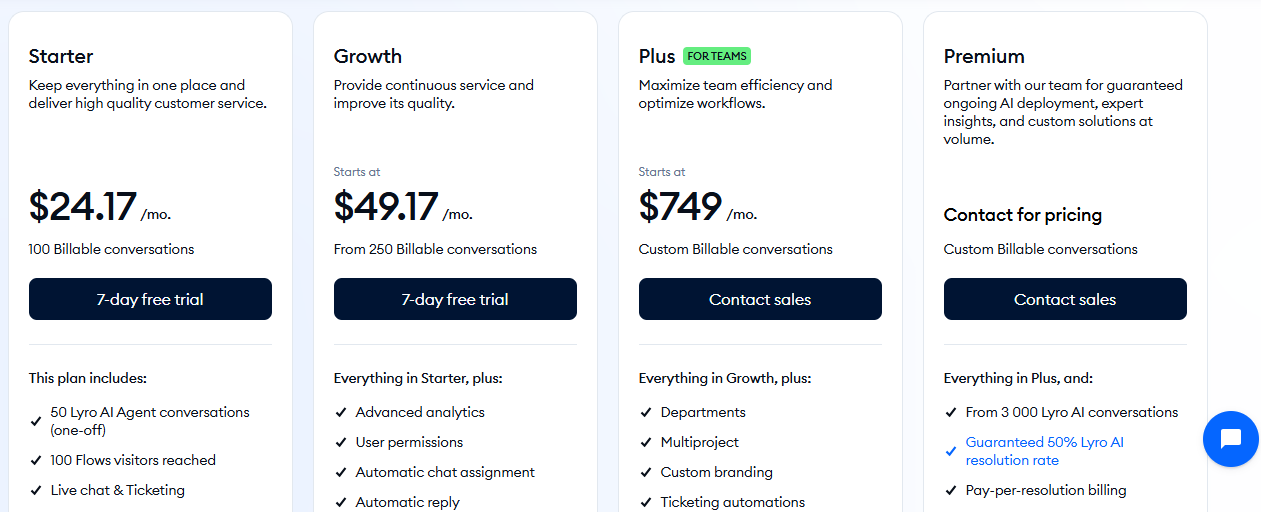
Paid plans begin at $24.17 per month (Starter) and scale up through Plus and Premium tiers based on conversation volume.
Free trial
7-day free trial on paid plans.
4. Zendesk for customer service: Best for enterprise scale
Zendesk is the long-standing enterprise helpdesk used by 200,000-plus brands across retail, SaaS, travel, and finance. Founded in 2007, the platform has 17-plus years of operational maturity. The Resolution Platform layer adds AI Agents to legacy ticketing systems to enable autonomous resolution.
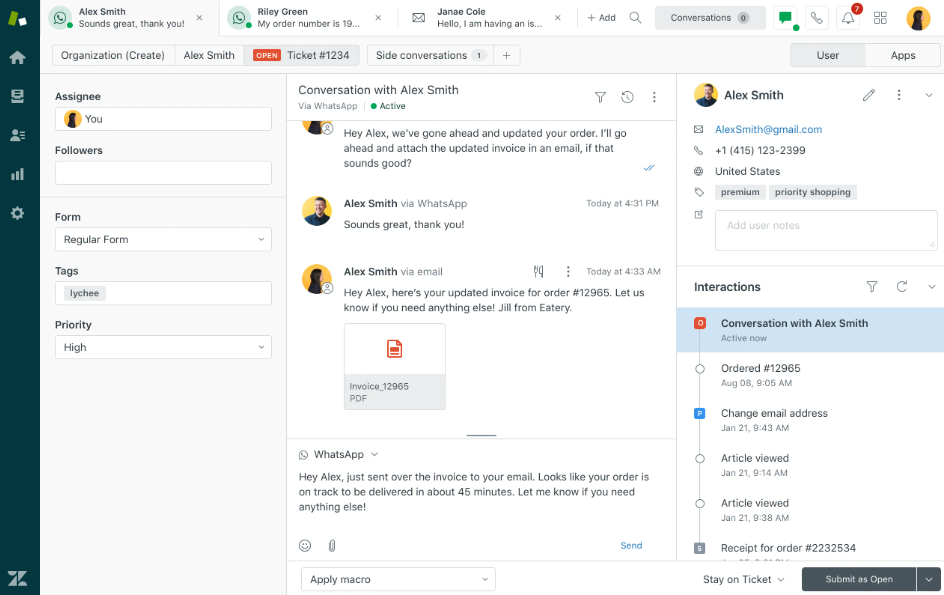
Zendesk's strength lies in consolidating internal and external support into a single core, with voice, ITSM, and HR service modules sitting alongside ticketing. Pricing follows a per-agent model with per-resolution AI fees layered on top.
Key features
- Multi-channel communication: Email, chat, voice, social, and messaging on one ticket data model.
- Customer database: Centralized profile with ticket history, tags, and CRM-style fields.
- Customer history: Full past tickets, conversations, and tags visible in the agent workspace.
- Automated routing: Omnichannel routing by date, priority, SLA breach, and skills.
- Alerts and escalation: SLA policies with breach alerts and intelligent triage for sentiment dips.
- Real-time notifications: Desktop, email, and mobile alerts for SLA risk and assigned conversations.
- Prioritization: Intelligent triage that detects intent, sentiment, and language for auto-tagging.
- Reporting and analytics: Prebuilt dashboards plus a custom report builder across the full data set.
Pros
- 1,800-plus apps for enterprise stack integration.
- Voice, ITSM, and HR service modules consolidate internal and external support into a single core.
- Strong omnichannel foundation.
Cons
- AI was added on top of legacy ticketing rather than built into the conversation layer like Rep AI's agentic OS.
- Setup typically takes 4 to 8 weeks for full deployment, often requiring a dedicated admin.
Why we picked zendesk
Zendesk is well-suited to enterprise teams with 50-plus agents, high-volume voice, and complex compliance needs. Commerce-led DTC brands targeting conversion and AOV will find a revenue-first AI brain like Rep AI more aligned with growth KPIs.
What customers are saying
IT Operations Manager Sabina K. praises Zendesk for strong built-in analytics and AI-suggested replies that help agents resolve tickets faster.
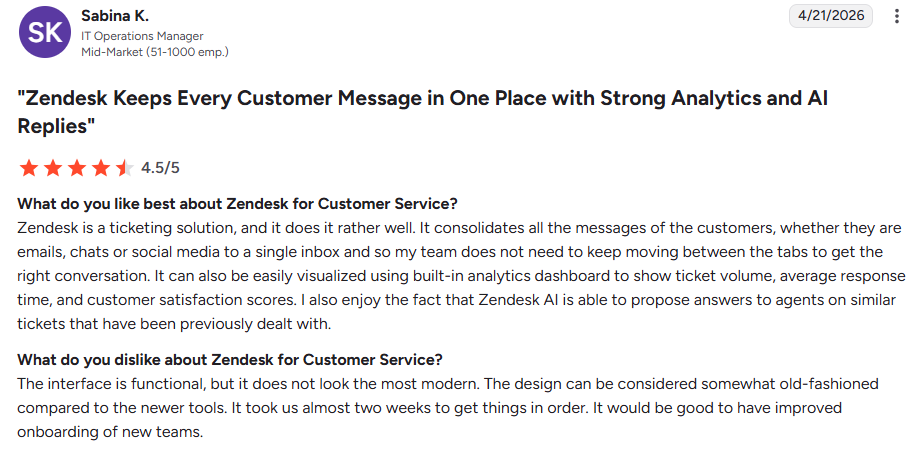
The main drawbacks noted are a dated interface compared to newer tools and a roughly two-week onboarding process that could be smoother for new teams.
Pricing
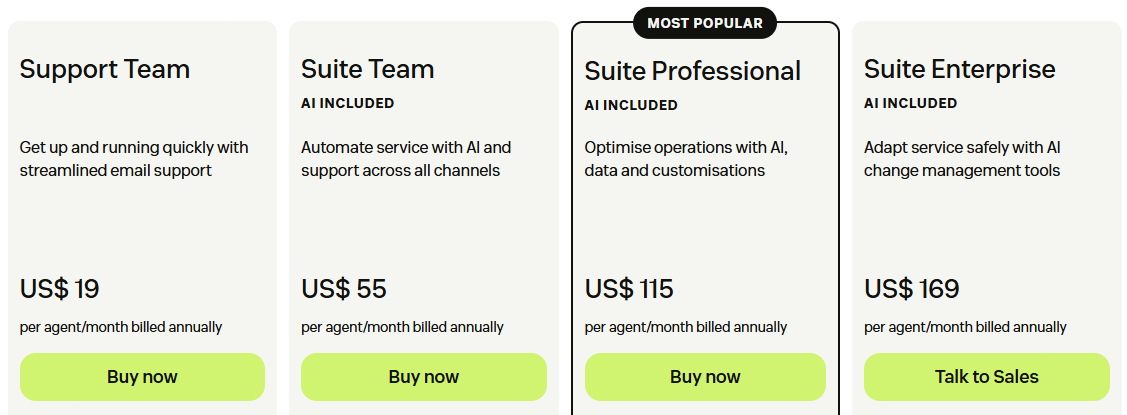
Zendesk's Suite + Copilot plans start at $169/agent/month (Professional) and $115/agent/month (Enterprise), billed annually, with Copilot available as a standalone add-on at $55/agent/month.
Free Trial
14-day free trial on the Zendesk Suite.
5. Freshdesk with freddy AI: Best budget helpdesk with free tier
Freshdesk is Freshworks' omnichannel help desk paired with Freddy AI Agent and Freddy Copilot. The platform serves 74,000-plus customers across SMB and mid-market segments. Freshworks went public on the Nasdaq in 2021 and continues to invest in Freddy across its product line.
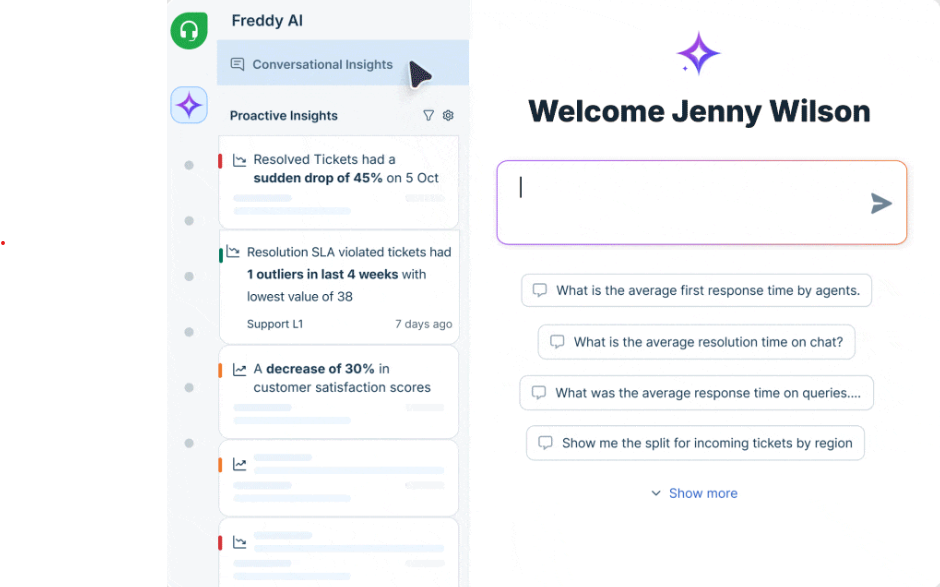
Freddy AI Agent handles autonomous resolution on chat, email, and the customer portal. Meanwhile, Freddy Copilot acts as an agent assisting with reply suggestions, summaries, and translations. Freshdesk fits budget-conscious SMBs that need omnichannel ticketing without enterprise pricing, though its native ecommerce order actions are shallower than those of dedicated commerce helpdesks.
Key Features
- Multi-channel communication: Email, chat, phone, social, and WhatsApp inside one ticket interface.
- Customer database: 360-degree customer view with order history fields, tags, and segmentation.
- Customer history: Ticket history, past conversations, and CSAT trends visible per shopper.
- Automated routing: Ticket dispatch rules with parent-child tickets and skill-based routing.
- Alerts and escalation: SLA breaches, sentiment dips, and refund disputes flagged in real time.
- Real-time notifications: Real-time updates on assignments, mentions, and SLA at-risk tickets.
- Prioritization: Freddy Copilot suggests ticket priority based on intent and sentiment.
- Reporting and analytics: Freddy AI Insights proactively flags SLA breach risks and CSAT dips.
Pros
- Custom mail SMTP feature allows personalized communication.
- Freddy Insights flags SLA breach risks and CSAT dips proactively.
- Extensive automation options.
Cons
- Complex initial setup.
- Switching between tickets can be slow at times.
Why we picked freshdesk
Freshdesk fits budget-conscious SMBs that need omnichannel ticketing with built-in AI. Brands prioritizing conversion lift over ticket cost will find a commerce-led platform more aligned with revenue KPIs.
What customers are saying
G2 reviewers consistently highlight Freshdesk's clean, intuitive interface and strong ticket management as standout strengths. Users also praise its powerful automation that helps teams stay organized and on top of requests.
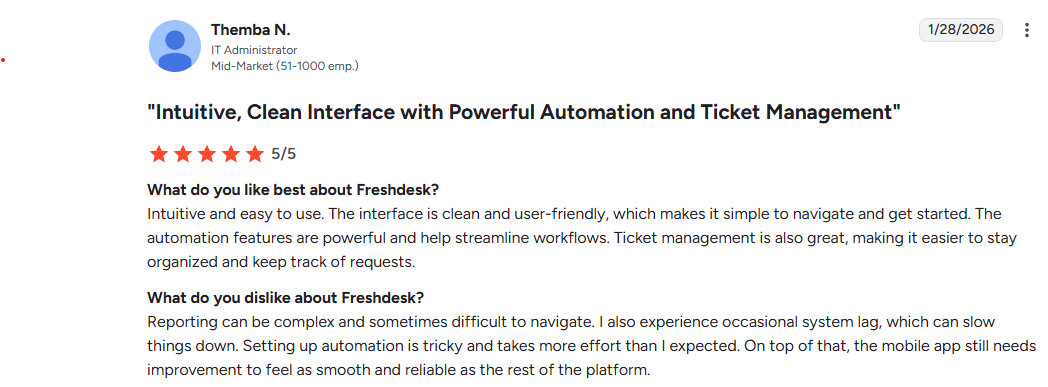
On the flip side, some users note that setting up automation takes more effort than expected. Reporting can also be difficult to navigate, and the mobile app still lags behind the desktop experience in quality.
Pricing
Freshdesk paid plans start at $19/agent/month (Growth), $55/agent/month (Pro), and $89/agent/month (Enterprise), all billed annually. Freddy AI Agent sessions are billed separately. The first 500 are included with Pro and Enterprise; after that, it is $49 per 100 sessions.

Free trial
14-day free trial on all paid plans.
6. Intercom with Fin AI: Best AI-resolution-first helpdesk
Intercom is a modern helpdesk built around the Fin AI Agent. Founded in 2011, it rebuilt its core for AI-first support over the past two years. Fin runs natively in Intercom and as a standalone agent on Zendesk, Salesforce, and HubSpot, reducing migration risk for teams not ready to switch help desks.
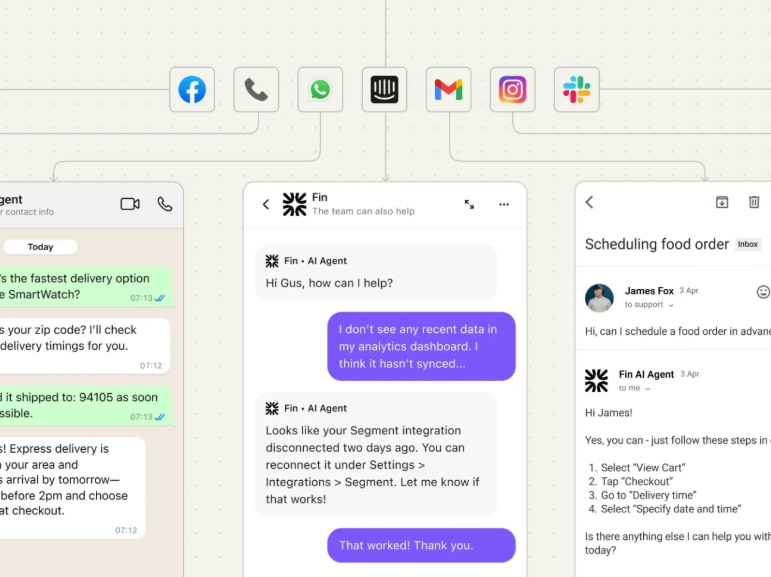
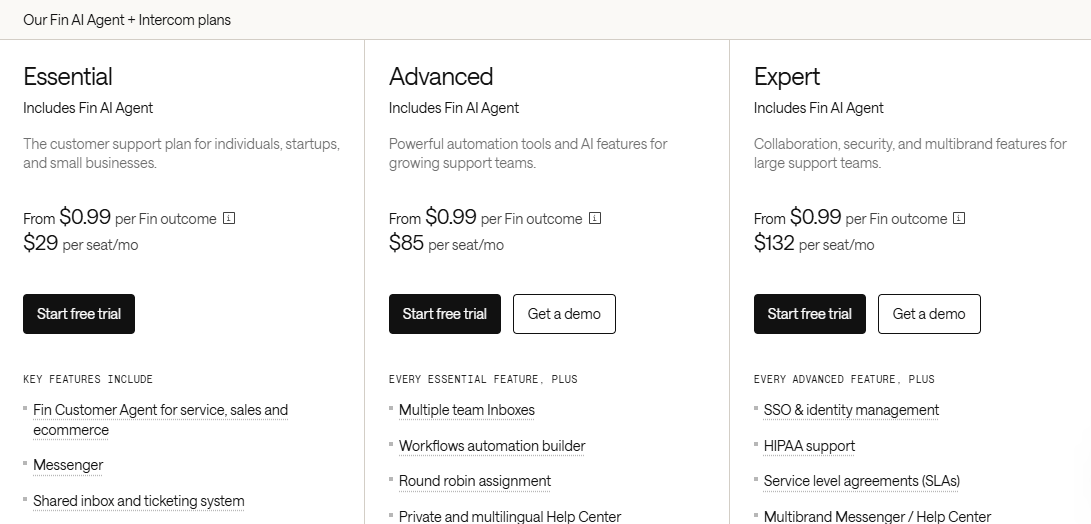
Intercom uses pure outcome pricing at $0.99 per resolved conversation, aligning spend with delivered value. Its SaaS-leaning DNA fits app and software companies most naturally, while ecommerce brands focused on conversion will need to layer in commerce-native engagement.
Key features
- Multi-channel communication: Fin runs on email, live chat, SMS, WhatsApp, and social platforms.
- Customer database: Unified customer profile with custom data attributes and CRM-style segmentation.
- Customer history: Full conversation history across all channels in the omnichannel inbox.
- Automated routing: Workflow automation by intent, sentiment, and account tier.
- Alerts and escalation: Confidence-based human handoff with SLA tools on the Expert plan.
- Real-time notifications: Desktop and mobile alerts for new conversations and SLA breaches.
- Prioritization: Triage rules using AI to score, tag, and route inbound tickets.
- Reporting and analytics: CX Score, Topics, and Recommendations plus AI performance dashboards.
Pros
- Handles customer conversations naturally.
- Provides different inboxes for separate teams.
- Works inside Zendesk, Salesforce, and HubSpot, lowering migration risk.
Cons
- Setting up workflows is tricky.
- Response accuracy cannot always be confirmed.
Why we picked intercom
Intercom suits SaaS-leaning teams that want a modern AI-first helpdesk. However, ecommerce brands that focus on conversion as the primary KPI will find Rep AI's commerce-native engagement more closely aligned with revenue.
What customers are saying
Farhan praises Fin for significantly reducing response times by automating large volumes of repetitive queries directly from the knowledge base. He also highlights its seamless Intercom integration, which makes it easy to deploy and scale.
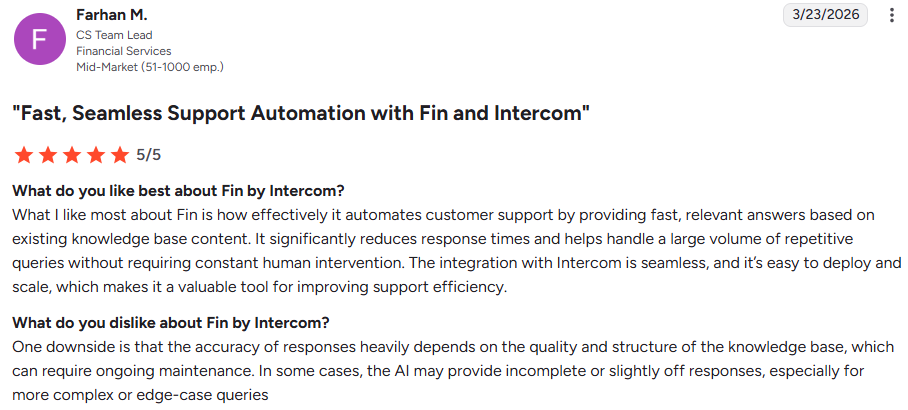
The main caveat is that response quality depends heavily on how well the knowledge base is maintained, with occasional gaps or inaccuracies on complex or edge-case queries.
Pricing
Intercom seats start at $29/seat/mo (Essential), $85 (Advanced), and $132 (Expert), all billed annually.
Free trial
14-day free trial.
7. Kustomer: Best CRM-driven enterprise commerce helpdesk
Kustomer is a CRM-native customer service platform. Unlike traditional help desks built around ticket queues, Kustomer uses a customer timeline architecture in which every shopper has a single, lifelong profile spanning orders, conversations, and events.
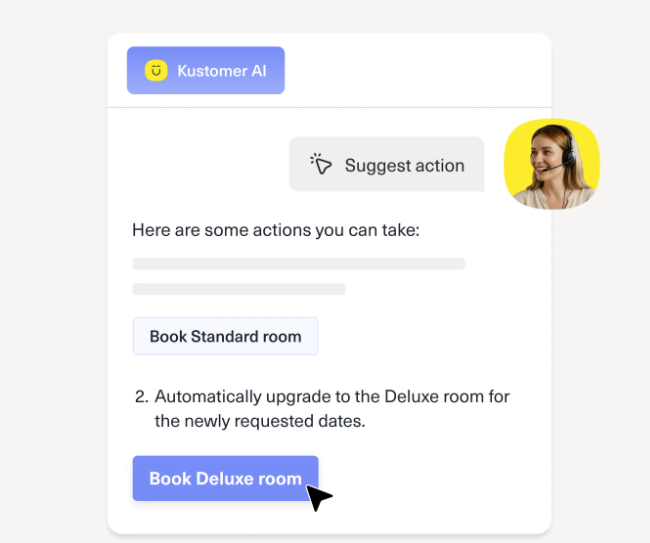
KIQ AI Agents handle automation and trigger backend actions, such as order cancellations, via approval workflows. While a native voice AI sits alongside omnichannel digital, removing the need for a separate telephony stack. Kustomer's 8-seat minimum and annual contracts limit SMB access.
Key features
- Multi-channel communication: Voice AI plus chat, email, SMS, and social inside one console.
- Customer database: Lifelong customer profile with every conversation, order, and event linked.
- Customer history: Customer timeline showing all interactions in a single thread, not split tickets.
- Automated routing: Business rules and conversation routing with up to 10 queues per team.
- Alerts and escalation: SLA management with breach alerts and KIQ AI handoff workflows.
- Real-time notifications: Live alerts for new conversations, mentions, and breach risks.
- Prioritization: AI-driven priority scoring based on tier, sentiment, and SLA proximity.
- Reporting and analytics: Dashboards covering CSAT, FCR, agent productivity, and revenue impact.
Pros
- Lifelong customer profile gives agents full context for high-touch enterprise commerce.
- Native voice AI plus omnichannel digital, with no third-party telephony stack required.
- Strong fit for portfolio brands and luxury retail with long customer lifecycles.
Cons
- The reporting suite isn’t very robust.
- CRM-heavy architecture is heavier than Rep AI's agentic OS for shopper intelligence.
Why we picked kustomer
Kustomer fits enterprise commerce brands that want a CRM-first approach to support. Mid-market DTC stores prioritizing fast time-to-value and conversion lift will find Rep AI's session-based pricing easier to deploy.
What customers are saying
Rasheed T. said Kustomer centralizes customer interactions into a single timeline, making support history easy to access without switching tools. The intuitive interface streamlines workflows and improves daily support organization.
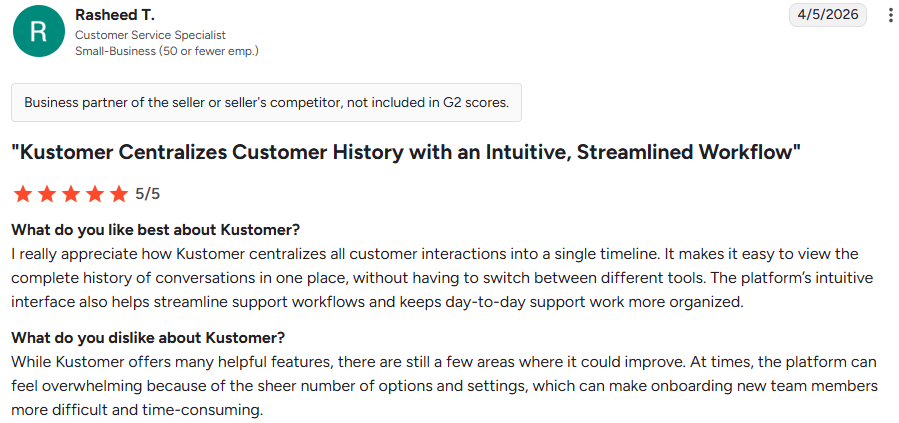
However, the platform’s extensive settings can make onboarding new team members more time-consuming.
Pricing
Custom.
Free trial
No public free trial; demo only.
8. Re:amaze: Best mid-market multichannel ecommerce helpdesk
Re:amaze is a helpdesk and live chat platform built specifically for retail and ecommerce. It integrates natively with Shopify, BigCommerce, WooCommerce, and Magento and offers a multi-brand inbox that lets portfolio operators manage multiple stores from a single console. The platform is used by mid-market DTC brands like Boody and Built Bar, the fastest-growing protein bar company.
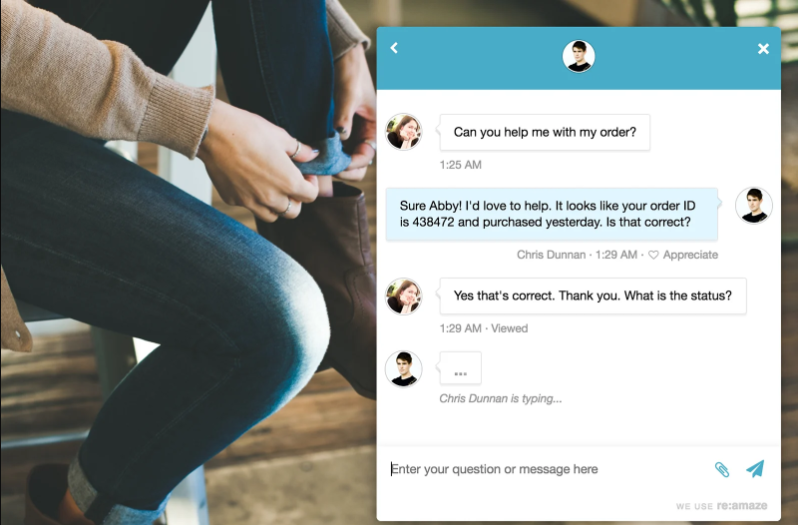
Re:amaze Push Campaigns and Cues add proactive engagement on top of pure ticketing for retention plays. AI features sit in BETA today, less mature than Gorgias's AI Agent or Tidio's Lyro. But the predictable per-agent pricing makes it a sensible fit for portfolio brands without surprise overages.
Key features
- Multi-channel communication: Shared inbox covering email, chat, social, SMS, and voice.
- Customer database: Customer profile with order data synced from Shopify and BigCommerce.
- Customer history: Full conversation and order history visible inside every ticket.
- Automated routing: Auto workflows for tagging, reassigning, and triggered autoresponders.
- Alerts and escalation: Smart SLA assistants with breach alerts and assignment rules.
- Real-time notifications: Live Dashboard pushes real-time activity, browsing, and geo data.
- Prioritization: Ticket tagging, custom statuses, and Cues-based routing for proactive chat.
- Reporting and analytics: Team performance metrics, support volume trends, and live dashboards.
Pros
- Multi-brand support lets you manage multiple Shopify, BigCommerce, or WooCommerce stores from a single console.
- Push Campaigns and Cues add proactive engagement.
- Chat widgets integrate well with ecommerce platforms.
Cons
- The settings screen is challenging to navigate.
- Customers demand advanced support features.
Why we picked re:amaze
Re:amaze fits mid-market portfolio brands managing multiple stores that want predictable pricing and clean multichannel ticketing.
What customers are saying
A Verified User in Automotive said Re:amaze combines email, SMS, eBay, social media, RingCentral, and live chat into one platform, helping teams manage customer communication from a single workspace.
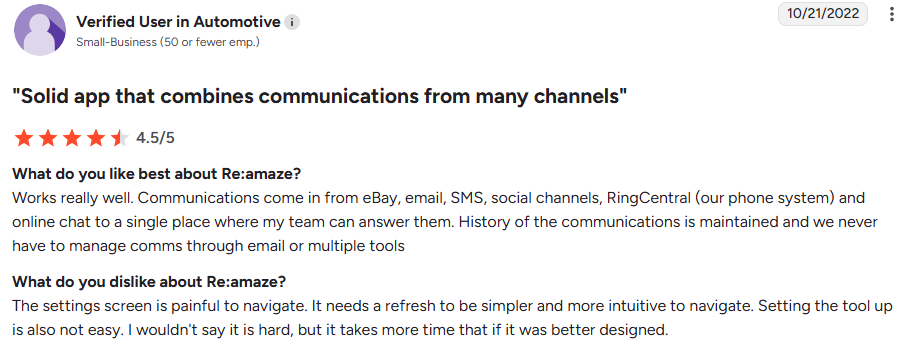
However, the settings interface feels outdated and makes setup and navigation more time-consuming.
Pricing
Re:amaze starts at $26.10 per team member per month (Basic), then $44.10 (Pro) and $62.10 (Plus), with custom Enterprise pricing available.
Free trial
14-day free trial on all plans.
9. eDesk: Best for multi-marketplace sellers
eDesk is an ecommerce help desk built for sellers operating across Amazon, eBay, Walmart, and 300+ other marketplaces. The platform powers 5k+ ecommerce sellers to increase sales and cut support time by half. Native marketplace coverage runs deeper here than any general-purpose helpdesk.
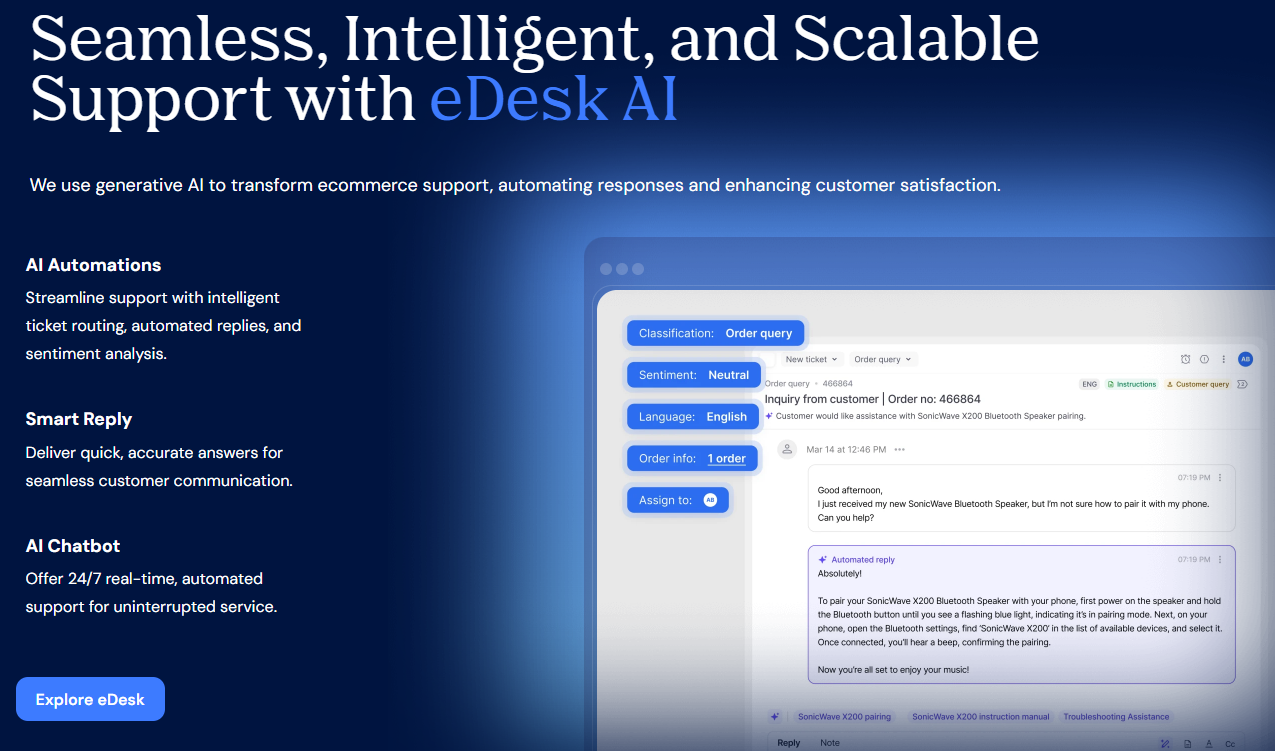
Marketplace SLA tracking includes countdown timers for Amazon's 24-hour requirement and eBay seller standards, protecting account health. eDesk is the right pick for any seller operating on more than two marketplaces, though pure DTC Shopify brands will find it overbuilt.
Key features
- Multi-channel communication: Smart Inbox covering marketplaces, social, and email.
- Customer database: Customer view with order history, tracking, and pre-sales mailbox.
- Customer history: Full marketplace order, return, and conversation history per shopper.
- Automated routing: Auto-prioritization by SLA proximity, sentiment, and customer value.
- Alerts and escalation: Marketplace SLA timers for Amazon's 24-hour and eBay seller standards.
- Real-time notifications: Breach alerts and collision detection between agents on shared tickets.
- Prioritization: AI-driven ticket sorting using sentiment, urgency, and SLA countdown.
- Reporting and analytics: Dashboards covering support, customers, products, and sales metrics.
Pros
- AI Agent included in every plan with no separate seat fee.
- 300+ direct marketplace integrations versus general help desks that need third-party connectors.
- Tickets can be sorted based on topic.
Cons
- AI translation quality can be inconsistent for less common languages, according to published reviews.
- No behavioral shopper-engagement layer for pre-sale conversion, like Rep AI.
Why we picked edesk
eDesk fits any seller operating on more than two marketplaces, where unified order context and SLA timers protect account health. Single-channel Shopify stores will find lighter, conversion-led options like Rep AI more efficient.
What customers are saying
Reviewers say eDesk consolidates multiple support channels into one inbox, helping teams manage customer inquiries more efficiently across eCommerce marketplaces.
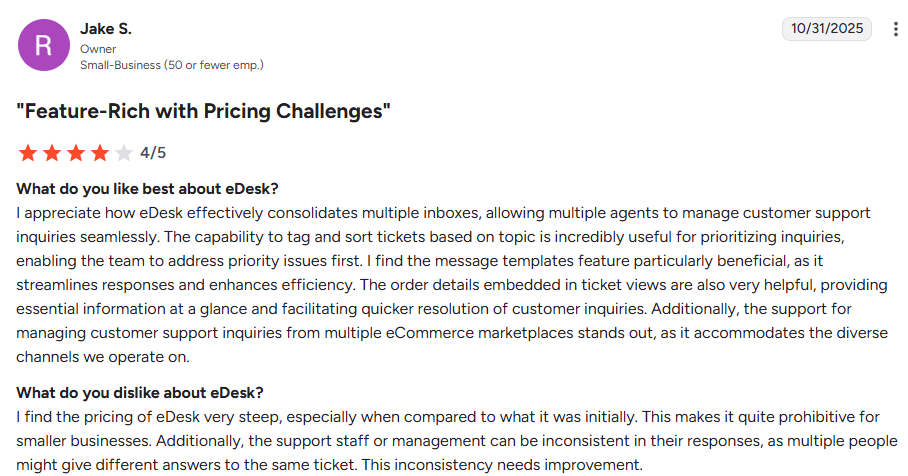
However, the platform’s high pricing can limit accessibility for smaller businesses, and inconsistent support responses can create confusion.
Pricing
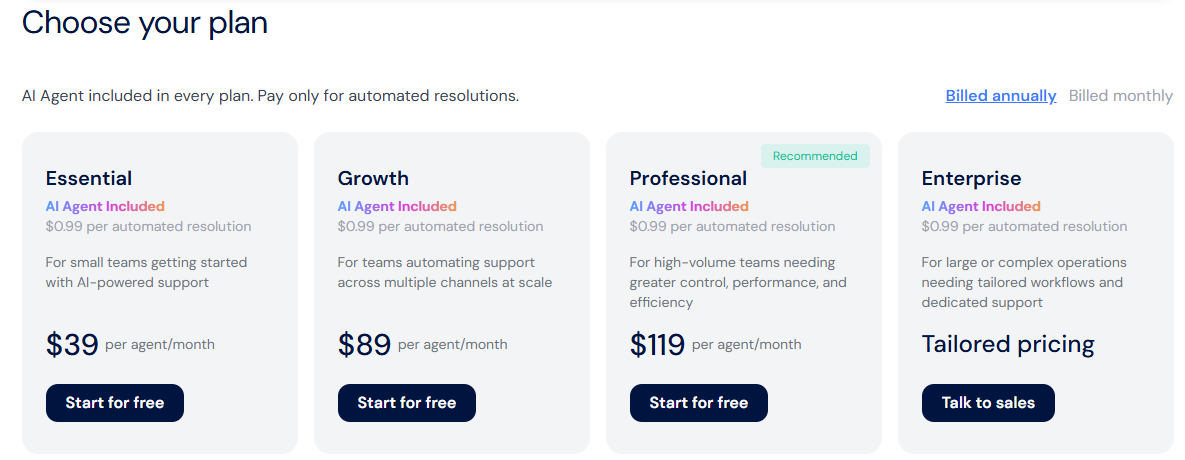
eDesk starts at $39 per agent per month (Essential), with higher tiers for Team and Scale plans. AI add-ons (Agent, Translations, Reviews) are available on every plan.
Free trial
14-day free trial.
What pricing plans should you expect?
The pricing table below highlights what unlocks at each tier across the nine platforms. Use it to match a plan to the support volume you actually run.
How did we evaluate these AI helpdesk tools?
Picking the right AI helpdesk goes beyond comparing feature lists. These technical angles separate platforms that scale from ones that stall. Here’s how we evaluated each AI platform
- Resolution depth versus deflection: Measure whether the AI ends conversations or just routes them. Remember, true resolution closes the ticket, and deflection still lands in your queue.
- AI guardrails and override capability: Look for rule-based escalation in plain language, hard limits on refund amounts, and audit logs on every AI action.
- Cold-start data requirements: Some AI models need time to learn from your existing ticket history before they perform well. Whereas agentic platforms like Rep AI get up to speed in minutes by ingesting your help center and product catalog directly.
- Pricing model math: Per-seat, per-resolution, per-ticket, and session-based all behave differently at scale. Run a 12-month forecast at your actual volume before signing.
- Time-to-first-value: Good platforms deliver impact in days, not months. Walk away from any vendor pitching a 2 to 3-month implementation for an SMB store.
- Channel parity across web, email, social, and SMS: Email-only AI handles the tickets that come after the sale. It does nothing for the shopper who's on the fence right now, browsing your site and one question away from buying.
- Behavioral signal capture beyond ticket logs: The best AI helpdesks pull intent, sentiment, and drop-off reasons from live shopper sessions, not just past tickets.
The platform that wins will treat ticket data as one input among many, not the only signal driving every reply.
How to choose the right AI helpdesk for your store
Use this ICP-based checklist to choose the right platform faster:
- Pure Shopify DTC stores under 1,000 tickets/month — Tidio is a solid entry point for budget-conscious AI. As ticket volume grows and in-chat order actions become a priority, Gorgias is the natural next step.
- Shopify or Shopify Plus brands serious about revenue, not just support — This is where Rep AI pulls ahead. Most helpdesks bolt on a chatbot and call it AI. Rep AI unifies sales assistance, support deflection, and real-time shopper intelligence within a single session. If converting browsers into buyers matters as much as resolving tickets, Rep AI is the platform built for that.
- Multi-marketplace sellers across Amazon, eBay, Walmart, and Shopify — eDesk is the pragmatic choice here, with 300+ native integrations covering the full marketplace stack.
- Enterprise teams with 50+ agents and compliance requirements — Zendesk suits ticket-led operations; Kustomer fits teams that want CRM-led architecture at scale.
- SaaS-leaning ecommerce stacks on HubSpot or Salesforce — Intercom Fin layers cleanly on top as a standalone AI Agent without replacing your existing helpdesk.
The common mistake ecommerce teams make isn't picking the wrong platform. It's picking a generic one and spending months bending it into shape with custom code. Choose a platform that already speaks Shopify, BigCommerce, or marketplace-native, and you start compounding value from day one instead of playing catch-up.
Picking the right AI helpdesk for your ecommerce stack
Most AI helpdesks measure success by the number of tickets closed. Rep AI measures it in revenue growth. The same conversation that resolves a question can lift conversion, increase AOV, and generate shopper intelligence without any extra effort from your team.
See why OLLY, Underoutfit, and Country Wine & Spirits chose Rep AI.
Start your free 30-day trial.
Frequently asked questions
What is the difference between an AI helpdesk and a regular helpdesk?
A regular helpdesk routes tickets to humans. An AI helpdesk uses agents trained on your store's data to autonomously resolve common questions, draft replies, and flag complex issues for human review.
How much does AI helpdesk software cost for ecommerce?
AI helpdesk software for ecommerce typically costs between $20 and $150 per agent per month. Enterprise ecommerce helpdesk platforms can cost more than $500 per month, depending on integrations, ticket volume, and AI capabilities.
Which AI helpdesk works best with Shopify?
For Shopify, Gorgias offers the deepest native ticket actions. However, Rep AI delivers the most complete agentic experience, spanning sales, support, and shopper insights.
How long does it take to set up an AI helpdesk?
Cloud-native platforms like Rep AI and Tidio go live in hours through one-click installs. Mid-market platforms like Gorgias and Re:amaze take a few days.
Can an AI helpdesk replace human agents?
AI handles tasks like order status, returns, and product questions. Humans handle what requires judgment, like escalations, edge-case refunds, and high-value customers who expect a personal touch. The best teams use both, not one or the other.
More from REP AI

AI for Handling Returns and Exchanges: Convert Lost Sales into Retained Revenue
Processing an online return costs between $10 and $65 per item, turning standard refund requests into an immediate margin killer. With ecommerce return rates hovering around 20%, treating reverse logistics as a routine helpdesk task bleeds gross revenue. Deploying AI for handling returns and exchang...
Real-Time Sales Engagement AI: Rescuing Storefront Revenue in 2026
According to the Baymard Institute, 70.22% of online shopping carts are abandoned before purchase. That means seven out of every ten shoppers who show buying intent walk away empty-handed, leaving expensive acquisition spend stranded on static product pages. Deploying real-time sales engagement AI c...

How to Reduce Customer Support Response Time and Rescue Revenue in 2026
Every minute a high-intent shopper waits for a reply, your conversion readiness drops by roughly 10 percent. For most brands, the traditional helpdesk has become a bottleneck where revenue goes to die. You likely recognize the pattern: your team is overwhelmed during peak seasons, the pressure to ac...
Want to see what your store would do with Rep?
Run your real Shopify catalog through the simulator before you commit to anything. No sales call required.

