


What is B2C Sales? 2026 Guide to Scaling DTC Revenue

In the first quarter of 2026, industry data shows that AI-referred shoppers converted 42% better than those navigating digital stores on their own. You likely feel the pressure of these shifting dynamics as you look for new ways to improve performance. It's frustrating to watch high cart abandonment rates climb while your support team remains trapped in a reactive loop. Understanding how to scale b2c sales in this environment requires moving beyond legacy helpdesks that only wait for problems to occur.
This guide will help you master the transition to agentic commerce. You'll discover how to turn every visitor interaction into a revenue rescue opportunity using proactive behavioral signals. We'll break down the fundamentals of modern B2C sales and explain how an Agentic Commerce OS uses Shopper Intelligence to drive a sales process that runs 24/7 without human intervention. By the end, you'll have a clear roadmap to increase conversion rates and maximize customer lifetime value through a more intelligent, unified system.
Key Takeaways
• Modern B2C sales requires a transition from static transactions to agentic commerce where every interaction is a revenue opportunity.
• Discover how to scale b2c sales by utilizing Shopper Intelligence to identify high-intent behavioral signals in real time.
• Replace reactive helpdesks with a proactive rescue algorithm that engages shoppers at the point of exit intent to secure rescued revenue.
• Deploy an Agentic Commerce OS with a one-click install to go live in days while using configurable Skills to maintain a personalized boutique feel at scale.
Defining B2C Sales in the Age of Agentic Commerce
B2C sales is the direct exchange of value between your brand and an individual consumer. While the core definition remains simple, the execution has changed fundamentally. In 2026, static product pages are no longer sufficient to capture modern demand. The industry has shifted from transactional commerce to agentic commerce. This means your digital storefront must act as a proactive participant in the sale rather than a passive catalog. Brands figuring out how to scale b2c sales today recognize that every visitor interaction is a high-stakes moment for revenue rescue.
Modern B2C sales cycles are short, high-frequency, and heavily influenced by emotional drivers. Shoppers don't just buy a product; they buy the feeling of a problem being solved instantly. When you focus on order taking, you leave money on the table. Scaling effectively requires moving toward a revenue rescue mindset. This involves using behavioral signals to identify when a shopper is hesitant and intervening before they leave. It's the difference between a store that waits for a checkout and one that actively closes the deal.
B2C vs. B2B Sales: The Fundamental Differences
The differences between B2C and B2B sales are stark. In B2C, you're dealing with a single decision-maker driven by emotional fulfillment. There are no corporate committees or six-month procurement cycles. Purchases happen in minutes, driven by immediate desire or urgent need. Scaling for these interactions requires a system capable of managing millions of unique sessions while maintaining a high-frequency, personalized touch. You aren't just selling to a person; you're managing a massive volume of individual experiences simultaneously.
The Evolution of the Digital Storefront
The digital storefront has evolved from a basic "vending machine" model into a sophisticated "Website Concierge" experience. This transition is powered by conversational commerce, which has redefined what buyers expect from a brand. Shoppers no longer want to search; they want to be served. A Rep Sales agent acts as your store's most effective salesperson, using Shopper Intelligence to guide visitors through the funnel. If you want to know how to scale b2c sales, you must stop treating your website as a static document and start treating it as a living sales floor.
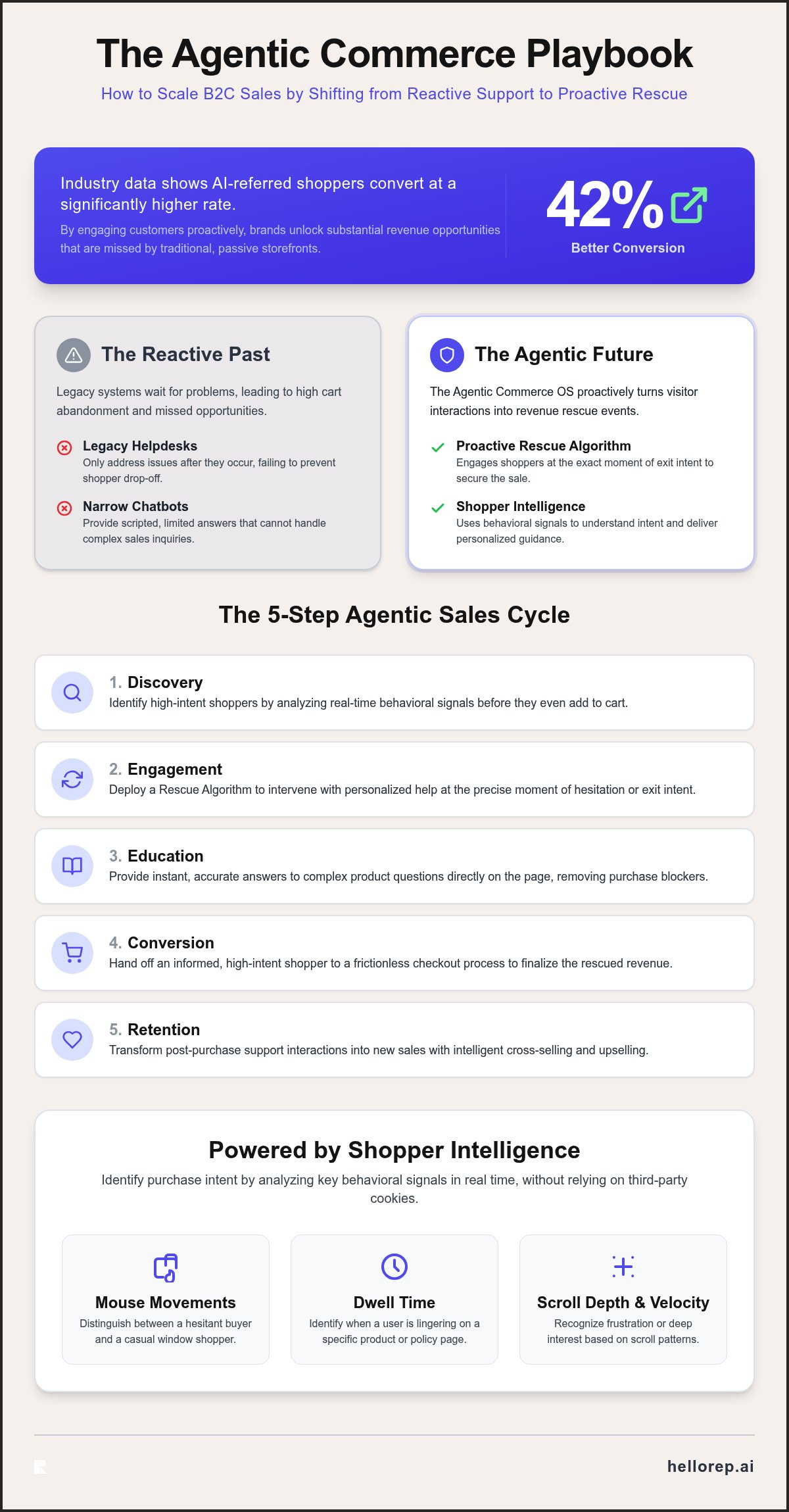
The 5-Step B2C Sales Cycle for Scaling Brands
Traditional sales funnels are often too slow for the 2026 shopper. If you want to know how to scale b2c sales, you must adopt a cycle that moves at the speed of intent. The modern process is no longer a linear path from awareness to purchase. It is a dynamic loop of intervention and resolution. Scaling requires a system that handles five critical stages without human bottlenecks:
Discovery
Identifying high-intent shoppers through behavioral signals before they even reach the cart.
Engagement
Using a Rescue algorithm to intervene at the exact moment of exit intent.
Education
Deploying Shopper Intelligence to answer complex product questions instantly on the page.
Conversion
Handing off a warm, informed lead to a frictionless checkout process.
Retention
Converting support resolutions into repeat purchase opportunities through intelligent cross-selling.
This cycle ensures that no visitor is left to navigate your store alone. By automating these touchpoints, brands can maintain a high-performance sales floor that operates 24/7. This is the foundation of agentic commerce, where the goal is to maximize the value of every session.
Identifying High-Intent Behavioral Signals
Most brands miss the "why" behind their bounce rates. By analyzing mouse movements, dwell time, and scroll depth, you gain a clear view of purchase intent in real time. A window shopper might scroll quickly through a collection; a frustrated buyer lingers on shipping policies or repeatedly highlights a specific product name. Behavioral signals are the real-time digital fingerprints that allow brands to identify and act on buyer intent without relying on depreciated third-party cookies. Distinguishing between these states allows Rep Sales to prioritize interactions that are most likely to result in rescued revenue.
The Art of the Revenue Rescue
Traditional exit-intent popups are reactive and often frustrate the user. A true revenue rescue happens through intelligent, personalized intervention. Instead of a generic "10% off" banner, the system offers a response based on specific Product Detail Page (PDP) interactions. If a user hesitates because they aren't sure about a product's compatibility, Rep Sales provides that specific answer. This creates a natural hand-off that moves the shopper from inquiry to cart without the friction of a broken user journey. You can schedule a walkthrough to see how these signals translate into consistent growth for your brand.
Scaling B2C Sales: Overcoming the Personalization Paradox
The Personalization Paradox is the wall every growing DTC brand eventually hits. You want to maintain a 1-on-1 boutique feel, but your traffic has scaled to 50,000 sessions per month. Human teams cannot keep up with that volume without sacrificing quality or becoming prohibitively expensive. If you want to know how to scale b2c sales without losing that personal touch, you must use Shopper Intelligence to read behavioral signals across every session. Most brands fail here because they rely on reactive helpdesks that wait for a problem to occur before acting. This approach stunts growth by ignoring the silent majority of shoppers who leave without ever opening a ticket, which is why high-performing DTC brands focus on delivering tailored interactions that address specific buyer concerns in real time.
Scaling effectively requires you to understand why customers are leaving your site in real time. Instead of guessing why a cart was abandoned, you can see the exact moment of hesitation. This turns every visitor interaction into a data point for better segmentation. By capturing these insights, you move from a "one size fits all" storefront to a dynamic environment that adapts to individual buyer intent. This behavioral data becomes the foundation for a sales process that feels personal but operates with the efficiency of an Agentic Commerce OS.
Moving Beyond Reactive Support
Ticket deflection is a common metric, but it's often a trap. Saving support time by hiding contact buttons or using narrow chatbots can cost you significant revenue. A deflected ticket is often a lost sale. Rep Sales shifts the focus from deflection to revenue rescue by proactively engaging shoppers who show signs of friction. See how Rep Sales transforms the customer journey from a series of support hurdles into a streamlined path to purchase. It turns every inquiry into a revenue-generating opportunity by resolving doubts at the point of sale. This proactive stance ensures your team isn't just closing tickets, but closing deals.
Deep Research and Audience Segmentation
The data captured during these conversations shouldn't live in a silo. An Agentic Commerce OS builds a unified data layer that connects your sales, support, and marketing efforts. For example, topics discovered by Rep AI can be pushed directly into Klaviyo for hyper-targeted post-purchase flows. This allows for several key optimizations:
• Automating follow-up campaigns that address specific product use cases mentioned in chat.
• Refining your product roadmap based on real-time conversational data.
• Updating marketing copy to reflect the actual language and concerns of your buyers.
Using these insights ensures your brand stays aligned with actual customer behavior rather than assumptions. By turning conversational data into actionable segmentation, you create a feedback loop that makes every marketing dollar work harder.
Why Legacy Helpdesks and Narrow Chatbots Fail B2C Brands
Legacy helpdesks are architected for a world that no longer exists. They function as digital filing cabinets for customer complaints, forcing high-intent shoppers to wait for a human response that often arrives too late. This reactive model is the primary reason many brands struggle with how to scale b2c sales. When your infrastructure prioritizes ticket deflection over revenue rescue, you're operating with a defensive mindset that ignores the sales floor. Narrow chatbots are equally problematic. These point-solutions rely on rigid decision trees that fail to understand the nuance of human dialogue, leading to the very frustration they were meant to solve.
The Agentic Commerce OS represents the necessary evolution for Shopify Plus brands. It unifies proactive engagement and behavioral data into a single intelligent layer. Scaling requires a system that doesn't just manage problems but actively identifies and resolves shopper hesitation in real time. Moving to an offensive sales strategy ensures that your support infrastructure acts as a growth engine rather than a cost center.
The Proactive vs. Reactive Performance Gap
Reactive support systems only capture the small percentage of visitors who bother to reach out. The vast majority of shoppers simply leave when they encounter friction. This performance gap is where revenue is lost. Instant resolution is a requirement for maintaining high conversion rates in 2026. When a shopper receives a precise answer in seconds, they move forward to the cart. You can compare your current setup with Rep Support to see how a proactive approach eliminates the friction that kills high-intent sessions.
Omnichannel Consistency in B2C Sales
Modern shoppers interact across Instagram, Facebook, and WhatsApp. If your AI lacks a single, unified brain, your brand experience becomes fragmented. An Agentic Commerce OS uses a "One Adaptive Engine" approach to ensure your brand voice and product knowledge remain consistent everywhere. This efficiency allows you to resolve interactions at an industry estimate of $0.75 per session. This is significantly more effective than the high overhead of human BPO services. Book a demo today to see how an integrated engine drives consistent revenue across every channel.
Implementing an AI Operating System for Your Brand
Implementing an Agentic Commerce OS is not a months-long technical overhaul. The one-click install for Shopify Plus ensures you can go live in days. This speed is essential for brands trying to understand how to scale b2c sales without losing seasonal momentum. Once the system is active, you configure Skills to match your brand's unique personality and sales voice. These Skills define how the AI interacts, ensuring it acts as a high-performing extension of your team rather than a generic bot. It allows you to dictate exactly how the AI handles specific scenarios, from nuanced product recommendations to complex fulfillment inquiries.
Establishing a continuous feedback loop is the next strategic step. By connecting AI sales data directly to your marketing strategy, you gain a clearer picture of what actually drives conversion. This data informs your AI sales performance optimization, allowing the system to learn from every interaction and improve its rescue rate over time. This unified data layer removes the guesswork from your marketing spend. When your AI identifies a recurring objection, you can address it immediately in your ad copy or top-of-funnel content.
Getting Started with Agentic Commerce
The first move is auditing your current exit points and abandonment triggers. You need to know where shoppers are dropping off and what behavioral signals precede that exit. Setting up your Website Concierge allows you to mirror your best human salesperson's approach, providing proactive assistance at the exact moment of hesitation. This setup integrates directly with your existing tech stack. By syncing behavioral data with Shopify and Klaviyo, you ensure that every insight captured by Rep AI informs your entire customer lifecycle. It turns passive browsing data into active sales intelligence.
Measuring Success: Rescued Revenue and ROI
Traditional metrics like CSAT or ticket deflection don't tell the full story of growth. You must move toward rescued revenue as your primary KPI. This metric tracks the actual dollar value of sales that would have been lost without proactive intervention. Analyzing Shopper Intelligence reports allows you to identify specific friction points in your funnel that were previously invisible. When you see exactly which behavioral signals lead to a successful rescue, you can refine your sales process with surgical precision. Scaling your revenue requires this level of visibility into the "silent" interactions on your site. Book a demo to see Rep AI in action and start transforming your store's performance.
Mastering the Shift to Agentic Commerce
The transition from reactive support to proactive agentic commerce is the defining factor for growth-focused DTC brands. By replacing narrow chatbots and legacy helpdesks with a system that reads 500+ behavioral signals, you move from simple order taking to consistent revenue rescue. This consolidated data layer ensures your brand remains competitive while maintaining a personalized feel for every visitor. Mastering how to scale b2c sales in 2026 requires moving beyond the "vending machine" model toward a dynamic, intelligent sales floor.
As OpenAI’s first ecommerce partner, Rep AI offers a solution that is live in days with a one-click install for Shopify Plus. You don't have to choose between scale and sophistication. By implementing an Agentic Commerce OS, you secure a 24/7 sales process that identifies intent and closes deals without human intervention. The path to optimized performance is clear for brands ready to embrace proactive sales intelligence and a unified approach to digital commerce.
Scale your B2C sales with a custom demo of Rep AI and start capturing the revenue your current setup is missing today.
Frequently Asked Questions
What is the main difference between B2C and B2B sales strategies?
B2C sales focus on emotional fulfillment and immediate resolution for individual consumers. Unlike B2B cycles, which involve complex committees and rational ROI procurement, B2C transactions happen quickly. Success depends on managing high-frequency interactions and providing instant value. Scaling a B2C brand requires a system that can handle thousands of unique sessions simultaneously while maintaining a direct, personalized connection with every shopper.
How can AI help scale B2C sales without losing the human touch?
Agentic commerce uses configurable Skills to mirror the voice and personality of your best human salesperson. This ensures that every interaction feels authentic and aligned with your brand identity. Understanding how to scale b2c sales involves deploying an Agentic Commerce OS that uses Shopper Intelligence to personalize conversations at scale. You maintain a boutique feel while the system manages the heavy lifting of 24/7 engagement.
What are behavioral signals and how do they impact conversion?
Behavioral signals are real-time data points like mouse movements, scroll depth, and dwell time. These digital fingerprints allow the system to predict buyer intent and identify frustration before a shopper leaves. By reading these signals, Rep Sales can intervene at the exact moment of hesitation. This proactive approach directly improves conversion rates by resolving doubts that would otherwise lead to a bounced session.
Can an AI sales agent actually close a sale on my website?
Rep Sales agents act as high-performance closers by resolving product doubts and guiding shoppers to the checkout. While they don't process payments natively within the chat widget, they effectively hand off warm leads to your existing checkout process. By removing the friction of unanswered questions, the agent ensures the shopper is confident and ready to complete their purchase without further assistance.
What is 'revenue rescue' in the context of ecommerce?
Revenue rescue is the process of proactively intervening in a session that shows high exit intent. Reactive helpdesks only assist the small percentage of shoppers who reach out for support. Revenue rescue uses a specialized algorithm to engage the silent majority of visitors who are about to bounce. This turns potential losses into successful transactions, significantly increasing the overall efficiency of your digital storefront.
Does Rep AI integrate with my existing Shopify store?
Rep AI is designed for mid-market DTC brands and offers a one-click install for Shopify Plus. The system is built to be live in days, syncing directly with your product catalog and customer data. This deep integration allows the AI to provide accurate product recommendations and real-time shipping updates. It works alongside your existing tech stack to create a unified data layer for your brand.
What channels are supported for omnichannel B2C sales?
The platform provides a unified experience across the most critical social and messaging channels. Currently, Rep AI supports integration with Instagram, Facebook, and WhatsApp, alongside your primary website. This "One Adaptive Engine" approach ensures that your brand voice and product knowledge remain consistent regardless of where the customer chooses to shop. You manage all interactions through a single, intelligent system rather than fragmented point-solutions.
How does pricing work for an AI-powered sales platform?
Pricing for an Agentic Commerce OS is typically structured around the volume of interactions and the specific capabilities your brand requires. Industry estimates suggest that resolving tickets through automated systems can cost as little as $0.75 per interaction. This is significantly more efficient than traditional human BPO services. You should consult current plans to determine the best fit for your specific session volume and growth targets.
More from REP AI

AI for Handling Returns and Exchanges: Convert Lost Sales into Retained Revenue
Processing an online return costs between $10 and $65 per item, turning standard refund requests into an immediate margin killer. With ecommerce return rates hovering around 20%, treating reverse logistics as a routine helpdesk task bleeds gross revenue. Deploying AI for handling returns and exchang...
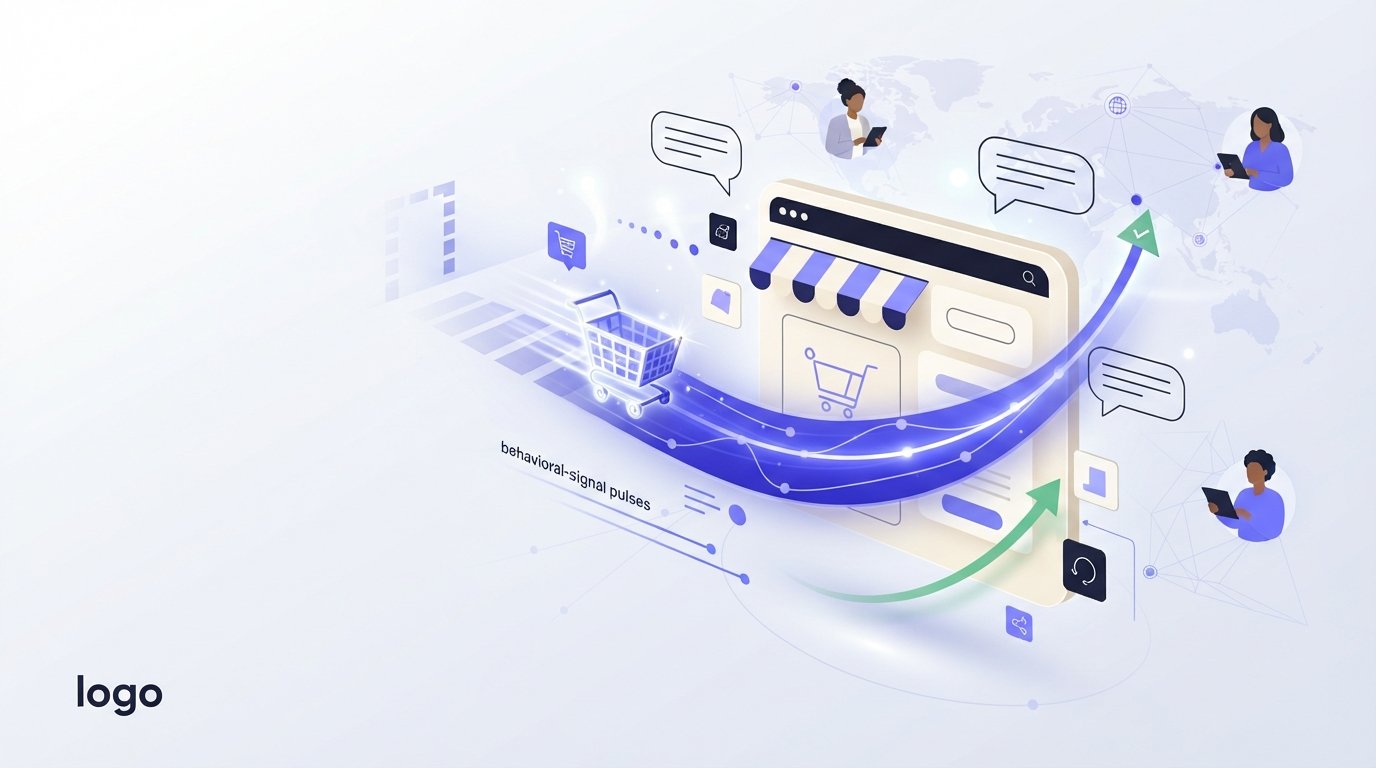
Real-Time Sales Engagement AI: Rescuing Storefront Revenue in 2026
According to the Baymard Institute, 70.22% of online shopping carts are abandoned before purchase. That means seven out of every ten shoppers who show buying intent walk away empty-handed, leaving expensive acquisition spend stranded on static product pages. Deploying real-time sales engagement AI c...
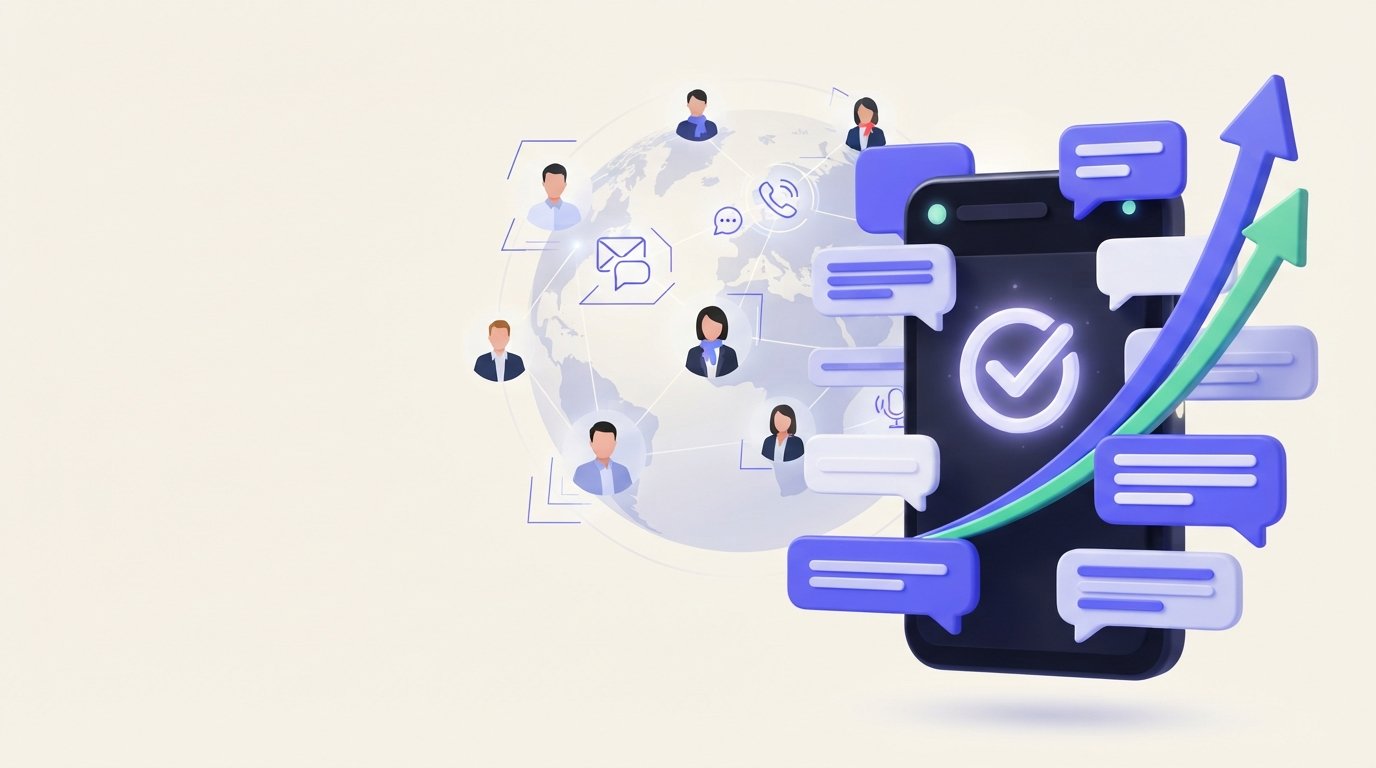
How to Reduce Customer Support Response Time and Rescue Revenue in 2026
Every minute a high-intent shopper waits for a reply, your conversion readiness drops by roughly 10 percent. For most brands, the traditional helpdesk has become a bottleneck where revenue goes to die. You likely recognize the pattern: your team is overwhelmed during peak seasons, the pressure to ac...
Want to see what your store would do with Rep?
Run your real Shopify catalog through the simulator before you commit to anything. No sales call required.

