


How to Use AI Chatbot Analytics to Grow Your E-commerce Brand
Quick summary
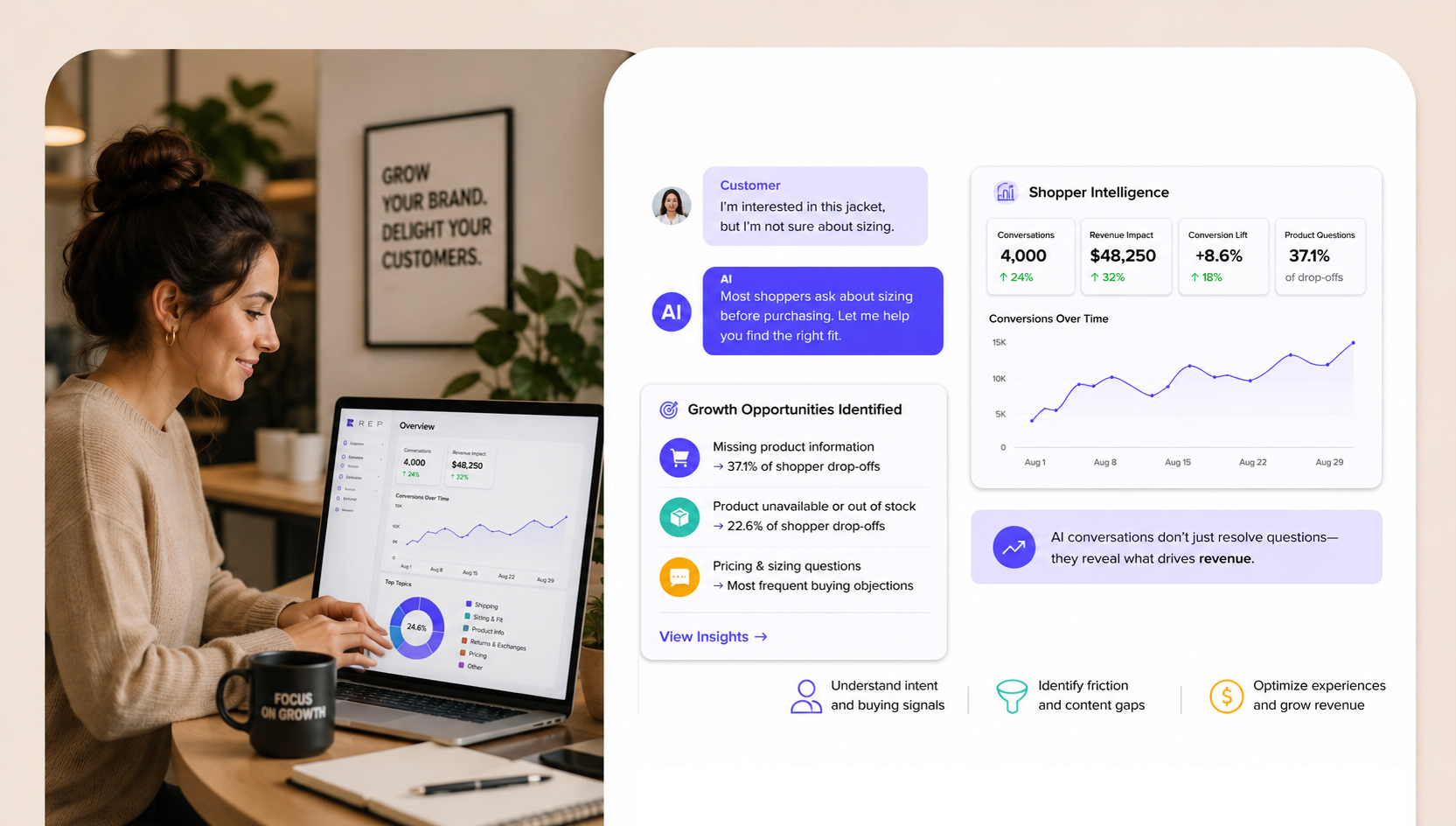
Standard chatbot analytics focus on support metrics like sessions handled, response times, and CSAT scores, but they rarely explain why shoppers fail to convert. The real value comes from conversation intelligence: identifying buying friction, product confusion, missing information, and drop-off patterns across customer interactions. When structured properly, these insights help e-commerce brands improve product pages, messaging, and conversion paths.
The problem with most AI chatbot analytics
Your AI handled 4,000 conversations last month. Yet your conversion rate did not move.
A shopper visited your jacket collection page, asked the AI about sizing, spent a few more minutes browsing, and left without making a purchase. The conversation was marked as resolved, and the chatbot did its job. However, nobody asked why she did not convert.
That is the gap with most chatbot analytics. They measure support performance: sessions handled, response times, and CSAT scores. But they do not explain what is stopping shoppers from buying.
The real value is inside the conversations themselves. Customer chats reveal hesitation to buy, product confusion, missing information, pricing concerns, and other friction points that directly affect conversions.
This guide explores how AI chatbot analytics are shifting from support reporting to growth intelligence and how conversation data can be used to improve revenue.
Why trust us
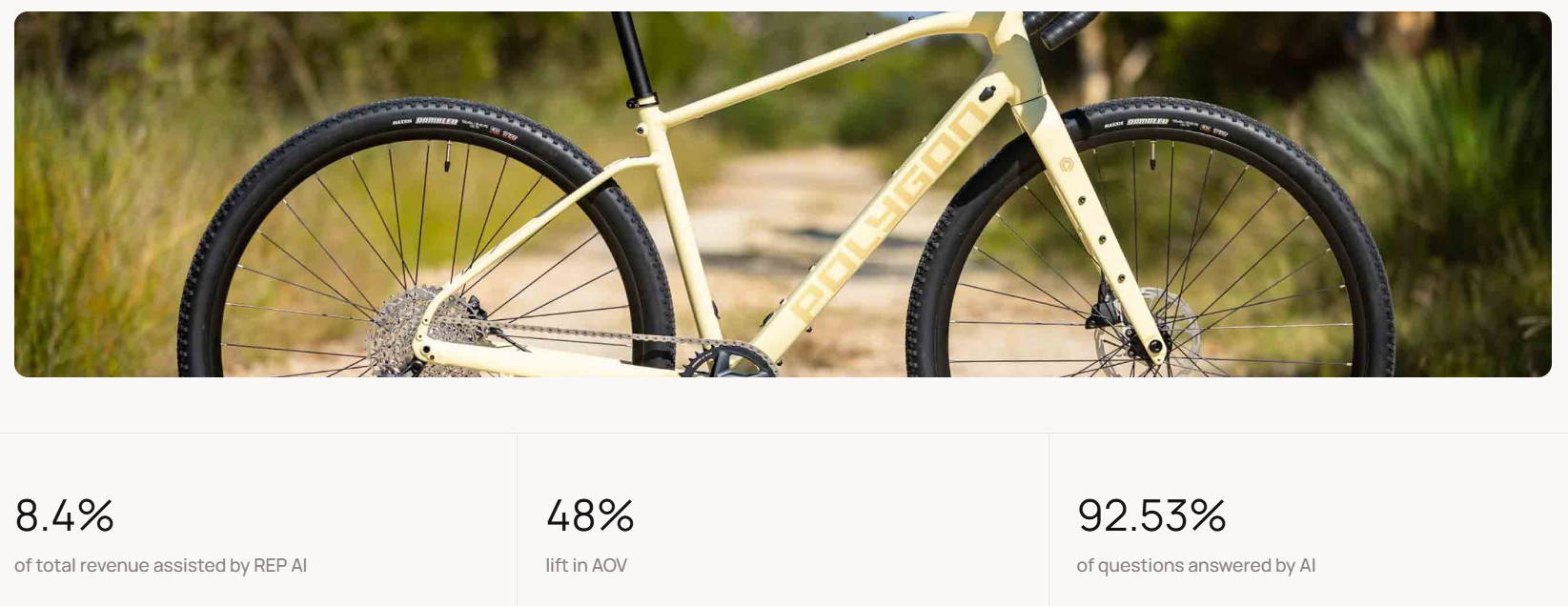
Rep AI has worked with major e-commerce brands like Bikes Online that successfully leverage our analytics platform to optimize their business operations. We process data from more than 110 million shopping sessions across 550+ Shopify Plus stores to provide you with deep insights.
Built as an agentic commerce platform for Shopify and Salesforce Commerce Cloud, Rep AI combines sales, support, and shopper intelligence into a single system. The conversation analytics insights in this guide are based on our deployment experience across hundreds of DTC e-commerce brands.
What growth-focused analytics actually measure
Growth-focused analytics treat conversation data as a business intelligence layer rather than a support log. Instead of measuring how well your AI performed, they surface what those conversations revealed about your store.
Growth-focused analytics track:
- Shopper Intent Signals: What visitors were trying to accomplish when they engaged, and whether the conversation helped them get there.
- Buying Friction Patterns: The recurring questions, hesitations, and objections that appear across hundreds of conversations and point to specific gaps in your funnel.
- Product Confusion Signals: The topics, comparisons, and clarification requests that cluster around specific SKUs or categories.
- Unanswered Questions: Queries your AI could not resolve from existing content, which map directly to missing information on your site.
- Drop-off Reasons: Structured analysis of why shoppers engaged but did not convert, categorized by customer problem type.
- Emotional Signals: Whether shoppers came into a conversation seeking clarity, needing assistance, or already frustrated, and how that maps to conversion outcomes.
- Topic Distribution: What percentage of conversations involve shipping, sizing, pricing, sustainability, or product fit, and how that shifts over time.
Each of these is a useful signal on its own. Together, they form an intelligence layer that a CSAT dashboard cannot replicate.
6 ways to use chatbot analytics to drive e-commerce growth
Here are six ways to employ chatbot analytics for increasing e-commerce growth:
Find out why shoppers are not buying
Drop-off reason analysis is one of the highest-leverage outputs AI conversation data can produce. According to Rep AI's Ecommerce Shopper Behavior Report, the leading drop-off causes are:
- Lack of product information (37.1%)
- Product unavailable or out of stock (22.6%)
- Inadequate customer support (8.4%)
When your platform categorizes these drop-off reasons, you can see exactly what is preventing shoppers from converting and prioritize fixes based on their impact.
What you can do with it: Fix the specific content gaps, policy language, or missing information that your drop-off data ranks as the biggest abandonment drivers.
Fix the gaps on your product pages
When your AI is asked a question it can’t answer from your existing content, that is not just a support failure. It is a content gap. Aggregated across thousands of conversations, unanswered questions, and missing information signals, you get a direct map of what is missing from your product pages.
Bikes Online saw this in practice. Rep AI surfaced a pattern that had been generating a steady stream of frustrated post-purchase contacts. Higher-end bikes in their catalog did not include pedals, and while that detail was technically listed on product pages, it was easy to miss. After making the information more prominent and having the AI surface it proactively in conversation, the team went from hundreds of those tickets per week to fewer than ten.
What you can do with it: Use unanswered question data as a prioritized content brief, a ranked list of what to add to your PDPs, FAQs, and category pages.
Understand how shoppers describe your products
There is a gap between the language brands use to describe their products and the language shoppers use when looking for them. For example, your copy may say “slim-fit chino,” while shoppers search for “skinny office pants.” Your product description might say “crossover compatible” instead of clearly stating it fits specific needs. Shoppers often ask practical questions, like whether a bag fits a specific laptop model.
Conversation topic data surfaces this mismatch. When you can see which terms, use cases, and comparisons appear most frequently in shopper questions, you can close the language gap on product pages, in search copy, and in paid media.
What you can do with it: Rewrite product descriptions, meta copy, and ad creative using the exact language your shoppers use.
Build smarter marketing campaigns
Conversation data becomes marketing intelligence when it syncs to your marketing platform. If many shoppers repeatedly ask about topics like sustainable materials, pricing, gifting, or specific product categories, it reveals what customers care about before buying. This feedback helps your team understand customer priorities and improve messaging, products, and merchandising.
When these conversation topics sync to Klaviyo as customer properties, they become usable audience segments. For example, you can create campaigns for shoppers who showed pricing hesitation, asked gift-related questions, or expressed interest in a certain product type.
Instead of relying solely on clicks or browsing behavior, your campaigns respond to what customers say directly in conversations.
What you can do with it: Build Klaviyo segments around topics shoppers repeatedly ask about and send campaigns that directly respond to those interests. For a breakdown of how to build these segments inside Klaviyo, see our guide on Klaviyo customer intent segmentation.
Reduce support ticket volume before it grows
Recurring questions in AI conversations are an early warning system for support volume. When the same type of question keeps appearing across different customers, the answer is either missing from your site or buried so deeply that shoppers will not find it.
Acting on that signal proactively, before those questions become tickets, is one of the most direct applications of conversation analytics.
Pür Smile used conversation-pattern data to identify and eliminate repetitive product-related questions that had been overwhelming their support team. Once the AI was trained on the answers and the most common content gaps were addressed, 99% of those product-related inquiries stopped reaching the human support queue.
The team could shift focus to higher-value interactions: personalized guidance, post-purchase follow-up, and review management.
What you can do with it: Identify your top recurring question types, address them at the content level, and reduce inbound ticket volume.
See which conversations are driving revenue
Attribution is where most AI platforms lose credibility. Some use multi-day attribution windows, crediting the AI for any purchase made days after a conversation took place. While this can produce impressive revenue figures, it doesn't necessarily prove the AI influenced the sale. In contrast, a same-session attribution model provides a more accurate picture by counting only purchases completed during the same browsing session in which the conversation occurred.
HigherDOSE had a mature CX operation before implementing Rep AI, but lacked visibility into whether chat was influencing revenue. Once they could see the attribution data, 45% of website visitors engaged with chat, and 2.5% of those interactions triggered a sales action. While 6% of those converted to purchases. The conversation about CX as a revenue function changed entirely.
That level of specificity is what allows an ecommerce leader to make a case for investment, not just justify existing spend.
What you can do with it: Use same-session attribution data to identify which conversation types, sales skills, and engagement moments are directly driving purchases.
What a modern AI analytics dashboard should show
The standard for what a chatbot analytics dashboard should deliver has changed. Session counts and average response time are table stakes. A dashboard built for growth surfaces intelligence across two layers that most platforms lack. These include:
Shopper intelligence
Shopper intelligence shows you what is actually happening inside your conversations. Rep AI's shopper intelligence panel covers:
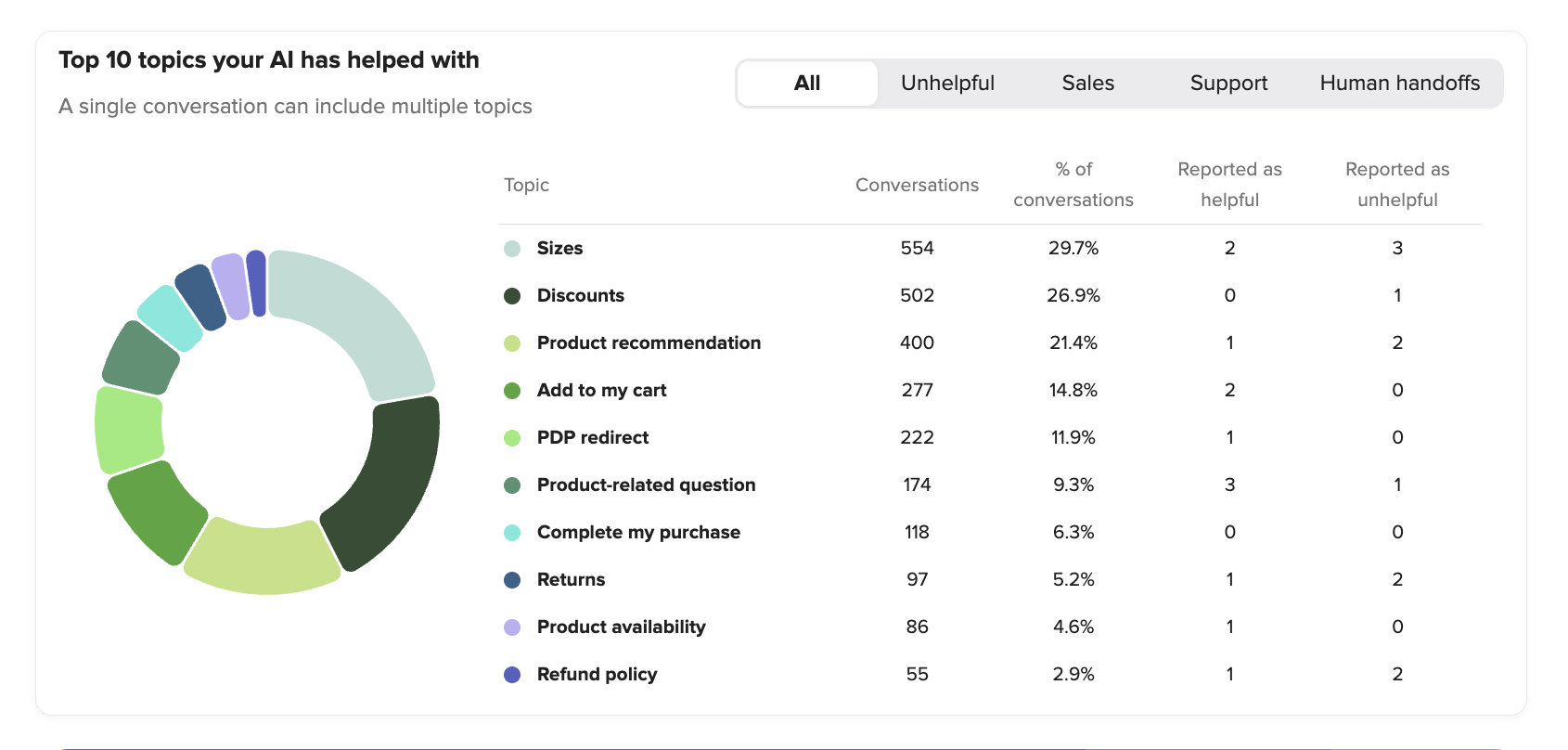
- Top 10 topics your AI has helped with, broken down by conversation volume and filterable by sales, support, unhelpful, and human handoff interactions.
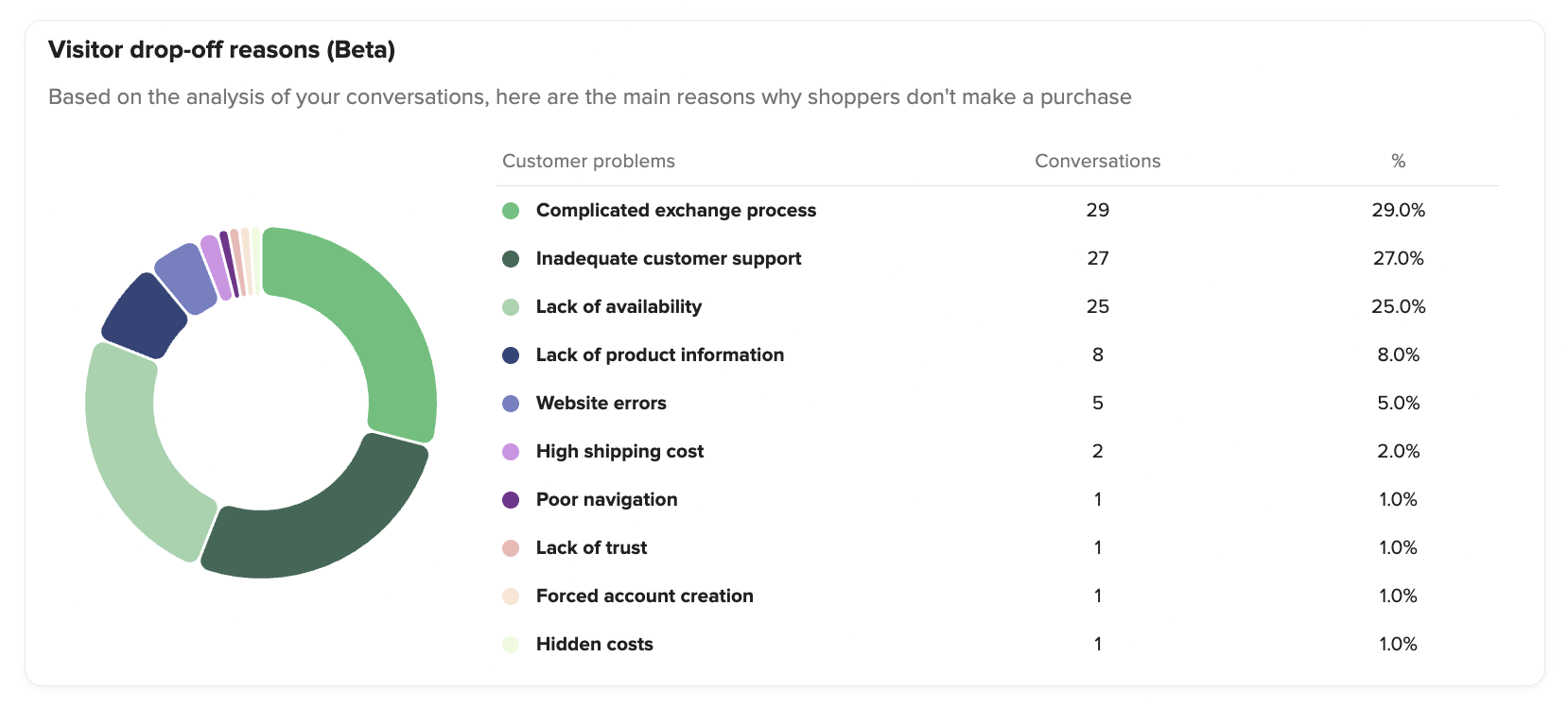
- Visitor drop-off reasons, categorized by customer problem type (complicated exchange process, inadequate support, lack of availability, and product information). So, you can see what is blocking purchases.
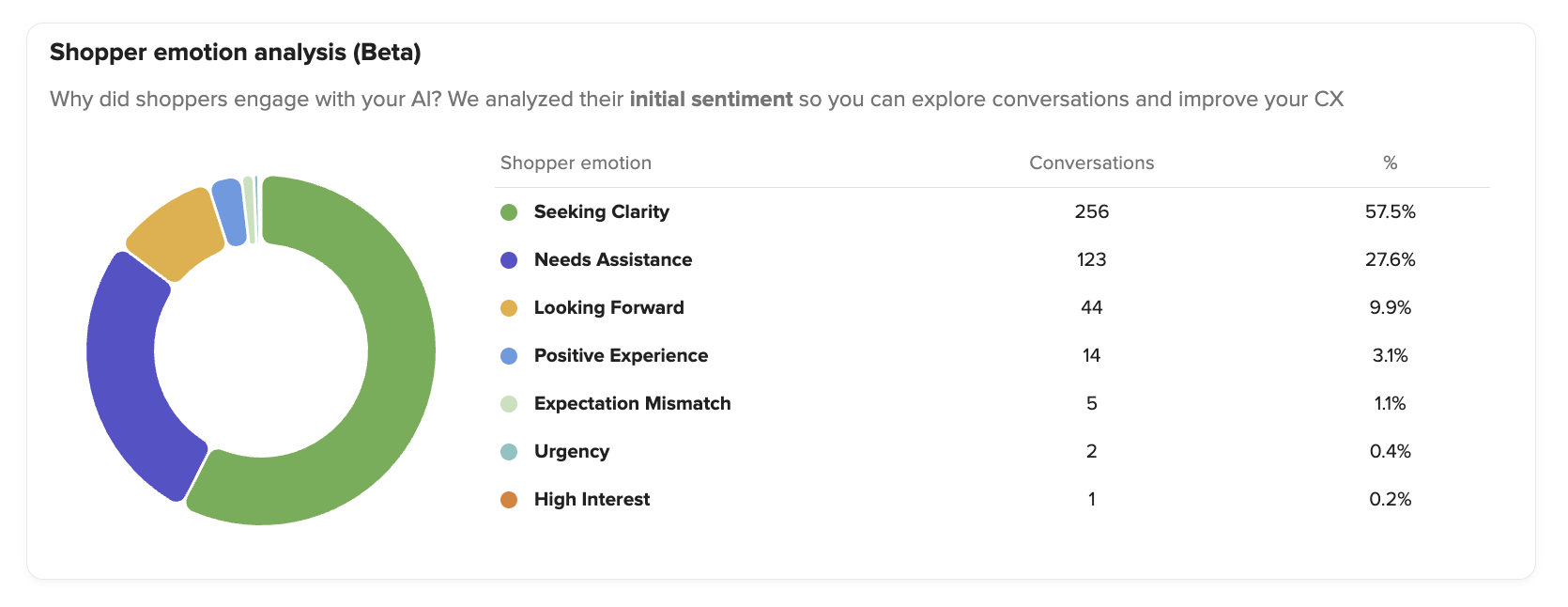
- Shopper emotion analysis, which classifies the initial sentiment shoppers brought into each conversation: seeking clarity, needing assistance, looking forward, expectation mismatch, and others.
- Top 10 products added to cart by the AI and top 10 PDP redirects, showing which products your AI is actively moving shoppers toward.
Engagement analytics
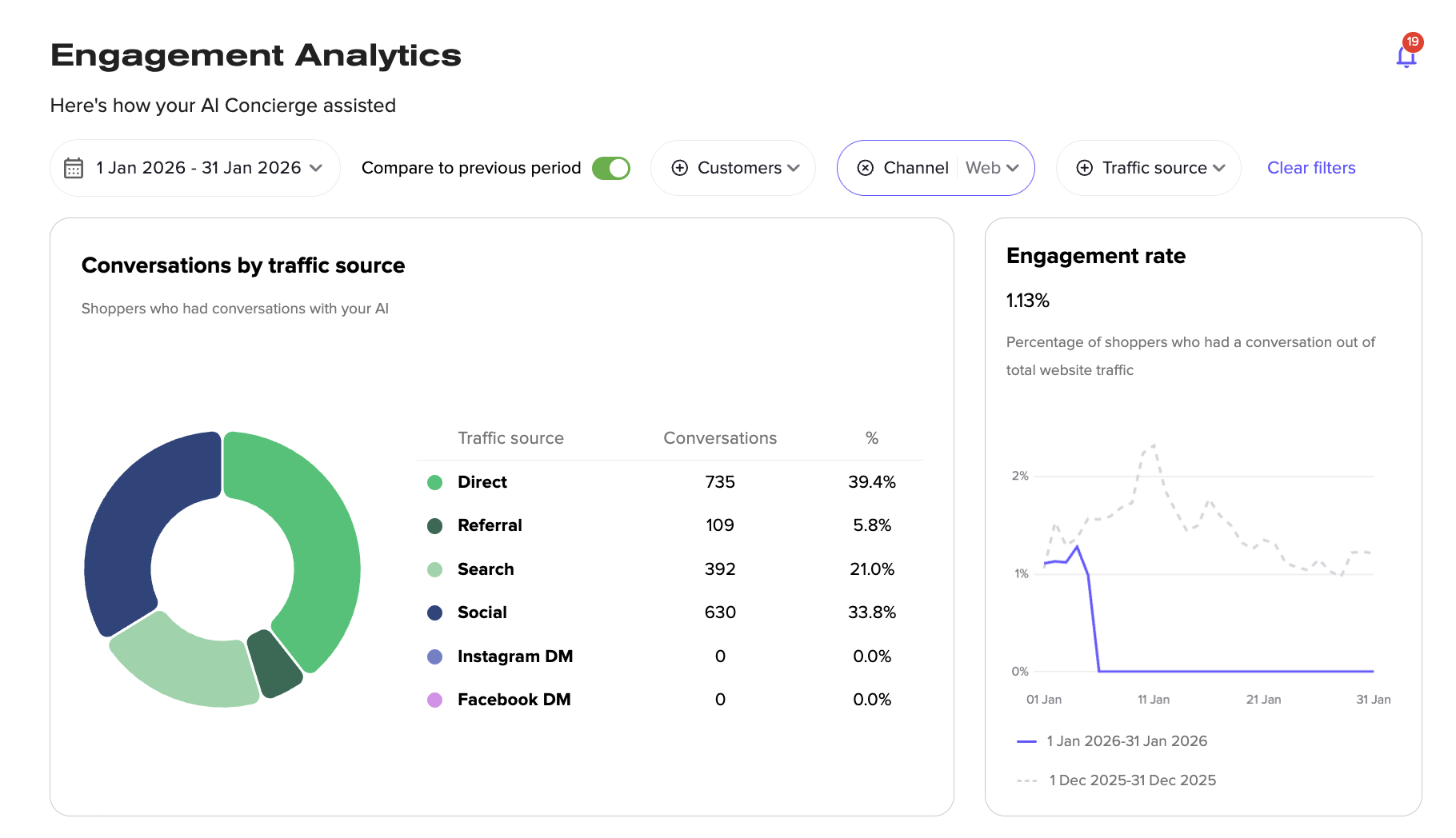
Engagement analytics show how your AI is performing as a conversion layer across your full traffic mix. Rep AI's engagement dashboard covers:
- Conversations by traffic source (direct, search, social, referral), so you know which acquisition channels are generating the most AI engagement.
- Overall engagement rate, which is the percentage of total website visitors who engaged with your AI.
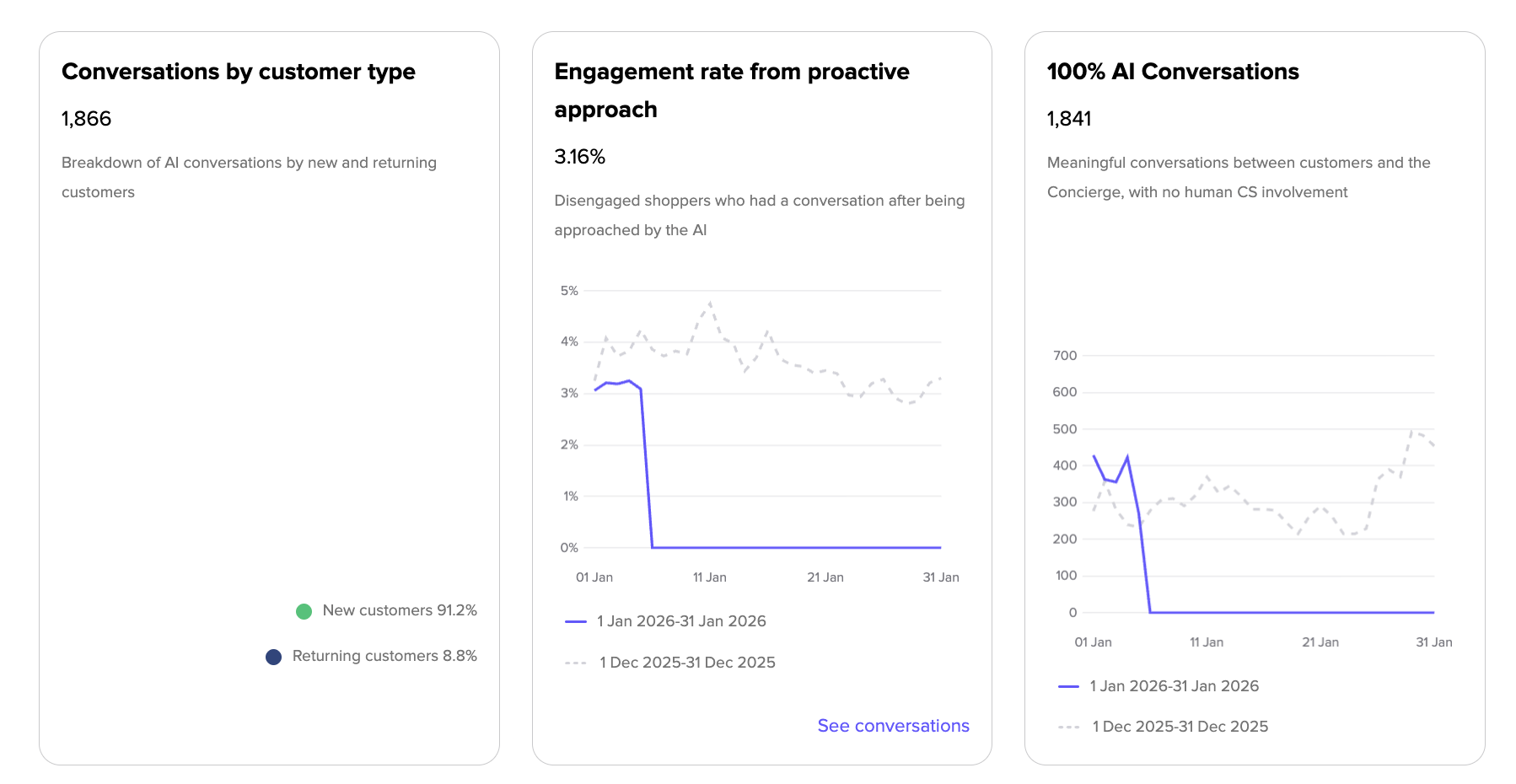
- Conversations by customer type, new vs. returning customers.
- Engagement rate from a proactive approach. It’s the percentage of disengaged shoppers who had a conversation after being approached by the AI.
- Proactive AI vs. shopper-initiated conversations, showing whether your AI is driving engagement or waiting to be asked.
- Leads, including emails and phone numbers, captured through AI conversations.
Why most platforms can't deliver this
The gap between what most chatbot analytics offer and what growth-oriented analytics require comes down to how the platform was built. Most chatbots are designed as support tools first, with analytics added as a reporting layer on top. The result is aggregate counts, with no structural ability to go deeper. Three capabilities in particular are missing from them:
- Pattern Detection: Conversations need to be structured and analyzed as a dataset rather than stored as individual transcripts.
- Missing Information Detection: The platform needs to compare what shoppers asked against what the knowledge base contains and flag the gaps.
- Drop-off reason analysis: The AI needs to classify the cause of non-conversion for every session, not just those that ended in a ticket.
- No Actionability: Most dashboards stop at reporting what happened. They do not tell you what to fix, which gaps to prioritize, or what specific changes would move conversion.
These are capabilities that need to be built into the platform from the start, not retrofitted. On most ecommerce AI platforms, features such as shopper drop-off analysis and AI-generated CX recommendations are rarely included.
How Rep AI turns conversation data into growth intelligence
Most chatbot platforms store conversations as transcripts. Rep AI structures usable data, analyzing patterns across sessions to surface drop-off reasons, topic trends, missing information, and shopper sentiment that would otherwise remain buried in chat logs. That intelligence connects directly to platforms like Klaviyo through Topic Sync, allowing brands to turn conversation topics into actionable customer segments and campaigns.
Built for Shopify and Salesforce Commerce Cloud, Rep AI combines sales, support, and shopper intelligence in a single agentic commerce platform. Brands use it to identify conversion friction, reduce repetitive support volume, and better understand shoppers' needs before they buy.
If you want to see how conversation data can be turned into actionable ecommerce insights, you can start a free trial with Rep AI.
Frequently asked questions
What metrics should I track in chatbot analytics for ecommerce?
Beyond CSAT and resolution rate, track shopper drop-off reasons, conversation topic distribution, and AI-assisted revenue as a percentage of total store revenue. Also measure AOV lift on AI-assisted orders and the split between proactive and shopper-initiated conversations. These metrics connect conversation data to growth decisions rather than support performance.
Can chatbot data improve my email marketing?
Yes, when your chatbot syncs conversation topics to your marketing stack. When chat topics are mapped as custom properties on customer profiles in Klaviyo, they capture what customers explicitly express during conversations. This lets you build segments based on real intent rather than relying solely on browsing history or past purchases. Campaigns built on this data respond to what customers said, which is a more reliable signal than what pages they visited.
What is shopper drop-off analysis?
Shopper drop-off analysis categorizes why visitors engage with your AI but do not convert. Common reasons include inadequate product information, limited availability, complicated exchange processes, pricing concerns, website errors, and other issues. Having this breakdown ranked across thousands of sessions tells you which problems are responsible for the most abandonment, so you can address them in order of revenue impact.
How do I know if my chatbot analytics are actionable?
The test is whether the data leads to a clear next step. A 94% resolution rate does not tell you what to improve. But if your analytics show that shoppers are dropping off due to pricing concerns, confusion about the exchange policy, or missing product information, the next step is obvious. Actionable analytics identify specific friction points and show where changes are needed.
More from REP AI

How to Reduce Customer Support Response Time and Rescue Revenue in 2026
Every minute a high-intent shopper waits for a reply, your conversion readiness drops by roughly 10 percent. For most brands, the traditional helpdesk has become a bottleneck where revenue goes to die. You likely recognize the pattern: your team is overwhelmed during peak seasons, the pressure to ac...
Customer Support Backlog Management: Beyond Reactive Deflection in 2026
A support backlog isn't a staffing crisis; it's a structural failure of a reactive commerce engine. When response times stretch past 48 hours, you aren't just losing sleep. You're losing customers who expect immediate resolution. Legacy helpdesks like Gorgias and Zendesk were built for a reactive er...
Advanced Shopping Assistance: A Guide to Agentic Commerce in 2026
Most DTC brands are bleeding revenue through a thousand tiny cuts, and their legacy helpdesks are simply handing out bandages. You've likely felt the frustration of watching high cart abandonment rates climb while your support team remains buried under repetitive tickets. Reactive tools serve a purp...
Want to see what your store would do with Rep?
Run your real Shopify catalog through the simulator before you commit to anything. No sales call required.

