


Best AI Sales Assistant Software in 2027: 10 Tools by the Job They Do

The best AI sales assistant software depends on where your sales process gets stuck. For Shopify brands, REP AI responds to shopper behavior and helps turn product questions into purchases; here are nine other tools for sales teams with different needs.
1. REP AI
REP AI is an AI sales and support agent for Shopify brands. It can start a conversation when shopper behavior signals hesitation, recommend products from the live catalog, and edit a cart in chat. That means shoppers can get help while they're still deciding, instead of leaving with an unanswered question.
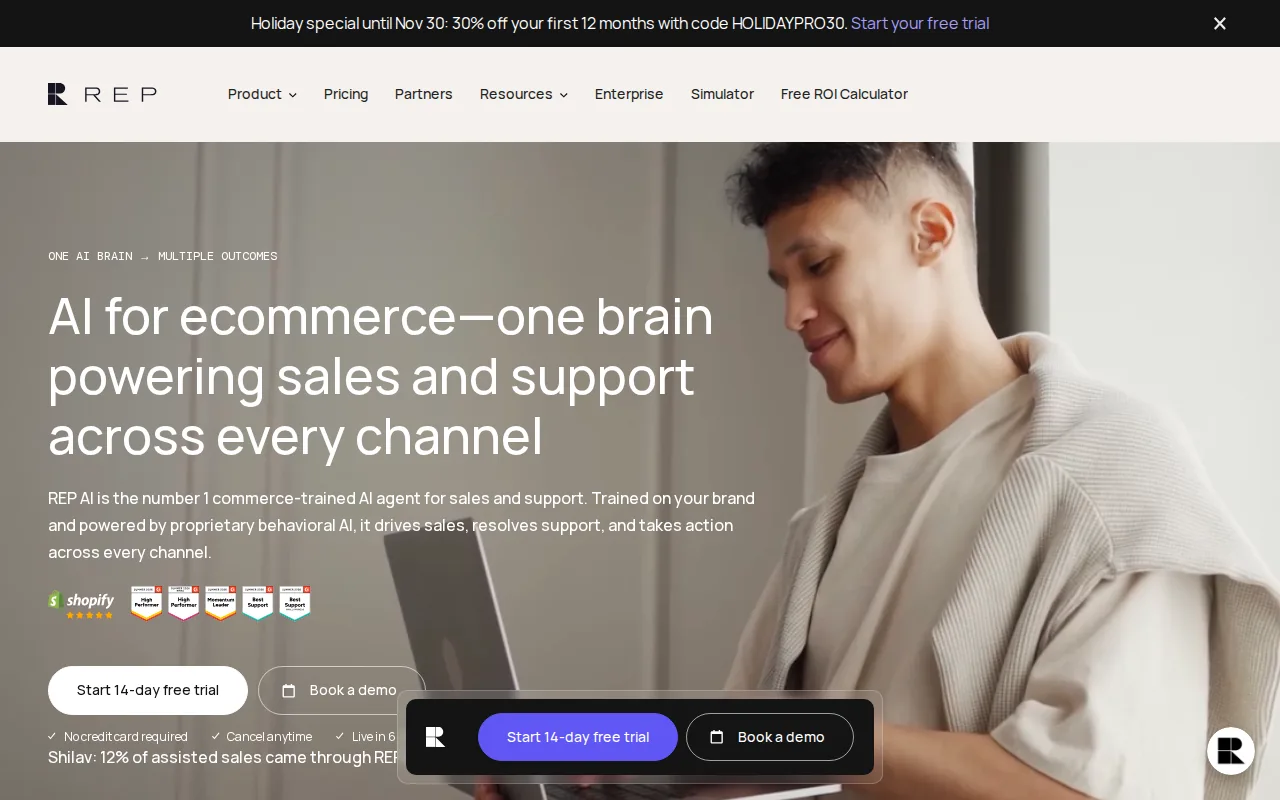
REP AI also handles order status, returns, and cancellations across web chat, email, Instagram, Facebook Messenger, and WhatsApp. Your team can use Rep Inbox or hand conversations to Gorgias or Zendesk. For teams focused on the sales side, the ai sales agent software page explains how the agent supports product discovery and purchase decisions.
Plans for up to 3,000 monthly sessions cost $19 per month for Support, $39 for Sales, or $46 for Concierge. Each plan includes a 14-day free trial, and REP AI is SOC 2 Type II certified. Brands can also explore REP AI solutions for ecommerce founders if they're weighing sales and support workflows together.
For ecommerce teams, this is the most direct fit on the list: one agent can help shoppers buy and resolve common post-purchase questions.
2. Dialpad: Real-time support for sales conversations
Dialpad is built for sales teams that want AI guidance during live calls. Its assistant can deliver real-time coaching, analyze calls with AI, and track sentiment while a rep is speaking with a prospect.
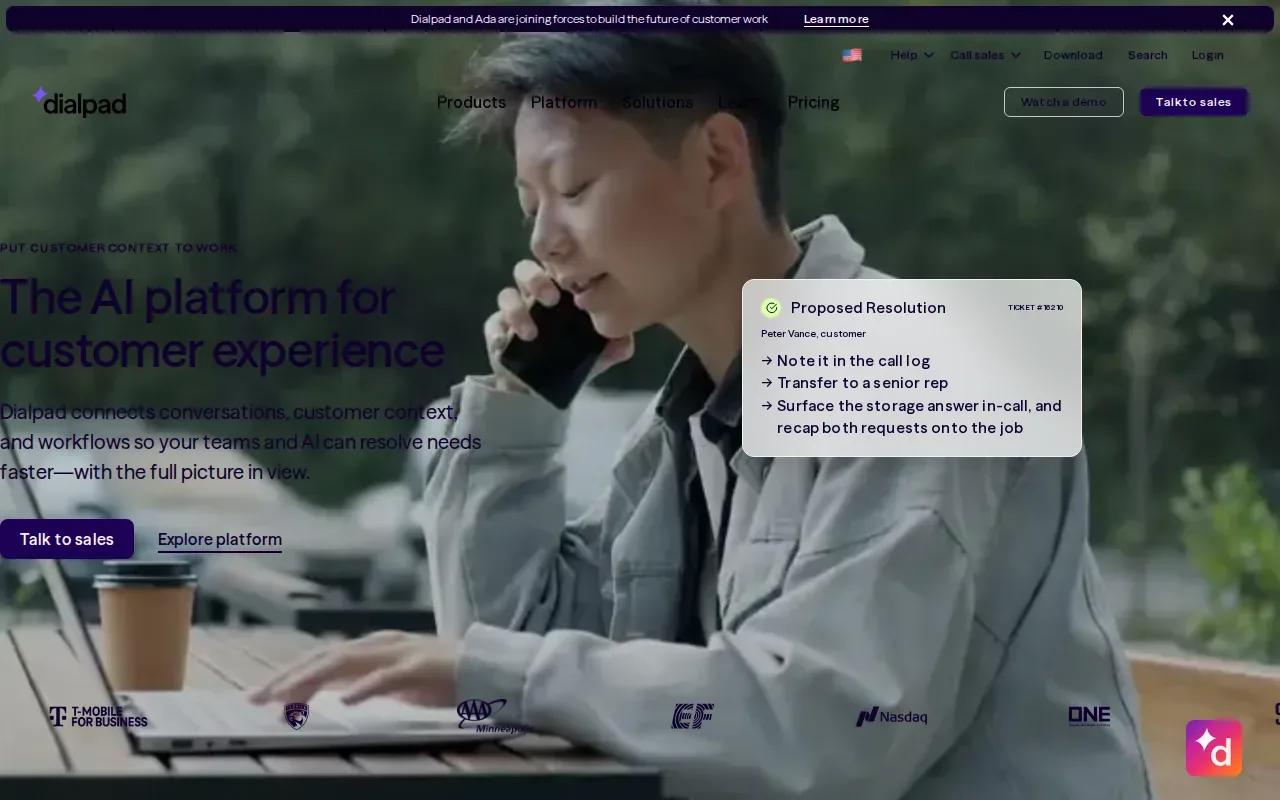
That timing matters when a buyer raises a pricing concern or mentions another vendor. A manager can use live conversation signals to spot calls that may need attention, while reps get support before the conversation ends. Call analysis can also give teams a clearer basis for coaching after a call.
Dialpad is a fit for teams whose main gap is live sales-call support, rather than ecommerce product recommendations or storefront chat.
3. Regie.ai: AI-assisted sales outreach content
Regie.ai is an AI-powered content platform for sales outreach. It automates research, suggests messaging, and fits into rep workflows so teams can draft personalized outreach without starting from a blank page each time.

This makes it a useful choice for outbound teams that spend a lot of time researching prospects and writing first drafts. Reps can use the generated content as a starting point, then adjust it to match the buyer and the team's tone.
Pricing is by request. Regie.ai is most relevant when outreach content is the bottleneck; it isn't positioned here as a Shopify shopping or support assistant.
4. Instantly: Cold email and lead engagement at scale
Instantly is an AI-powered cold email and lead engagement platform for businesses reaching prospects at scale. It supports personalized email outreach, advanced lead filtering, and AI-driven personalization, with campaign analytics to review engagement.

That combination can help a team shape prospect lists before sending outreach, then assess how campaigns perform. It's a better match for outbound email work than for sales calls or ecommerce support conversations.
Instantly uses custom pricing based on plan and usage. Before choosing it, map the email work you expect it to handle and check how your team will use campaign results to refine follow-up.
5. Apollo.io: Prospecting and sales engagement in one platform
Apollo.io is an AI-powered sales platform that helps teams find, connect with, and convert prospects. Its listed automation includes AI-driven lead scoring, predictive sales analytics, and CRM automation.

Putting prospecting and engagement in one workflow can reduce the handoffs between finding a lead and contacting that person. It's worth considering if your team needs support with prioritizing prospects as well as maintaining CRM activity.
Evaluate Apollo.io against your team's existing prospecting process, especially how lead scores and analytics will affect who reps contact first.
6. ZoomInfo: Account-based prospecting for B2B sales teams
ZoomInfo is best suited to sales-led B2B organizations focused on account-based marketing. Its AI sales assistant supports account recommendations and personalized emails, and ZoomInfo lists CRM systems among its integrations.

For an account-based team, the key workflow is choosing which target accounts deserve attention and giving reps context for outreach. ZoomInfo's focus is a closer match for that job than a tool centered on online-store conversations.
ZoomInfo uses custom pricing. Consider it when account-based prospecting is a central part of your sales motion and CRM integration is part of the requirement.
7. Linked Helper: LinkedIn-focused outreach automation
Linked Helper is an AI-powered LinkedIn automation tool for outreach and lead generation. Its automation covers LinkedIn messaging, profile engagement, and data scraping, with CRM integration available.
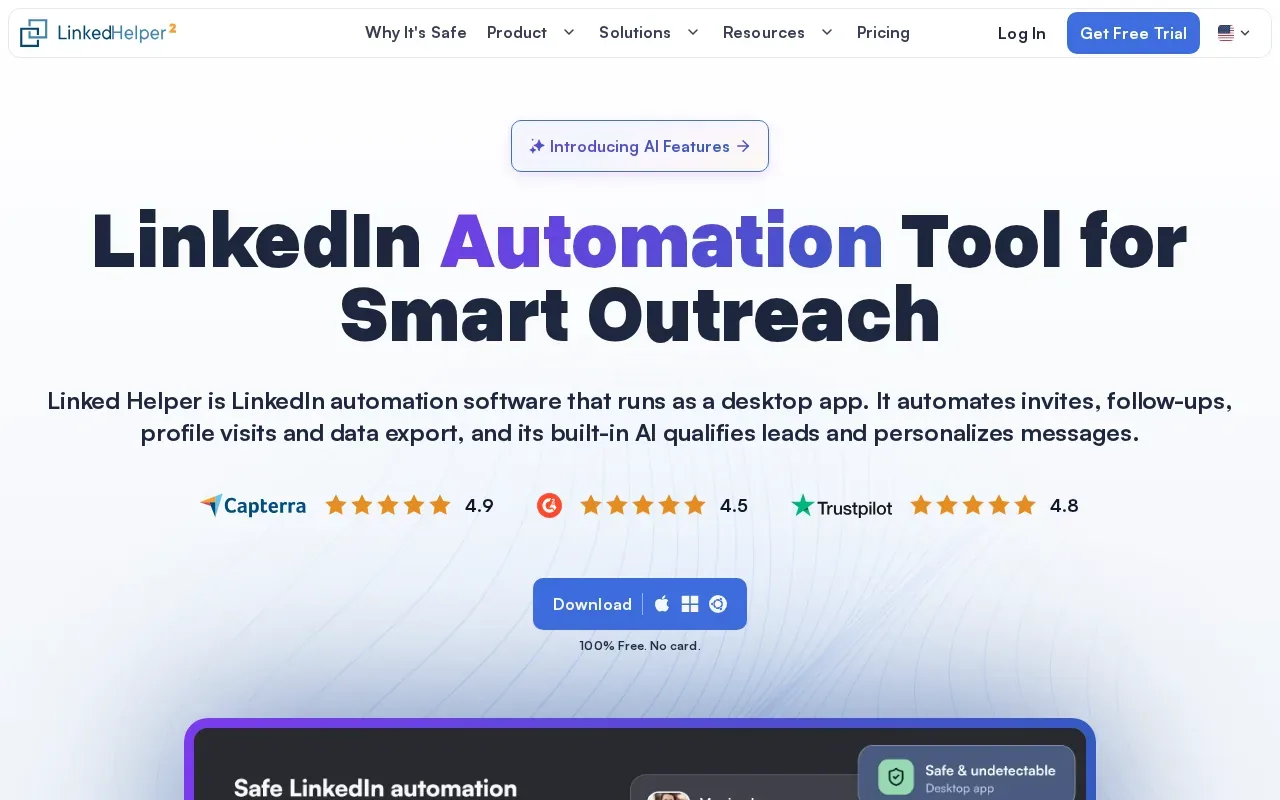
This focus can suit a team that uses LinkedIn as a core prospecting channel. It gives reps a way to automate parts of their LinkedIn workflow, while CRM integration can connect that outreach with broader lead management.
Linked Helper is a narrower choice than a platform built around multiple sales channels. Check that LinkedIn fits your team's outreach plan before making it part of the sales stack.
8. HubSpot Sales Hub: Sales workflows connected to CRM data
HubSpot Sales Hub connects sales workflows to CRM data. Its AI-guided selling can surface suggested tasks based on buying signals, provide deal summaries, and help reps prepare for meetings.

That context can help reps decide what to do next without relying only on memory or a manual review of each record. HubSpot also describes a large integration ecosystem, which may matter if your team already works across several sales tools.
Guided selling is included in Sales Hub Professional and Enterprise. For teams using an existing sales system, the main question is whether its built-in guidance covers enough of the work that currently happens in separate tools.
9. Gong: Revenue intelligence for sales conversations
Gong is a revenue intelligence platform built around customer interaction data. Its Revenue AI OS uses multimodal revenue signal processing, specialized AI agents, and purpose-built applications to support go-to-market teams.

That focus makes Gong relevant when leaders want to use conversation signals in sales workflows. For example, a team could review how buyer conversations inform coaching or deal discussions, rather than treating each call as an isolated record.
Gong is a fit for organizations that want conversation intelligence tied to broader revenue work. It has a different focus from REP AI, which is designed for shopper interactions and sales support on ecommerce storefronts.
10. Alhena AI: AI shopping and support assistants for ecommerce
Alhena AI provides shopping assistants, customer support chatbots, and voice agents for ecommerce brands. Its focus is helping shoppers during buying and support interactions.

That makes it relevant to online retailers looking for ecommerce-specific conversations rather than a general B2B prospecting workflow. If your team is reviewing options for a particular vertical, REP AI has pages on an AI concierge and shopping agent for beauty brands.
Compare the tasks you need covered, such as product questions before purchase or support requests after an order. That split will help you see whether one assistant can support the full shopper journey your team has in mind.
Compare the AI sales assistant software options
These tools cover different parts of selling. Use the table to match the main job to your team's workflow, rather than treating every platform as a direct substitute.
| Tool | Best fit | Primary AI role |
|---|---|---|
| REP AI | Shopify ecommerce brands | Shopper engagement, product guidance, and support |
| Dialpad | Sales teams on live calls | Real-time coaching and call analysis |
| Regie.ai | Outbound sales teams | Research and outreach content |
| Instantly | Cold email teams | Personalized email campaigns and analytics |
| Apollo.io | Prospecting and sales engagement teams | Lead scoring, analytics, and CRM automation |
| ZoomInfo | Account-based B2B sales | Account recommendations and personalized outreach |
| Linked Helper | LinkedIn-led prospecting teams | Messaging and profile engagement automation |
| HubSpot Sales Hub | Teams working in a CRM | Suggested tasks and deal guidance |
| Gong | Revenue teams focused on conversation signals | Revenue intelligence and AI agents |
| Alhena AI | Ecommerce brands seeking shopping and support assistants | Customer shopping and support conversations |
For ecommerce, REP AI is the clearest match when you want an agent that can engage shoppers from behavioral signals and help with support. The REP AI vs Tidio for Shopify comparison can help if that specific pairing is part of your shortlist.
What to check before choosing an AI sales assistant
Start with the point where your team loses time or shoppers lose confidence. A B2B team may need help prioritizing leads; a Shopify store may need timely answers to product questions or order issues.
Next, check where the AI gets its context. Sales recommendations are only useful if they reflect the records, buying signals, or product details your team relies on. Common uses include lead qualification, personalized follow-ups, and sales forecasting.
Then confirm the tool fits the systems and channels your team already uses. For ecommerce teams, REP AI's sales and support agent for home and garden brands is one example of a vertical-specific use case. Apparel teams can also review the AI clothing shopping assistant page.
- Workflow: Is the main need prospecting, call coaching, outreach, or shopper support?
- Data: Can the assistant use the context needed for its job?
- Handoff: Can people step in when a conversation needs human judgment?
- Cost: Does the pricing model match how your team will use the tool?
- Trust: Review data access, security, and how the assistant handles uncertain answers.
For food and beverage stores, REP AI also has a page about an AI food shopping assistant. If you want to see how the workflow fits a premium product category, its AI jewelry shopping assistant page gives another vertical example.
FAQ
What does AI sales assistant software do?
AI sales assistant software helps with tasks such as prospect research, outreach drafts, lead prioritization, call analysis, and next-step suggestions. The exact job depends on the tool. Ecommerce-focused assistants can also answer shopper questions or guide product choices, while sales platforms may focus on B2B prospecting or CRM workflows.
Which AI sales assistant is best for ecommerce?
For Shopify brands that want sales and support in shopper conversations, REP AI is a strong fit in this shortlist. It can respond to shopper behavior, recommend products from a live catalog, edit carts in chat, and handle common order questions. Its plans start at $19 per month for up to 3,000 monthly sessions.
How much does AI sales assistant software cost?
Prices and pricing models vary by tool, and many sales platforms quote custom pricing. REP AI starts at $19 per month for up to 3,000 monthly sessions, billed by sessions rather than per resolution. Check each vendor's current pricing page and compare what each plan covers alongside the billing model.
Can AI sales assistants help reps close deals faster?
They can support faster follow-up by reducing manual steps and surfacing useful context. For example, a tool may draft an outreach message or identify a call that needs review. Results still depend on your sales process, data quality, and how reps use the recommendations, so track workflow measures after rollout.
What should I check before adding an AI sales tool?
Check whether it fits the job you need done, connects to the right data, and hands work to a person when needed. Review its security practices and how it responds when it lacks enough context. Then test it with real scenarios before making it part of a customer-facing workflow.
Conclusion
If your team runs a Shopify store and wants one agent for timely sales conversations and support, start with REP AI. Its plans include a 14-day free trial, so you can test the workflow against real shopper questions before deciding. Start your REP AI free trial and see how it fits your store. Running a larger brand, on Shopify Plus or another platform? Book a demo and we will walk through your catalog, channels and helpdesk.
More from REP AI

Which Ecommerce Helpdesks Are Not Priced per Ticket? (2026)
A dated list of how ecommerce helpdesks and AI agents charge: per ticket, per agent, per conversation, per resolution or per session. It shows which bills rise as your AI resolves more and where REP AI's session pricing fits.


Want to see what your store would do with Rep?
Run your real Shopify catalog through the simulator before you commit to anything. No sales call required.

