


11 Best AI Shopify Product Recommendation Apps to Boost Sales and Personalize Shopping in 2026
%2520(500%2520x%2520500%2520px)%2520(23).png)
Quick Summary
The best AI product recommendation apps for Shopify range from conversational sales platforms to post-purchase upsell tools, guided quizzes, and search-driven discovery. The right pick depends on where your store is losing revenue and how your shoppers browse.
If you're short on time, here are three to look at first:
Looking for the Right AI Product Recommendation App for Your Shopify Store?
If you run a Shopify store, you know that helping customers find what they want can make or break a sale.
Product recommendation tools simplify that process by showing shoppers what they’re likely to buy, sometimes before they even realize they’re looking for it. This leads to a smoother shopping experience, higher revenue, and stronger engagement.
Shopify makes it easy to add these tools to your store. The challenge is choosing the one that fits your business, customers, and growth goals.
This guide breaks down the 11 best AI-powered Shopify product recommendation apps, what they do best, and which might fit your store best.
Why Listen to Us?
Rep AI is an agentic commerce platform built for Shopify Plus brands. It unifies AI-powered sales, customer support, and shopper intelligence into a single system. The platform is trained on insights from more than 110 million shopper sessions across 550+ online stores, giving it a strong foundation in real-world e-commerce behavior.
For example, Kinn Studio used Rep AI to increase its average order value (AOV) by 16% through AI-driven product recommendations alone. Results like this reflect how real merchant outcomes directly inform and refine the guidance in this guide.
The Quantifiable Impact of Product Recommendations on Ecommerce Success
Product recommendation tools have proven their worth across thousands of online stores, delivering measurable results that directly impact your bottom line.
Driving Engagement and Revenue Growth
Shoppers love recommendations. 49% of consumers said they purchased a product they did not initially intend to buy after receiving a personalized recommendation.
That’s nearly half of your audience making extra purchases just because you pointed them in the right direction. It’s no surprise that product recommendations now account for up to 31% of eCommerce revenues.
Boosting Conversion Rates
Stores that use personalized product suggestions can see conversion rates up to 4.5 times higher than those that don’t. When the right product appears at the right time, more people click “Buy.”
Improving Customer Retention and Lifetime Value
Personalized experiences keep people coming back. Retailers using personalized recommendation algorithms have reported a 22% increase in customer lifetime value. It’s easier to build loyalty when shoppers feel like the store “gets” them.
Best Shopify AI Product Recommendation Apps Compared
11 Best Shopify Product Recommendation Apps Reviewed
The 11 best product recommendation apps for Shopify are:
1. Rep AI: Best for Conversational and AI-Powered Recommendations

TL;DR: Rep AI is an agentic commerce platform that guides shoppers through product discovery in real time, increasing conversion and AOV through behavioral AI and conversational recommendations.
About Rep AI
Rep AI is an agentic commerce platform built for Shopify Plus merchants. It combines AI-powered sales, support, and shopper intelligence in one unified system.
What sets Rep AI apart from every other platform in this list is its behavioral AI engine. It detects when shoppers are about to disengage, based on scroll behavior, session patterns, and buying journey signals. This approach detects exit intent with 92% accuracy and performs four times better than standard pop-ups.
Inside the conversation, shoppers can browse visual product carousels, get recommendations based on what's already in their cart, add items directly without being redirected to a new tab, and proceed to checkout.
Rep AI also includes a Virtual Try-On feature, where shoppers upload a selfie and see themselves wearing a product in chat, then switch variants instantly without re-uploading.
On the intelligence side, Rep AI surfaces drop-off reasons, unanswered question tracking, shopper emotion analysis, and AI-generated CX recommendations.
Rep AI At-a-Glance
Rep AI’s Key Features
- Visual product carousels: Displays product images and chips directly in chat so shoppers can browse and compare without leaving the conversation.
- One-click add to cart: Lets shoppers add products directly inside the chat without being redirected to a new browser tab.
- Go to checkout in chat: Guides shoppers from product selection all the way to checkout without breaking the conversation flow.
- Upsell after add to cart: Triggers relevant upsell and cross-sell suggestions the moment a shopper adds an item, capturing revenue at peak buying intent.
- Virtual Try-On: Shoppers upload a selfie and see themselves wearing products in chat, switching variants instantly without re-uploading.
- Automated brand training: AI automatically generates tone of voice and selling style based on your brand, with real-time website syncing and unlimited file and URL training inputs.
- Klaviyo Conversation Sync: Syncs every AI conversation as a real-time event in the customer's Klaviyo profile, with direct transcript access and topic-based segmentation properties.
Pros & Cons
Pros
- Only platform in this list with proactive behavioral engagement.
- Covers sales, support, and shopper intelligence in one platform.
- 30-day free trial, four times longer than most competitors.
- Conservative 3-hour same-session attribution window keeps reported ROI accurate.
Cons
- Primarily built for Shopify Plus, but Salesforce Commerce Cloud support is still rolling out.
- Language support is currently focused on English and Spanish.
Case Studies
- Proof Wallets used Rep AI to engage hesitant shoppers before they dropped off, generating $84 for every $1 invested and driving 12.7% of total store revenue through Rep-assisted conversations.
- FASS Motorsports deployed Rep AI across a catalog of 200,000+ SKUs, achieving a 20x ROI with Rep AI driving 11% of total revenue and a 9% higher AOV on assisted purchases.
- VIBAe used Rep AI to handle support at scale across 150+ countries, achieving a 97% conversation resolution rate and a 95%+ question-answering rate without adding headcount.
Pricing
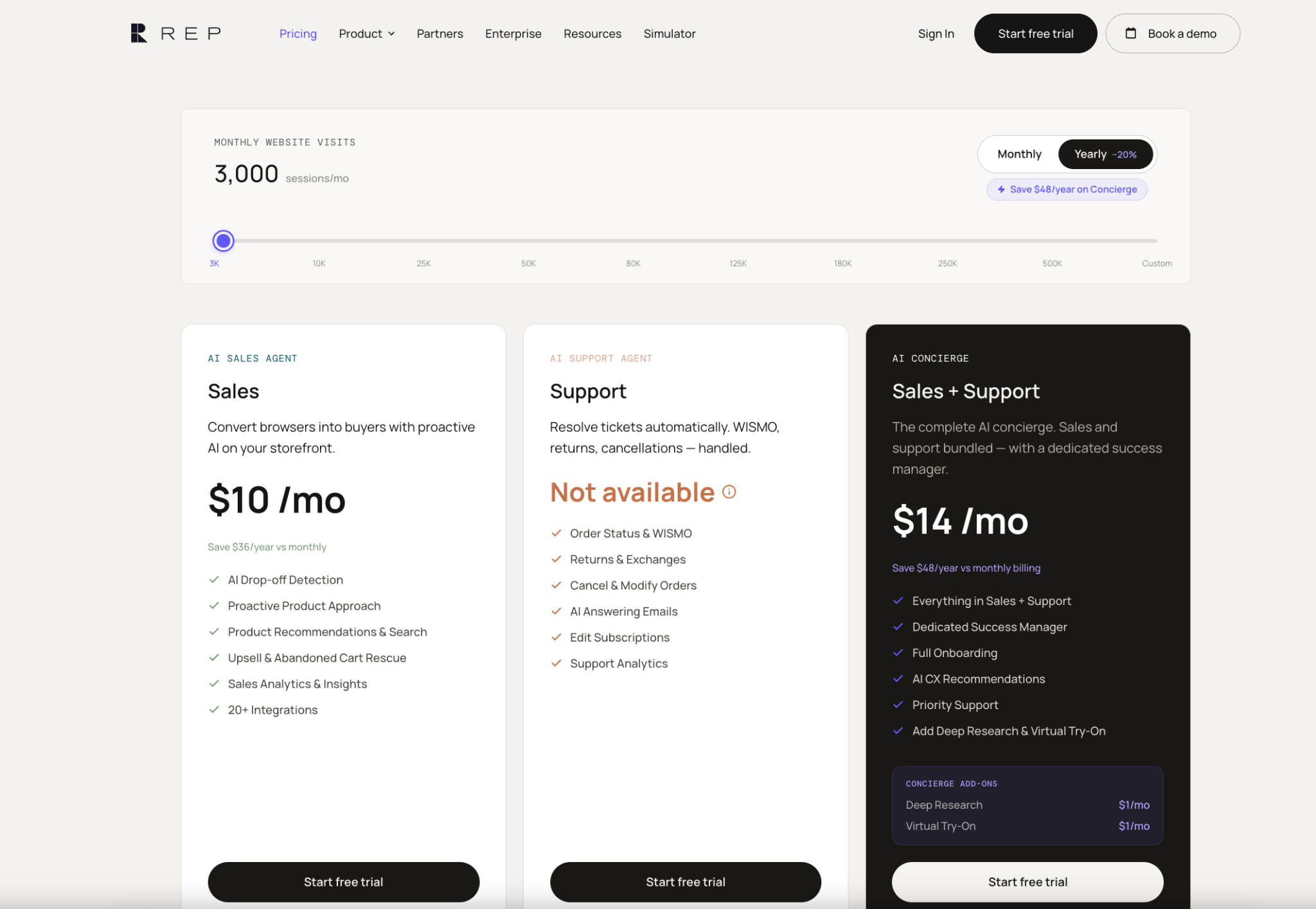
Rep AI offers separate plans for Sales Assistant, Support Agent, and a Concierge Bundle that combines both. You’ll need the Sales Assistant or Bundle to use the AI’s recommendation capabilities. Plans start at $10/month, with a 30-day free trial included.
Top Use Cases
- Fashion and Apparel: Sizing guidance and virtual try-on reduce hesitation on high-consideration purchases.
- Jewelry and Accessories: Proactive engagement replicates the high-touch in-store experience online.
- Health and Wellness: Usage and ingredient questions answered instantly, with recommendations tailored to each shopper's goals.
- Food and Beverage: Product matching helps shoppers navigate large catalogs and find the right SKU fast.
- Home and Lifestyle: Upsell and cross-sell sequences built into chat increase AOV on considered purchases.
Integration Highlights
Rep AI integrates directly with Shopify through the app store, requiring no custom development. The system automatically syncs your product catalog to provide up-to-date recommendations.
It also integrates with Klaviyo, Omnisend, Postscript, and Mailchimp for marketing, Yotpo and Judge.me for reviews, Gorgias, Freshdesk, and Zendesk for support, and Tapcart for mobile. Social and messaging integrations include Meta, WhatsApp, and Instagram.
Author’s Tip
Configure the Product Finder settings to match your most common customer questions. The more precise your instructions, the better the AI will make relevant suggestions.
2. Aiden: Best for Guided Shopping Widgets
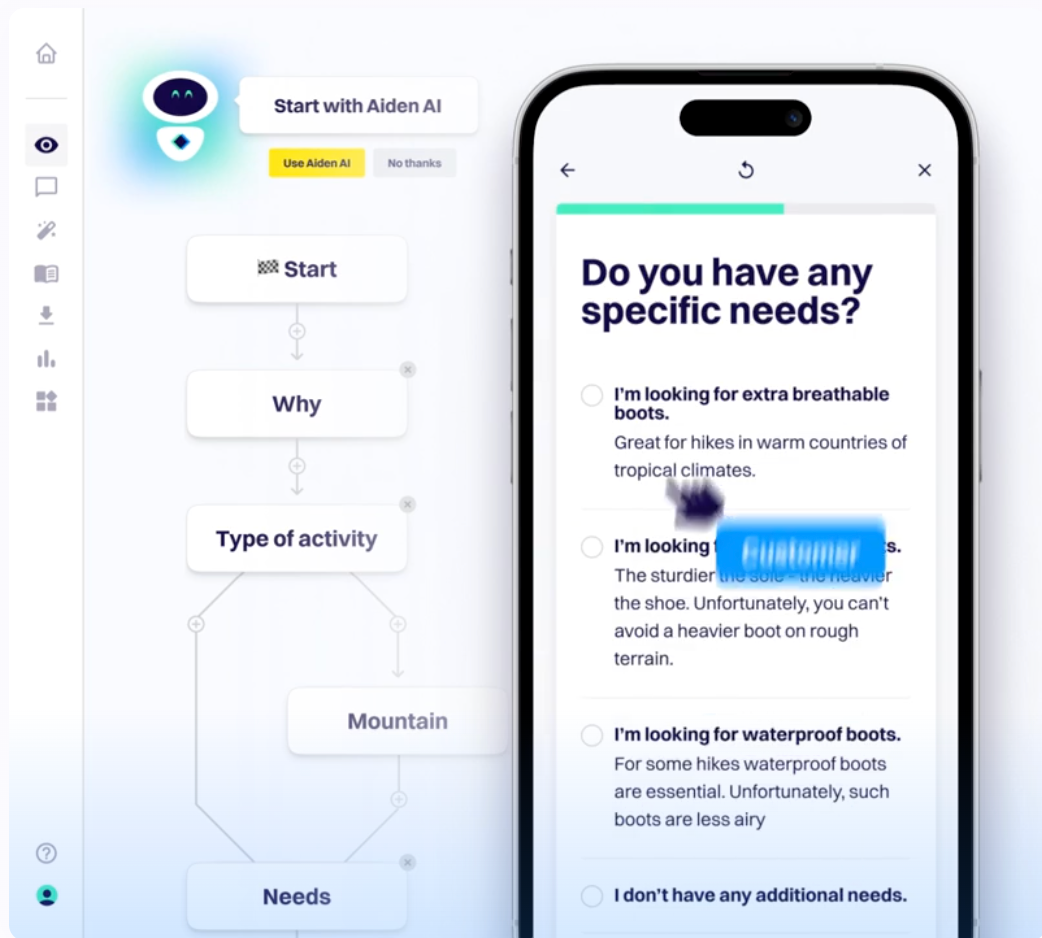
TL;DR: Aiden provides guided shopping journeys that help take the guesswork out of your personalization strategy.
About Aiden
Aiden is a product discovery platform that helps customers find what they’re looking for, faster and smarter. Rather than leaving shoppers to scroll endlessly through collections, Aiden offers a guided shopping experience powered by AI.
Through quizzes, on-page widgets, and smart filters, it helps match each customer to the perfect product. The visual editor also makes it easy to get started without needing a developer, which is a big plus for busy merchants.
Aiden’s Key Features
- Multiple Widget Formats: Deploys as a sidebar, a pop-up, in-page, or full-page experience depending on placement needs.
- Visual Drag-and-drop Editor: Builds and customizes campaigns without developer help.
- A/B Testing: Tests widget variations and recommendation formats to identify what drives the most conversions.
- Guided Shopping Quizzes: Walks shoppers through structured questions to match them with the right product
Pros & Cons
Pros
- Constantly improves recommendations through automation.
- Good balance of customization and ease of use.
- Helps you test and optimize for higher conversions.
Cons
- May require regular tweaks for best performance.
- Learning period needed before recommendations become highly accurate.
Integration Highlights
Aiden integrates with Shopify through a custom integration that automatically pulls product data from your shop and embeds the widgets on your site.
Pricing
Contact for pricing.
3. Upsell.com (formerly ReConvert) — Best for Post-Purchase Product Recommendations
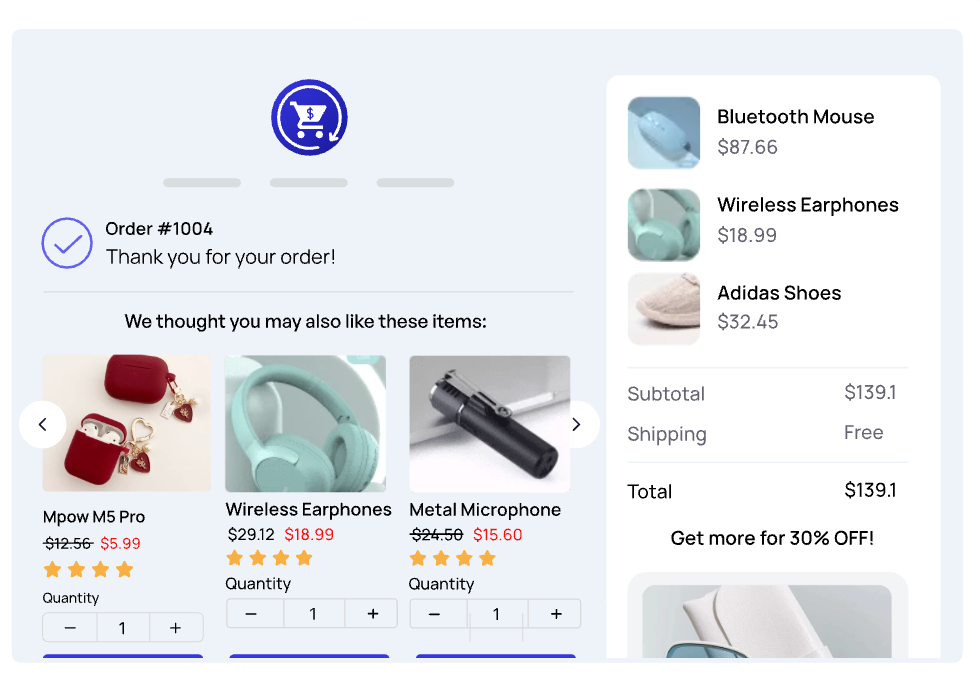
TL;DR: Upsell.com specializes in post-purchase upsells, helping merchants maximize revenue from customers already in a buying mindset.
About Upsell.com
Upsell.com, formerly known as ReConvert, focuses on one of the most profitable moments in the customer journey: right after someone makes a purchase. When customers are still in buying mode, they're much more likely to add complementary products to their order. It’s like offering them dessert right after a delicious meal.
The platform makes this easy with a drag-and-drop editor and smart rules that optimize each offer to the shopper’s behavior. You can recommend products based on what someone just bought, their browsing history, or predetermined rules you set up.
It’s explicitly designed for Shopify, so setup and integration are smooth and hassle-free.
Key Features
- One-click Post-purchase Upsells: Presents targeted offers immediately after checkout with a single tap, with no re-entering of payment details required.
- Checkout Upsell Funnels: Adds upsell and cross-sell offers directly at checkout (Shopify Plus only).
- Thank-you Page Builder: Customizes the post-purchase page with product recommendations, countdown timers, surveys, and birthday collection.
- Smart Targeting Rules: Creates offers based on products in cart, cart value, order history, and customer segments.
Pros & Cons
Pros
- Made specifically for Shopify merchants.
- Streamlines recommendations at key funnel moments.
- Customizable and easy to use.
Cons
- Product recommendations are focused on upselling.
- May not be suitable for stores seeking broader personalization.
Pricing
- $4.99/month for 50 orders.
- $9.99/month for 100 orders.
- $19.99/month for 200 orders.
- $39.99/month for 500 orders.
- $79.99/month for 1,000 orders.
4. ConvertFlow: Best for Funnel-Focused Product Recommendations
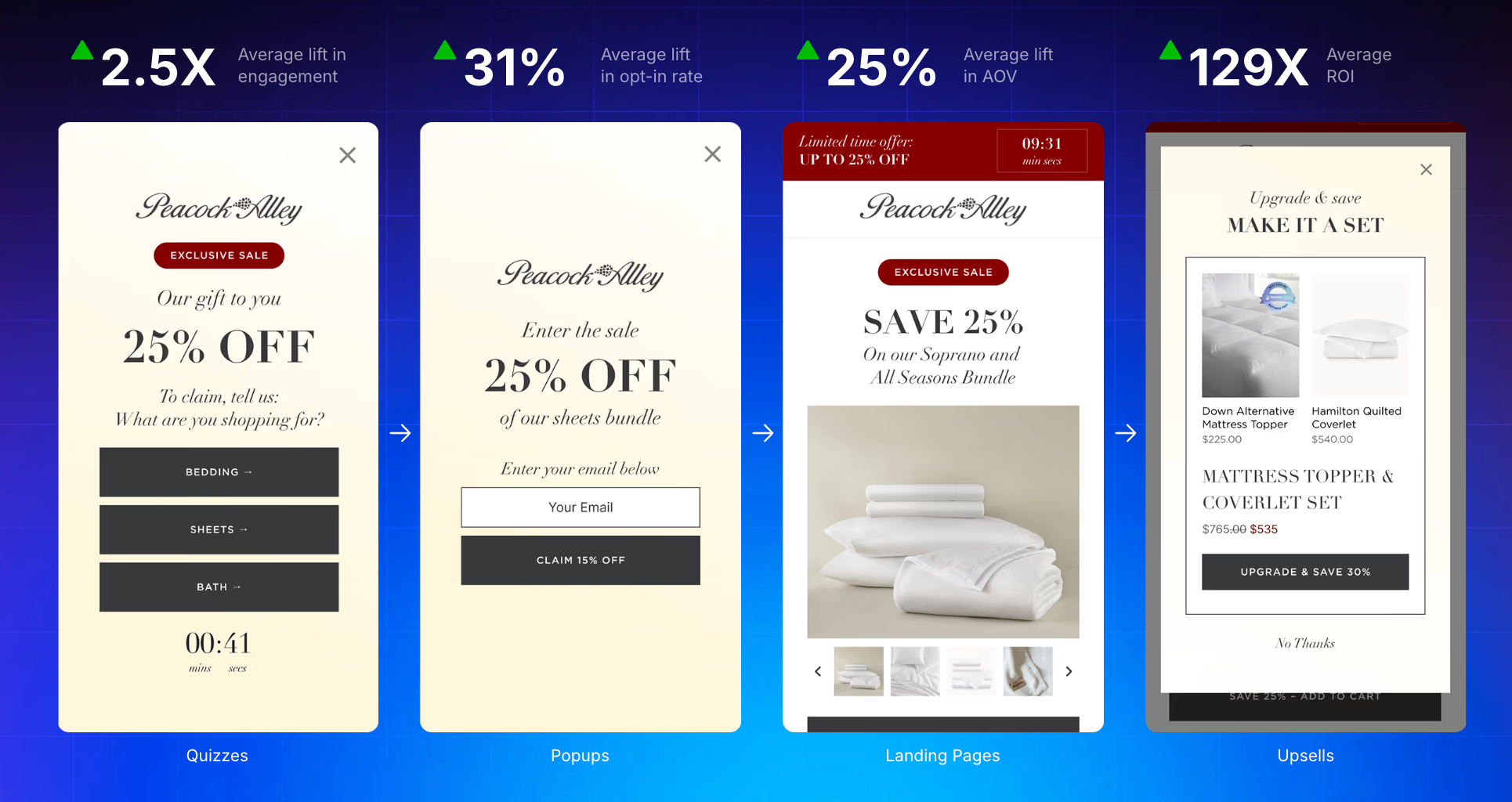
TL;DR: ConvertFlow enables you to create personalized product recommendation feeds in Shopify pages, popups, and quizzes without needing designers or developers.
About ConvertFlow
ConvertFlow takes a comprehensive approach to conversion optimization, combining product recommendations with lead capture, landing pages, and funnel building. This makes it ideal for stores that want to nurture prospects while guiding them toward relevant products.
The platform's strength lies in its ability to trigger product recommendations based on specific customer actions. For example, you can show different products to visitors who add items to their cart versus those who are just browsing, creating more targeted experiences.
ConvertFlow’s Key Features
- Product Recommendation Feeds: Displays personalized product feeds across Shopify pages, pop-ups, quizzes, and landing pages without any coding.
- Cart-triggered Recommendations: Fire cross-sell and upsell pop-ups the moment a shopper adds a product to the cart.
- Product Quiz Funnels: Uses quiz answers to filter and recommend the right products, with responses synced to Klaviyo and Attentive.
- Conditional Product Logic: Shows different products based on cart contents, visit history, location, and CRM segment data.
Pros & Cons
Pros
- Publish to Shopify pages with 1 click.
- Multiple formats for presenting recommendations.
- Comprehensive analytics and reporting.
Cons
- Requires subscription to a broader funnel-building platform.
- Learning curve for utilizing all available features.
Integration Highlights
ConvertFlow integrates seamlessly with Shopify and connects with popular email marketing tools like Klaviyo and Mailchimp, as well as analytics platforms like Google Analytics for comprehensive tracking.
Pricing
- Personal: $25/month, publish funnels with 400+ AI-remixable templates.
- Pro: $250/month, AI-powered funnel A/B testing, conditional logic, and integrations.
- Plus: $833/month, full-funnel personalization, and advanced experimentation.
- Enterprise: Custom pricing, managed services, and data compliance.
Free account available. Free trial on Pro plan.
5. Wisepops: Best for Popups and Banner-Based Recommendations
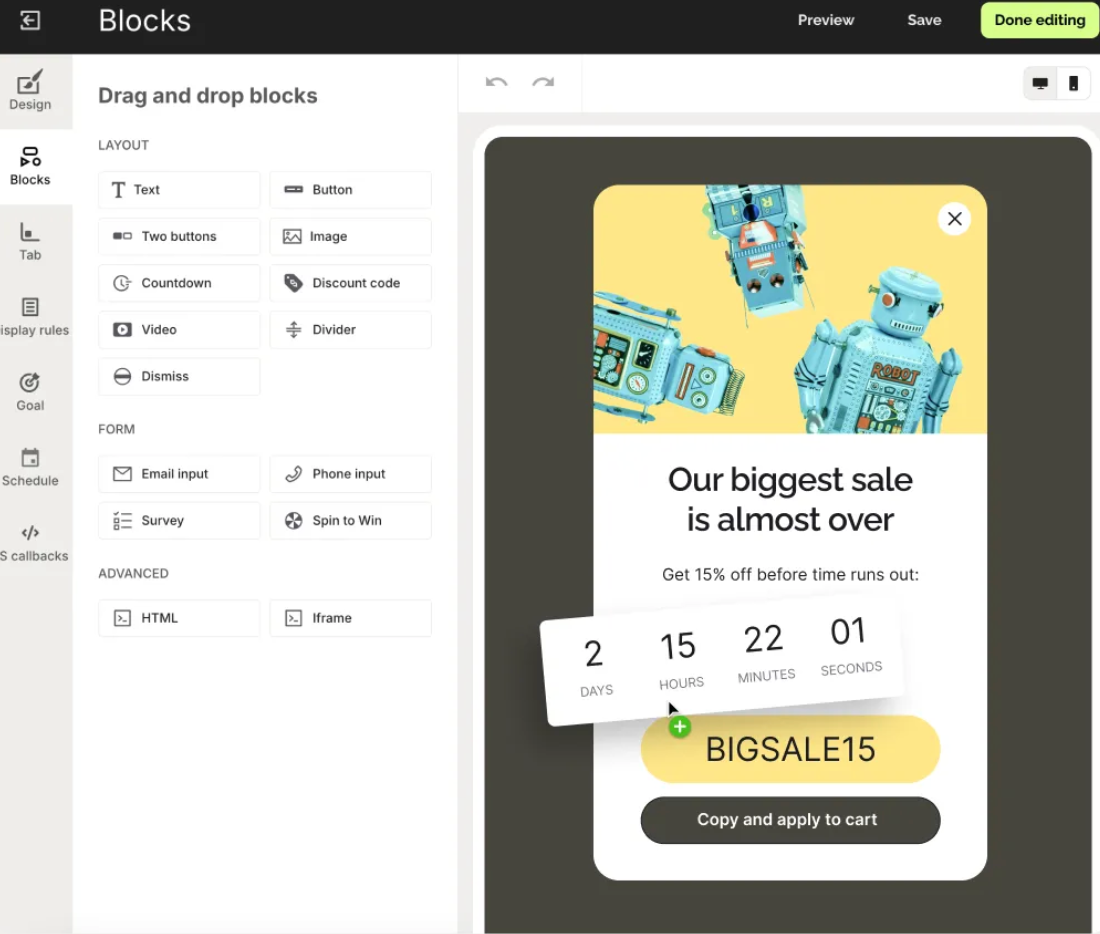
TL;DR: Wisepops uses AI-powered product recommendations that predict customer intent to transform browsing into buying through well-timed pop-ups and banners.
About Wisepops
Wisepops engages through strategically timed popups, slide-ins, and notification bars. While known for lead capture, it’s also adept at promoting product recommendations based on real-time customer behavior.
The platform's AI analyzes multiple data sources, including onsite activity, visitor profiles, and sales performance, to predict purchase intention. This allows it to show the right products to people at the perfect moment.
Key Features
- AI Cart Recovery: Automatically detects high-risk exit moments and triggers personalized cart abandonment popups based on cart value and items, without manual rule setup.
- Shopify-specific Targeting: Targets campaigns using 17 Shopify-native conditions, including cart content, last order date, and total customer spend.
- Multiple Onsite Formats: Deploys recommendations across popups, embedded sections, sticky bars, and a social media-style onsite notification feed.
- AI Product Recommendations: Predicts purchase intent using browsing behavior and sales performance data to surface relevant products
Pros & Cons
Pros
- No coding required, and campaigns launch in minutes using 190+ ready-made templates.
- Revenue attribution shows exact sales impact per campaign, not just click rates.
- Best suited for mid-sized to large stores with consistent traffic and a clear popup strategy
Cons
- May require testing to find optimal pop-up frequency.
- Some visitors may find pop-ups intrusive if not well-timed.
Integration Highlights
Wisepops integrates with Shopify through the app store and supports connections with Yotpo, Klaviyo, and Google Analytics for comprehensive customer data utilization.
Pricing
- $49/month for 50k pageviews.
- $99/month for 100k pageviews.
- $249/month for 500k pageviews.
- $399/month for 1M pageviews.
6. Dynamic Yield: Best for Enterprise-Grade Personalization
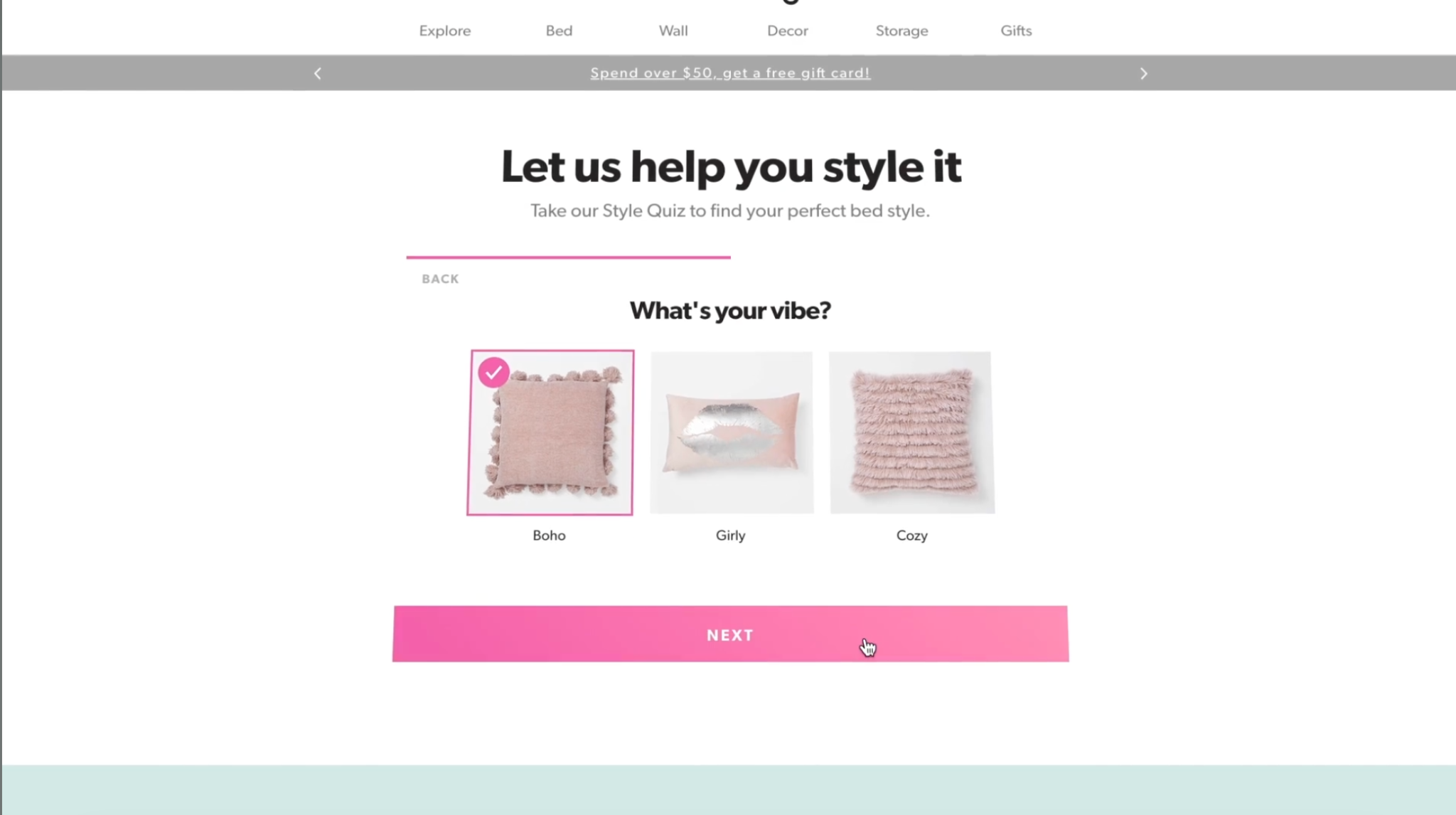
TL;DR: Dynamic Yield enables leading global brands to deliver and test personalized, optimized customer interactions with enterprise-scale capabilities.
About Dynamic Yield
Dynamic Yield is built for large-scale operations that need sophisticated personalization across multiple touchpoints. The platform uses advanced algorithms to deliver highly accurate recommendations, including deep learning and reinforcement learning.
The system can handle complex product feeds spanning multiple languages, currencies, and geographies with millions of SKUs. It dynamically optimizes recommendations based on customer attributes, traffic patterns, geography, device type, and numerous other factors.
Dynamic Yield’s Key Features
- AffinityML Recommendations: A neural network algorithm that builds real-time individual preference profiles to anticipate what each shopper is most likely to buy next.
- Deep Learning Personalization: Adapts recommendations across the page type and context, such as homepage, PDP, cart, and category pages, each receive different logic based on where the shopper is in the journey.
- Automated Customer Profiling: Tracks cart additions, purchases, and browsing patterns automatically to build actionable segments without manual setup.
- Real-time Inventory Sync: Automatically removes out-of-stock products from recommendation feeds as stock levels change
Pros & Cons
Pros
- Highly customizable algorithms for unique business needs.
- Works across all marketing and sales channels.
- Enterprise-scale capabilities for extensive catalogs.
- Advanced testing and optimization features.
Cons
- Pricing may be prohibitive for smaller businesses.
- Implementation complexity suited for larger teams.
Integration Highlights
Dynamic Yield integrates with Shopify via the app store. It connects with Google Analytics, Yotpo, Algolia, and other tools for comprehensive marketing stack integration.
Pricing
Contact for pricing.
7. Monetate: Best for A/B Testing Recommendation Strategies
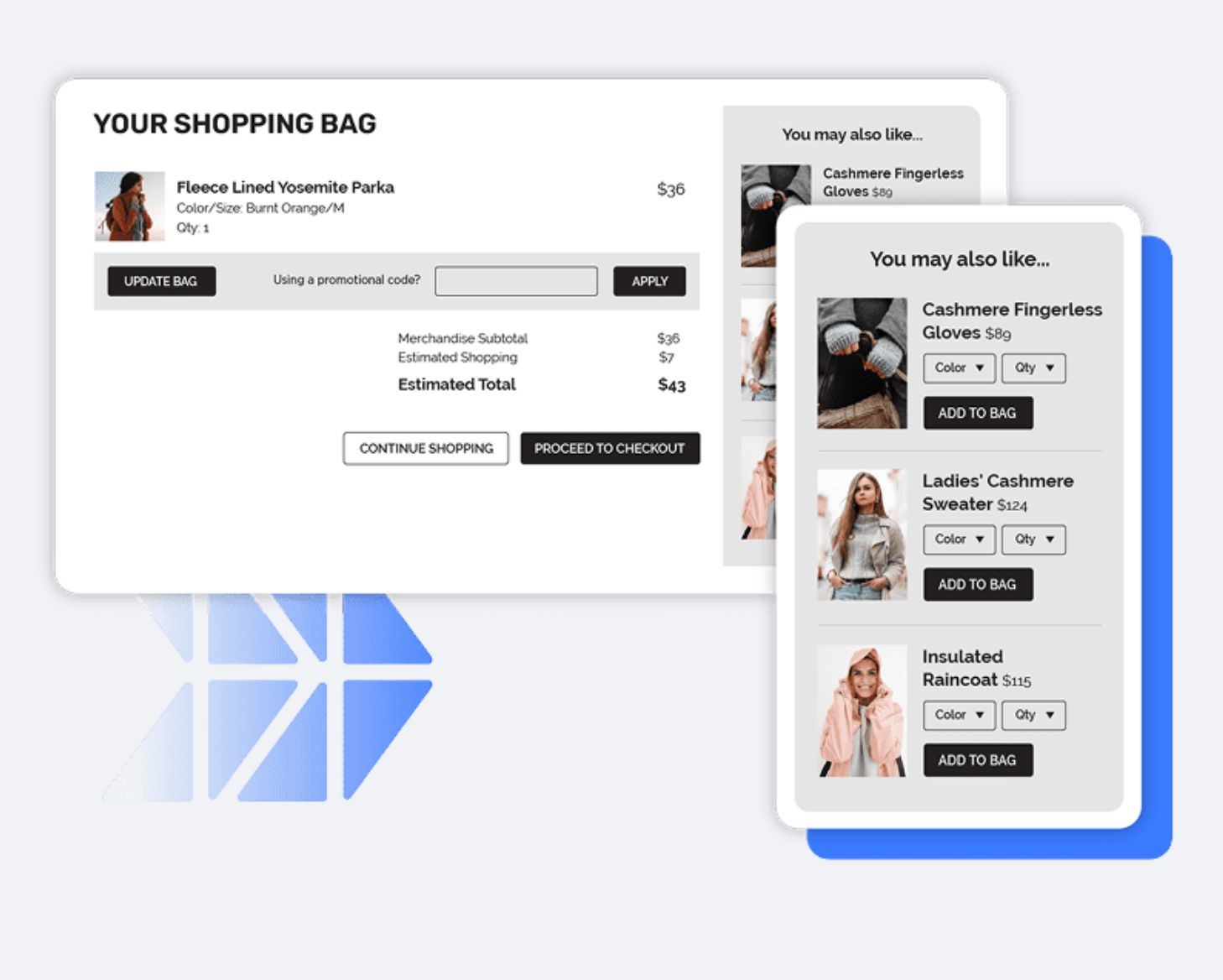
TL;DR: Monetate focuses on testing and optimization, treating recommendations as hypotheses to be tested rather than set-and-forget features.
About Monetate
Monetate offers a product recommendation engine that combines scalability and best-in-class algorithms. Its testing-first methodology helps retailers discover what actually works for their specific audience and product mix.
Instead of guessing which recommendation placement performs better, Monetate provides concrete data to guide decision-making.
Monetate’s Key Features
- SKU-level Recommendation Filtering: Filters recommendations by specific attributes like size, color, margin, and availability.
- Boost and Bury Controls: Manually promotes or suppresses specific SKUs in recommendation feeds based on margin, seasonality, or business priorities.
- Multiple Recommendation Algorithms: Supports collaborative and non-collaborative strategies, including viewed-and-also-viewed, purchased-and-also-purchased, top-selling by revenue, and search-based recommendations.
- Multivariate Testing on Recommendations: Tests different recommendation strategies, placements, and algorithms against each other with statistical significance tracking
Pros & Cons
Pros
- Strong focus on testing and optimization.
- Cross-channel recommendation capabilities.
- Serves recommendations based on real-time user signals.
Cons
- May require analytics expertise for optimal utilization.
- A complex feature set may overwhelm smaller teams.
Integration Highlights
Monetate offers custom integration with Shopify and other major e-commerce platforms and marketing tools, providing comprehensive data flow for testing and optimization across the entire customer journey.
Pricing
Contact for pricing.
8. AI Trillion: Best for All-In-One Marketing Automation
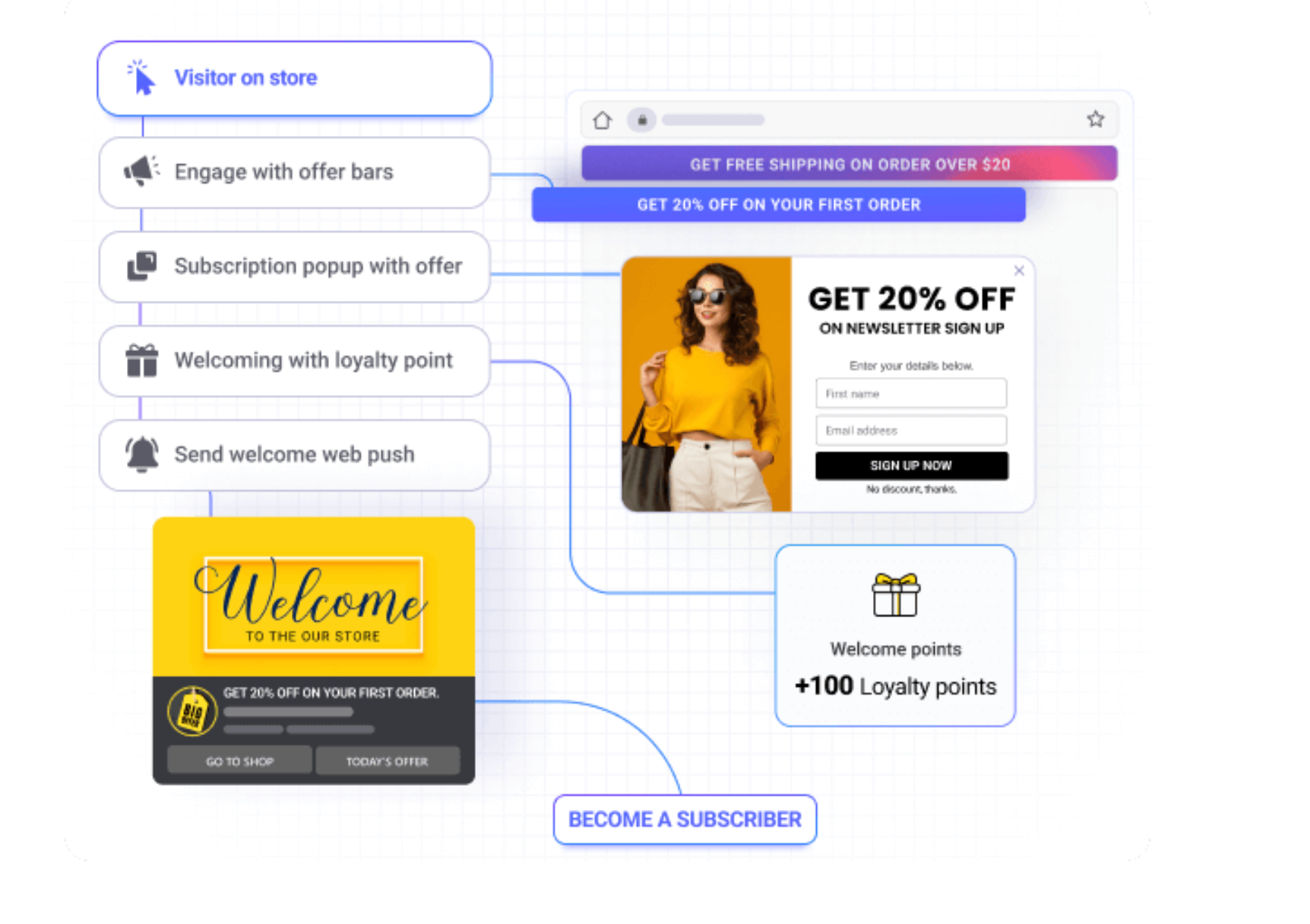
TL;DR: AITrillion is an all-in-one marketing platform that targets customers with personalized product recommendations while providing comprehensive marketing automation tools.
About AITrillion
AITrillion takes a holistic approach to customer engagement, combining product recommendations with email marketing, push notifications, loyalty programs, and customer analytics in a single platform.
The system analyzes customer purchase history and browsing behavior to deliver automated, personalized recommendations across multiple channels. You can send recommendations directly via email, display them in smart popups, or include them in push notifications.
AITrillion’s Key Features
- Behavior-based Recommendations: Triggers personalized suggestions based on cart contents, order history, and real-time browsing activity.
- Recommendations in Email and SMS: Embeds AI product suggestions directly into automated cart recovery, win-back, and post-purchase flows.
- Loyalty-linked Recommendations: Connects product suggestions with loyalty rewards data to drive repeat purchases.
- Unified Marketing Automation: Combines recommendations, loyalty, reviews, email, SMS, and affiliate marketing in one platform, replacing 10+ standalone apps.
Pros & Cons
Pros
- All-in-one platform reduces tool fragmentation.
- Comprehensive customer data for better recommendations.
- Cost-effective compared to multiple separate tools.
Cons
- May include features beyond basic recommendation needs.
- Migration from existing tools may be complex.
Integration Highlights
AITrillion integrates natively with Shopify and connects with popular third-party apps for reviews, customer service, and additional marketing functions.
Pricing
- Startup plan: $19/month for up to 100 orders.
- Standard plan: $49/month for up to 300 orders.
- Growth plan: $99/month for up to 500 orders.
9. Nosto: Best for Infusing Recommendations into Visual Merchandising
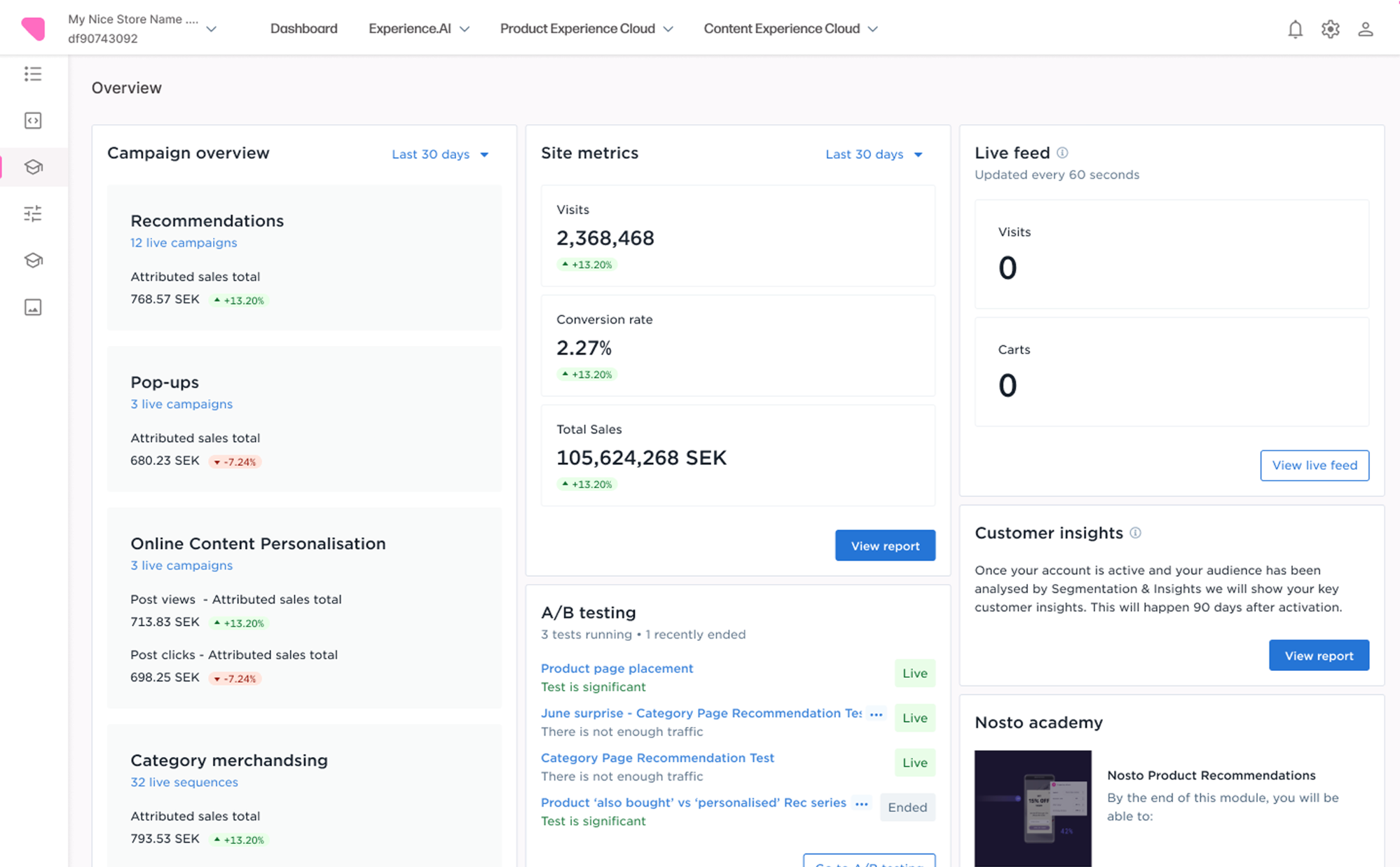
TL;DR: Nosto delivers robust personalization tools focusing on customers' unique interactions, combining recommendations with visual merchandising capabilities.
About Nosto
Nosto provides a comprehensive personalization platform that tracks detailed customer behavior, including browsing patterns, purchase history, and even how long visitors linger on specific products. This detailed behavioral data powers highly relevant product suggestions.
The platform's strength lies in its visual merchandising tools, making it easy for non-technical team members to create and manage recommendation campaigns. You can set up campaigns that feel like curated shopping experiences rather than algorithmic suggestions.
Nosto’s Key Features
- Visual Merchandising Controls: Lets teams boost or bury products in recommendation feeds based on conversion rate, margin, stock level, or category without touching code.
- UGC-enriched Recommendations: Displays customer-generated photos inside recommendation widgets instead of stock images, adding social proof directly at the point of discovery.
- Granular Segmentation: Personalizes recommendations by visitor segment, device type, referral source, geography, and behavioral triggers across the full storefront.
- Checkout and Thank-you Page Recommendations: Applies product recommendations at the point of purchase and post-purchase to drive cross-sells and AOV
Pros & Cons
Pros
- UGC-enriched recommendations add social proof directly inside product suggestion widgets.
- Supports multi-language and multi-currency personalization
- Covers recommendations across every page, including checkout and thank-you.
Cons
- Pricing may be steep for smaller stores.
- Custom features may require support.
Integration Highlights
Nosto integrates with popular marketing tools, including Klaviyo, Yotpo, and Attentive, enabling comprehensive customer data utilization across your entire marketing stack. It connects to Shopify via the app store.
Pricing
Custom pricing.
10. LimeSpot — Best for AI Personalization Across the Full Shopping Journey
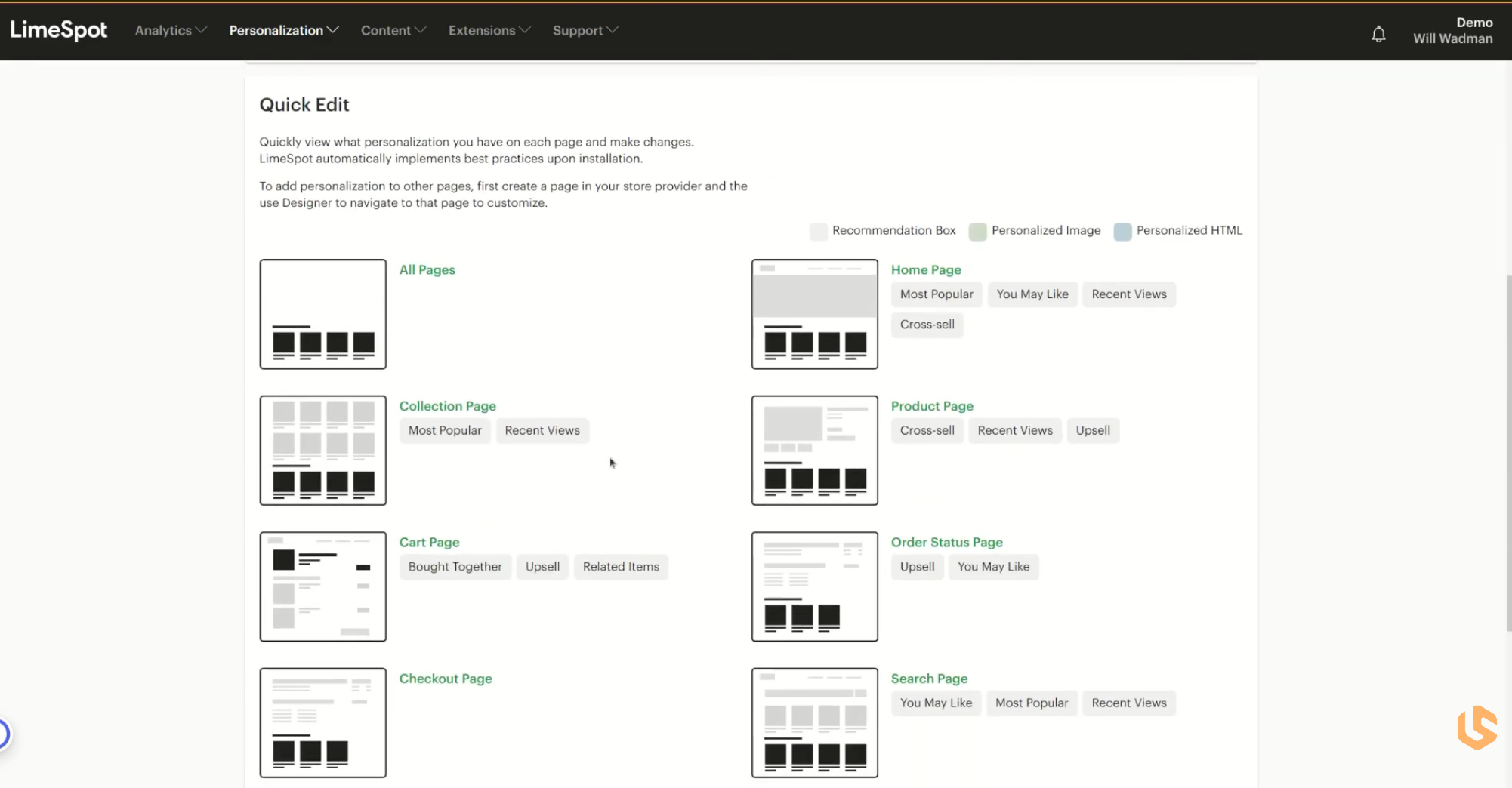
TL;DR: LimeSpot is an AI personalization platform that delivers product recommendations, upsells, cross-sells, and bundling across every page of your Shopify store.
About LimeSpot
LimeSpot is an AI personalization platform that covers product recommendations across every page of your Shopify store, like homepage, product pages, cart, checkout, and post-purchase.
The AI adapts recommendations in real time based on each shopper's browsing history, purchase patterns, referral source, and location.
You can run frequently bought-together bundles, upsell sequences, and trending product blocks without managing multiple apps. Multivariate testing is built in, so you can measure which placements and recommendation types actually drive revenue.
Key Features
- AI product recommendations: Serves personalized suggestions across every page, including cart, checkout, and order confirmation.
- Audience segmentation: Adapts recommendations based on browsing behavior, purchase history, UTM parameters, and location in real time.
- Upsell and cross-sell widgets: One-click setup for bundle offers and complementary product suggestions at high-intent moments.
- Multivariate A/B testing: Tests recommendation placements and formats from homepage to thank-you page.
Pricing
- LimeSpot Turbo is priced at $6.99 per month.
- LimeSpot Max pricing scales with monthly store revenue (for example, $150 per month for stores generating up to $50,000).
- 15-day free trial available.
Pros and Cons
Pros
- Full-storefront coverage in one platform.
- Revenue-based pricing scales predictably with store growth.
- No developer needed to customize recommendation layouts
Cons
- Not available for Shopify Plus stores on the Turbo plan.
- Audience segmentation and AI targeting require the higher-priced Max plan
Integration Highlights
LimeSpot integrates with Shopify via the App Store and connects with Klaviyo, Omnisend, and Mailchimp for email and SMS personalization. It also supports Yotpo, Stamped.io, and Judge.me for reviews, and works with Shopify's native checkout and post-purchase flows.
11. Searchanise — Best for Search-Driven AI Product Recommendations
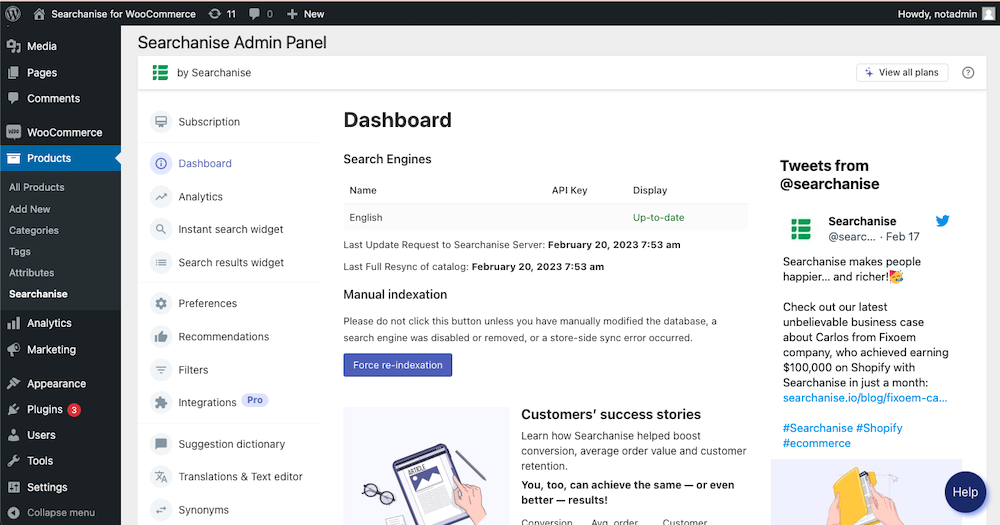
TL;DR: Searchanise upgrades Shopify's native search with AI-powered results, smart filters, and recommendation blocks.
About Searchanise
Searchanise is a search and product discovery app that replaces Shopify's native search with AI-powered results, smart filters, and recommendation blocks.
The AI personalizes results in real time, corrects typos, and surfaces relevant products before a shopper finishes typing. Recommendation blocks for bestsellers, similar items, and recently viewed products also extend discovery into collection pages and PDPs.
Key Features
- AI-powered instant search: Delivers accurate, personalized results with autocomplete and typo tolerance as shoppers type.
- Recommendation blocks: Adds similar items, bestsellers, new arrivals, and recently viewed widgets across the storefront.
- Advanced collection filters: Lets shoppers narrow results with fully customizable filter options.
- Merchandising rules: Promotes specific products or brands at the top of search results.
Pricing
- Free: Up to 25 products.
- Basic: $19/month, up to 1.5k products.
- Essential: $39/month, up to 7.5k products.
- Advanced: $89/month, up to 15k products.
- Growth: $139/month, up to 30k products.
- Pro: $209/month, up to 50k products.
- Premium: $349/month, up to 300k products.
14-day free trial available on all plans.
Pros and Cons
Pros
- Strong fit for large-catalog stores where search drives discovery.
- Affordable entry point with a free tier.
- Highly rated for support responsiveness, and search accuracy.
Cons
- Recommendation features are secondary to search, not a full recommendation platform on its own.
- Some visual customizations require CSS help or support assistance.
Integration Highlights
Searchanise integrates with Shopify via the App Store and connects with Yotpo, Judge.me, Stamped.io, and Reviews.io for review data. It also supports Wishlist Plus and Langify, and works with Shopify's latest OS 2.0 themes out of the box.
Why Choosing the Right Product Recommendation Tool Matters for Your Bottom Line
Selecting the wrong product recommendation tool can do more harm than good. When customers see product recommendations that don’t align with their interests, they question how well your store understands them. That disconnect can impact everything from click-through rates to overall brand perception. To choose the right recommendation tool for your Shopify store, consider these key factors:
Business size and traffic volume
Your store’s scale plays a major role in determining suitable tools. Larger retailers with thousands of SKUs and heavy traffic need robust, enterprise-level platforms that handle complex product data and real-time personalization.
On the other hand, small to mid-sized stores may benefit more from lightweight, affordable tools that offer bundled features without overwhelming complexity.
Industry and product type
The kind of products you sell and how customers shop for them can influence which recommendation strategy works best. A fashion brand might prioritize style quizzes and visual merchandising, while a tech store may need cross-sell logic based on specs or compatibility.
Pricing structure
Every recommendation tool has a different pricing model. Some charge based on the number of views or recommendations shown, while others bill per order volume. It’s important to understand how these models align with your store’s traffic, average order value, and margins.
Integration requirements
Your tech stack matters. The best recommendation engine is the one that plays well with your existing systems: Shopify themes, email marketing tools, CRMs, loyalty programs, and analytics platforms. Poor integration can delay setup, create data silos, or result in a clunky customer experience.
Types of Product Recommendation Strategies That Work
Success with product recommendations depends heavily on strategy and placement. Here are a few recommended approaches that have proven effective:
Chat-Based Recommendations
Conversational recommendations through chat interfaces create natural, low-pressure ways to guide customers toward relevant products. Instead of showing static suggestion boxes, these systems engage customers in dialogue to understand their needs and preferences.
"Frequently Bought Together" Product Page Sections
Bundle recommendations leverage purchasing pattern data to suggest products that complement the main item. These recommendations appear prominently on product pages, often near the "Add to Cart" button, where they can influence immediate purchasing decisions.
Personalized Homepage and Collection Page Modules
Your homepage doesn't need to look the same for every visitor. Dynamic content can show trending items for returning customers or highlight restocked products for people who browsed before. This personalization reduces bounce rates and encourages deeper exploration of your catalog.
Checkout and Post-Purchase Upsells
Recommending upsells during and after checkout helps maximize shoppers' buying mindset at the point of purchase. These moments offer some of the highest conversion rates for additional purchases.
Emerging Trends in Product Recommendation Technology
Several emerging trends are reshaping how online stores connect customers with products they'll love. Here they are:
AI and Hyper-Personalization
Artificial intelligence is moving beyond basic behavioral tracking to create truly unique experiences for each visitor.
Modern systems analyze browsing patterns, purchase history, seasonal preferences, and even external factors like weather or local events to predict what someone might want next.
As third-party cookies disappear, these tools increasingly rely on first-party data collected directly from customer interactions with your store.
Augmented Reality (AR) in Recommendations
Visual try-before-you-buy experiences are becoming mainstream. Customers can see how furniture looks in their living room, try on glasses virtually, or preview how clothing fits their body type.
This technology reduces return rates and increases purchase confidence. Research shows that 57% of customers are more likely to buy from brands incorporating AR into their shopping experience.
Voice Search Integration
Voice commerce is creating new opportunities for product discovery. Customers increasingly ask Alexa or Google Assistant for product recommendations, and forward-thinking brands are optimizing their recommendation engines for voice queries.
Bottom Line
Product recommendation tools have evolved from nice-to-have features into essential revenue drivers for successful Shopify stores. With nearly half of consumers making unplanned purchases based on personalized suggestions, the opportunity to grow sales through relevance and timing is too big to ignore.
Whether your audience needs guidance, inspiration, or quick answers, your recommendation strategy should match how they shop.
Rep AI is the one for you if you’re looking for a more dynamic and interactive way to deliver recommendations. It combines real-time personalization with a conversational shopping experience to help customers find the right products faster while keeping them engaged and supported every step of the way.
Start your free trial of Rep AI today and see how AI-powered recommendations can drive more conversions for your Shopify store.
Product Recommendations on Shopify FAQ:
What is a Shopify product recommendation tool?
A Shopify recommendation tool is an app or platform that analyzes real‑time shopper behavior—pages viewed, items in cart, purchase history, and serves dynamic product suggestions. The goal is to surface items a customer is likely to buy, raising average order value and conversion rates without manual merchandising.
How do product recommendations increase sales?
Personalized suggestions reduce decision friction. Studies cited by Shopify merchants show recommendation engines can drive up to 31% of total revenue and lift conversion rates 4 – 5 × versus stores that show the same catalog to everyone. Relevant items at the right moment translate directly into more checkouts.
What is the best product recommendation solution for Shopify?
Rep AI is widely considered the best Shopify product recommendation tool because it combines conversational AI with real-time, context-aware suggestions. Native Shopify integration, 24/7 availability, and machine learning improvements let merchants deliver personalized recommendations that lift conversions and average order value without coding or extra staff.
Which Shopify recommendation app is best for conversational shopping?
Rep AI excels at chat‑based discovery. Its AI concierge learns from catalog data, cart contents, and live questions to recommend products in a human‑like dialogue. This is especially powerful on mobile, where typing SKUs or filtering menus is cumbersome and shoppers prefer quick, guided answers.
What factors should I consider when choosing a recommendation engine?
Evaluate store size, catalog complexity, integration stack, pricing model, and industry needs. High‑SKU retailers may prioritize AI depth and A/B testing, while smaller brands might want bundled pop‑ups and quizzes. Seamless Shopify integration and first‑party data control are non‑negotiable for most merchants.
Do recommendation apps slow down Shopify site speed?
Well‑built apps load asynchronously, adding milliseconds, often imperceptible, to page speed. Leading vendors use lightweight JavaScript snippets and CDN caching. But always test with Shopify’s performance metrics and minimize overlapping apps that inject large libraries or duplicate tracking scripts.
Can AI chatbots replace traditional ‘Related Products’ carousels?
Chatbots such as Rep AI offer conversational, context‑aware suggestions, while static carousels give instant visual options. Many high‑performing stores run both: a carousel for quick scanning and chat‑based guidance for deeper assistance, capturing shoppers who prefer either discovery style.
How much do Shopify recommendation tools cost?
Pricing varies by model: some charge on monthly page‑view tiers (e.g., Wisepops), and others on order volume (ReConvert) or revenue share. Rep AI offers pay‑as‑you‑grow from $12/mo for its Sales Assistant, scaling to enterprise bundles above $2,000/mo with full concierge capabilities.
Are recommendation engines compliant with data‑privacy laws?
Reputable tools encrypt traffic with TLS, isolate merchant data, and comply with GDPR and CCPA. Though always review each vendor’s data‑processing addendum, ensure first‑party cookies are used where possible, and confirm opt‑out mechanisms for behavioral tracking.
More from REP AI

AI Shopping Assistant: How It Guides Ecommerce Shoppers in 2026
When a shopper hesitates, timely guidance can help them decide what to explore next. An ai shopping assistant can answer product questions, narrow choices, and guide product discovery without taking control of checkout. Shoppers get help comparing options, while still making the purchase decision th...

Benefits of Agentic Commerce: How AI Can Help Brands Sell and Serve Better
When a shopper hesitates, a useful answer can turn a moment of uncertainty into a chance to help, rather than a sale lost or a question left unanswered. The benefits of agentic commerce come from connecting shopper intent with timely action, then learning from those interactions to improve sales gui...
Want to see what your store would do with Rep?
Run your real Shopify catalog through the simulator before you commit to anything. No sales call required.

