


AI Shopping Agents and Assistants for Ecommerce: Definition, Types, Use Cases, Success Stories, Implementation & More
Quick summary
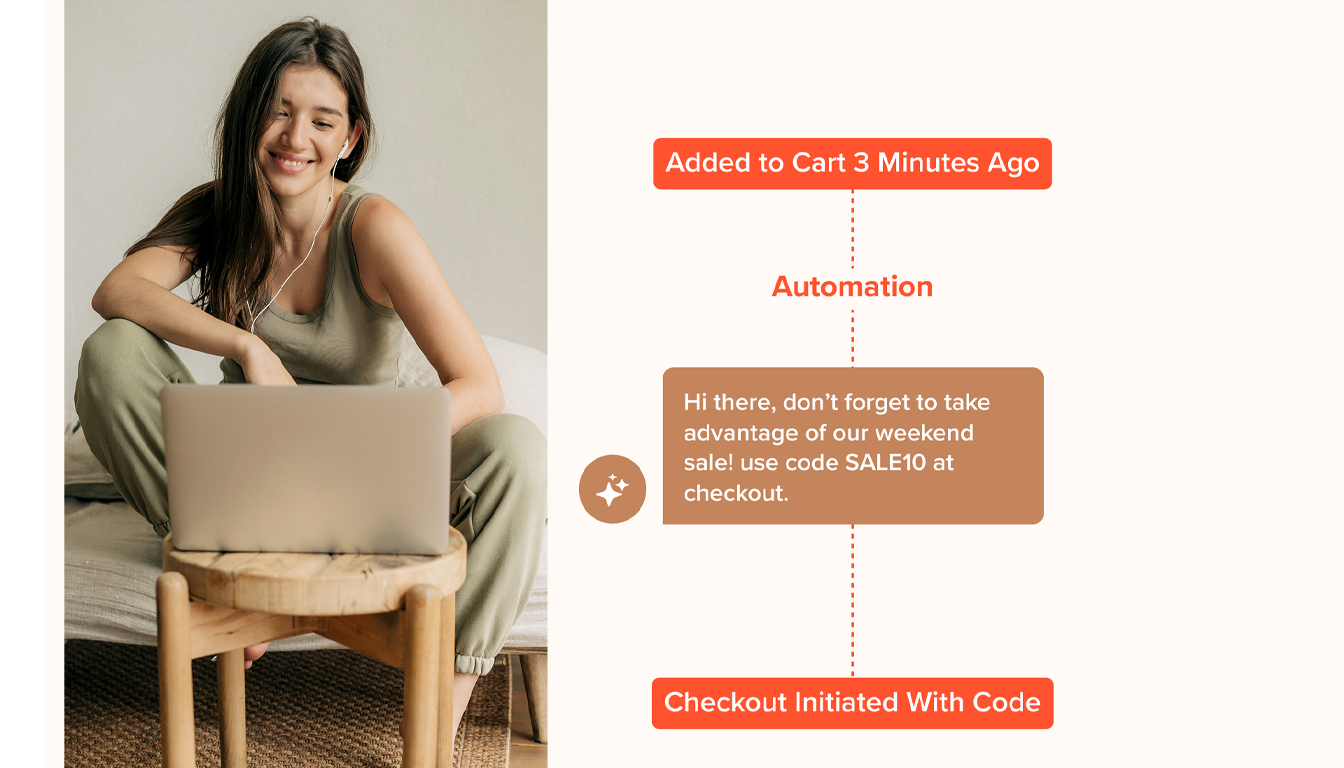
AI shopping agents are already changing how purchase decisions are made, removing manual search entirely. Brands that deploy their own agents are better positioned to be discovered and preferred by the AI intermediaries now guiding shoppers. The bigger opportunity is converting more of the traffic already arriving through agents who engage proactively, close the gap between interest and decision, and surface shopper intelligence.
With the increasing popularity of AI shopping agents, shopping in 2026 promises to be unlike anything we've seen before.
AI-assisted shopping started with recommendation engines and traditional chatbots. However, it has evolved into full-fledged autonomous shoppers that can understand personal preferences and budgets. They can compare prices across thousands of retailers, negotiate deals, and even complete purchases on users’ behalf.
AI agents essentially make the online shopping experience easier, faster, and more personalized. As a result, instead of navigating countless websites themselves, more and more shoppers are relying on AI agents to discover, evaluate, and purchase products online.
This paradigm shift means that, in the near future, most of your most valuable shoppers won’t be humans but AI agents acting on their behalf. It also means that brands need to position themselves to be discovered, understood, and preferred by AI shopping agents.
This post will explore how AI agents are changing how people shop. You’ll also learn how retailers can optimize for AI agents to gain more visibility, more recommendations, and ultimately, more revenue.
What is an AI shopping agent?
An AI shopping agent is an autonomous digital system. It acts on behalf of a shopper to find, evaluate, and purchase products without requiring them to manually search, compare, or navigate between stores. Unlike a basic search bar or recommendation widget, an AI shopping agent takes goals as inputs and delivers outcomes as outputs.
Consider a typical online shopping experience. If you want to buy a laptop, you’ll spend hours browsing multiple websites, comparing product specs, checking reviews, hunting for the best price, tracking stock availability, and more.
All this effort, necessary to ensure you buy a reliable product that meets your needs, can make shopping time-consuming and stressful.
In 2026, AI shopping agents handle all of that. They understand shopper preferences in real time, and compare thousands of products across dozens of stores within seconds. The agents also identify the best deals, monitor inventory, and complete purchases on the shopper's behalf. By doing so, they transform online shopping from a manual, multi-step chore into an automated experience.
This shift is already reshaping how brands think about traffic, conversion, and customer relationships. Shoppers increasingly arrive with an AI intermediary doing the legwork for them. This means brands now need to be discoverable, interpretable, and preferred not just by humans but by the agents guiding them.
Also read: Personalizing Product Recommendations With Conversational AI: Complete Implementation Guide.
Agentic AI Vs. AI Agents
These two terms are often used interchangeably, but they describe different things, and the distinction matters for anyone evaluating AI solutions for their store.
An AI agent is the system that performs tasks on behalf of a shopper or a business. Agentic AI enables an AI agent to understand context, make decisions, and adapt its actions as situations change, allowing it to operate with greater autonomy. Unlike a scripted agent that follows fixed rules, an agent powered by Agentic AI can interpret new information, adjust its approach, and pursue goals more intelligently.
For e-commerce brands, the practical implication is that deploying an AI agent is only as valuable as the agentic capability behind it. An agent without genuine agentic AI is still reacting, while an agent with it is driving outcomes.
AI shopping agents vs. chatbots
Both assist shoppers, but in very different ways.
Chatbots are conversational systems that answer questions following pre-written scripts. AI shopping agents act. They interpret context, make decisions, and take purposeful action on behalf of the customer.
If a shopper asks "Do you have shoes?", a chatbot may answer yes or no. An AI shopping agent will determine what the shoes are needed for, and find suitable options across the catalog. It’ll show the top picks, and guide the shopper toward checkout.
The core difference is that chatbots assist with information, while AI shopping agents drive outcomes.
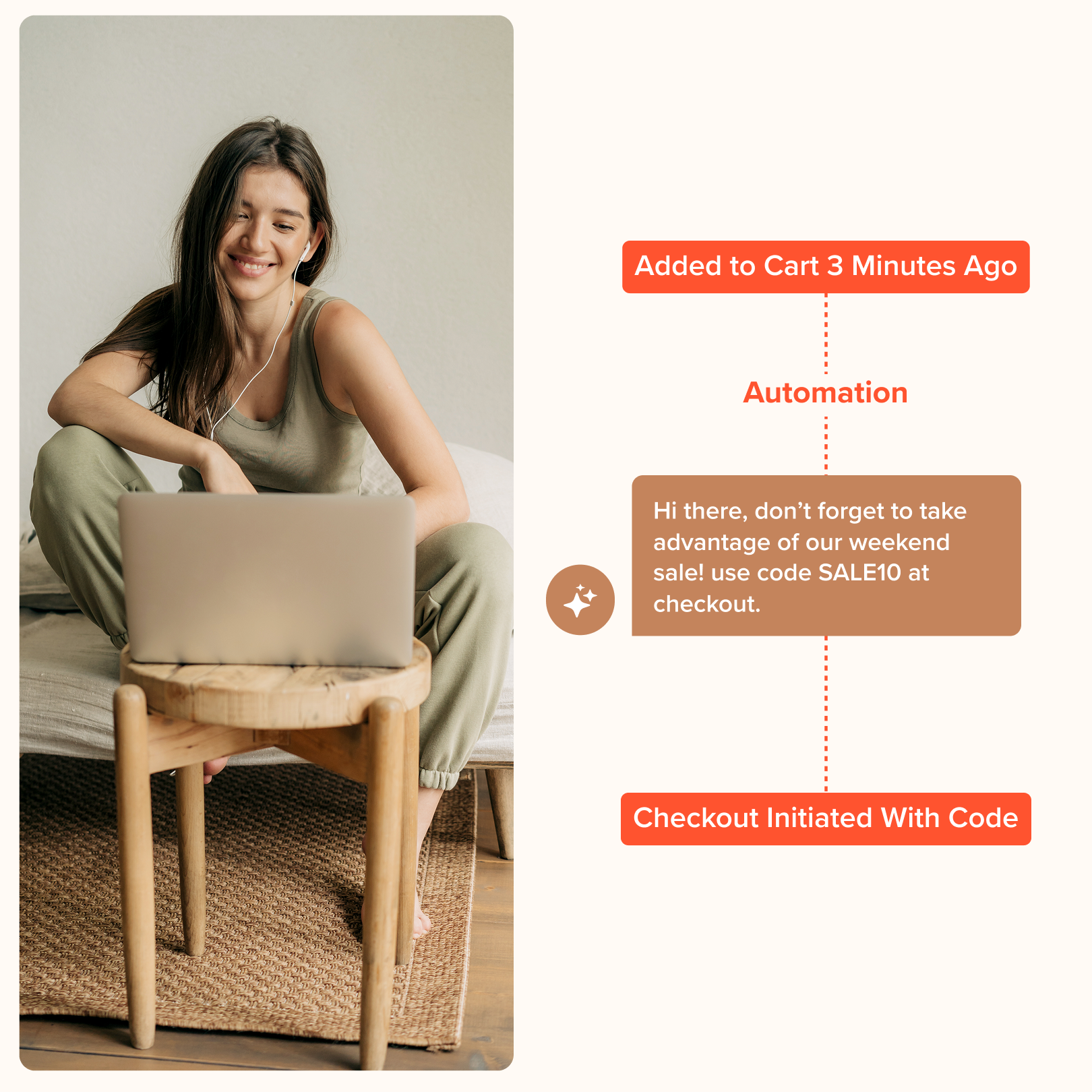
How AI shopping agents reshape the 2026 online shopping experience
Types of AI shopping agents
AI shopping agents aren't all built the same way. Depending on their design and purpose, they fall into three broad categories:
Agents that guide
These agents assist shoppers in finding the right product by answering questions, surfacing recommendations, and helping narrow down options. Their primary function is to reduce friction during the discovery and consideration phase. They're most commonly found embedded in e-commerce storefronts as conversational assistants.
Agents that sell
These agents go beyond guidance and actively drive purchase behavior. They read behavioral signals, detect hesitation, engage proactively, and move shoppers toward checkout without waiting for them to ask. Agents that sell are built around conversion as the core objective rather than information delivery.
Agents that do both
The most capable category handles the full journey. These agents guide shoppers through discovery, assist with comparison and decision-making, and drive toward purchase through proactive engagement and streamlined checkout.
On the merchant side, agentic commerce platforms like Rep AI operate at this level. They cover sales, support, and shopper intelligence without requiring brands to stitch together multiple point solutions.
What can an AI shopping agent and assistant do?
AI shopping agents can handle the parts of online shopping that usually require manual searching, comparison, or help from a sales associate. Their capabilities depend on their level of autonomy, but the most advanced systems can support shoppers from product discovery through checkout and post-purchase support.
Understand what the shopper is trying to buy
Shoppers often describe a need rather than enter an exact product name. An AI shopping agent can interpret requests such as "I need a lightweight laptop for university" or "Find a moisturizer for sensitive skin under $40." Then, ask follow-up questions about budget, features, fit, or intended use to narrow down the right options.
Platforms like Rep AI apply this through conversational search and a product finder that interprets intent. It asks clarifying questions, and searches the live catalog to surface the most suitable options from a large product range.
Answer product-specific questions
An agent can draw on catalog data, product descriptions, reviews, sizing information, and policies to answer questions while the shopper remains on the product page.
Questions about compatibility, sizing, materials, ingredients, availability, and use cases are all within scope, without the shopper needing to hunt through product pages themselves.
Narrow and compare product options
When several products look similar, the agent can compare the details that matter to the specific shopper instead of presenting a generic list. It looks at price, specifications, fit, materials, reviews, or intended use, and explains the differences in plain language.
For example, an AI agent can help a shopper choose between two laptops by comparing factors like portability and battery life based on their needs. It can also recommend between two skincare products by evaluating ingredients and skin type, similar to the guidance a knowledgeable store associate would provide.
Recommend suitable products and alternatives
AI shopping agents can recommend products based on the current conversation, browsing behavior, available inventory, and stated preferences. This includes best-fit products, visually or functionally similar items, in-stock alternatives, products within a stated budget, and replacements for unavailable options.
The best agents narrow these dynamically rather than relying on static recommendation blocks.
Cross-sell, upsell, and complete the purchase
An agent can also recommend products that complete the shopper's intended purchase. Someone buying a laptop may need a compatible case or charger. Someone choosing a dress may also want shoes or accessories.
The best recommendations are those that match the shopper’s needs and goals, not simply the most expensive products. They're most effective after a product is added to the cart, when the shopper is most likely to complete the purchase.
Detect hesitation and prevent abandonment
Most shopping tools wait for the customer to click a button or complete a form. Behavioral shopping agents can act before that happens.
An AI agent monitors signals like time on page, repeated comparisons, pauses, and scrolling to detect when a shopper becomes uncertain. It can then start a relevant conversation to answer questions, address concerns, and help the shopper continue toward a purchase.
Apply relevant offers at the right time
AI agents personalize discounts and promotions based on the shopper, context, and buying stage instead of showing the same offer to everyone. This allows an offer to support the purchase decision rather than interrupt it.
Guide the shopper to checkout
Advanced shopping agents let shoppers browse visual product cards, select an item, add it to the cart, and move toward checkout without repeatedly leaving the conversation. This removes one of the most common sources of friction in the final stage of a purchase.
Handle routine post-purchase support
The same agent can assist after the sale by answering shipping questions, providing order updates, handling returns or cancellations, and escalating complex cases to a human.
When escalation happens, the support agent receives the full conversation history, so the customer doesn't have to repeat the issue.
Surface insights from shopper conversations
Conversations reveal why shoppers hesitate, which products they compare, what information is missing, which objections repeatedly block purchases, and what competitors shoppers mention.
This data, when structured properly, can inform product page improvements, merchandising decisions, segmentation, and campaign messaging in ways that standard page analytics can’t.
How AI shopping agents work
AI shopping agents aren't built on the same logic as traditional chatbots or recommendation engines. Understanding how they actually work helps clarify why they behave differently and why they produce meaningfully different outcomes for both shoppers and brands.
At a high level, an AI shopping agent operates through a continuous loop of three things: perceiving inputs, reasoning about what to do next, and taking action.
That loop runs in real time, across every active session, and adapts based on what happens at each step:
Perceiving inputs
The agent continuously collects signals:
- On the shopper side, this includes natural language requests, browsing behavior, time on page, scroll patterns, product interactions, and session context.
- On the merchant side, it includes live catalog data, inventory, pricing, promotions, and policy information.
This is why data quality matters so much in agentic commerce. If product data is unstructured, delayed, or inconsistent, the agent can’t reliably include it in the candidate set. The storefront may exist, but it’s not machine-readable in a transactional context.
Reasoning and planning
Once inputs are collected, the agent uses its underlying model to interpret intent, identify what the shopper actually needs, and plan how to meet that need. This isn't a fixed decision tree. The agent evaluates the context, factors in constraints such as budget or use case, and determines the most relevant next action.
Taking action
Once the agent has decided what to do next, it executes that step using the tools available within the store’s systems.
In practice, this can involve recommending a product, updating the cart, retrieving order details, or escalating the conversation to a human.
An agent’s capabilities depend on its integration. Some only provide guidance, while others can complete multiple actions in one interaction.
Adapting over time
The loop doesn't reset after each session. Agentic AI observes outcomes and refines future behavior based on what worked and what did not.
Over time, the agent becomes better at predicting what each shopper needs. It also learns which interventions work best and where shoppers are most likely to face friction during the buying journey.
For brands, the implication is that the quality of the agent's output is directly tied to the quality of the data it can access. An agent running on a stale catalog, inconsistent product descriptions, or slow inventory feeds will produce worse results regardless of how capable its underlying model is.
The 5 stages of the customer journey AI agents can assist in
AI shopping agents aren't limited to one part of the funnel. A recent study found that 73% of consumers are already using AI somewhere in their shopping journey, and the most capable agents cover every stage of it:
Stage 1: Discovery
At the top of the funnel, the shopper knows what outcome they want but not which product will deliver it. A shopper looking for "something warm for winter evenings at home" isn't searching for a product category. They're describing a feeling.
An AI shopping agent interprets that intent, maps it to relevant inventory, and surfaces options the shopper would never have found through a standard keyword search.
Shoppers only need to create the prompt and wait for recommendations, which often take only a matter of seconds. Search and comparison, which typically account for the bulk of time spent during a shopping session, are handled effectively by the agent.
Stage 2: Consideration
Once shoppers start comparing products, the agent answers detailed questions and compares relevant options. It then narrows the choices based on preferences like fit, material, ingredients, compatibility, or price.
Unlike a standard FAQ page or fixed comparison chart, the response can reflect the shopper’s specific context. This gives them the kind of guidance they'd normally expect from a knowledgeable sales associate.
Stage 3: Purchase
At the moment of decision, hesitation is the biggest risk. Throughout the purchase process, AI agents are starting to take on the heavy lifting for consumers, recommending options, hunting for deals, checking stock, and finding smart substitutions.
On the merchant side, AI agents detect when shoppers hesitate and start a conversation at the right moment. They answer final objections and guide shoppers to checkout without leaving the current page.
Stage 4: Post-purchase
The journey doesn't end at checkout. Once a purchase is made, the AI agent continues to operate on the consumer's behalf throughout the post-purchase journey.
By integrating real-time order, carrier, and inventory data, AI systems can generate more accurate estimated delivery dates that continuously update as conditions change.
Agents also handle returns, cancellations, and follow-up questions automatically. When human support is needed, they pass along the full conversation history.
Stage 5: Retention
Over time, agents build a picture of each customer's preferences and behavior. That data feeds more accurate recommendations on future visits and gives marketing teams the context they need for precise follow-up campaigns.
Instead of sending generic re-engagement emails, brands can send personalized messages based on what customers asked about, browsed, or hesitated over in previous sessions.
How AI agents are changing the way people shop
AI agents are fundamentally shifting how shoppers discover, evaluate, and buy, and how brands need to show up. Consumer behavior changes that took over a decade during the rise of e-commerce are now happening much faster:
1. The hardest part of the journey is being delegated
Shoppers have always struggled most with the middle of the journey, the "help me figure this out" phase of gifting, outfit building, seasonal planning, and complex purchases.
This is where AI agents are having the fastest impact in 2026. Rather than spending hours researching and comparing, shoppers describe the problem and let the agent work through it.
The cognitive effort that used to define the consideration stage is increasingly being handled before the shopper even sees a product.
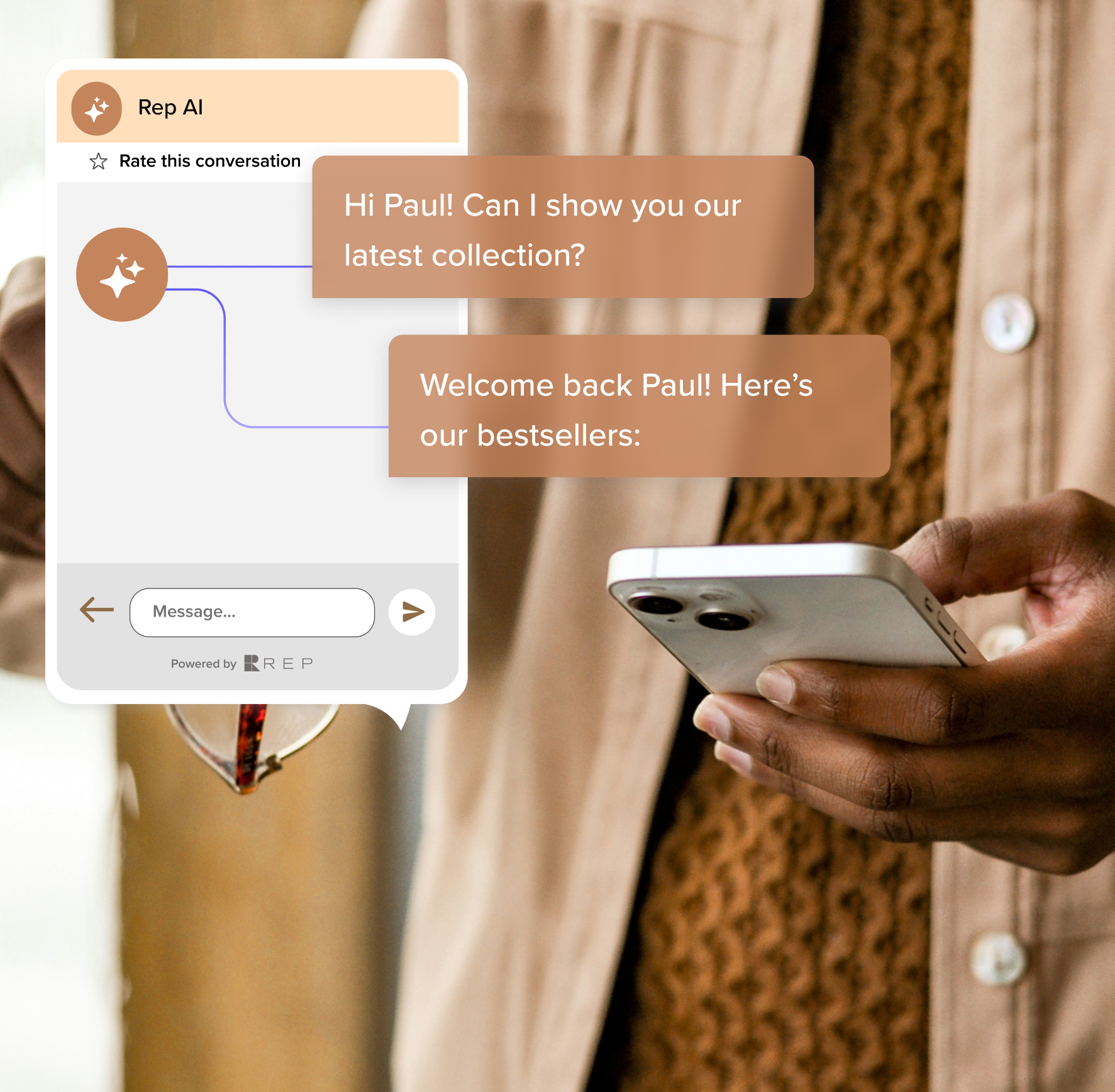
How AI agents are changing the way people shop
2. Shopping is shifting from navigation to conversation
Instead of browsing categories and filters, shoppers simply describe what they want in natural language, and the agent finds the right products.
The interface of shopping itself is changing. Shoppers are replacing traditional browsing with natural language prompts. Brands whose product data can't be understood by AI agents risk becoming invisible in this new discovery process.
3. Zero-click commerce is becoming a reality
Shoppers are increasingly making purchases without ever visiting a brand's website. AI platforms like ChatGPT, Gemini, and Perplexity now allow users to discover products, compare options, and complete a purchase entirely within the conversation. For brands, visibility in AI channels is becoming as important as visibility in search.
4. Replenishment is becoming automatic
For repeat purchases and household staples, the active decision moment is disappearing. Shoppers are setting preferences once and letting agents reorder on their behalf, removing the brand touchpoint from the replenishment cycle entirely.
For brands that rely on repeat purchase behavior, this shift makes the first purchase, and the AI agent's impression of the brand more important than ever.
5. The customer journey extends beyond the point of purchase
In the era of Agentic AI, customer support doesn't end at checkout. AI Agents support customers before, during, and even after the purchase. They can track deliveries, reorder essentials, notify about complementary products, and even handle returns.
Thus, AI agents help retailers take control over their customer relationships, shifting them from simply “buying a product” to providing ongoing assistance.
6. Customers rely less on search engines and more on their personal AI
As more shoppers rely on intelligent agents rather than manual browsing and search engines, retailers are also thinking beyond ads and SEO (search engine optimization) to optimize for AI-driven discovery.
Brands that aren't machine-readable with product data, structured metadata, and accessible APIs, risk being excluded from that consideration set entirely.
7. Loyalty is shifting from brands to the AI Agent guiding the purchase
Brand loyalty is also taking a hit in this era of agentic AI shopping assistants. As shoppers gain trust in the accuracy and convenience of AI agents, they rely more on their recommendations. This makes them more willing to consider and buy brands suggested by the agent, even if they had another brand in mind.
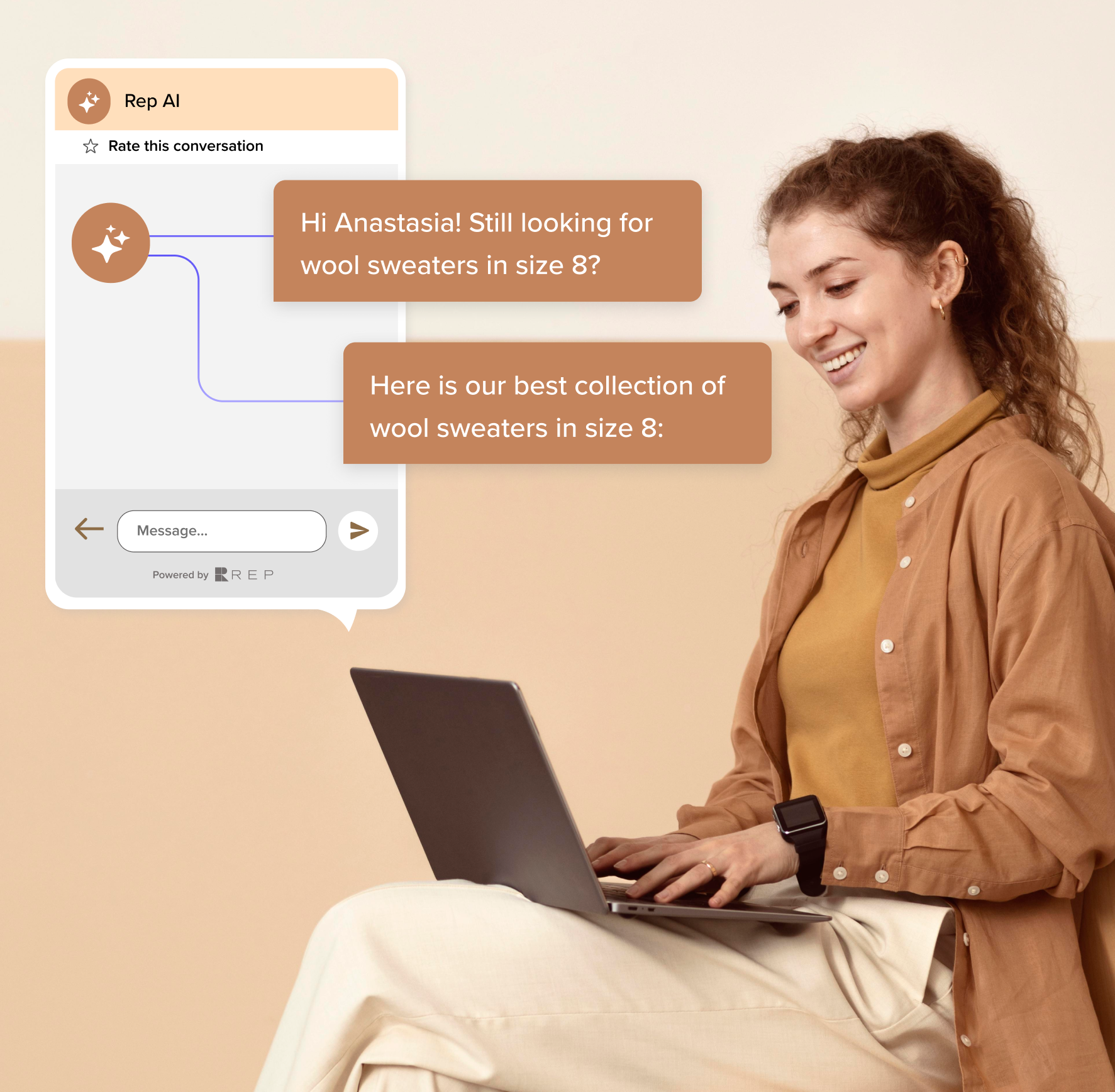
How AI agents transform every stage of the modern shopping journey
How AI shopping agents benefit store owners
For store owners, AI shopping agents represent a shift in what is operationally possible, and what is commercially achievable, without proportional increases in headcount or cost. Here’s how they benefit store owners:
Higher conversion from existing traffic
Store owners spend heavily on paid search, social ads, affiliates, SEO, and other acquisition channels. But most of that traffic leaves without generating revenue. Increasing conversion therefore doesn't always require attracting more visitors. It can come from improving how effectively the store monetizes the traffic it already has.
AI shopping agents support this by engaging more sessions at scale, qualifying shopper intent, and directing high-intent visitors toward the most relevant next action.
This can raise the assisted conversion rate, improve revenue per session, and help brands generate a stronger return from the same acquisition budget.
Higher average order value without a harder sell
As AI agents understand context and shopper intent, their upsell and cross-sell recommendations feel relevant rather than intrusive.
AI-driven personalization can increase average order value by 10–15% by recommending the right products at the right time.
Support at scale without growing the team
The volume of routine Wismo inquiries (order tracking, return policies, product questions, cancellations) no longer needs to scale linearly with store growth. An AI agent handles the majority of these interactions around the clock, freeing the human team to focus on cases that genuinely require their judgment.
Visibility into why shoppers aren't buying
Standard analytics tell store owners how many people visited a page and how many left. They don't explain why. AI shopping agents surface the reasons behind drop-off (recurring questions, missing product information, pricing hesitations, and comparison patterns). This gives store owners actionable intelligence they previously had no way to access.
A scalable data asset that improves over time
Unlike most operational investments, AI shopping agents get more valuable with use. Every conversation adds to the agent's understanding of shopper behavior, common objections, and product gaps.
Over time, this compounds into a data asset that informs not just the agent's responses but the broader marketing, merchandising, and product decisions of the business.
Applications of AI shopping agents across different e-commerce niches
AI shopping agents aren't a single-use solution. The core role of an AI agent is to understand shopper intent, answer questions, and guide customers toward a purchase. How it performs these tasks varies based on the product category, catalog, and where shoppers experience friction in the buying journey. Here is how it plays out across the most common e-commerce verticals:
Health and wellness
The purchase decision in health and wellness is rarely straightforward. Shoppers are evaluating ingredients against personal health goals, comparing formulations, and asking questions that fall somewhere between product education and medical guidance.
The AI agent's job is to answer within brand-approved guardrails, guide toward the right product or routine, and know when to escalate.
Apparel and clothing
In apparel and clothing, returns are expensive, and most of them start with a sizing decision made without enough information.
AI agents reduce that friction before the purchase rather than managing the fallout after it. Beyond fit, they handle the style and occasion questions that move a hesitating shopper from browsing to checkout.
Beauty and cosmetics
Beauty and cosmetics have one of the highest knowledge requirements of any e-commerce vertical. Shade matching, ingredient compatibility, routine sequencing, and skin concern guidance all require product expertise that a standard FAQ can’t replicate.
AI agents trained on the full catalog handle this depth of conversation while keeping responses accurate and on-brand.
Home and garden
Home and garden shoppers need help with dimensions, materials, assembly, maintenance, weather resistance, and delivery requirements.
AI agents can guide shoppers through these specifications, check whether a product suits the intended space or environment, and answer post-purchase questions about assembly, care, and delivery.
Food and beverage
Flavor and dietary fit are decisions shoppers can't make from a product image alone. First-time buyers need guided discovery. Returning customers need subscription management that actually fits how fast they go through a product.
AI agents handle both ends of that relationship, and the space between them. Bundles, pairings, and replenishment prompts are where a lot of incremental revenue lives.
Luxury and jewelry
At this price point, the buying experience matters as much as the product itself. Shoppers want to feel guided, not processed.
AI agents in luxury and jewelry are less about answering FAQs and more about replicating the attentiveness of a knowledgeable sales associate. They're helping with sizing, gifting context, material education, and the reassurance that comes with a considered purchase.
Sports and fitness
The catalog complexity here is significant. The same product category, shoes, for example, branches into dozens of subcategories based on sport, terrain, gait, and training volume.
AI agents that ask the right qualifying questions at the start of the conversation save shoppers from making the wrong choice and brands from handling the return.
Pets
Pet owners bring a level of care and specificity to product decisions that most categories don't see. Breed, age, weight, dietary sensitivities, and behavioral traits all factor into what gets bought.
AI agents that can navigate this specificity, and do so accurately, build the kind of trust that drives subscription and repeat purchase behavior over time.
Automotive
Wrong-part orders are costly for both the customer and the brand. The entire purchase decision in this category hinges on compatibility confirmation such as, fitment data, part numbers, vehicle specs, and installation requirements.
AI agents that surface this information accurately at the point of decision remove the single biggest reason automotive shoppers abandon a purchase.
AI shopping agent success stories
These success stories show how e-commerce brands are using AI shopping agents to support sales and reduce support demand:

- HigherDOSE (health and wellness): HigherDOSE already had a strong support operation, so the goal was to make website conversations contribute more directly to sales. After deploying an AI shopping agent, 45% of website visitors engaged with chat, and 96% of those engagements came from new visitors. The agent became an important first touchpoint for product guidance and sales assistance.
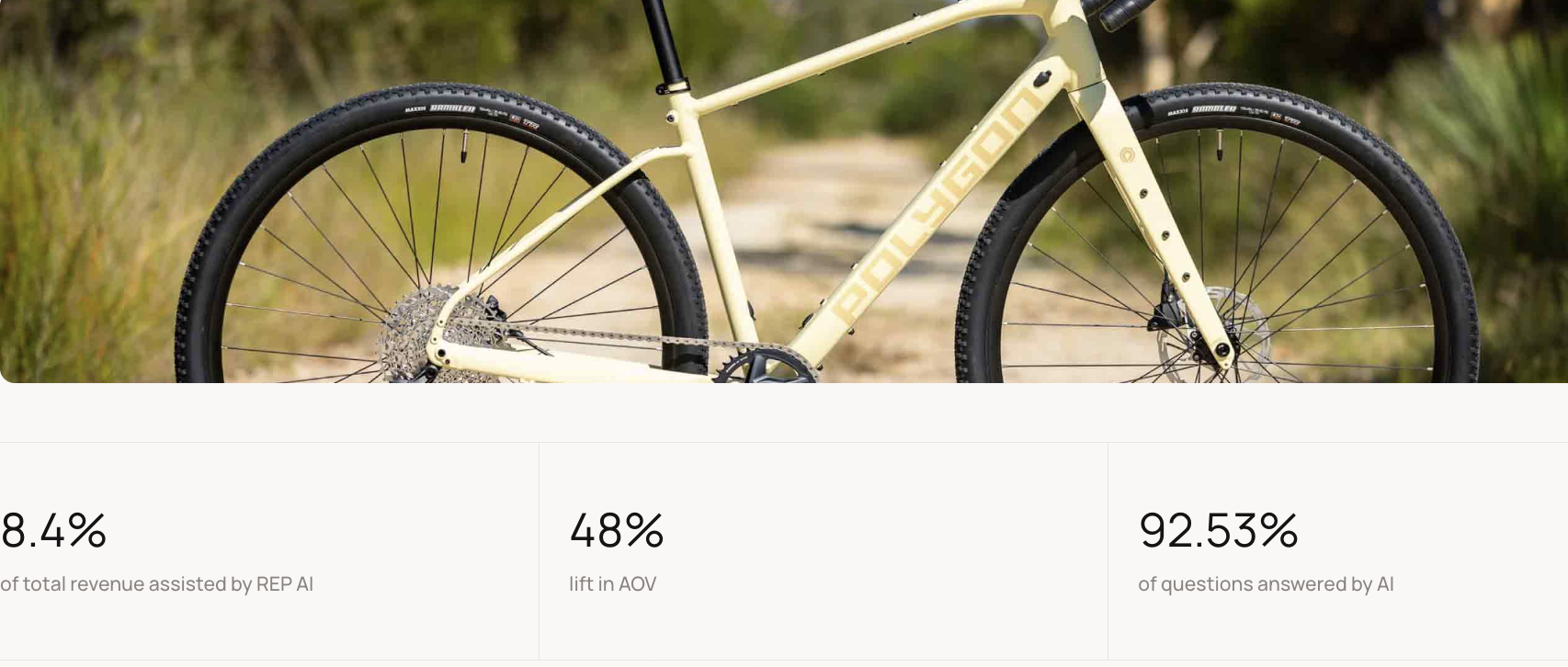
- Bikes Online (sporting goods): Bikes Online needed a better way to guide shoppers through a large, technical catalog while reducing repetitive support questions. AI-assisted orders recorded a 48% higher average order value, while shoppers guided to a product page converted at 4%. The agent also identified repeated confusion about pedals on higher-end bikes. After the product pages were updated, related tickets fell from hundreds per week to fewer than ten.
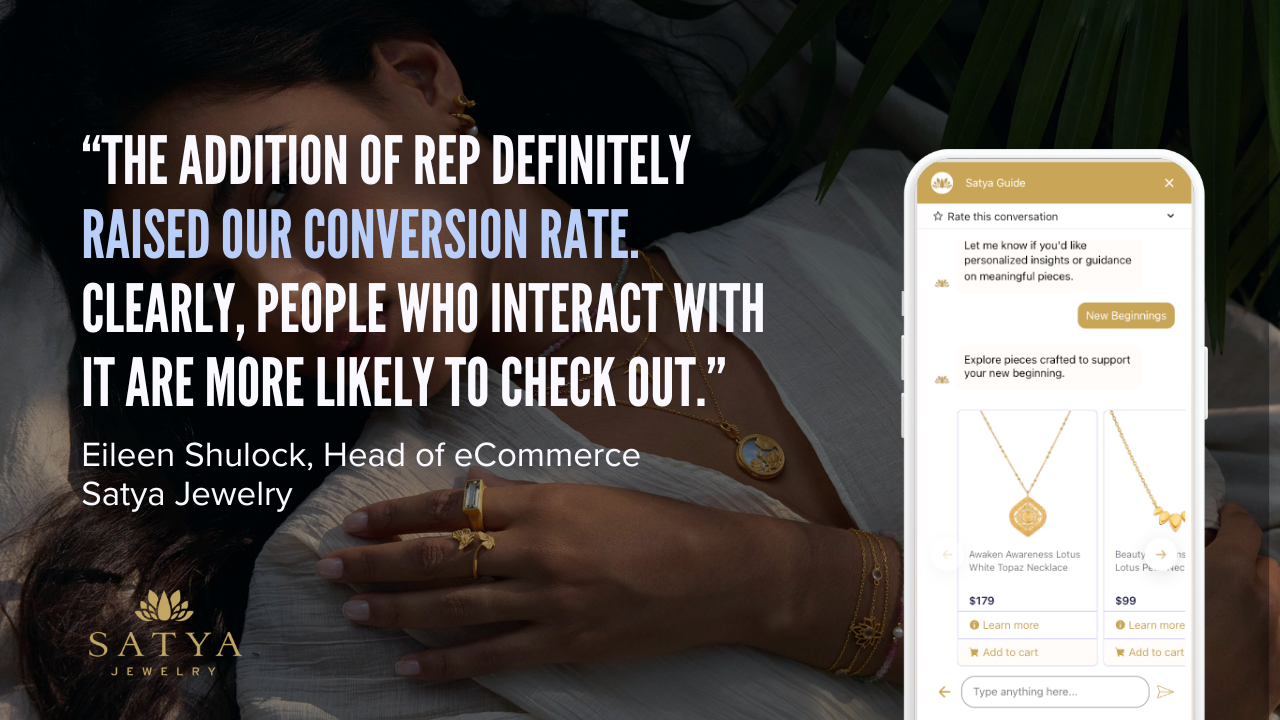
- Satya Jewelry (luxury and jewelry): Satya Jewelry needed to explain the meaning, materials, and symbolism behind its products without overwhelming shoppers with long product descriptions. Its AI concierge guided shoppers through gifting, product meaning, and selection. Chat-assisted orders recorded a 37% higher average order value, the in-chat conversion rate reached nearly 11%, and the agent handled 94% of support inquiries.
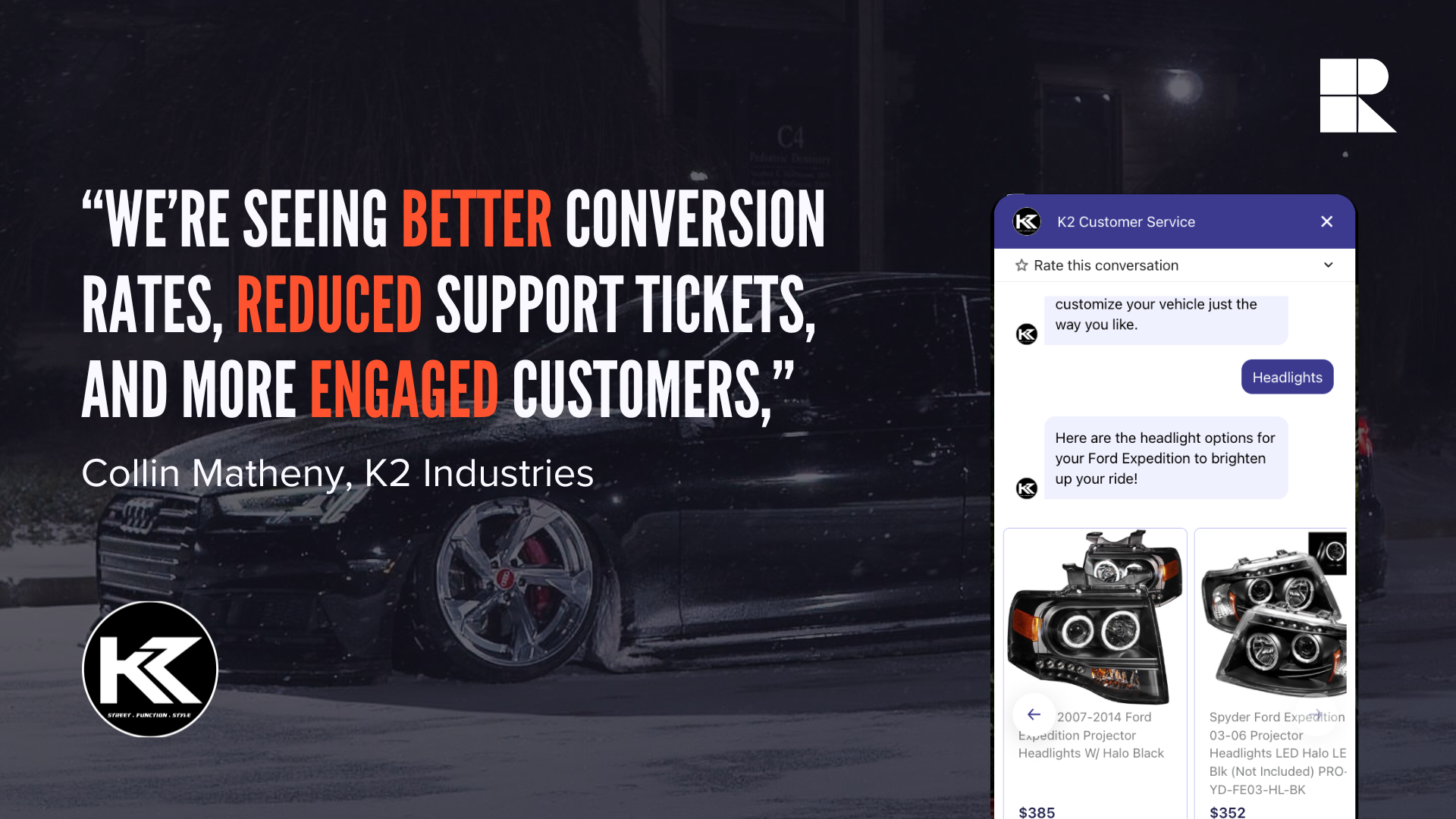
- K2 Industries (automotive): K2 sells automotive products that often require detailed guidance on fitment and compatibility. After introducing an AI agent, the brand reported a tenfold increase in conversion rates for AI-assisted sessions. It also saw an 80% reduction in support tickets and a 15% increase in average order value. The biggest gains came from high-ticket purchases where shoppers needed more information before ordering.
Common AI shopping agent challenges and how to solve them
While AI shopping agents are very powerful, deploying them comes with some challenges. Here are common AI shopping agent challenges and how to solve them:
Inaccurate recommendations
AI agents rely entirely on your product data to understand what items are, how they differ, and who they're right for. Thus, issues with the product data can lead to inaccurate recommendations.
For example, if product data is outdated, inconsistent, or unstructured, AI may misunderstand important product details. As a result, it may recommend products that don't fully match the shopper's needs.
To overcome this challenge, you can take actions such as centralizing product data, and using structured formats that agents can reliably interpret. You can also implement guardrails so that agents validate product information before presenting it.
Recommending items that don’t match real stock or pricing
AI agents often operate faster than traditional e-commerce infrastructure. This can create a frustrating experience where the customer progresses through a conversation only to hit a dead end.
For example, if inventory or pricing update systems lag (even by a few minutes), the agent may recommend items that are already sold out or have changed in price. This damages consumer trust by making a brand seem disconnected from its own operations.
To overcome this challenge, you should connect agents to live inventory and pricing sources (not batch updates). Also, teach the agent to monitor fluctuations during the conversation and automatically find alternatives.
Responses that are noncompliant or sound robotic and off-brand
Another challenge when deploying AI agents is maintaining brand voice and compliance.
Since AI agents often learn from general internet data that has nothing to do with your brand, they may produce responses that sound robotic or off-brand. Without proper guardrails, they may make claims your brand wouldn’t, or answer questions you legally can't.
Brand-level governance helps overcome this challenge. Have a clear, formalized brand voice guide and define messaging rules, tone boundaries, and restricted topics. Also, implement automated monitoring to detect and address any deviations.
Hallucinations and misinformation
Some AI systems “guess” or invent details when information is unclear, leading to incorrect product claims or misleading recommendations. With misinformation, retailers risk losing customer trust and facing more returns and complaints.
To overcome this challenge, you should ground the AI’s responses in verified data, meaning you should restrict its output to known catalogs, policies, and trusted data sources.
Privacy issues
Agentic systems often handle sensitive data (such as purchase history, location, contact information, etc.). This introduces risks, as poorly governed systems can violate privacy regulations (such as GDPR).
To overcome this challenge, ensure any deployment complies with privacy regulations and clearly discloses how data is used. Also, give customers control through consent banners and opt-out options.
Difficulty measuring performance and proving ROI
Traditional e-commerce analytics are built around pages, clicks, and funnels, not agent interactions. As a result, teams struggle with using them to measure the impact of agentic AI. When the value of these systems can't be justified, they risk being deprioritized.
To overcome this challenge, retailers should measure agentic performance using agent metrics (such as conversion rate for agent-assisted sessions and number of agent-resolved journeys).
How to deploy an AI shopping agent for ecommerce
Want to stay ahead of the e-commerce game by deploying AI agents? Here’s how to start an AI shopping agent pilot without complexity, long timelines, or technical bottlenecks:
1. Define the goal of your pilot
A clear goal helps you avoid a scattered, unfocused pilot, so start by defining your goals (the outcome you want to achieve). Goals could be increasing conversion rates, reducing support ticket volume, improving AOV through guided selling, or decreasing cart abandonment.
2. Choose the pages or flows where the agent will operate
When starting with AI, you don’t need to activate the AI everywhere. Instead, activate it on only specific pages at first. For this, choose high-impact areas like product pages, checkout/ cart, FAQ or support pages, and high-traffic landing pages.
3. Prepare your product data and knowledge sources
AI agents rely on accurate information to operate, so after deciding where the AI will operate, the next step is to prepare your data foundations.
Make sure the AI has access to the product catalog, FAQs, policy details, support documentation, shipping and return information, and warranty information.
4. Train the agent on brand voice, tone, and guardrails
The next step is to make sure the AI agent sounds like your brand and doesn't make claims you wouldn’t. To this end, teach the agent how to behave by defining your tone, the phrases to use and those to avoid, escalation rules, and compliance and privacy restrictions.
5. Enable core behaviors that impact revenue
After training the AI agent, the next step is to test its agentic performance. For this, activate the agentic actions you want. This should be:
- Key selling behaviors (like proactive engagement, product recommendations, product finder flow, cross-selling and upselling, suggesting alternatives, and assisting with checkouts).
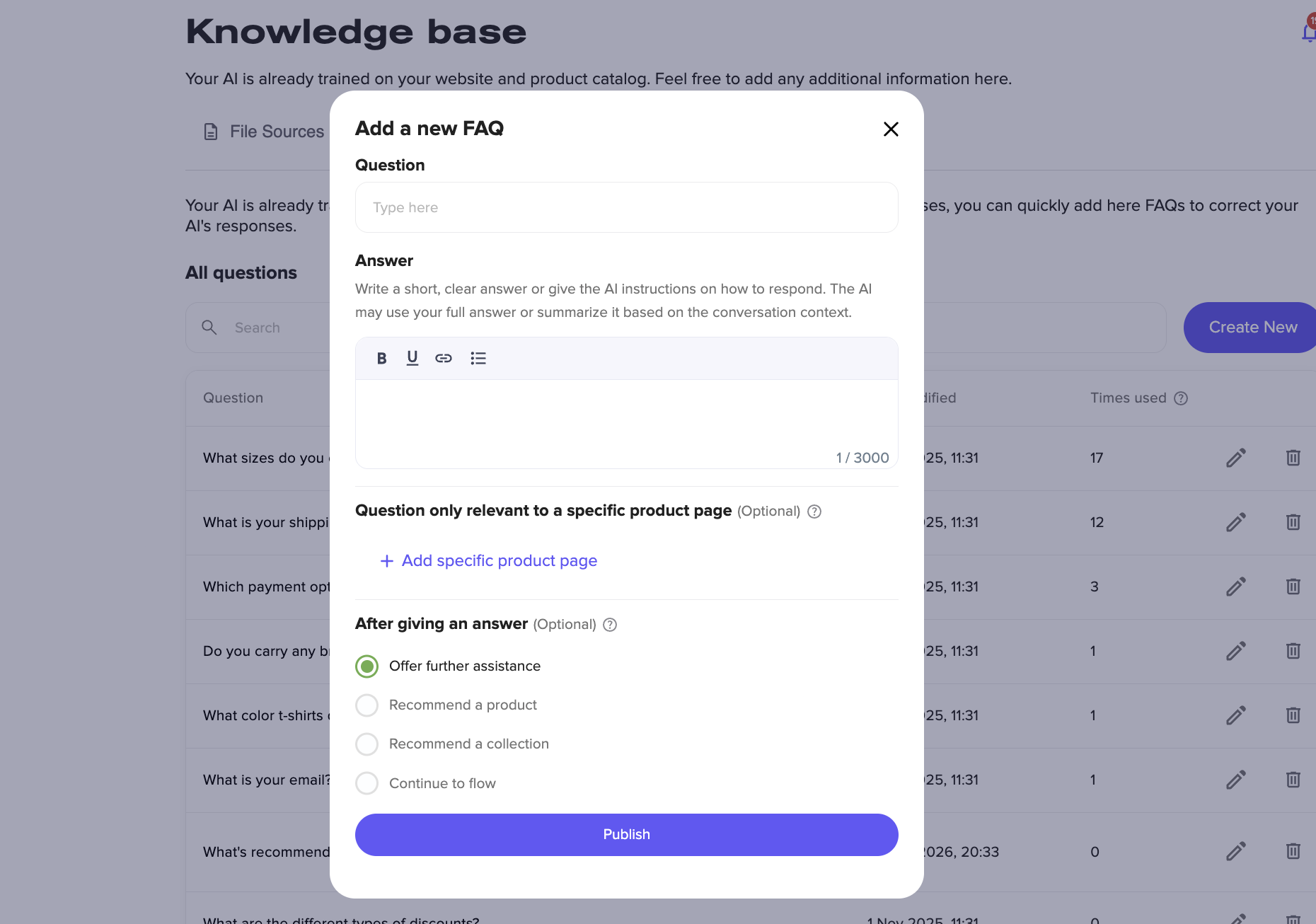
- Key support behaviors (answering FAQs, order tracking, processing returns or cancellations, and escalating complex issues to a human agent).
6. Launch the pilot for a fixed time period
After activating the agent, let it run for 30-45 days. This gives the system enough time to collect meaningful data and measure improvements in conversion rates, average order value (AOV), support ticket reduction, and other metrics.
7. Review the insights and optimize
After the pilot window, analyze the insights to understand where your customer journey succeeds and where it breaks. For example, you can see where the agent drove conversions, where shoppers dropped off, which upsells succeeded, and what product or content gaps emerged.
This helps you understand what to improve (product pages to strengthen, knowledge gaps to fill, etc.).
8. Scale from pilot to full deployment
Lastly, if the pilot proves ROI, consider rolling out the agent to additional areas (such as the homepage, PDFs, the helpdesk, and social channels).
How Rep AI elevates the modern ecommerce experience
Becoming an e-commerce performance powerhouse requires more than having an AI agent. It’s about how powerful, accurate, and commercially effective the agent is. This is where Rep AI stands out.
It’s an agentic commerce-trained AI system built to drive revenue growth and reduce support tickets. Here’s how Rep AI enhances the experience in ways most AI tools can’t match:
Converts conversations into revenue
Most on-site chat experiences wait for the shopper to ask something. Rep AI doesn't. Its behavioral algorithm detects when a shopper is about to leave or disengage. Then, it starts a timely, on-brand conversation instead of a generic pop-up to improve the chances of a purchase.
From there, the experience is built to sell:
- Visual product carousels let shoppers browse and compare options without leaving the conversation.
- One-click add to cart moves shoppers from recommendation to purchase in a single step.
- Direct checkout from within the chat removes the handoff to a separate page that breaks buying momentum.
- Virtual Try-On lets apparel and fashion shoppers see products on themselves inside the chat, resolving the fit uncertainty that drives most returns.
- Upsell prompts surface after a product is added to the cart, when purchase intent is at its highest.
- Abandoned cart recovery engages shoppers who have left before completing their order.
Rep AI is also context-aware. It uses the full conversation to deliver product recommendations that match the shopper's actual needs.
Dramatically reduces support volume
Rep AI resolves 95-99% of common support inquiries, including product questions, shipping and policy information, order tracking, order cancellations, and returns.
This coverage extends across website chat, email, WhatsApp, Instagram, and Facebook Messenger, so shoppers get the same quality of response regardless of which channel they use.
If a human agent is ever needed, Rep AI includes live conversation drop-in, letting teams jump into chats seamlessly while the AI continues handling everything else.
With this, teams can focus on high-value customer interactions rather than repetitive questions. The result is fewer tickets, faster resolutions, and higher customer satisfaction.
Unlocks high-value shopper intelligence you can actually use
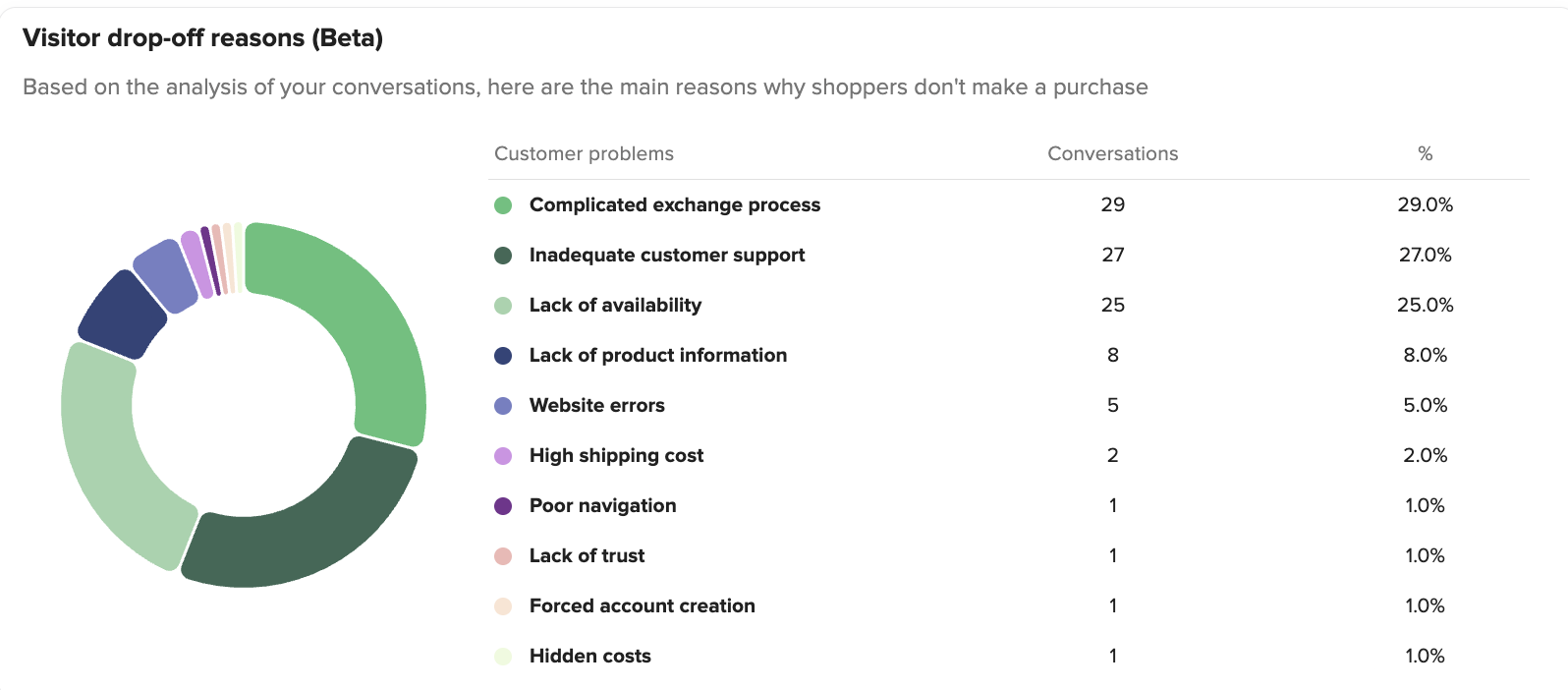
Rep AI provides a wealth of insights from real shopper behavior, which can help you optimize your sales and support strategies in real time.
Every conversation is analyzed to identify why shoppers leave without buying and which questions remain unanswered. It also highlights confusing pages and friction points that prevent shoppers from completing their purchases. This includes:
- Visitor drop-off reason analysis.
- Shopper emotion analysis, showing the sentiment behind each conversation.
- Missing website information detection, flagging content gaps that are costing conversions.
- Unanswered question tracking, identifying where the agent and the product pages fall short.
- AI-generated CX recommendations that translate conversation data into specific actions for the team.
Marketing and retention built into every conversation
Rep AI doesn't store conversation data within its platform. It connects directly to the tools marketing teams already use.
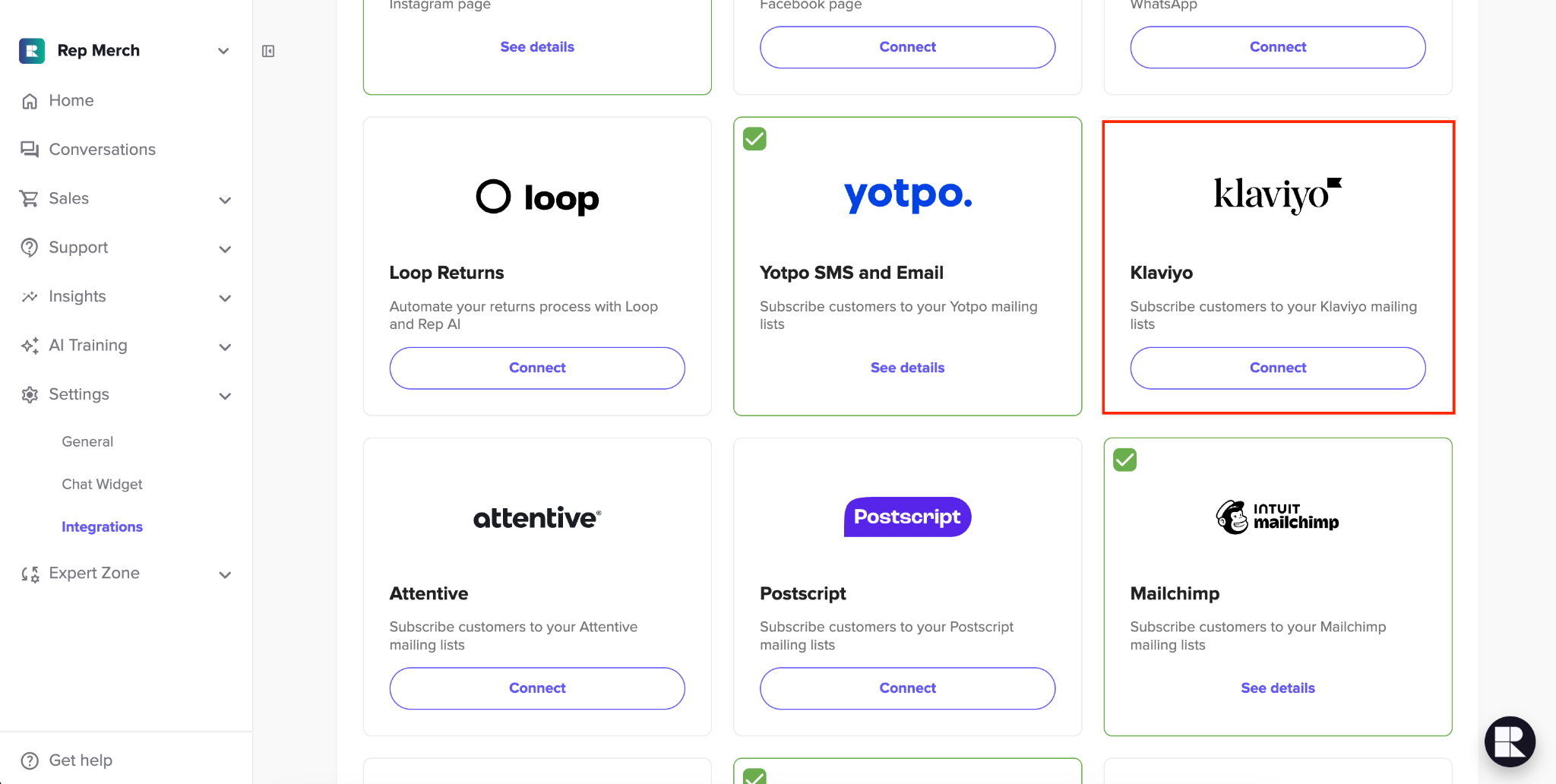
Klaviyo Conversation Sync pushes every chat transcript into the customer's Klaviyo profile in real time, with a direct link to the full conversation.
Klaviyo Topic Sync goes further by converting conversation topics into custom segmentation properties, so follow-up campaigns are built on what shoppers actually discussed.
Built for agentic commerce
One of the biggest challenges with agentic AI is ensuring the system stays up to date with real-time inventory, pricing, dynamic product availability, and brand voice.
Rep AI solves this with 1-click catalog adoption and a powerful data engine that keeps the AI agent grounded in accurate information.
This means that with Rep AI, there are no hallucinations, inaccurate recommendations, or off-brand responses. Shoppers (and their agents) receive recommendations that actually match what you have in stock, at the right price, and in your authentic brand voice.
Fast to launch, built to scale
Rep AI goes live in six clicks. The agent learns a product catalog in just three to ten minutes and adopts the merchant's brand voice automatically from day one. Its tone can then be refined, corrected, and A/B tested directly in Sales Skills.
For teams managing multiple users, a full audit log records every configuration change with a before-and-after view. Two-factor authentication secures Console access. Enterprise-grade security means brands can deploy AI without putting customer data at risk.
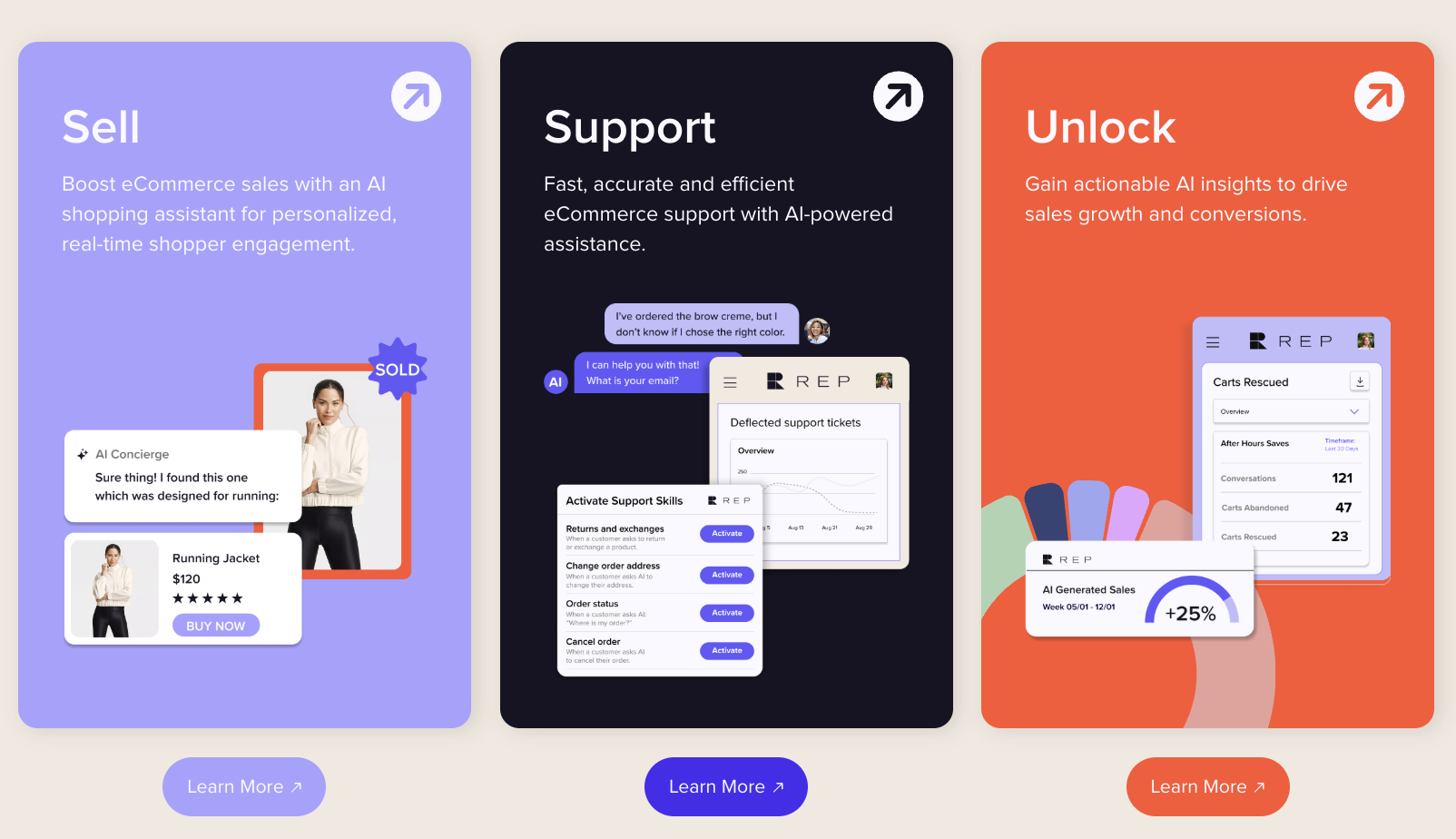
How Rep AI drives revenue, improves support, and enhances shopper intelligence
Also read: Top AI Agents Driving E-Commerce ROI in 2026
Takeaway: Be prepared for the future of e-commerce with Rep AI
The rise of AI shopping agents demands a fundamental rethinking of digital commerce strategy. Brands now need to prepare for AI-driven shopping. Those that do will capture shoppers (and AI agents) of the near future, while those that don’t will be invisible to them.
One way for brands to prepare for AI-driven shopping is to create their own agentic experiences. Brands with their own AI agents will be the ones these shopping agents can understand and recommend.
This is where Rep AI comes in. It gives e-commerce teams everything they need to launch a powerful agentic experience. The platform can sell, support, and learn at the level AI shopping agents expect. It also comes with a fast, plug-and-play setup and is scalable.
Ready for the agent-to-agent interaction that drives revenue growth and reduces support tickets? Try Rep AI for free today!
More from REP AI
Benefits of Agentic Commerce: How AI Can Help Brands Sell and Serve Better
When a shopper hesitates, a useful answer can turn a moment of uncertainty into a chance to help, rather than a sale lost or a question left unanswered. The benefits of agentic commerce come from connecting shopper intent with timely action, then learning from those interactions to improve sales gui...

AI Agent for Magento 2: How to Evaluate the Right Solution in 2026
The wrong AI agent for Magento 2 can create more work than it removes: shoppers get unreliable answers, and sales conversations end before they lead anywhere. Start with a practical question: can the agent access the store information it needs to respond accurately?Magento compatibility isn’t a box...
Want to see what your store would do with Rep?
Run your real Shopify catalog through the simulator before you commit to anything. No sales call required.

