


7 Best Agentic Commerce Solutions: Platforms, Features & Selection Guide
Quick Summary
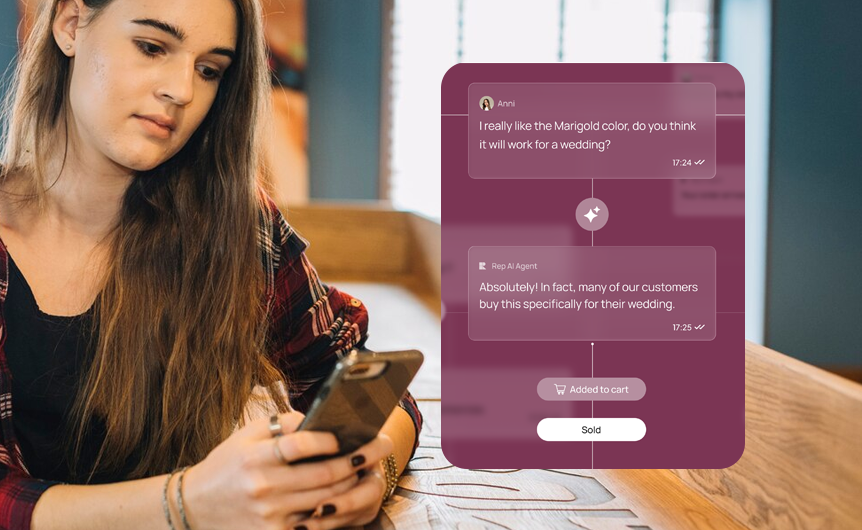
Agentic commerce platforms fall into three categories: unified platforms, use-case agents, and payment solutions. But unified platforms deliver the highest ROI by combining sales, support, and shopper intelligence. Compare 7 solutions across features, pricing, integrations, and use-case fit, with a framework for choosing based on revenue gap, store maturity, and attribution model.
Why Agentic Commerce Matters in 2026
Shoppers now expect the same proactive, AI-driven experience on brand websites that they get on discovery platforms like ChatGPT and Perplexity. Yet most e-commerce brands still rely on static product pages, rule-based chatbots, and disconnected support systems. The gap between what shoppers expect and what brands deliver is widening with each quarter.
Agentic commerce solutions close that gap. They replace fragmented point solutions with AI that acts autonomously without human intervention. But what’s tough is figuring out the right solution.
Some platforms prime their focus just on support ticket deflection, while others optimize checkout with AI-powered upsells. A very small category of unified platforms combines sales, support, and intelligence in one system. This guide compares 7 agentic commerce solutions across three categories so you can identify the right platform for your store.
Why Listen to Us
At Rep AI, we built the first Agentic Commerce OS for Shopify Plus brands, unifying AI-powered sales, support, and shopper intelligence in one platform.
Today, we power 550+ e-commerce brands and have analyzed over 160 million shopping sessions. This gives us unique insight into how shoppers behave, when they disengage, and which AI strategies actually increase conversion and revenue.
As we see this data at scale, we know what works in agentic commerce, and what doesn’t. The insights in this guide are based on real performance data from brands actively using AI in their e-commerce operations. This data shows how AI can improve conversion rates, reduce support workload, and provide deeper insight into customer behavior.
What Is an Agentic Commerce Platform?
An agentic commerce platform is a unified AI system that autonomously handles sales, support, and customer intelligence across your e-commerce store. Unlike traditional chatbots that follow scripted flows, agentic platforms observe shopper behavior in real time, make independent decisions, and take action within the conversation.
These platforms connect to your product catalog, customer data, and marketing stack. They detect intent signals like hesitation, exit behavior, and comparison shopping. Then they intervene with personalized conversations, product recommendations, cart actions, and checkout assistance, all without human involvement.
An agentic platform deals with context, adapts its approach, and takes end-to-end actions to drive a specific outcome: conversion, resolution, or retention.
Types of Agentic Commerce Solutions
Agentic commerce solutions fall into three categories based on their scope and primary function:
Unified Platforms
Unified platforms combine AI-powered sales, automated support, and shopper intelligence in a single system. They cover the full shopper journey, right from the first-visit engagement through post-purchase support, and bring out actionable data about customer behavior across all touchpoints.
These platforms replace multiple point solutions and deliver the highest ROI for mid-market and enterprise e-commerce brands. This guide focuses primarily on unified platforms because they represent the most complete approach to agentic commerce.
Use-Case Specific Agents
These solutions focus on a single function, most commonly conversational product discovery or lightweight chat-based engagement. They integrate into existing stacks rather than replacing them, and also serve as entry points for smaller stores testing AI-assisted commerce.
Payment and Checkout Solutions
These platforms optimize the cart, checkout, and post-purchase experience with AI-powered upsells, dynamic bundles, and personalized offers. They increase average order value at high-intent conversion moments and pair well with unified platforms for full-funnel coverage.
Best Agentic Commerce Platforms Compared
Here’s a side-by-side comparison of the 7 platforms covered in this guide:
1. Rep AI
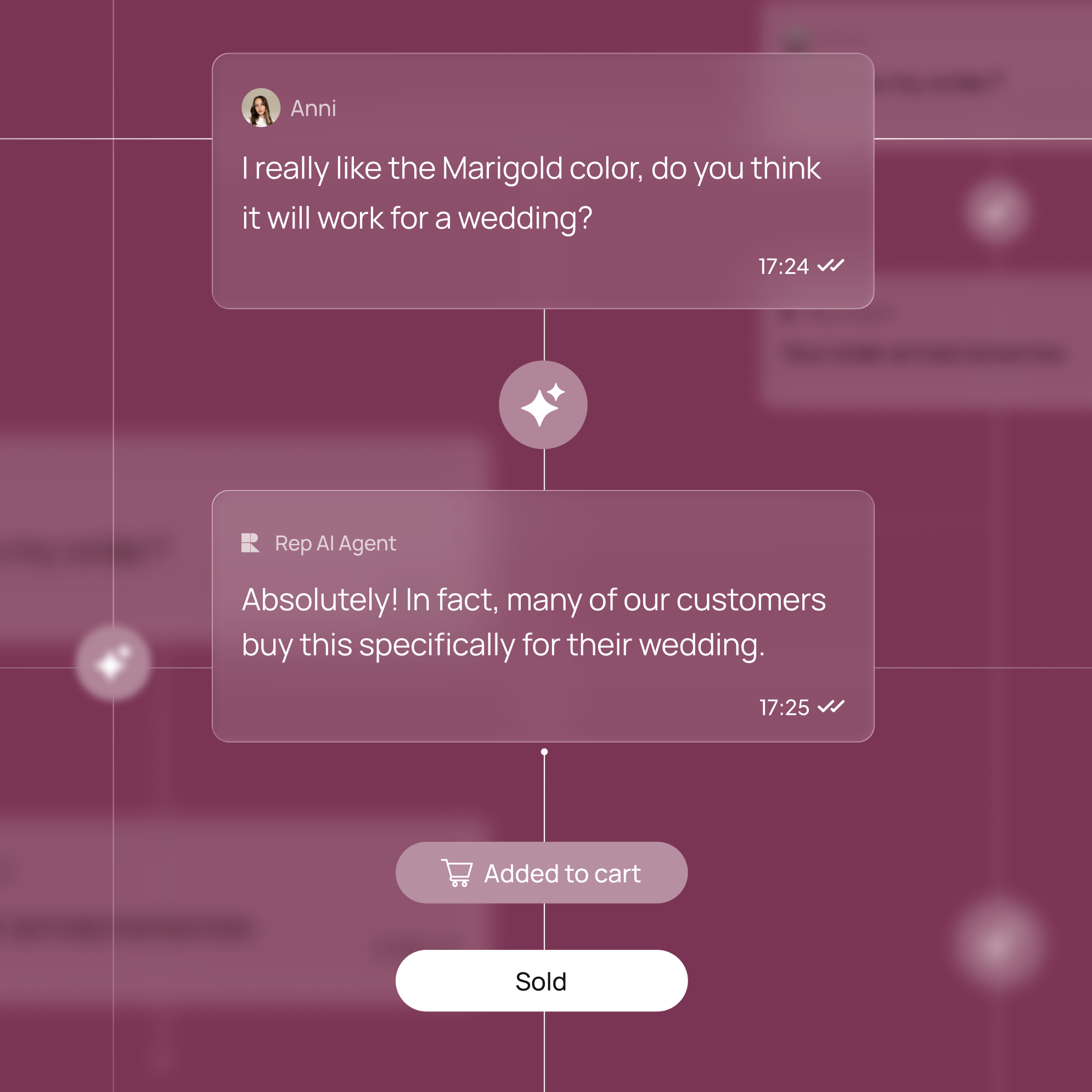
Rep AI is the Agentic Commerce Operating System built for Shopify Plus brands that want to increase conversion, boost AOV, and reduce support costs from a single platform.
Rep AI is sales-first. Its proprietary behavioral algorithm, trained on over 160 million shopper sessions, detects hesitation, exit intent, and buying friction with 92% accuracy. When a shopper is about to leave, Rep AI starts a conversation to answer questions, recommend products, and guide the shopper to checkout.
It’s designed to convert. Shoppers browse visual product carousels, filter options, add items to cart with one click, and proceed to checkout directly inside the chat. The AI also handles post-add-to-cart upselling, surfacing complementary products at the highest-intent moment in the session.
Beyond sales, Rep AI automates up to 97% of support inquiries and reduces ticket volume by 50–70% within the first 30 days. The platform covers websites, email, social DMs, and WhatsApp from a single AI brain with multi-tiered instruction control.
What truly separates Rep AI is its shopper intelligence layer. The platform surfaces drop-off reasons, missing website information, AI-powered CX recommendations, and conversation topic analytics through its Deep Research feature.
Brands using Rep AI see a 10–30% lift in conversion rate within the first 30 days. The company backs this with a 5X ROI guarantee and a 30-day free trial.
Key Features
- Behavioral AI Sales Agent: Detects drop-off with 92% accuracy and engages shoppers showing exit intent before they abandon.
- One-Click Add to Cart: Shoppers add products directly in chat without browser redirects.
- Visual Product Carousels: Browse and compare products inside chat with images, prices, and variant options.
- Virtual Try-On: Customers upload a selfie and see themselves wearing products within the chat interface.
- Shopper Intelligence & Deep Research: Surfaces drop-off reasons, AI-discovered conversation topics, and CX recommendations.
- Klaviyo Conversation & Topic Sync: Pushes conversation data and topics into Klaviyo profiles for targeted segmentation.
- Automated Support Resolution: Handles orders, returns, cancellations, WISMO, and FAQs across websites, emails, social media, and WhatsApp.
Integrations
Klaviyo, Postscript, Omnisend, Attentive, Gorgias, Zendesk, Freshdesk, Richpanel, Kustomer, Yotpo, Loop, Tapcart, Meta, WhatsApp, Slack, and Shopify.
Pros
- Sales-first AI that actively drives conversion by 10–30% and increases AOV.
- Full agentic commerce platform replacing multiple point solutions.
- Proactive behavioral triggers that identify disengaged shoppers in real time.
- Shopper intelligence capabilities, including emotion analysis and deep research.
- Longest free trial in the category (30 days) with a 60-day money-back guarantee.
- One brain, multi-channel: website, email, social DMs, and WhatsApp from a single AI.
- Conservative 3-hour same-session attribution window.
Cons
- Language support currently covers English and Spanish, with additional languages in development.
2. Certainly
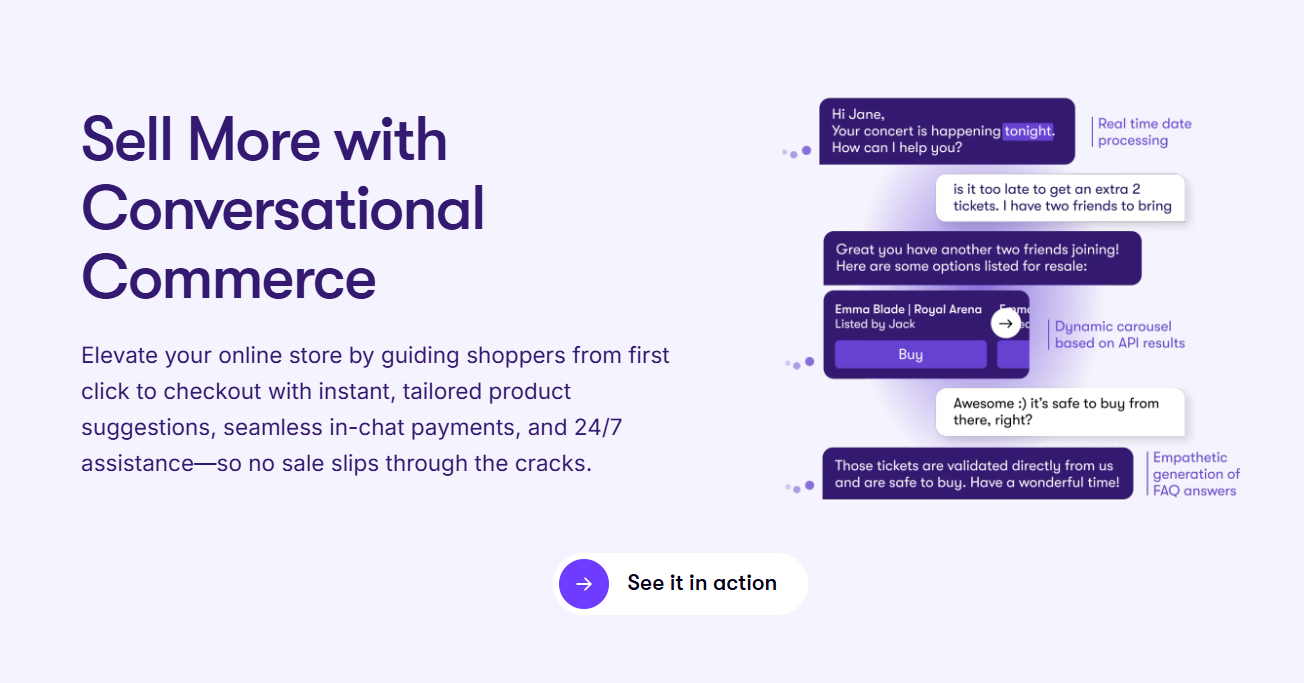
Certainly is a Denmark-headquartered AI agent platform that builds digital twins of your best sales and support agents for e-commerce brands. The platform serves 500+ clients across 20+ countries, combining conversational AI for product discovery, automated customer support, and marketing personalization.
Certainly recently launched its Agentic AI capabilities alongside its established no-code builder. The platform powers measurable results for brands like Feastables, Carlsberg, Booking.com, and Tiger of Sweden. Its proprietary AI detects any language and offers ready-to-use content in 14+ languages.
Key Features
- AI Agent Builder: No-code platform for building conversational AI agents across sales, support, and marketing use cases.
- Product Discovery & Recommendations: AI-powered guided selling that drives shoppers from browsing to checkout with personalized suggestions.
- Multichannel Deployment: Deploys across chat, email, social media, and QR codes for consistent customer experiences.
Integrations
Shopify, Zendesk, Klaviyo, Google Analytics, OpenAI, and 200+ integrations.
Pros
- Strong European roots with proven multilingual capabilities across 14+ languages.
- 500+ clients globally, including recognizable brands like Feastables, Carlsberg, and Booking.com.
- Dedicated build-and-deploy model where their team builds, implements, and optimizes your AI agent with you.
Cons
- The core platform relies on flow-based logic.
- Heavy configuration and a dedicated onboarding process rather than a self-serve plug-and-play deployment.
- No proactive behavioral AI that detects exit intent or shopper hesitation signals in real time.
3. Tidio
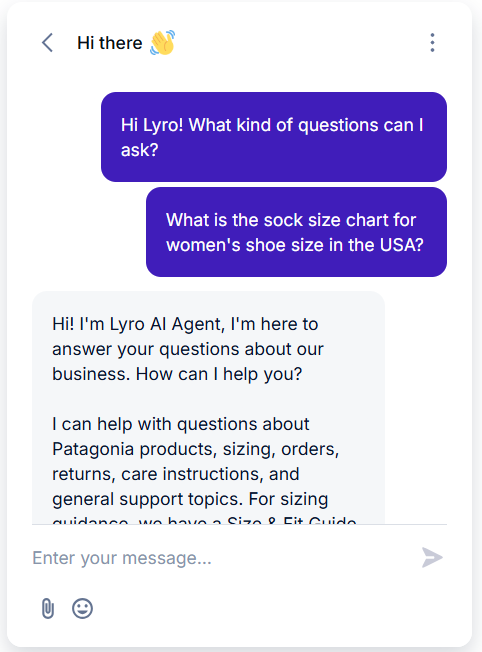
Tidio is an all-in-one customer communication platform combining live chat, chatbot automation (Flows), and an AI agent called Lyro. The platform targets small-to-medium e-commerce brands looking for an affordable entry point into AI-assisted customer engagement.
Lyro handles common support questions using your existing help content and achieves up to a 67% resolution rate, backed by a money-back guarantee if your rate doesn't reach at least 50%. The free tier and low-cost plans make it viable for smaller merchants testing AI-assisted communication for the first time.
Key Features
- Lyro AI Agent: Conversational AI that learns from help center content, resolves common inquiries, and supports multilingual conversations.
- Flows Automation: Rule-based chatbot builder for lead generation, cart recovery, and structured customer journeys.
- Help Desk & Multi-Channel Inbox: Manages conversations from email, Messenger, Instagram, WhatsApp, and live chat in one dashboard.
Integrations
Shopify, WordPress, WooCommerce, Wix, Squarespace, HubSpot, Zendesk, Mailchimp, Zapier, Messenger, Instagram, WhatsApp, and 120+ integrations.
Pros
- Generous free plan for testing AI-assisted support.
- Accessible pricing for SMB merchants with modular pricing options.
- Multi-channel inbox consolidates conversations across platforms.
Cons
- Essential automation and analytics features require paid upgrades.
- No proactive behavioral engagement or sales-first capabilities.
- Can affect website loading speeds according to user reports.
4. Zipchat
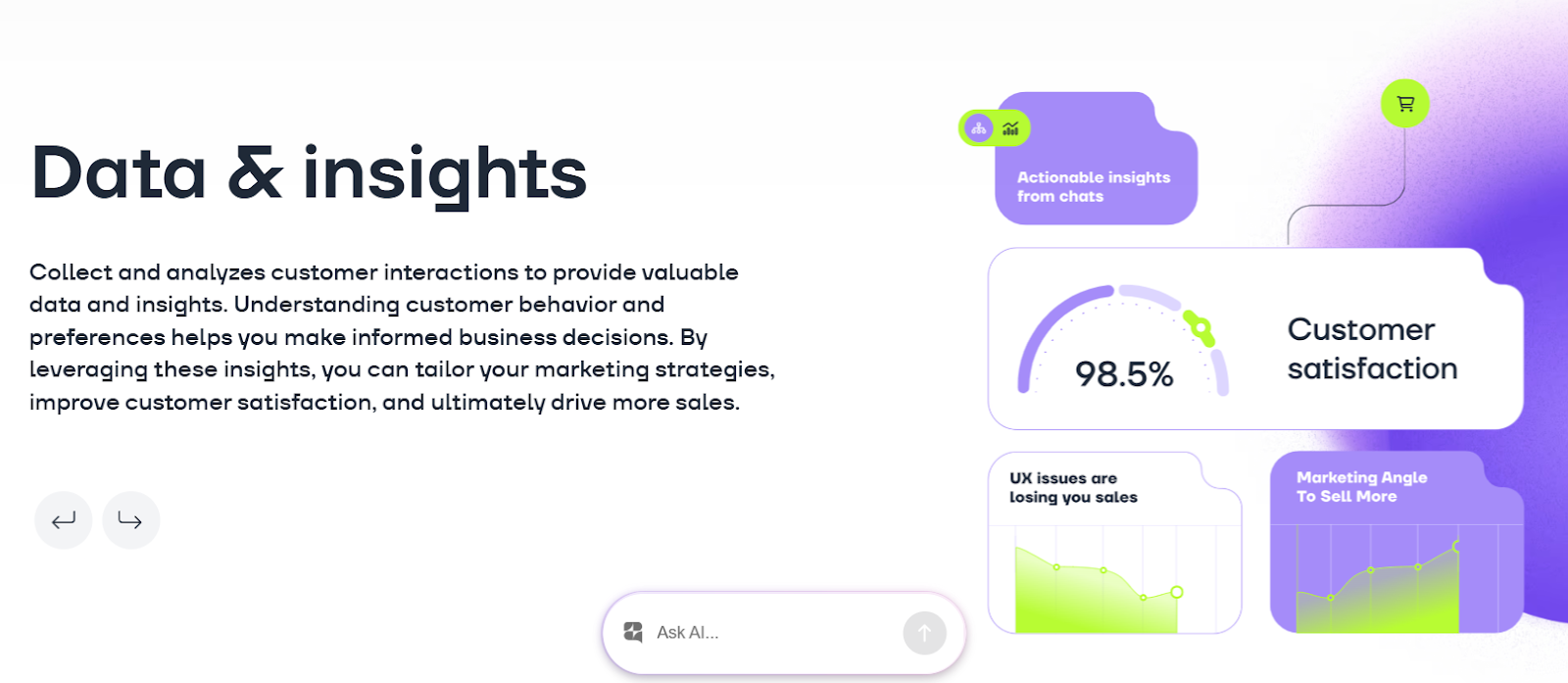
Zipchat is a sales-focused AI agent platform for e-commerce that positions itself around proactive engagement and conversion optimization. The platform deploys a single AI agent across website chat, WhatsApp, Instagram DMs, Facebook Messenger, and email from one interface, with all channels sharing the same AI brain.
Zipchat reports an average 16.3% chat conversion rate. The platform detects when shoppers linger on a product page, hesitate at checkout, or show exit intent, and triggers personalized messages to re-engage them.
Key Features
- Proactive Behavioral Messaging: Detects exit intent, page lingering, and checkout hesitation to trigger personalized re-engagement conversations.
- AI WhatsApp Marketing: Automated abandoned cart recovery, post-purchase flows, and proactive campaigns via WhatsApp.
- Sales Tracking Dashboard: Monitors chat-to-sale rates, order value, and revenue attribution, with basic conversation analytics on visitor concerns and common questions.
Integrations
Shopify (native), WooCommerce, Magento, Wix, Webflow, Salesforce Commerce Cloud, WhatsApp, Instagram, Facebook Messenger, and email.
Pros
- Sales-focused positioning with strong conversion tracking and revenue attribution.
- 95+ language support with automatic detection for global stores.
- Quick setup in under 20 minutes with minimal technical requirements.
Cons
- Overage pricing ($49 per additional 250 replies) can escalate at higher volumes.
- Lacks shopper intelligence, drop-off analytics, or conversation topic insights.
- Product carousels display items with links rather than enabling one-click add-to-cart or full checkout completion directly within the chat conversation.
5. Siena AI
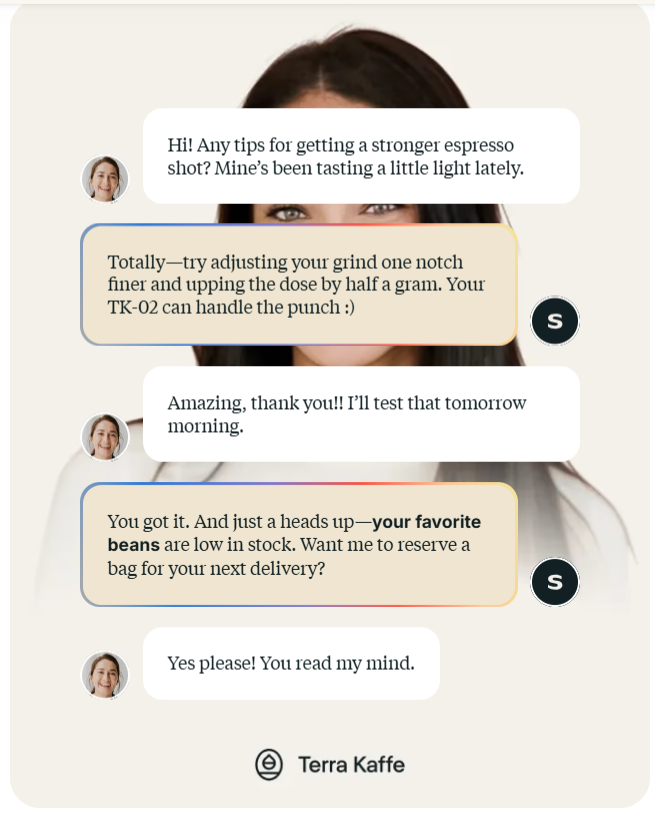
Siena AI is an empathic AI CX agent platform designed for commerce. The platform offers three core AI agents. Customer Service Agent for automated support, Shopping Agent for turning conversations into purchases, and Reviews Agent for putting review management on autopilot.
Siena handles backend actions like updating addresses, generating return labels, issuing refunds, and sending replacements within a single conversational flow. The platform claims up to 80% automation of customer interactions, with 98% faster response times and a +94.7% average CSAT.
Key Features
- Shopping Agent: Generative product recommendations that help customers find products, complete routines, and discover new items with in-the-moment suggestions
- Customer Service Agent: Automates post-purchase workflows, including WISMO, returns, refunds, address updates, and subscription management.
- Memory: Personalized experiences that remember customer history and preferences across interactions.
Integrations
Shopify, Gorgias, Zendesk, and a broad commerce and helpdesk ecosystem with custom app support.
Pros
- Three dedicated AI agents cover support, sales, and reviews in one platform.
- Strong client roster with enterprise-grade brands like HexClad and Simple Modern.
- AI Personas enable channel-specific brand voice customization across all touchpoints.
Cons
- Shopping Agent capabilities are less battle-tested than the platform's established support automation.
- Dependent on third-party helpdesk systems for full functionality.
- Built as a customer support automation platform rather than a sales-first AI solution.
6. Zowie
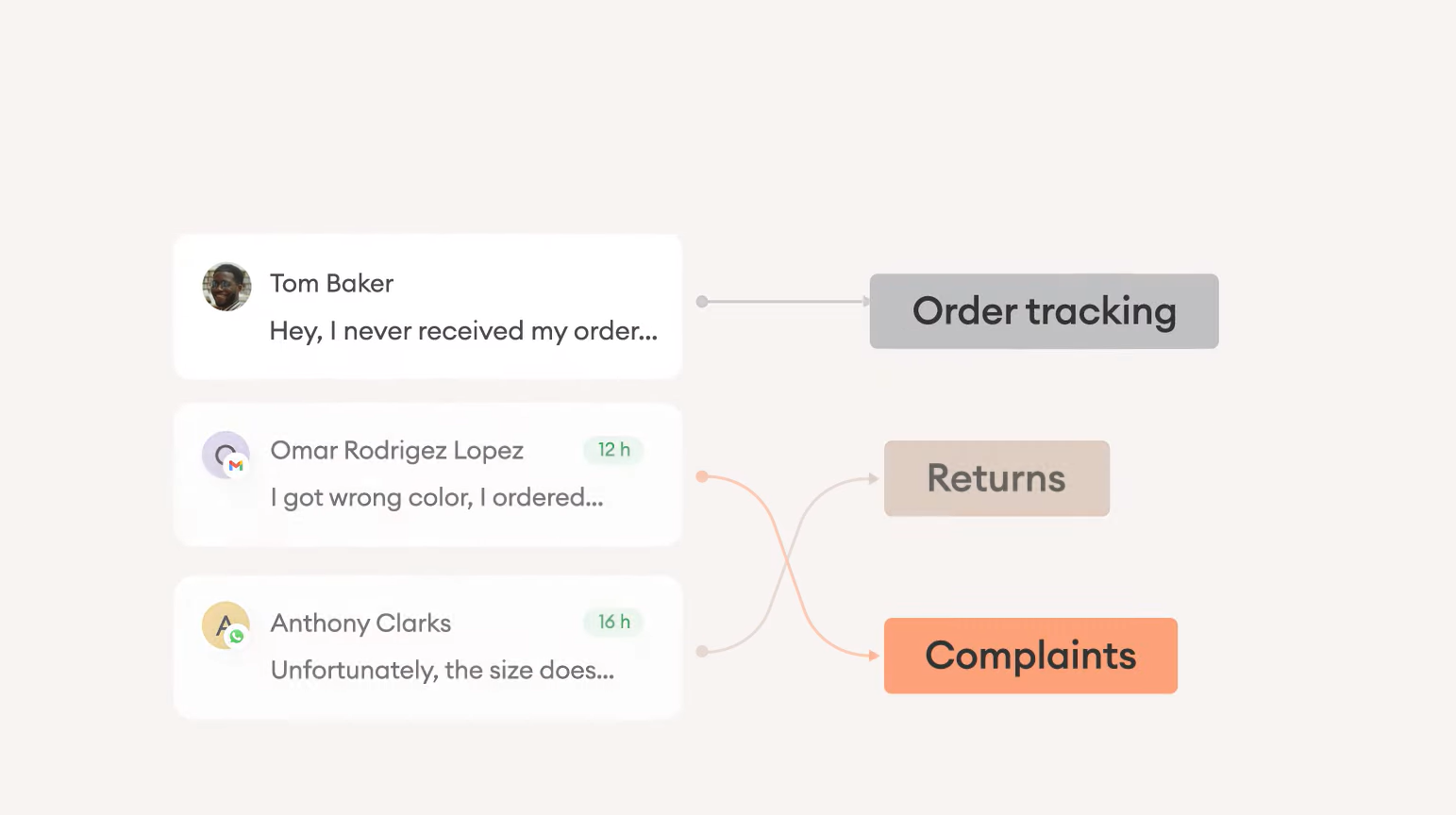
Zowie is a customer AI agent platform built for enterprises that need full-process automation across support and sales. The platform is powered by three proprietary AI layers. A “Reasoning Engine” that understands context, and a Decision Engine that executes backend actions like refunds and order tracking with 100% accuracy. It also has Zowie X2, a proprietary layer that controls nondeterministic AI outputs to eliminate hallucinations.
The platform now extends beyond support with its newly launched “Sales Skills” capability. It’s a conversational shopping experience that guides browsers toward purchase decisions and moves them through to cart and checkout.
Key Features
- Sales Skills: Conversational shopping experience that turns browsing into guided purchase decisions with product recommendations and checkout completion.
- Multi-Agent Orchestrator: Orchestrates hundreds of specialized AI agents from a single platform, with support for connecting external agents alongside Zowie's own.
- Proactive Chats: Real-time tracking that delivers personalized messages to customers during the shopping journey based on behavioral signals.
Integrations
Zendesk, Salesforce, Shopify, Stripe, Intercom, Gorgias, Klaviyo, and Zapier, plus developer APIs for custom workflows. Infrastructure partnerships with Google Cloud and AWS.
Pros
- Enterprise-grade architecture with deep backend integration.
- Voice support alongside chat and email channels.
- Strong multilingual capabilities for global operations.
Cons
- The real-world sales track record is less established than the platform's mature support automation.
- Lacks advanced BI integrations and cross-brand analytics capabilities.
- Enterprise-grade platform with pricing and contract structures designed for mid-market to large organizations, not small Shopify stores.
7. Alhena AI
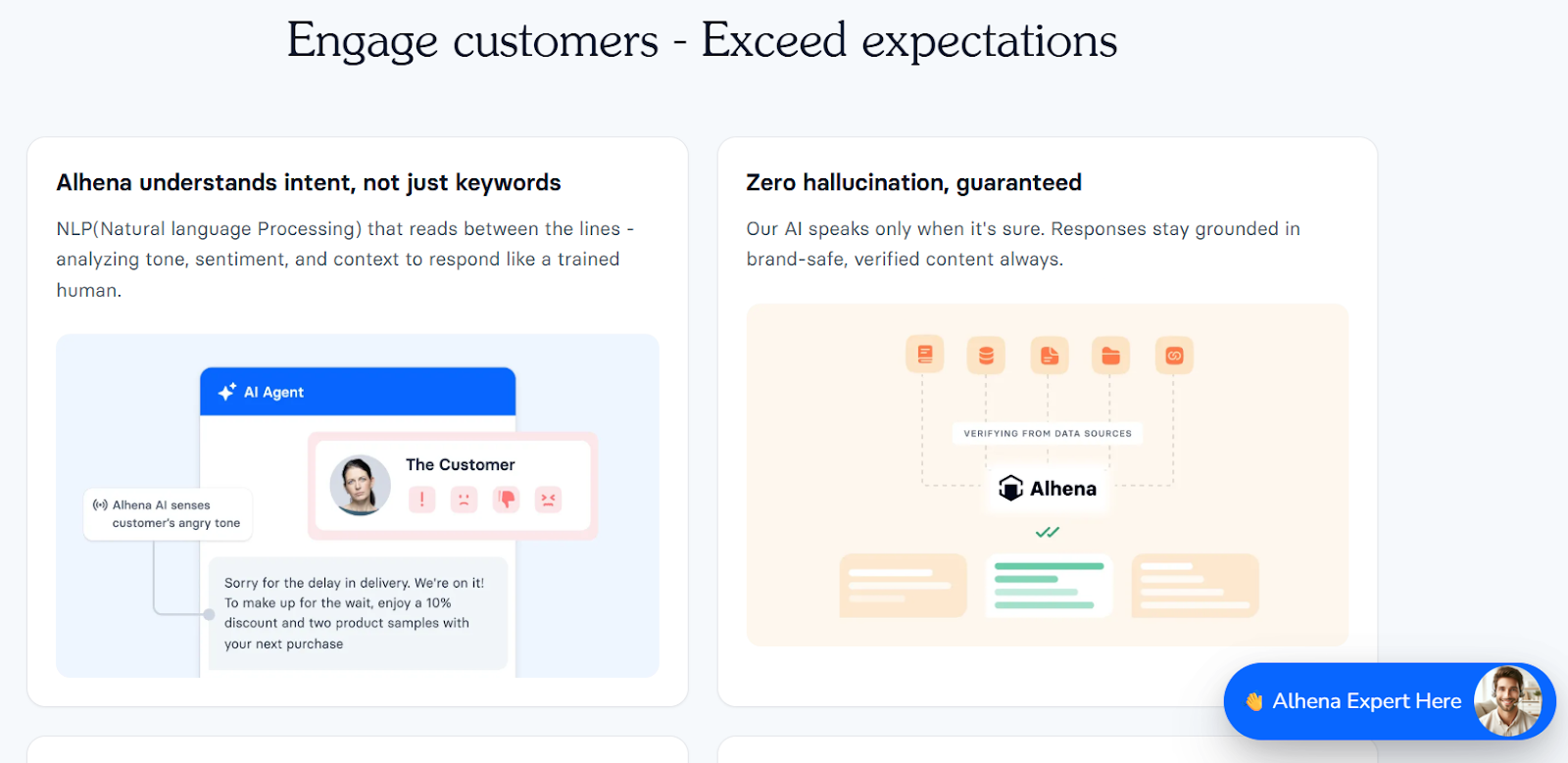
Alhena AI is a hallucination-free AI platform that positions itself at the intersection of shopping and support, with an emphasis on revenue attribution. The platform guarantees zero-hallucination responses grounded in verified product data, brand knowledge bases, and store policies.
Alhena now offers six dedicated AI products. The platform also deploys across web chat, email, social DMs, WhatsApp, and voice, supporting 90+ languages. Beyond that, Alhena claims deployment in under 48 hours with no development work required.
Key Features
- AI Shopping Assistant: Conversational search and guided product discovery with AI-powered nudges that trigger based on real-time user behavior.
- AI Social Commerce: Dedicated product that converts Instagram/Meta DMs and WhatsApp conversations into sales opportunities.
- Revenue and Performance Analytics: Track AI-attributed revenue, average cart value, daily GMV, and add-to-cart conversions with conversation-level filters by topic, date, and status.
Integrations
Shopify, WooCommerce, Salesforce Commerce Cloud, Intercom, Zendesk, Freshdesk, Gladly, Gorgias, HubSpot, Salesforce Service Cloud, Zoho SalesIQ, Zoho Desk.
Pros
- Zero-hallucination guarantee with SOC 2, GDPR, PCI-DSS, ISO 27001, and HIPAA compliance.
- Six dedicated AI products spanning shopping, support, social commerce, reviews, voice, and agent assist under one platform.
- Broad platform compatibility beyond Shopify.
Cons
- Newer entrant with a smaller review base compared to established competitors.
- Revenue analytics and AI nudges are recent additions, making their long-term impact data less mature than platforms with years of conversion tracking.
- BigCommerce and Magento are not currently listed among supported e-commerce integrations.
Honorable Mentions: Use-Case Specific Agents
These solutions focus on a single function rather than unifying sales, support, and intelligence. They integrate into existing stacks and serve well for brands with niche requirements.
Gorgias - For Helpdesk
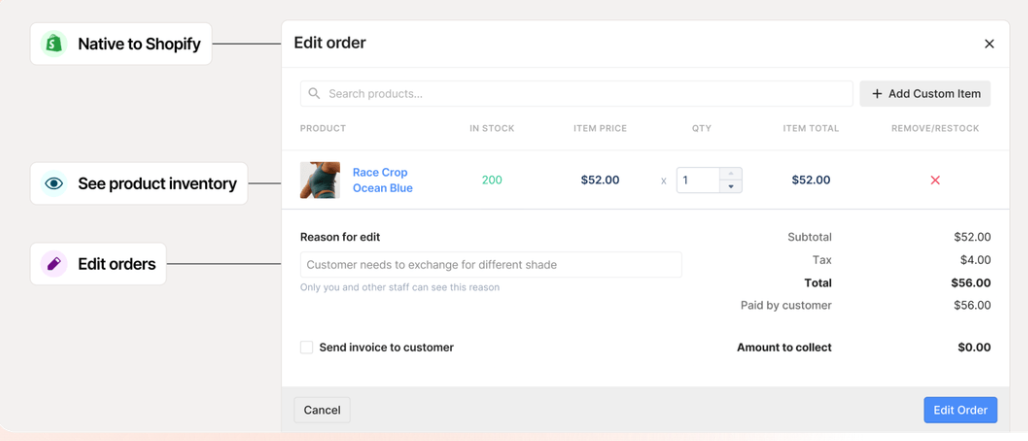
Gorgias is the dominant helpdesk-first platform for Shopify merchants. Its AI Agent resolves up to 60% of support inquiries autonomously. The platform also includes a dedicated Shopping Assistant that claims 2.5x conversion increases through AI-powered product recommendations and proactive chat campaigns.
While Gorgias has evolved well beyond a traditional helpdesk, its AI Agent interactions are billed on top of helpdesk ticket costs. Besides, its sales capabilities remain secondary to its core support and ticket management strengths.
Rebuy - For Cart Optimization
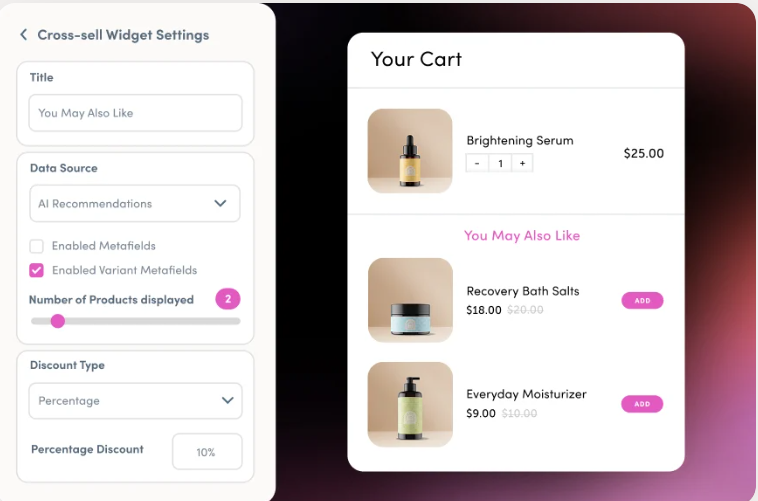
Rebuy is a Shopify-native personalization platform focused on cart, checkout, and post-purchase optimization. It has a customizable, AI-powered slide-out cart with dynamic upsells. Rebuy Monetize also unlocks incremental post-purchase revenue from third-party brand offers.
While Rebuy is the gold standard for AI-driven merchandising and cart optimization, there is no chat interface, support automation, and shopper dialogue.
Stripe Agentic Commerce Suite - For Checkout Payments
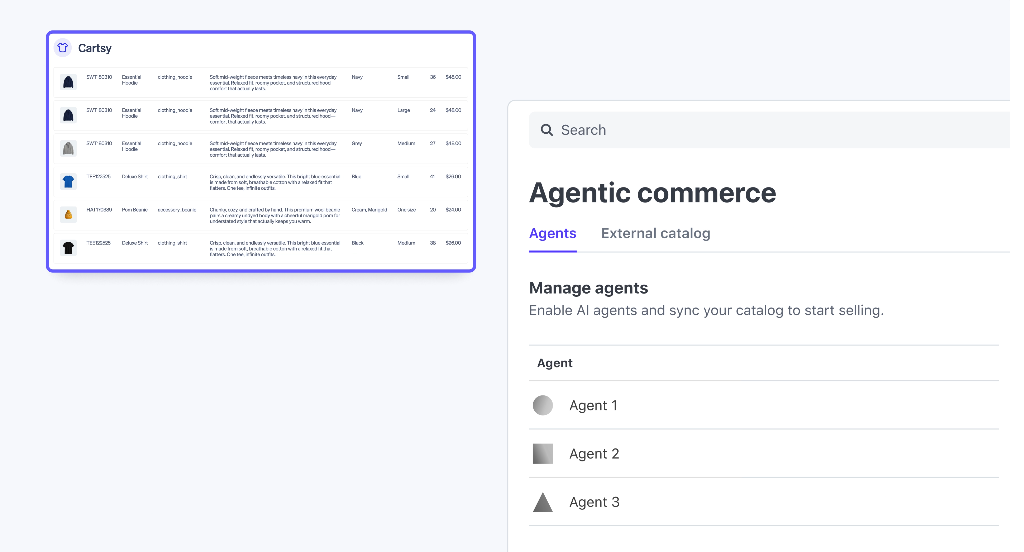
Stripe’s Agentic Commerce Suite enables businesses to sell through AI agents via a single integration. The platform handles product catalog syndication, checkout, payments, and fraud detection across agentic channels.
It has essential infrastructure for making products discoverable to AI shopping agents, though it does not engage shoppers on your own storefront.
How to Choose an Agentic Commerce Platform
Here are the factors you should consider when picking an Agentic Commerce platform:
1. Identify Your Primary Revenue Gap
If shoppers abandon before you capture their contact information, you need proactive behavioral engagement. But if your support team is overwhelmed with repetitive tickets, a support-focused agent may fill the gap. Scaling brands that need both should evaluate unified platforms.
2. Evaluate Sales vs. Support Orientation
Most agentic commerce solutions evolve from support. They deflect tickets effectively yet don’t drive revenue. If conversion and AOV are your primary KPIs, prioritize platforms built for sales outcomes and not just cost savings.
3. Match Platform to Store Maturity
Stores with fewer than 50,000 monthly sessions may get stronger ROI from affordable entry points like Tidio. But brands with 180K+ monthly sessions and Shopify Plus should evaluate full-funnel platforms like Rep AI that leverage behavioral data at scale.
4. Check Attribution Before Comparing ROI
Some platforms use 3-day or 7-day attribution windows, crediting any purchase within that timeframe to the AI, whether it influenced the decision or not. For instance, Rep AI uses a conservative 3-hour same-session window. But always ask what attribution model a platform uses before comparing results.
5. Think Beyond Chat
The strongest agentic commerce platforms surface why shoppers leave, what questions your product pages aren’t answering, and what objections your checkout flow isn’t addressing. That intelligence compounds over time and informs decisions beyond the AI itself.
Which Agentic Commerce Platform Fits Your Store?
Most solutions in this guide specialize in one function: support automation, conversational product discovery, checkout optimization, or ticket deflection. Few combine proactive behavioral sales engagement, automated support, and shopper intelligence in a single platform.
Rep AI is purpose-built to fill that gap. Its Agentic Commerce OS detects when shoppers hesitate, engages them with conversational product guidance, completes transactions inside the chat, and surfaces actionable intelligence about visitor behavior. The Klaviyo integration also pushes conversation data directly into customer profiles for targeted follow-up campaigns.
For brands looking to replace fragmented point solutions across sales, support, and analytics, Rep AI provides a single unified platform. It delivers one of the most complete agentic commerce experiences available for Shopify today.
Ready to see what agentic behavioral AI does for your conversion rate?
Start your 30-day free trial and experience the difference between deflecting tickets and driving revenue.
FAQs
What is agentic commerce?
Agentic commerce uses AI systems to autonomously manage sales, support, and customer interactions across e-commerce stores. Agentic platforms observe shopper behavior, analyze context, and take independent actions to increase conversions and resolve customer issues.
How is an agentic commerce platform different from a chatbot?
Chatbots follow pre-set scripts and respond to specific triggers. Whereas Agentic platforms use behavioral AI to detect shopper intent, adapt conversations in real time, and take actions like adding items to the cart. They also autonomously complete transactions without requiring human involvement.
Which agentic commerce platform is best for Shopify?
Rep AI is purpose-built for Shopify Plus brands. It combines behavioral AI sales engagement, automated support, and shopper intelligence in one platform. Moreover, it delivers 10–30% conversion lifts backed by a 5X ROI guarantee and a 30-day free trial.
Can agentic commerce solutions handle both sales and support?
Unified platforms like Rep AI handle both functions simultaneously. They proactively drive sales through conversational product guidance while automating up to 97% of support inquiries. While most competitors focus primarily on support and treat sales as secondary.
How long does it take to implement an agentic commerce platform?
Implementation varies widely by platform. Rep AI goes live in six clicks with catalog sync completing in 3–10 minutes. Whereas enterprise solutions like Zowie typically require approximately 3 months of integration and configuration before reaching full functionality.
More from REP AI

AI Shopping Assistant: How It Guides Ecommerce Shoppers in 2026
When a shopper hesitates, timely guidance can help them decide what to explore next. An ai shopping assistant can answer product questions, narrow choices, and guide product discovery without taking control of checkout. Shoppers get help comparing options, while still making the purchase decision th...

Benefits of Agentic Commerce: How AI Can Help Brands Sell and Serve Better
When a shopper hesitates, a useful answer can turn a moment of uncertainty into a chance to help, rather than a sale lost or a question left unanswered. The benefits of agentic commerce come from connecting shopper intent with timely action, then learning from those interactions to improve sales gui...
Want to see what your store would do with Rep?
Run your real Shopify catalog through the simulator before you commit to anything. No sales call required.

